The Abu Simbel Temples are one of Egypt’s biggest “wow” moments—massive rock-cut temples in southern Egypt, built with incredible precision and later moved in a famous UNESCO rescue project. This guide focuses on the things first-time visitors from the US and UK usually care about most: how to do an Aswan to Abu Simbel day trip, Abu Simbel tickets price (entrance fee), opening hours vs last entry, sun alignment dates, and the most practical transport options.
At the time of writing, ticket prices, opening hours, and safety advice can change. Always re-check official sources close to your travel date—especially if you are visiting around holidays or Ramadan.
Abu Simbel Temples at a Glance
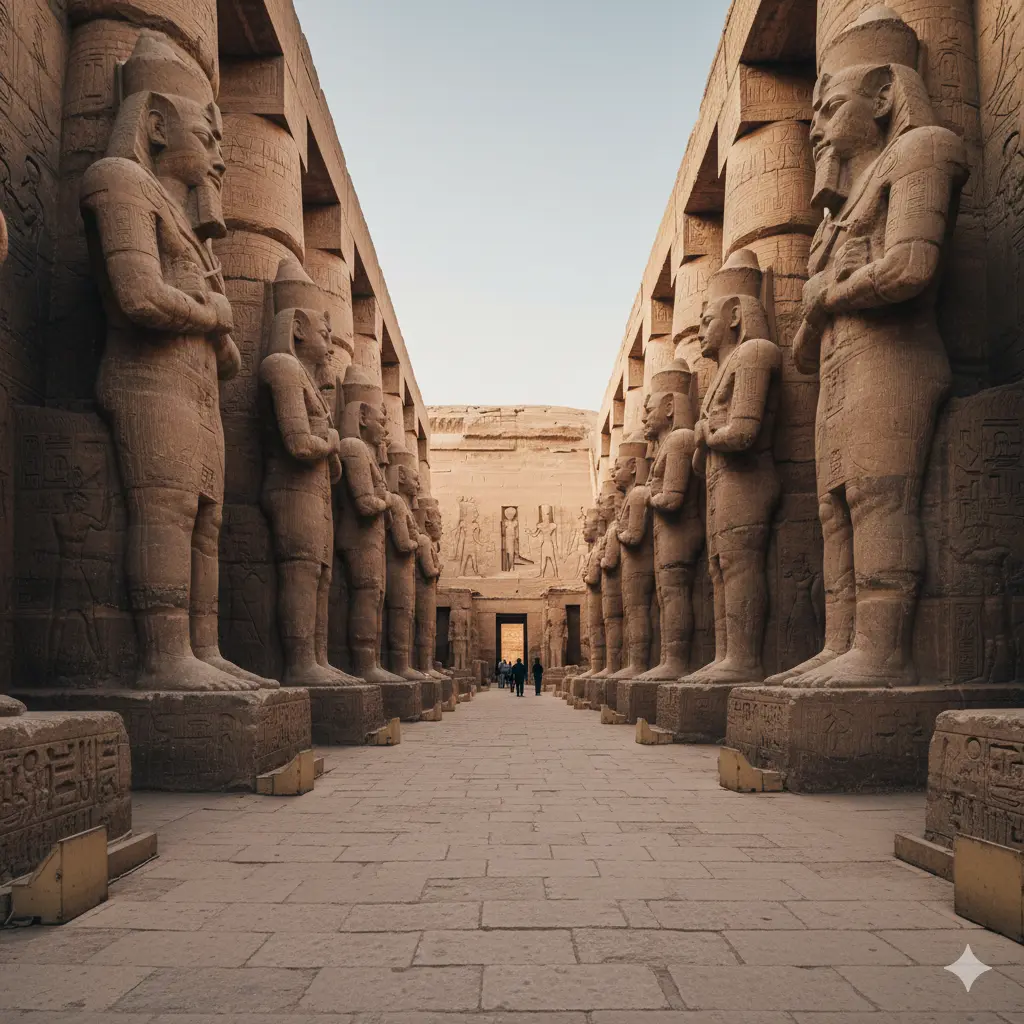
If you only read one section, read this one.
Quick facts (practical)
-
Best base: Aswan (most visitors do it as a day trip)
-
Distance from Aswan: about 280 km (174 miles) by road (one way)
-
Time on the road: usually ~3–4 hours each way (depends on traffic, stops, and checkpoints)
-
How long at the site: most first-timers spend 1.5–2.5 hours inside + photos outside
-
Official hours vs last entry (important):
-
MoTA lists 06:00 to 17:00
-
Booking portal lists Last Entry 16:00, and Ramadan: 07:00 with Last Entry 15:00
-
-
Sun alignment dates: February 22 and October 22 (twice a year)
-
Sound & Light Show: evening show times are listed as 18:30 and 19:30, with a regular ticket shown as $20 on the official site (dates subject to change)
“At a glance” table (save this for planning)
| Topic | Practical answer |
|---|---|
| Ideal trip length | Aswan: 3–5 days works well, with 1 day for Abu Simbel |
| Best seasons | Oct–Apr for cooler weather (hotter months still possible with early start) |
| Best time of day | Morning for comfort and fewer crowds |
| Official opening hours | MoTA: 06:00–17:00 |
| Last entry cutoff | Booking portal: Last Entry 16:00 (Ramadan Last Entry 15:00) |
| Ticket price (foreign adult) | EGP 750–822 (official pages differ) |
| Ticket price (foreign student) | EGP 375–445.5 (official pages differ) |
| Sun alignment ticket (adult) | EGP 1200–1272 |
| Do you need a guide? | Not required, but helpful if you want context inside (optional cost) |
| Most common transport | Shared tour/coach from Aswan (very early start) |
A quick note on money (EGP + optional US/UK thinking)
-
Entrance fees are listed in EGP on the official pages.
-
If you like a rough conversion, use a live rate on your banking app (rates can move quickly). A simple rule: EGP 1,000 is usually “tens” of USD/GBP, not “hundreds.” (This is only a ballpark—check current rates.)
Where are the Abu Simbel Temples and what is on-site?
Where exactly is Abu Simbel?
The Abu Simbel temples are in southern Egypt (Aswan Governorate), in Nubia near Egypt’s southern border.
Most visitors reach the site from Aswan, either by road or (less commonly) by a domestic flight.
What to expect on-site (practical)
Think of Abu Simbel as a “single big site” rather than a whole town of attractions. The visit is usually:
-
Arrive → ticket/entry area → walk to the temples → time inside/outside → return.
Good to know:
-
Shade is limited outside. Heat planning matters.
-
Bring water and sun protection.
-
Expect some walking on flat paths, plus indoor temple floors and thresholds.
Abu Simbel opening hours vs last entry
This is one of the most common mistakes first-time visitors make.
The key difference: “closing time” vs “last entry”
-
Closing time is when the site officially closes.
-
Last entry is the latest time you are allowed to enter—often earlier than closing time.
So if a site “closes at 5 pm,” you may still be refused entry at 4 pm (or even earlier) if that is the last-entry rule.
What the official pages say (and why they look different)
At the time of writing:
-
The Ministry of Tourism & Antiquities (MoTA) Abu Simbel page lists opening hours as 06:00 AM to 05:00 PM.
-
The official booking portal lists:
-
Summer: from 06:00 am, Last Entry 04:00 pm
-
Winter: from 06:00 am, Last Entry 04:00 pm
-
Ramadan: from 07:00 am, Last Entry 03:00 pm
-
These can both be “true” at the same time:
-
MoTA shows the broad public opening hours window.
-
The booking portal adds the practical cutoff: last entry (and a Ramadan schedule).
The booking portal also advises arriving at least one hour prior to the site’s closing time for a pleasant experience.
What this means for real trip planning
For most travelers coming from Aswan:
-
You will arrive in the morning, so last entry is not a problem.
-
But last entry matters if:
-
you are driving independently and leaving late
-
you are trying to visit late afternoon
-
you are catching a flight/bus and cutting it close
-
Best practice timing rules (simple)
-
Aim to arrive before 10:00 if possible (cooler, fewer crowds).
-
Build in a buffer (at least 30–60 minutes) for:
-
rest stops
-
checkpoints
-
slow traffic
-
your driver/tour group schedule
-
-
If visiting in Ramadan, assume a shorter day and re-check the portal.
Abu Simbel tickets price (Abu Simbel entrance fee): the official range
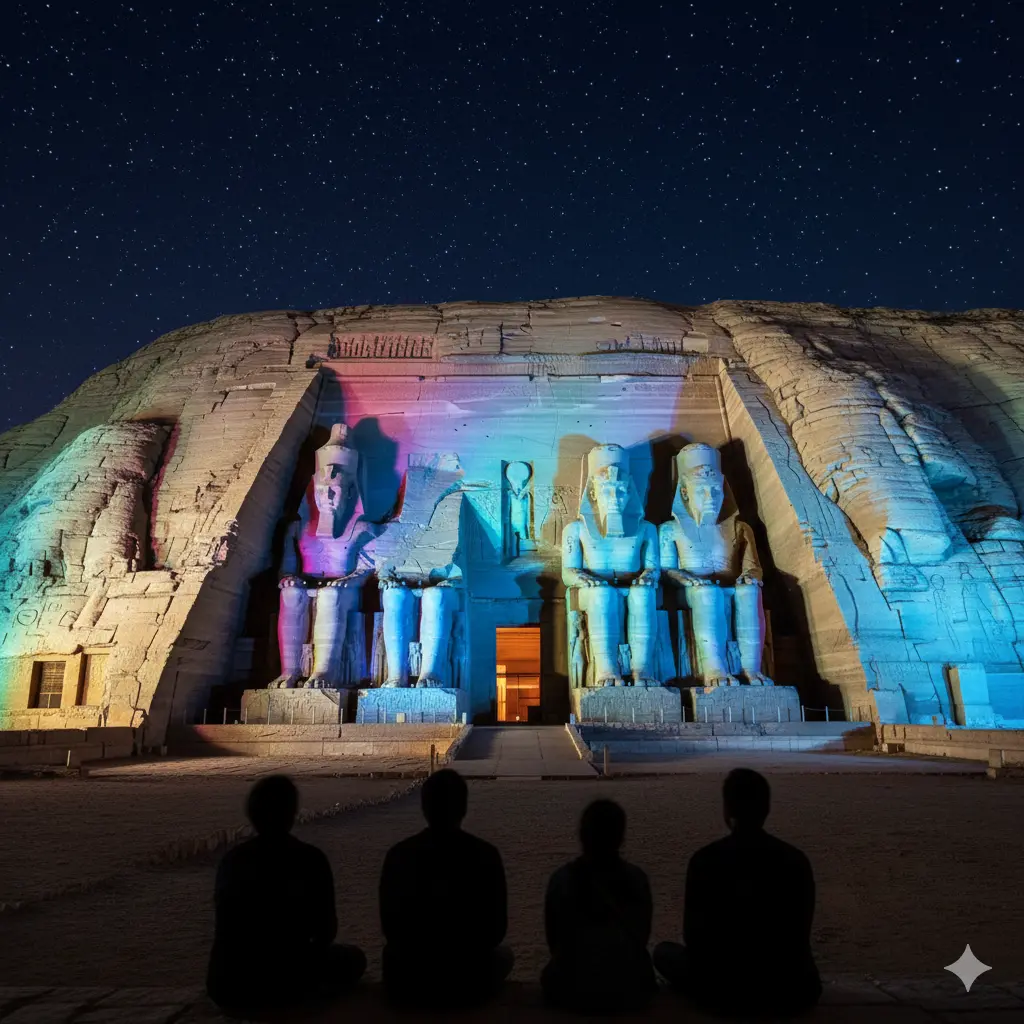
Ticket pricing is one of the few confusing parts of Abu Simbel—because official pages can show different numbers.
The two official prices you will see
At the time of writing, the official pages show:
MoTA page (Foreigners):
-
Adult: EGP 750
-
Student: EGP 375
-
Feb 22 & Oct 22 (Sun alignment): Adult EGP 1200 / Student EGP 600
Official booking portal (Other Nationality):
-
Adult: EGP 822
-
Student: EGP 445.5
-
Sun Alignment Tickets (Feb 22 & Oct 22): Adult EGP 1272 / Student EGP 670.5
How to read this (honestly)
-
Treat the entrance fee as a range, not a single fixed number.
-
The booking portal may include updated pricing, rounding, or fees, or it may be updated at a different time than the MoTA listing.
Best action: check both official sources in the week you travel (or as close as possible).
Ticket range summary table (foreign visitors)
| Ticket type | Adult (EGP) | Student (EGP) | Notes |
|---|---|---|---|
| Standard day | 750–822 | 375–445.5 | Official pages differ |
| Sun alignment day (Feb 22 / Oct 22) | 1200–1272 | 600–670.5 | More expensive + busier |
Student tickets: what to bring (very important)
The booking portal says:
-
Students must present a valid ID, and age must not exceed 24.
Practical advice:
-
Bring a physical student ID (not only a photo).
-
Carry your passport as backup ID.
-
If the ID is not clearly dated or recognizable, expect the adult rate.
Vehicle tickets (for drivers/taxis)
MoTA also lists separate car/vehicle ticket prices (useful if arriving by taxi/private vehicle), for example:
-
Car & Taxi: EGP 25
-
Micro-bus: EGP 50
-
Coaster: EGP 75
-
Bus: EGP 100
This is not always charged to every visitor (it depends how you arrive and how your transport is arranged), but it is worth knowing if you are hiring a private driver.
Should you book online?
The booking portal is designed for online booking and shows the official categories and rules clearly.
In practice:
-
Online booking can help if you want less friction on arrival or you are visiting on a busy date.
-
On-site purchase may be fine on normal days, but you still want to arrive early.
If you are on a tour, confirm:
-
Does the price include entrance tickets, or do you pay separately?
How to get to Abu Simbel from Aswan
Most first-time visitors choose a road trip. Flights exist, but schedules can vary.
Option A: Shared tour/coach/minivan (most common)
This is the classic Aswan to Abu Simbel day trip:
-
Very early pickup (often before dawn)
-
Road drive to Abu Simbel
-
~1.5–2.5 hours at the temples
-
Drive back to Aswan
Pros:
-
Easiest for first-timers
-
No planning stress
-
Usually the best value per person
Cons:
-
Fixed schedule (less flexible)
-
You may feel rushed if the group time is short
Good for:
-
US/UK visitors who want a simple, safe-feeling plan on a first Egypt trip
Option B: Private car + driver (mid-range comfort)
A private driver is often the most comfortable road option:
-
Leave when you want (still best early)
-
Stop for bathrooms when needed
-
Spend longer inside the temples
Pros:
-
Flexibility
-
Better pacing for families, older travelers, photographers
Cons:
-
More expensive than a group tour
-
You still do the long road day
Good for:
-
Travelers who value comfort, personal timing, and fewer group pressures
Option C: “DIY” hired taxi/driver from Aswan
This is similar to a private driver, but arranged more casually:
-
Agree on total price, departure time, and waiting time at Abu Simbel
Practical tip:
-
Confirm in advance:
-
total cost (round trip)
-
how many hours the driver will wait
-
whether the driver will enter the site or stay at the car park
-
Option D: Domestic flight (fast, but check schedules)
Flights can save time, but they depend on airline schedules and seasonality.
Best practice:
-
Check EgyptAir timetable/flight status close to your date. Do not assume a daily flight.
Pros:
-
Much less time on the road
Cons:
-
Often more expensive than a road tour
-
Schedule changes can affect tight itineraries
-
You still need transport from the airport to the temples
Option E: Lake Nasser cruise / multi-day route (brief note)
Some travelers visit Abu Simbel as part of a Lake Nasser cruise or a longer Upper Egypt route. This can be a good fit if:
-
you want a slower pace
-
you are building a bigger Nubia/Lake Nasser-focused trip
Transport comparison table (simple)
| Option | Typical total time | Flexibility | Comfort | Best for |
|---|---|---|---|---|
| Shared tour/coach | ~10–12 hours day | Low | Medium | First-timers, value, simple logistics |
| Private car + driver | ~10–12 hours day | High | High | Families, photographers, “go at your pace” |
| Flight + local transfer | Often half-day-ish | Medium | High | Limited time, avoiding long drive |
| Overnight in Abu Simbel | 2 days | High | High | Sun alignment / Sound & Light / relaxed pace |
Aswan to Abu Simbel day trip: a step-by-step plan that works
A day trip is long but very doable with the right plan.
A realistic day-trip timeline (example)
Times vary by season and tour operator, but many days look like this:
-
Very early departure from Aswan
-
Aim: reach Abu Simbel in the morning for comfort and light
-
Arrive at Abu Simbel
-
Bathroom stop, tickets, short walk
-
Visit the temples
-
Great Temple + Small Temple
-
Photos outside (façade is the big moment)
-
Take breaks—heat can sneak up even in cooler months
-
Return to Aswan
-
Expect to arrive back late afternoon or early evening
How to choose a tour (so you don’t feel rushed)
Before booking, ask:
-
How long is the total stop at Abu Simbel (from arrival to departure)?
-
Is a guide included, or only a driver/escort?
-
Are entrance tickets included, or paid separately?
-
What is the pickup time and return time?
What to bring (practical packing list)
-
Passport (or at least a secure copy) and your ticket confirmation (if booked online)
-
Water (more than you think you need)
-
Hat, sunglasses, sunscreen
-
Light layers (cool mornings, warm afternoons)
-
Snacks (especially if traveling with kids)
-
Power bank (photos drain batteries fast)
-
Small cash in EGP for small purchases/tips
How long to spend at Abu Simbel?
A simple planning answer:
-
Minimum comfortable time: ~1.5 hours
-
Good first-time visit: ~2 hours
-
Relaxed visit with photos: ~2.5–3 hours
If visiting on Feb 22 or Oct 22, add extra time for:
-
crowds
-
queues
-
slower movement inside the temple
Top things to do at Abu Simbel (smart order)
1) Start with the Great Temple façade (the “postcard view”)
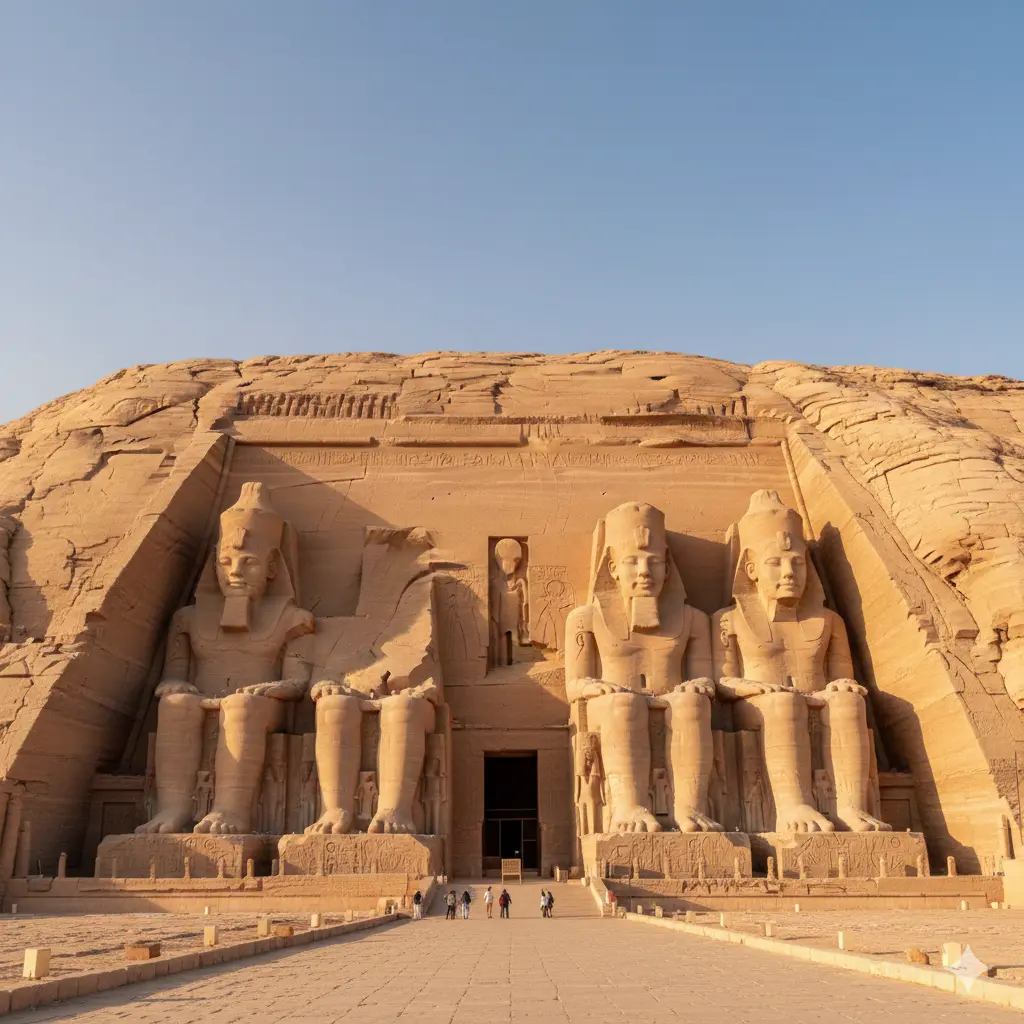
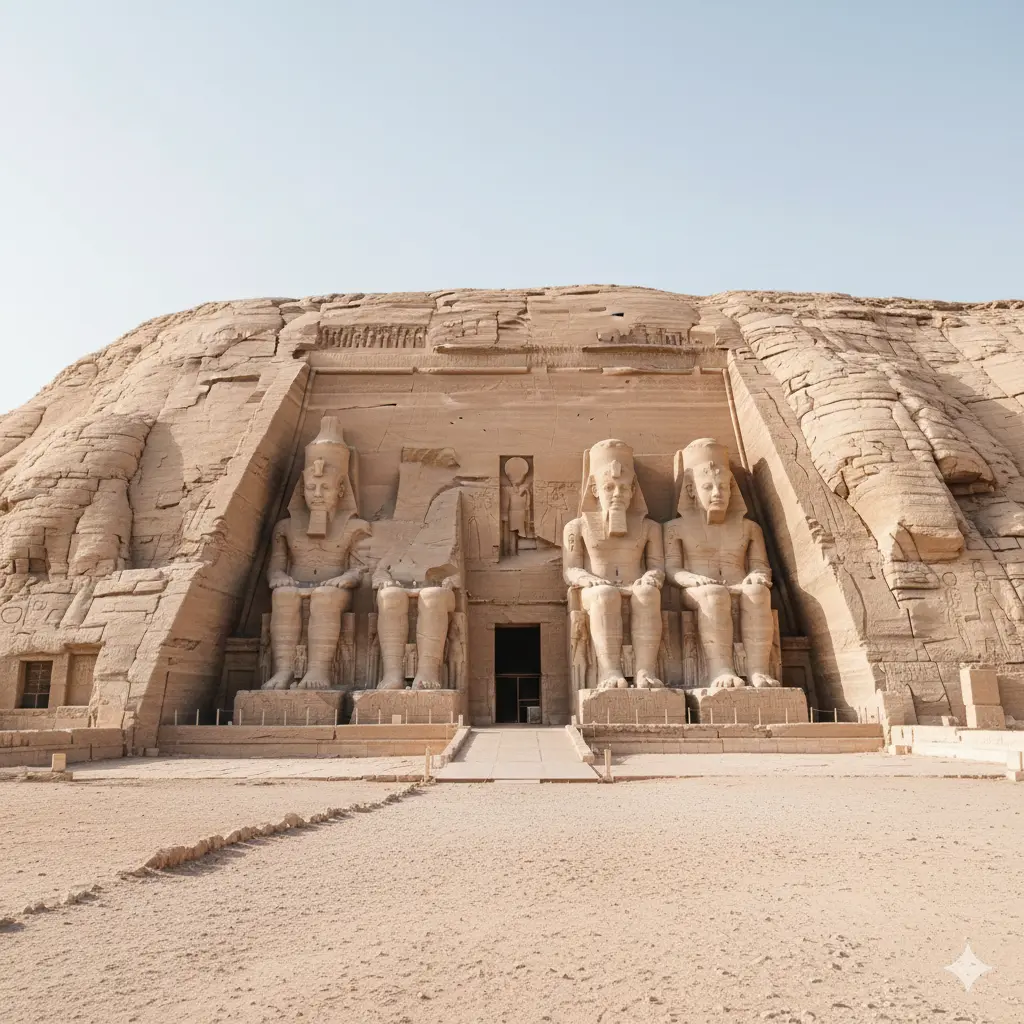
The Great Temple is famous for its huge seated statues on the front. It is one of Egypt’s most recognized monuments for a reason.
Practical tip:
-
Take façade photos early if possible (cooler and fewer people).
2) Go inside the Great Temple
Inside, the visit is usually:
-
main hall → deeper chambers → sanctuary area
The famous “sun alignment” concept is about sunlight reaching deep inside the temple on two specific dates each year.
3) Visit the Small Temple (Nefertari/Hathor)
Just north of the Great Temple is the Small Temple, dedicated to Hathor and Queen Nefertari.
It is smaller, but it is part of what makes Abu Simbel feel like a “two-temple” experience, not just one façade.
Photography and basic rules (check before you go)
The official booking portal notes:
-
Photography with mobile phone is free of charge.
Rules can change, and some equipment (tripods, flash, large cameras) may be treated differently in different sites. If photography matters a lot, ask staff at the entrance the same day.
Abu Simbel sun alignment (Abu Simbel Sun Festival): February 22 & October 22
These are the most famous days at Abu Simbel.
What happens (simple explanation)
The Great Temple was designed so that on February 22 and October 22, sunlight reaches deep inside and illuminates the innermost statues.
Why these dates are busier (and cost more)
Both official pages list special Sun Alignment Tickets for those dates, which are more expensive than standard days.
So it is smart to expect:
-
bigger crowds
-
earlier starts
-
higher total costs (transport + tickets)
How to plan for sun alignment days (best-practice approach)
For most first-time visitors, the easiest plan is:
-
Stay overnight in Abu Simbel (or arrive extremely early from Aswan)
-
Keep expectations realistic: the key moment is brief, and crowds are part of the experience
Practical comfort tips:
-
Bring extra water and snacks
-
Wear comfortable shoes (standing time can be long)
-
Keep valuables simple and close to your body
At the time of writing, always verify:
-
the ticket category for that day
-
last entry and any special hours close to travel date
Abu Simbel Sound and Light Show (what to know)
If you want a second Abu Simbel “wow” moment, this is the evening option.
Official schedule and price (subject to change)
The official Sound & Light site lists:
-
Show times: 18:30 and 19:30 (listed across the week)
-
Regular ticket: $20
-
Child ticket (6–12): $11
-
Note: “DATES ARE SUBJECT TO CHANGE”
Practical planning: can you do it from Aswan?
Most travelers need to stay overnight in Abu Simbel to attend comfortably. Doing a same-day round trip from Aswan and also seeing the show is usually too tiring (and may not match tour timings).
What to bring for the evening:
-
light jacket (desert evenings can feel cooler)
-
insect repellent (seasonal)
-
a small torch/phone light (useful around dark areas)
Is Abu Simbel safe for tourists? (US + UK perspective)
No travel guide can promise safety. What it can do is explain the official advice and the practical habits that reduce risk.
US audience: U.S. State Department summary (plain English)
At the time of writing, the U.S. State Department advises Exercise increased caution in Egypt due to terrorism, crime, and health, and it lists areas to avoid including:
-
Northern and Middle Sinai Peninsula
-
Egyptian border areas (military zones)
-
and other higher-risk regions
It also notes practical risks like pickpocketing and harassment of women, and recommends staying alert in tourist locations.
How this applies to Abu Simbel:
Abu Simbel is a major tourist site in the far south. The trip is long and remote, so the practical risks are usually about:
-
long road travel (fatigue)
-
heat/dehydration
-
keeping valuables secure
-
following local instructions at checkpoints
UK audience: UK FCDO “regional risks” notes (plain English)
The UK FCDO regional risks page includes:
-
warnings for specific regions (Sinai, certain borders, parts of the Western Desert)
-
and it explicitly lists exceptions in the Western Desert section, including Aswan and Abu Simbel
-
it also advises being extremely cautious in all border areas
Practical safety habits for the Abu Simbel day trip
-
Bring enough water and do not rely on “buying later.”
-
Keep passport and cash secure (money belt or secure inner pocket).
-
Use reputable transport (tour company or vetted driver).
-
Avoid flashing valuables at rest stops.
-
If traveling solo, especially solo female:
-
choose a reputable tour or a trusted driver
-
dress modestly (helps reduce unwanted attention)
-
keep interactions firm but polite
-
Important: Safety advice can change quickly. Re-check the US and UK official pages shortly before travel.
Best time to visit Abu Simbel (comfort + photos)
Best months for most visitors
Most travelers find October to April more comfortable because days are generally cooler. In hotter months, the temples are still possible, but an early start becomes much more important.
Best time of day
-
Morning is the best mix of:
-
cooler temperatures
-
softer light
-
fewer crowds
-
If visiting in hot season:
-
treat it like a “desert morning mission”
-
avoid long outdoor time around midday if possible
Where to stay for Abu Simbel: Aswan vs Abu Simbel (areas only)
Staying in Aswan (most common)
Aswan is the easiest base for first-time visitors because it has:
-
more restaurants and services
-
more transport options
-
other major sights
Popular areas (no hotel brands, just areas):
-
Aswan Corniche / city center (east bank): convenient for restaurants, pick-ups, and evening walks
-
Elephantine Island: quieter feel, scenic river setting
-
Nubian village area (west bank): cultural atmosphere and slower pace (but longer transfers)
Staying overnight in Abu Simbel (best for special experiences)
An overnight stay makes sense if:
-
you want the Sound and Light Show
-
you are visiting on Feb 22 or Oct 22 (sun alignment)
-
you want a less rushed visit without a 10–12 hour road day
Areas:
-
Abu Simbel village area / near the site access roads
-
Lakeside/Lake Nasser-side areas (for a calmer feel)
Budget & average costs (mid-range, first-timer planning)
Costs in Egypt change often, so treat these as planning ranges.
1) Entrance tickets (official range)
For foreign visitors (at the time of writing):
-
Standard day: EGP 750–822 adult; EGP 375–445.5 student
-
Sun alignment day: EGP 1200–1272 adult; EGP 600–670.5 student
2) Transport (typical market ranges — not official)
These vary by season, group size, and comfort level:
-
Shared minivan/coach tour: often the cheapest per person
-
Private car + driver: higher total, but can be good value if split between 2–4 people
-
Flight: often the most expensive, but saves time (check EgyptAir)
Budget table (day trip + optional overnight)
| Scenario | What it usually includes | Typical planning range (EGP) |
|---|---|---|
| Budget day trip | Shared transport + standard ticket + snacks | ~2,500–5,000+ |
| Mid-range day trip | Better shared tour or simple private driver split + standard ticket + lunch | ~4,000–9,000+ |
| Comfort / private | Private car + driver (not split much) + ticket + guide + extras | ~7,000–15,000+ |
| Add Sound & Light + overnight | Overnight stay + show ticket + extra meals/transfer | +1,500–6,000+ (varies) |
Notes:
-
Entrance fees are the most “fixed” part because they are published officially.
-
Everything else depends on your supplier, season, and negotiation.
Food & drink basics (Aswan + Abu Simbel)
Simple plan that works
-
Eat a proper meal in Aswan before leaving (or bring something easy).
-
Bring snacks you trust (especially for kids).
-
Bring water from Aswan; buy extra if needed near the site.
Water safety (simple advice)
Many visitors prefer bottled or filtered water in Egypt. If you have a sensitive stomach:
-
avoid tap water
-
be cautious with ice in places you do not trust
Culture, dress code & etiquette at the temples
Abu Simbel is a religious and cultural heritage site. A respectful approach makes the day smoother.
Dress code (practical)
-
Light, breathable clothes that cover shoulders and knees are a safe choice.
-
Comfortable walking shoes (sand/dust happens).
Etiquette
-
Keep voices low inside.
-
Do not touch carved surfaces.
-
Follow staff instructions about photos and restricted areas.
SIM/eSIM & internet on the Abu Simbel route
For first-time visitors, a simple setup helps:
-
Download offline maps before you leave Aswan.
-
Expect that mobile signal can be weaker on long desert roads.
-
Keep key info offline: hotel address, driver contact, ticket screenshots.
Sample itinerary: 3–7 days in Aswan + Abu Simbel
Abu Simbel fits best as part of an Aswan-based plan.
3-day itinerary (highlights)
-
Day 1: Arrive Aswan + Corniche walk + easy evening
-
Day 2: Abu Simbel day trip
-
Day 3: Aswan sightseeing + depart
5-day itinerary (balanced, first-timer friendly)
| Day | Plan | Timing notes |
|---|---|---|
| Day 1 | Arrive Aswan, settle in, Corniche/city stroll | Keep it easy after travel |
| Day 2 | Aswan sights (Philae-style day) + relaxed evening | Don’t over-pack |
| Day 3 | Aswan to Abu Simbel day trip | Early start, long day |
| Day 4 | Nubian culture day (village area / felucca time) | Flexible pace |
| Day 5 | Buffer morning + depart | Good for rest or shopping |
7-day itinerary (slower pace + special experiences)
-
Add: overnight in Abu Simbel for the Sound & Light Show
-
Add: extra time in Aswan for museums, islands, slow river time
Practical tips checklist (save this)
Before you go (the night before)
-
Re-check:
-
opening hours and last entry
-
ticket prices (official range)
-
-
Confirm pickup time and the exact meeting point
-
Pack water + sun protection
-
Charge phone + power bank
Money and payments
-
Carry some EGP cash for small purchases and tips.
-
Keep larger money/cards secure (split cash across pockets).
Toilets and breaks
-
Plan restroom breaks around known stops (ask your driver/tour).
-
Bring tissues and hand sanitizer.
Photography
-
Mobile phone photos are listed as free on the booking portal.
-
If you have special equipment, ask on-site what is allowed that day.
Avoid common hassles
-
If approached by sellers, a calm “No thank you” and walking on works well.
-
Avoid arguments; keep it polite and firm.
Why was Abu Simbel moved? (UNESCO relocation story, in simple terms)
Abu Simbel is famous not only for its original construction, but also for being moved and rebuilt.
The short reason
The Aswan High Dam project created a reservoir that threatened to flood important Nubian monuments. UNESCO led an international safeguarding effort.
The key engineering facts (the parts people remember)
According to UNESCO’s World Heritage Centre story:
-
Workers began slicing the temples into more than a thousand blocks
-
Each block weighed some 30 tons
-
The temples were reassembled in a specially built artificial cliff
-
The new location is 64 meters higher and 180 meters inland
-
Abu Simbel was inaugurated in its new location on 22 September 1968
That project helped shape global heritage protection and is part of why Abu Simbel is so often described as a “must-see.”
Frequently Asked Questions
1) What are the Abu Simbel opening hours?
At the time of writing, the MoTA Abu Simbel page lists 06:00 AM to 05:00 PM.
However, the official booking portal lists Last Entry 04:00 pm (and Ramadan hours that start later and end earlier).
Always re-check close to your travel date.
2) What is “Abu Simbel last entry,” and why does it matter?
“Last entry” is the cutoff time to enter, which can be earlier than the closing time.
The booking portal lists Last Entry 04:00 pm, and Ramadan Last Entry 03:00 pm.
If you arrive after last entry, you may be refused even if the site “closes later.”
3) How much are Abu Simbel tickets (Abu Simbel entrance fee)?
At the time of writing, official pages show different foreign visitor prices:
-
MoTA: EGP 750 adult / EGP 375 student
-
Booking portal: EGP 822 adult / EGP 445.5 student
Treat it as a range and verify right before you visit.
4) Are Abu Simbel tickets more expensive on the sun alignment dates?
Yes. Both official pages list special Sun Alignment Tickets for February 22 and October 22, and the EGP price is higher than standard days.
5) When is the Abu Simbel sun alignment?
The official pages list February 22 and October 22.
These dates are usually much busier. Plan extra time and consider staying overnight.
6) What is the Abu Simbel Sun Festival?
Many travelers use “Sun Festival” to describe the busy period around the sun alignment dates (Feb 22 and Oct 22).
It is not just a “normal day at the temple”—expect crowds, earlier starts, and higher costs.
7) How do you get to Abu Simbel from Aswan?
Most first-time visitors go by road on an Aswan to Abu Simbel day trip (tour or private driver).
The site is about 280 km (174 miles) from Aswan.
Flights can be an option, but schedules vary—check EgyptAir close to your date.
8) Is it better to do Abu Simbel by tour or privately?
For first-time Egypt visitors:
-
Tour is easiest and usually best value.
-
Private driver is best for comfort and flexible timing (especially with kids or photography needs).
If a tour feels rushed, a private option can be worth it.
9) How long is the drive from Aswan to Abu Simbel?
Many travelers plan for about 3–4 hours each way, plus stops.
Actual time depends on traffic, rest stops, and checkpoints.
10) How long should you spend at Abu Simbel?
A good first-time visit is usually about 2 hours at the site.
Add extra time on the sun alignment dates because crowds slow everything down.
11) Can you visit Abu Simbel and come back to Aswan the same day?
Yes—this is the standard way most visitors do it.
Just expect a long day and an early start.
12) Is Abu Simbel safe for tourists?
No place is risk-free. At the time of writing:
-
The U.S. State Department advises Exercise increased caution in Egypt and notes areas to avoid, including border areas (military zones).
-
The UK FCDO regional risks page includes warnings for certain regions and notes exceptions that include Aswan and Abu Simbel, while also advising caution in border areas.
Best practice is to use reputable transport, follow local guidance, and re-check official advisories before travel.
13) Is Abu Simbel safe for solo female travelers?
Many solo women visit Upper Egypt successfully, but street harassment can happen in Egypt in general.
Practical steps that help:
-
choose a reputable tour or trusted driver
-
dress modestly
-
keep boundaries polite and firm
-
avoid isolated situations at rest stops
14) Are photos allowed inside Abu Simbel?
The official booking portal states mobile phone photography is free of charge.
Rules for other equipment can vary by site and can change, so ask on arrival if you have special gear.
15) Can you buy Abu Simbel tickets online?
Yes—the official booking portal lists Abu Simbel with prices and rules and a “Book Now” option.
Even if you plan to buy on-site, checking the portal is a good way to confirm last entry times.
16) What student ID is accepted at Abu Simbel?
The booking portal notes students must show a valid ID and be 24 or younger.
A physical university/college ID is safest. If in doubt, budget for the adult ticket.
17) What are the Ramadan hours at Abu Simbel?
At the time of writing, the official booking portal lists Ramadan working hours starting 07:00 am with Last Entry 03:00 pm.
Always re-check close to your travel date because Ramadan dates and site schedules can change.
18) What is the Abu Simbel Sound and Light Show schedule and price?
At the time of writing, the official Sound & Light site lists show times 18:30 and 19:30 and a regular ticket price of $20 (child $11, ages 6–12), and it notes that dates are subject to change.
19) Do you need to stay overnight for the Sound and Light Show?
Most visitors do. The show is in the evening, and a same-day return to Aswan is usually too tiring and may not match tour schedules.
20) Why was Abu Simbel moved?
UNESCO explains the temples were threatened by flooding from the Aswan High Dam reservoir and were cut into more than a thousand blocks, moved to an artificial cliff 64 m higher and 180 m inland, and inaugurated in the new location on 22 September 1968.
Suggested External Links
Only official/authoritative sources (as requested). URLs are provided in code format.
-
Ministry of Tourism & Antiquities – Abu Simbel page (official hours + ticket categories)
“MoTA Abu Simbel official opening hours and ticket prices” -
Egymonuments official booking portal – Abu Simbel (prices + last entry + Ramadan hours + rules)
“Official Abu Simbel ticket booking portal (last entry & Ramadan hours)” -
UNESCO World Heritage Centre – Abu Simbel relocation story (engineering facts)
“UNESCO story: how Abu Simbel was moved” -
Sound & Light Egypt – Abu Simbel show page (schedule + prices; subject to change)
“Official Abu Simbel Sound and Light Show schedule” -
U.S. Department of State – Egypt Travel Advisory (US safety reference)
“U.S. State Department Egypt travel advisory” -
UK FCDO – Egypt travel advice (regional risks)
“UK FCDO Egypt travel advice: regional risks” -
EgyptAir – timetable checker (do not assume fixed schedules)
“EgyptAir timetable (check domestic flight schedules)”