Last updated: January 2026
Introduction: What to Expect as a Tourist in Egypt During Ramadan
Ramadan is the ninth month of the Islamic lunar calendar, observed by Muslims worldwide as a month of fasting, prayer, reflection, and community. In Egypt — a country where the majority of the population is Muslim — Ramadan is a deeply felt national occasion that changes the rhythm of daily life in noticeable ways.
For tourists, this means:
- A different daily schedule (quieter days, livelier evenings)
- Changed restaurant and shop hours
- Reduced or adjusted alcohol service in some venues
- A stronger expectation of respectful behavior in public
- Access to unique Ramadan food, culture, and atmosphere
This guide is written to help tourists navigate Egypt during Ramadan with confidence, respect, and enjoyment.
Ramadan 2026 Dates in Egypt
Ramadan 2026 is expected to begin around February 17–18, 2026 and end around March 19–20, 2026. The exact start date depends on the sighting of the crescent moon and is confirmed by religious authorities.
Important: Ramadan dates shift approximately 10–11 days earlier each year in the Gregorian calendar. If you are planning a future trip, always verify the current year’s dates closer to your travel date.
After Ramadan ends, the three-day celebration of Eid al-Fitr begins. Eid is a major public holiday in Egypt, with closures, family gatherings, and a festive atmosphere.
Can Tourists Eat and Drink in Public During Ramadan?
Direct answer: Technically, tourists are not required to fast. But eating, drinking, and smoking in public during daylight hours is considered disrespectful, and in some areas and situations, it can attract negative attention or police intervention.
The Practical Rule for Tourists
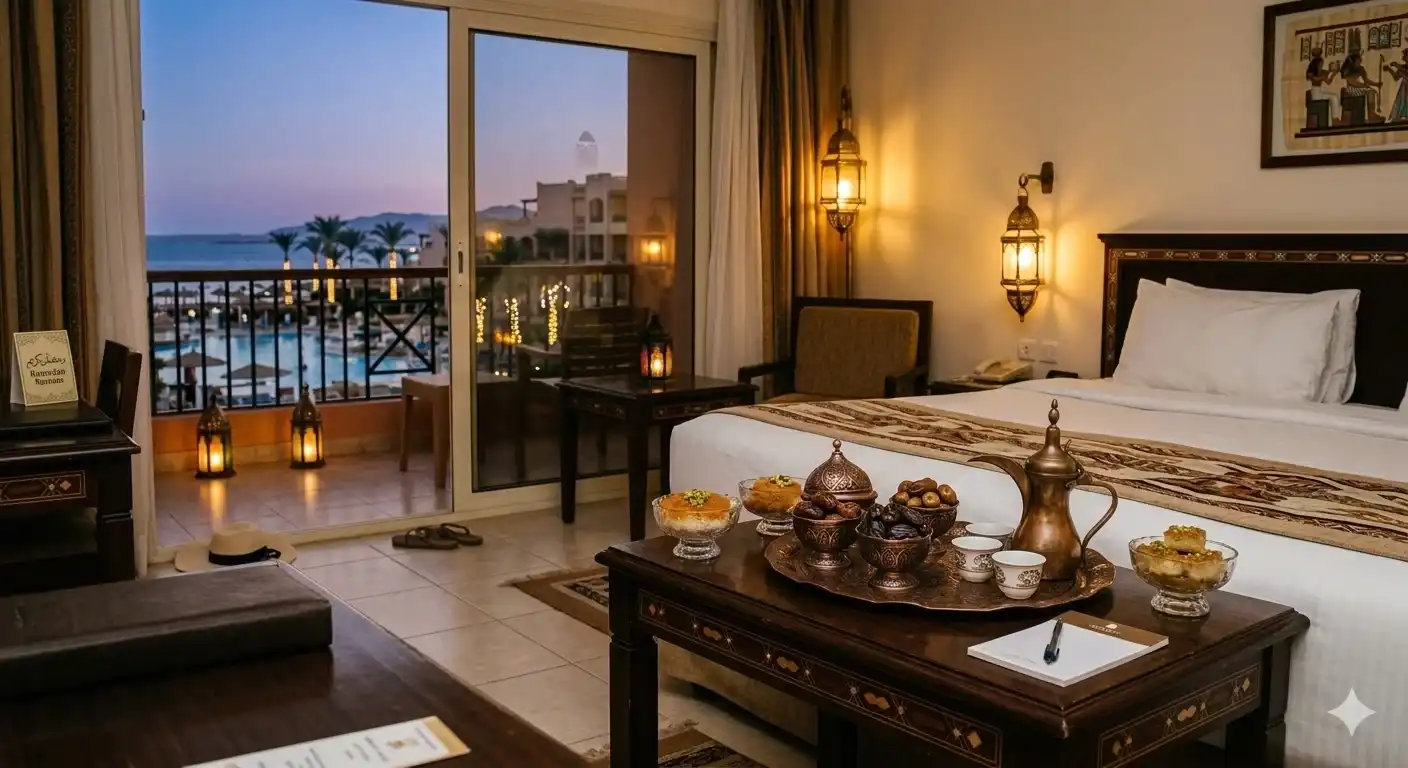
- Inside your hotel, resort, or a licensed restaurant: eating and drinking during the day is generally fine. These are private, licensed spaces with staff experienced in serving non-fasting guests.
- In public spaces (streets, markets, public transport): avoid eating, drinking, or smoking during daylight hours. This includes non-alcoholic drinks and snacks.
- Near mosques and religious sites: be particularly careful — extra respectful behavior is expected at all times during Ramadan.
Where You Can Eat During the Day
- Your hotel restaurant (many tourist hotels serve breakfast and lunch as usual for non-fasting guests, often in a specific area)
- Resort restaurants and buffets within the resort compound
- Licensed tourist restaurants that remain open for daytime service
What to Avoid
- Eating a snack while walking down a local street
- Drinking a coffee or water bottle while on public transport
- Smoking in public during daylight hours
- Loud music or noise during daylight hours, particularly in residential areas
Alcohol During Ramadan in Egypt
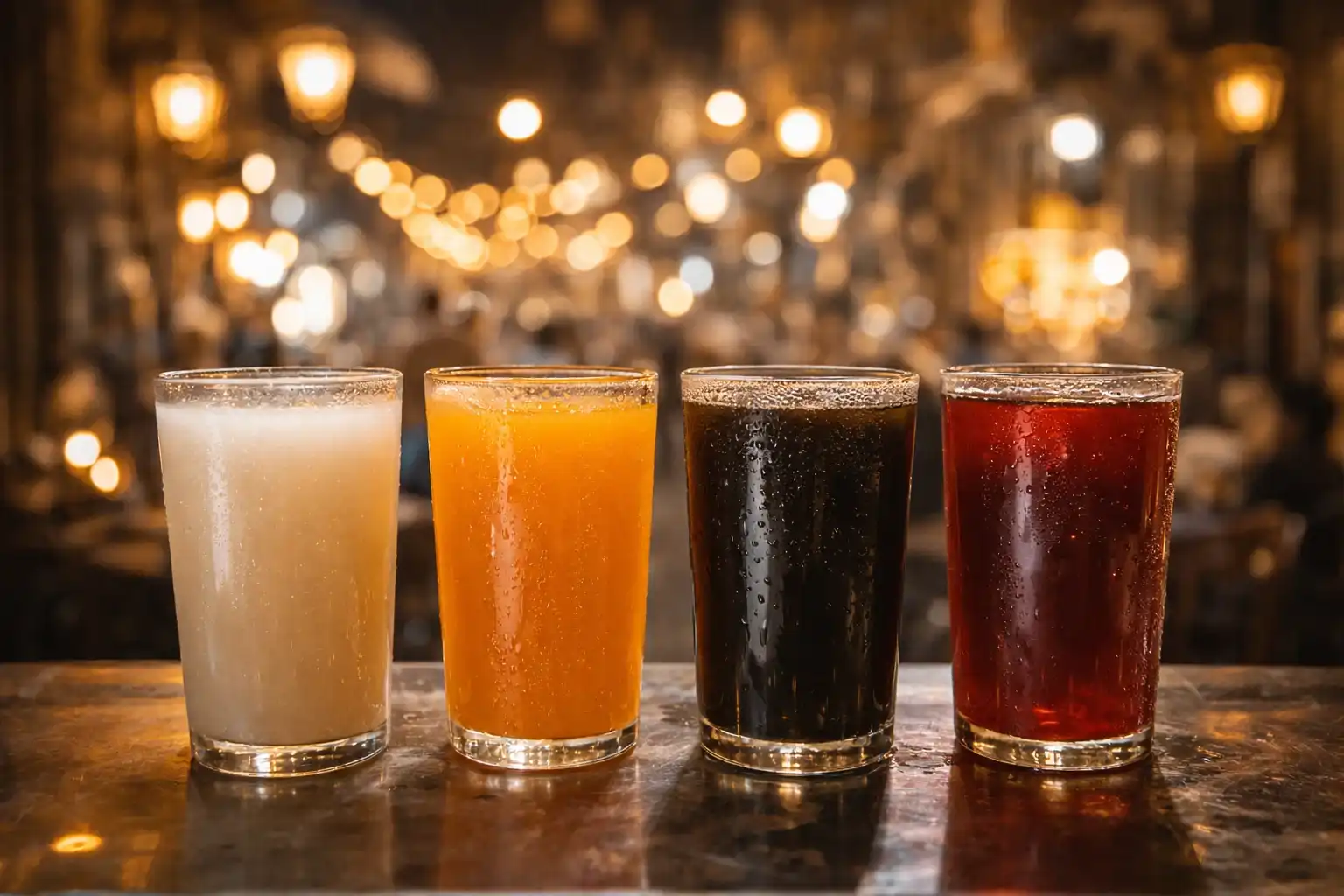
Alcohol is sometimes still available in tourist hotels and licensed venues during Ramadan, but with important changes. In public, alcohol is always illegal — and even more so during Ramadan.
What Usually Changes for Alcohol During Ramadan
- Some hotels continue alcohol service but move it to a specific room or section to keep it away from public sight.
- Some hotels reduce bar hours, particularly during daytime and early evening.
- Some hotels remove alcohol from public buffets and serve it only on request.
- Some smaller hotels and restaurants pause alcohol service entirely during Ramadan.
- Drinkies shops may have reduced opening hours.
What Usually Stays the Same
- Large international hotel chains and all-inclusive resorts in Hurghada and Sharm el-Sheikh typically continue serving alcohol inside the licensed resort area, though sometimes with modified hours.
- Your hotel room — you can still keep and drink alcohol privately in your room.
The Golden Rule for Alcohol During Ramadan
Ask your hotel at check-in: “Do you serve alcohol during Ramadan, and where and when?” Do not assume. The policy can change between individual hotels, and even within the same hotel compared to the previous year.
For more detail on buying alcohol during Ramadan, see our guide: Buying Alcohol in Egypt: Drinkies, Duty-Free & Licensed Shops.
Restaurant Hours During Ramadan in Egypt
Ramadan completely changes the daily eating schedule in Egypt. Understanding this helps tourists plan their days.
The Ramadan Daily Food Schedule
- Suhoor (pre-dawn meal): eaten before the fast begins, around 3–5am. Many restaurants and cafés stay open late into the night or open very early to serve suhoor. This creates a lively late-night food scene during Ramadan.
- Iftar (breaking the fast at sunset): the most important meal of the day. Streets come alive at sunset, with families and friends gathering to eat. Many restaurants offer special iftar menus and can be very busy from sunset to around 9–10pm.
- Night dining: restaurants and cafés often stay open very late during Ramadan — past midnight is common.
What This Means for Tourists
- Lunch options may be limited — many local restaurants do not open until iftar time.
- Your hotel restaurant is the most reliable option for daytime meals.
- Evening dining is excellent — the variety of food available after iftar is exceptional, and the atmosphere is lively and warm.
- Iftar time (around sunset) is busy — traffic increases sharply as people rush home for the meal. Plan accordingly.
- Suhoor meals can be a memorable experience — if you are a night owl, joining the local late-night dining scene is one of the most authentic Ramadan experiences.
Table: How Ramadan Changes Daily Life for Tourists
| Aspect | Normal Times | During Ramadan |
|---|---|---|
| Local restaurants (day) | Open from mid-morning | Many closed until iftar (sunset) |
| Local restaurants (evening) | Open until 11pm–midnight | Very busy after sunset; open late into night |
| Hotel restaurants | Normal hours | Often open as usual for non-fasting guests (in separate area) |
| Hotel bar alcohol service | Normal hours | May be reduced, moved, or have changed hours |
| Street and market atmosphere | Active through the day | Quieter during day; very lively after sunset |
| Traffic at sunset | Normal rush hour | Heavy traffic as people rush home for iftar |
| Shops and services | Normal business hours | Shorter daytime hours; longer evening hours |
Ramadan Etiquette for Tourists in Egypt
You do not need to fast or change your lifestyle entirely. But a few adjustments will make your trip more enjoyable and show respect for the people around you.
Dress More Modestly Than Usual
During Ramadan, dress modestly when outside tourist resort zones:
- Cover shoulders and knees — both men and women
- Avoid tight or revealing clothing in markets, local areas, and anywhere near religious sites
- Inside resorts and tourist hotels, normal tourist attire is generally acceptable
Keep Your Voice Down in Public
Public spaces during Ramadan are more reflective and contemplative, particularly during daylight hours. Avoid loud music, shouting, or raucous behavior in public.
Be Patient
Services can be slower during Ramadan. Staff may be tired from fasting. Shops may close unexpectedly. Be patient and flexible — this is a normal part of the Ramadan experience.
Do Not Stare or Take Photos Intrusively
Iftar is a personal and spiritual moment for many families. If you are near a group breaking their fast, be respectful — smile and observe quietly rather than pointing cameras at people eating.
Learn a Few Arabic Phrases
- Ramadan Kareem (رمضان كريم) — “Generous Ramadan” — a standard Ramadan greeting. Use it freely.
- Ramadan Mubarak (رمضان مبارك) — “Blessed Ramadan” — another common greeting.
- These phrases will be warmly received by Egyptian people and show genuine respect.
The Special Things About Egypt During Ramadan
Ramadan is not just a set of restrictions — it is one of the most culturally rich times to visit Egypt. Many tourists who experience it find it unexpectedly moving and memorable.
Ramadan Decorations and Lights
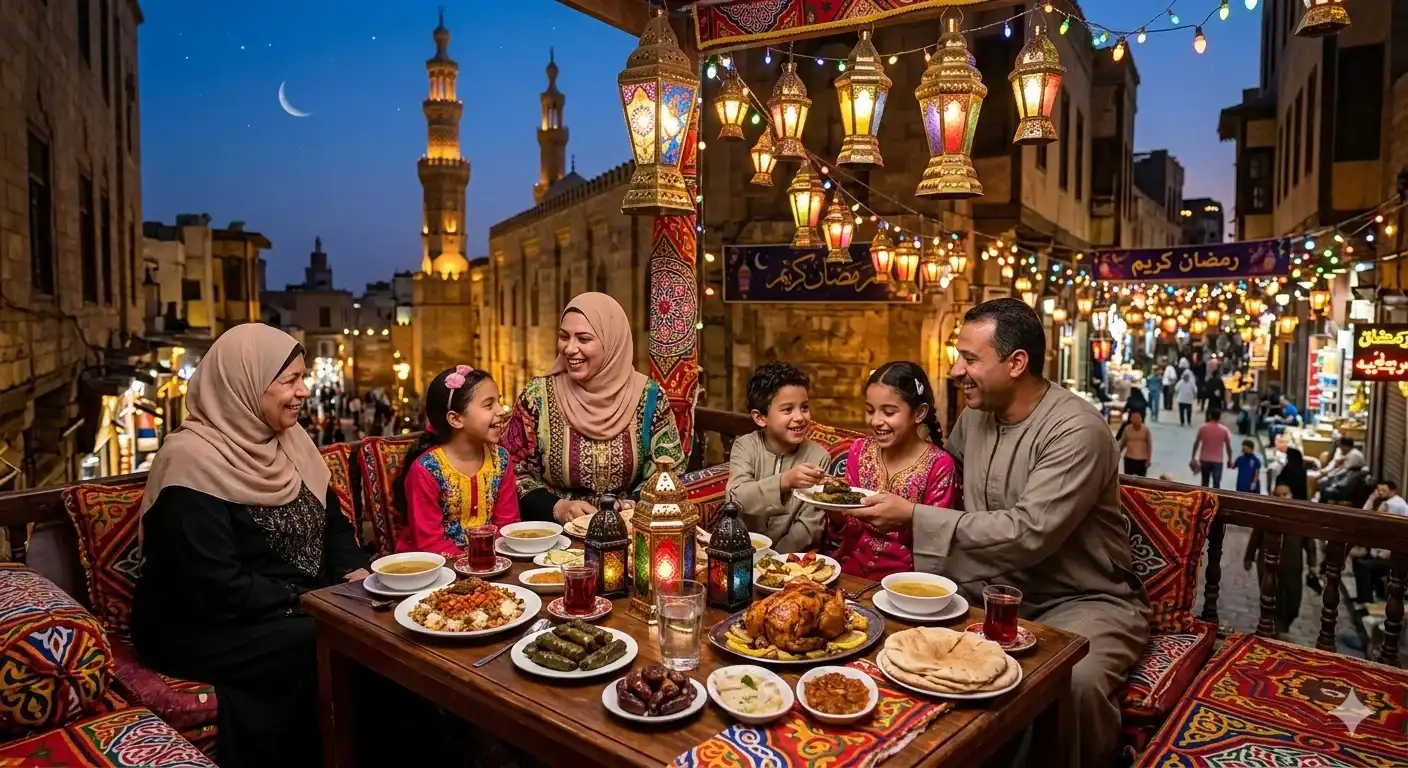
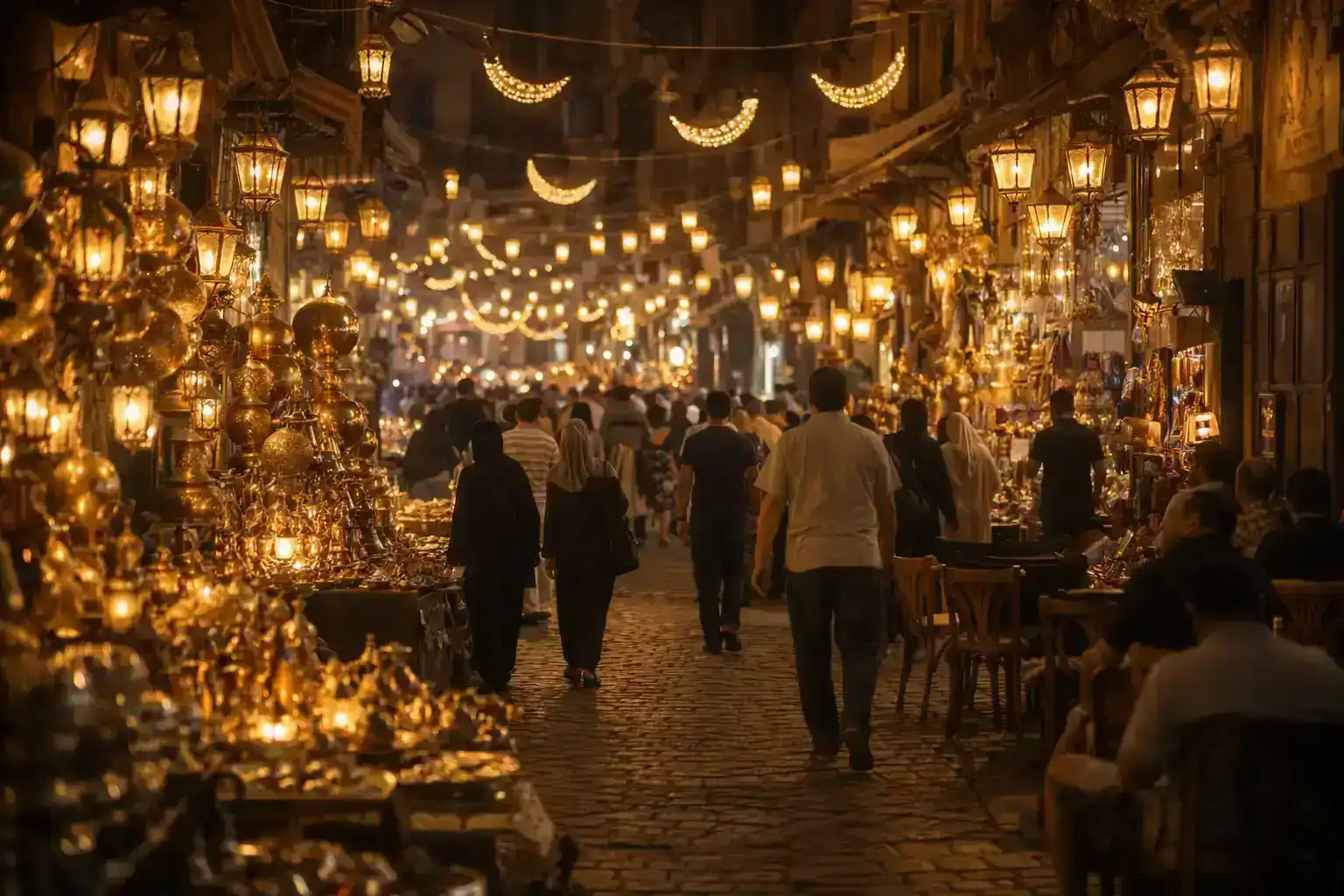
Egyptian streets are decorated with lanterns (fanous), lights, and colorful banners during Ramadan. Fanous — the Ramadan lantern — is a symbol deeply associated with Egyptian Ramadan tradition and is sold everywhere during the month. The decorations create a warm, festive atmosphere in the evenings.
Ramadan Food
Iftar menus in Egypt feature some of the most traditional and delicious Egyptian food:
- Ful medames — slow-cooked fava beans, one of Egypt’s most beloved dishes
- Koshari — Egypt’s national dish: rice, lentils, pasta, and spiced tomato sauce
- Fateer — a flaky pastry served sweet or savory
- Qatayef — sweet stuffed pancakes eaten only during Ramadan
- Konafa — a sweet cheese pastry dessert, very popular during Ramadan
- Apricot juice (amar al-din) — a thick, sweet apricot drink traditionally consumed at iftar
- Tamarind juice (tamer hindi) — another traditional Ramadan drink
Ramadan Tents and Communal Dining
During Ramadan, large decorated tents (saha) are set up in public areas and outside mosques for communal iftar meals. In some places, free food is distributed to those who need it. Some upscale hotels set up Ramadan tents with elaborate iftar buffets open to guests and the public — these can be a genuinely memorable experience.
The Evening Atmosphere
After iftar, Egyptian streets come alive in a way that is unique to Ramadan. Families stroll, children play late into the night, street food vendors are everywhere, and the general mood is festive and generous. For tourists who enjoy people-watching and street culture, the Ramadan evening is one of Egypt’s great experiences.
Planning Your Egypt Trip Around Ramadan
Should You Visit Egypt During Ramadan?
This depends on what you want from your trip:
Ramadan is a good choice if you:
- Are interested in Egyptian culture and want an authentic experience
- Enjoy a relaxed daytime pace with a lively evening atmosphere
- Are flexible about food hours and do not rely heavily on daytime restaurant options
- Are comfortable making slight adjustments to public behavior
Ramadan may not suit you if you:
- Need reliable access to alcohol throughout the day and evening
- Rely heavily on local restaurants for daytime meals
- Are sensitive to slower service or unexpected closures
- Have small children who need regular daytime meals in cafés
Practical Ramadan Planning Tips
- Book international hotels that have confirmed alcohol and food service for non-fasting guests.
- Ask your hotel at check-in what the current Ramadan policies are.
- Plan sightseeing earlier in the day when sites are less crowded, and plan meals for evenings.
- Do not plan driving around sunset — traffic is at its worst as people rush to iftar.
- Embrace the evenings — the Ramadan night atmosphere in Egyptian cities is genuinely wonderful.
- Carry water and snacks in your bag for daytime sightseeing (consume discreetly if needed).
Eid al-Fitr — The End of Ramadan
Eid al-Fitr, the three-day celebration marking the end of Ramadan, is a major Egyptian public holiday. During Eid:
- Many businesses, museums, and services close or operate on reduced hours.
- Egyptians travel to visit family — airports and trains can be extremely busy.
- Streets are festive with celebrations, new clothes, and sweets.
- It is a wonderful time to experience Egyptian family and community life if you are in the country.
Planning tip: If your trip ends around Eid, book transport early — flight and train seats book up quickly.
Frequently Asked Questions
1) When is Ramadan 2026 in Egypt?
Ramadan 2026 is expected to begin around February 17–18, 2026, and end around March 19–20, 2026. Confirm exact dates closer to your trip as they depend on moon sighting.
2) Can tourists eat and drink in public during Ramadan in Egypt?
Tourists are not required to fast, but eating, drinking, or smoking in public during daylight hours is disrespectful and can attract negative attention. Eat and drink inside your hotel, resort, or a licensed restaurant during the day.
3) Can tourists drink alcohol in Egypt during Ramadan?
Sometimes yes, in tourist hotels and licensed venues. Alcohol service may be reduced or have changed hours. In public, alcohol is always illegal. Ask your hotel what is available and when.
4) Do restaurants close during Ramadan in Egypt?
Many local restaurants close during the day and open for iftar at sunset. Tourist hotels and some licensed restaurants remain open during the day for non-fasting guests.
5) Is it a good time to visit Egypt during Ramadan?
For culturally curious travelers who are flexible about meals and alcohol, Ramadan in Egypt is a genuinely special experience — particularly the evening atmosphere, food, and decorations. With preparation, it is one of the most memorable times to visit.
6) What should tourists wear during Ramadan in Egypt?
Dress more modestly outside resort zones — cover shoulders and knees. Inside resorts and tourist hotels, normal tourist attire is generally fine.
7) What is iftar in Egypt?
Iftar is the sunset meal that breaks the Ramadan fast. It is a communal, joyful occasion. Many restaurants offer special iftar menus. The atmosphere after the iftar call to prayer is one of Egypt’s most vivid experiences.
8) What is suhoor during Ramadan in Egypt?
Suhoor is the pre-dawn meal before fasting begins. Many restaurants and cafés stay open until the early hours of the morning to serve suhoor. It creates a lively and unusual late-night food scene.
9) What Ramadan foods should tourists try in Egypt?
Key Ramadan foods in Egypt include qatayef (sweet stuffed pancakes), konafa (cheese pastry dessert), ful medames (fava beans), koshari (Egypt’s national dish), and special Ramadan drinks like amar al-din (apricot juice) and tamer hindi (tamarind juice).
10) What are the best Ramadan greetings in Egypt?
Say “Ramadan Kareem” (رمضان كريم) or “Ramadan Mubarak” (رمضان مبارك) — both are warmly received Ramadan greetings in Egypt.
Related articles:
- Can You Drink Alcohol in Egypt? Full Tourist Guide (2026)
- Drinking in Public in Egypt: What Tourists Must Know
- Buying Alcohol in Egypt: Drinkies, Duty-Free & Licensed Shops
- Alcohol in Egypt Hotels & All-Inclusive Resorts
- Ramadan Vibes in Egypt
Explore Egypt with us: Cairo Tours | Luxor Tours | Nile Cruises | All Egypt Packages