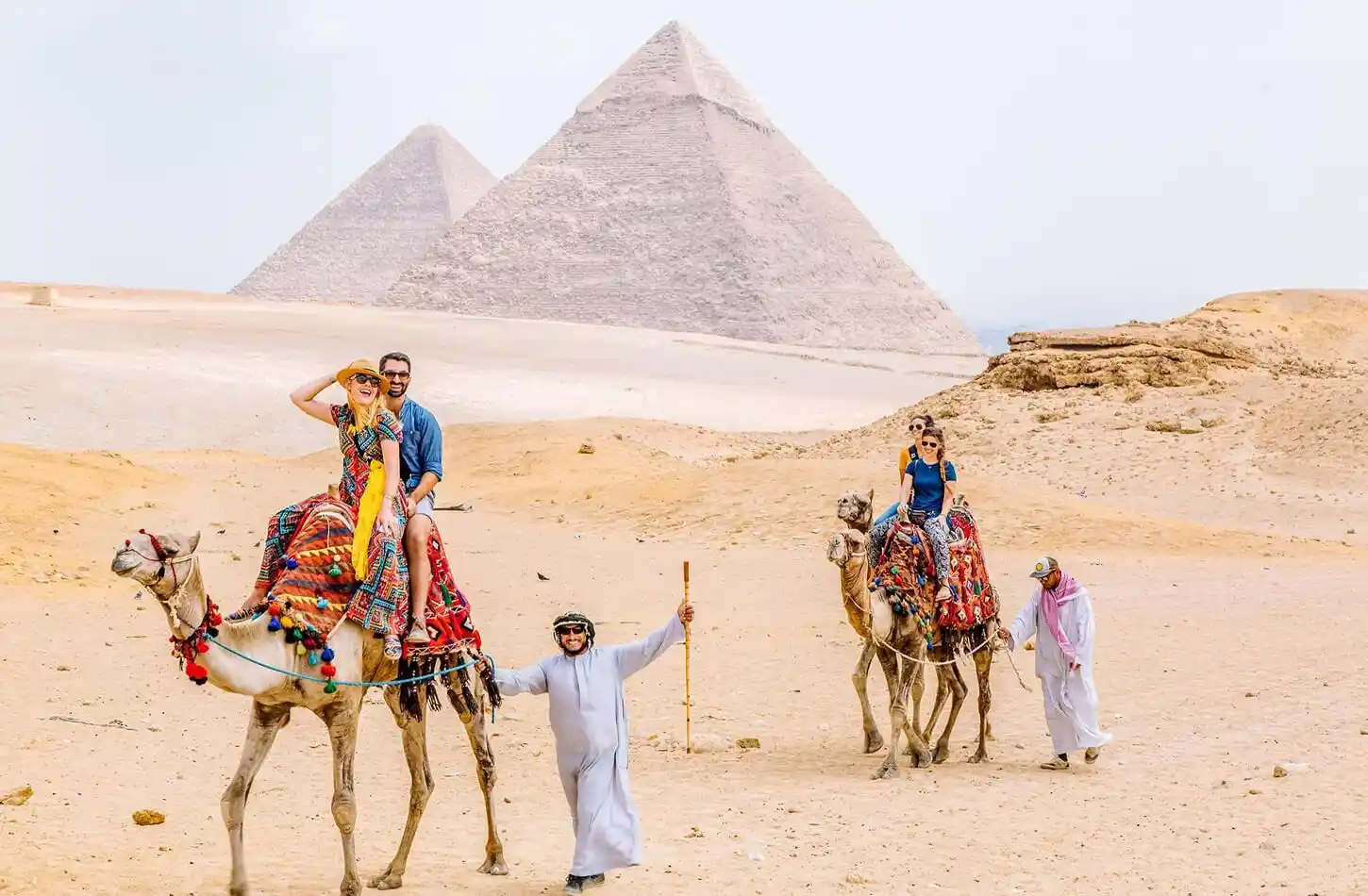
The Pyramids of Giza are the only surviving wonder of the ancient world’s original Seven Wonders list — and they have stood on the edge of the desert, just outside modern Cairo, for roughly 4,500 years. Most visitors arrive knowing the basics: three big pyramids, one Sphinx, very old. Far fewer know which pharaoh built which pyramid, how the numbers actually compare, or why the construction techniques remain genuinely debated among Egyptologists today.
This guide brings together the verified facts about all three Giza pyramids — their builders, dimensions, construction theories, and what’s actually inside them — along with the practical details you need to plan a visit.
Quick Facts: The Three Pyramids of Giza
All three pyramids were built during Egypt’s Fourth Dynasty, across three generations of the same royal family: Khufu, his son Khafre, and Khafre’s son Menkaure. Together with the Great Sphinx and several smaller satellite pyramids and tombs, they form the Giza pyramid complex — a UNESCO World Heritage Site since 1979.
The Great Pyramid of Khufu
The largest and oldest of the three, the Great Pyramid was built for Pharaoh Khufu (also known by his Greek name, Cheops), the second ruler of the Fourth Dynasty, around 2600–2560 BCE.
Key facts:
- Originally stood 146.6 meters (481 feet) tall — today, having lost its smooth outer limestone casing, it stands at approximately 138.5 meters (454 feet)
- Built from an estimated 2.3 million limestone blocks, with individual blocks averaging around 2.5 tons and some weighing as much as 50 tons
- Remained the tallest man-made structure on Earth for roughly 3,800 years, until the completion of Lincoln Cathedral in England in the 14th century
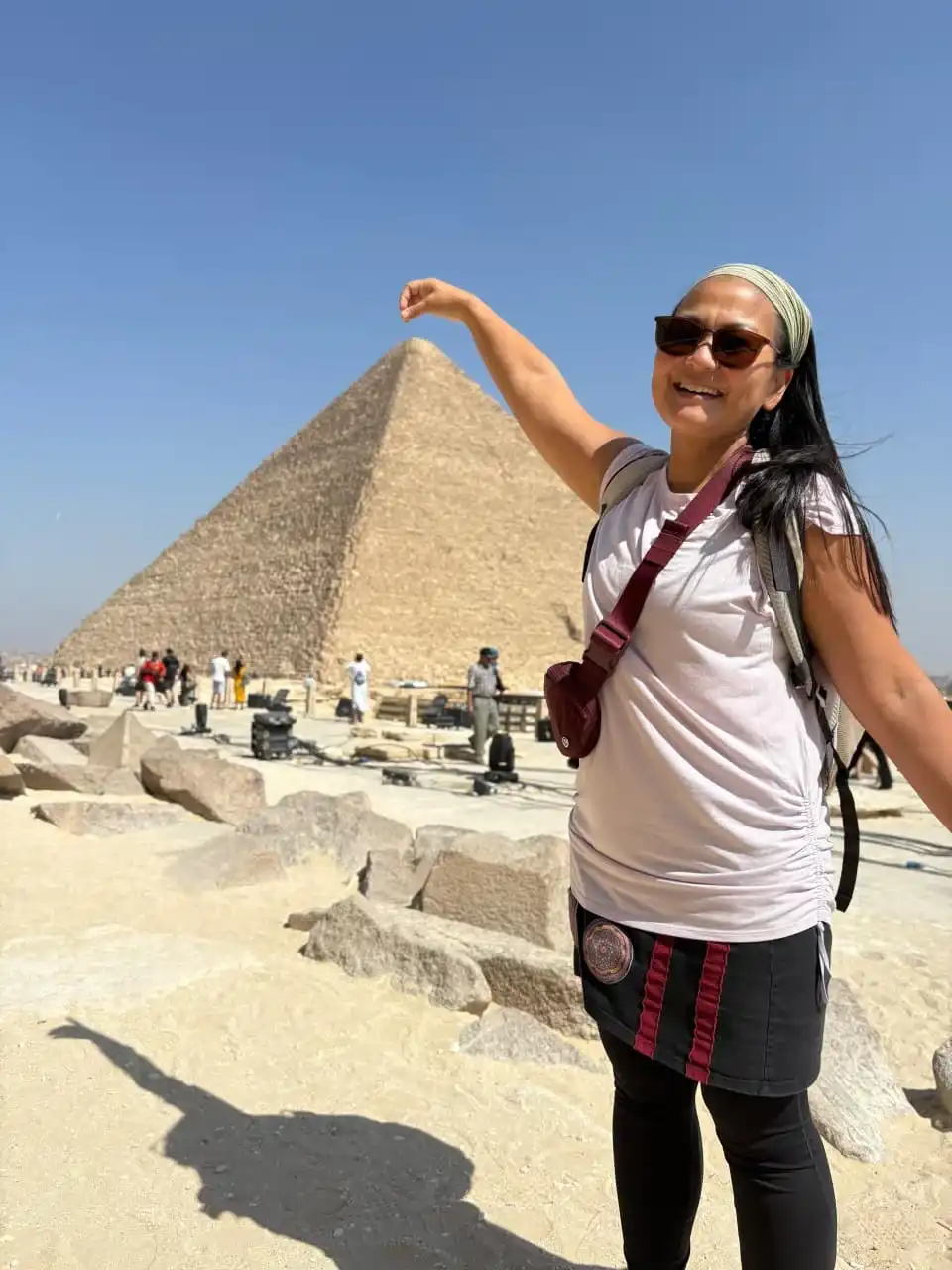
- The base is level to within about 2.1 centimeters across its entire 230-meter length — a precision that remains genuinely impressive by any era’s engineering standards
- Believed to have been designed by Khufu’s vizier, Hemiunu
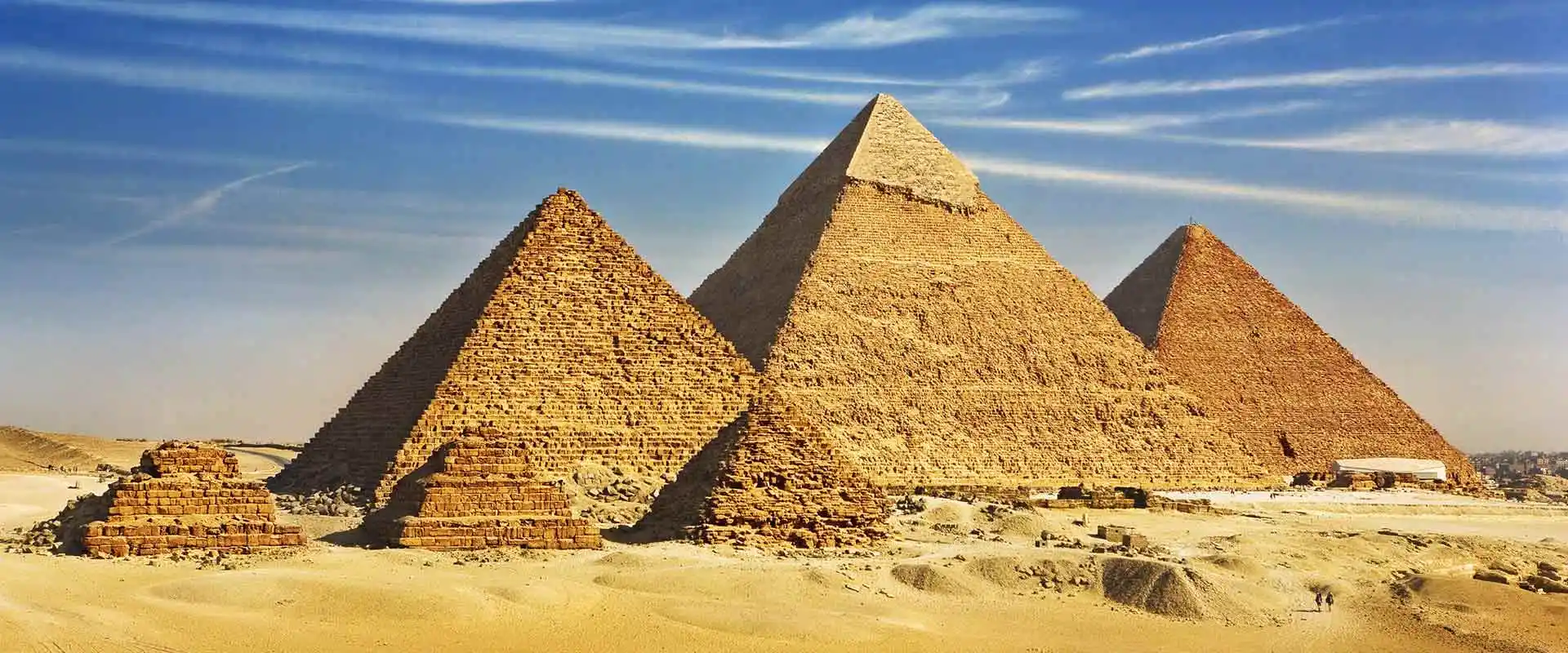
The pyramid originally had a smooth, polished white limestone casing quarried from Tura, across the Nile, which would have made the structure brilliantly reflective in sunlight. Most of this casing was removed over the centuries, largely during the medieval period, to be reused as building material in Cairo — which is why the pyramid’s surface today shows the rougher core stones rather than its original polished exterior.
Inside the Great Pyramid
The Great Pyramid contains three known chambers: the unfinished Subterranean Chamber cut into the bedrock below the pyramid, the so-called Queen’s Chamber (despite the name, not actually built for a queen), and the King’s Chamber, which houses Khufu’s empty granite sarcophagus. The chambers are connected by a series of passages, including the dramatic Grand Gallery — a soaring corbelled corridor leading up toward the King’s Chamber.
For a full breakdown of what visitors can actually see and access inside the Great Pyramid, see our complete guide to visiting inside the Great Pyramid.
The Pyramid of Khafre
Built by Khufu’s son Khafre, this is the second of the three Giza pyramids and, despite being slightly smaller than his father’s, it often appears taller from certain angles because it sits on higher bedrock.
Key facts:
- Original height: 143.5 meters (471 feet); current height: 136.4 meters (448 feet)
- Base length: 215.5 meters (706 feet) per side
- The only one of the three Giza pyramids that still retains a portion of its original smooth limestone casing, visible near its summit
- Steeper angle of inclination (53°10′) than the Great Pyramid (51°50′), giving it a noticeably different silhouette
- Part of Khafre’s pyramid complex, which also includes the Great Sphinx, the Sphinx Temple, and his valley temple
Khafre’s pyramid complex is generally considered the best-preserved of the three, with its valley temple — built from massive granite blocks — surviving in unusually good condition. For a complete look at the monument most closely associated with this pyramid, see our guide to the Great Sphinx of Giza.
The Pyramid of Menkaure
The smallest of the three main Giza pyramids, built by Khafre’s son (and Khufu’s grandson) Menkaure, around 2510–2490 BCE.
Key facts:
- Original height: 65 meters (213 feet) — roughly half the height of the other two pyramids
- Base: approximately 102 x 105 meters
- Built using a combination of limestone for the core and red granite casing on its lower portion, a design choice not used on the larger two pyramids
- Recent archaeological research suggests the Giza pyramid builders relied on a Nile-connected harbor and canal system to transport stone, with this system remaining active through the construction of Menkaure’s complex
Menkaure’s smaller scale compared with his father’s and grandfather’s pyramids has long puzzled Egyptologists — some attribute it to a shorter reign, others to the diminishing economic resources available for monumental construction by this point in the Fourth Dynasty.
How Were the Pyramids Built?
This is the single most-debated question in all of Egyptology, and while the broad picture is well understood, many specific engineering details remain genuinely uncertain.
What We Know With Confidence
- The pyramids were built from limestone quarried both locally at Giza and from across the Nile at Tura (for the finer casing stones)
- Skilled, paid laborers — not slaves, according to the modern archaeological consensus — built the pyramids, organized into work gangs with their own identities, as confirmed by worker graffiti and the discovery of a dedicated workers’ village and cemetery near the plateau
- Construction relied on ramps, sledges, levers, and an extraordinarily well-organized logistics and labor management system
- A Nile-connected harbor and canal network helped transport massive stone blocks close to the construction site
What Remains Genuinely Debated
Exactly how workers raised multi-ton blocks to increasing heights remains unresolved in its specifics. Competing theories include a single straight ramp, a spiraling ramp wrapping around the pyramid’s exterior, an internal spiral ramp, and various combinations of levers and counterweights. Each theory has supporting evidence and unresolved problems, and no consensus has fully emerged.
For a complete breakdown of the construction debate, see our dedicated guide: How Were the Pyramids of Giza Built?
Who Built the Pyramids — Slaves or Paid Workers?
For much of modern history, popular imagination assumed the pyramids were built by enslaved laborers under the whip — an image cemented by biblical references and Hollywood films. Modern archaeology has substantially revised this picture.
Excavations near the Giza plateau uncovered a purpose-built workers’ settlement, complete with bakeries, breweries, and housing capable of supporting thousands of laborers. Nearby cemeteries contain the burials of workers who died during construction, given proper burial rites — treatment inconsistent with slave labor in the ancient world. Worker graffiti found within the pyramids references organized work gangs with names like “Friends of Khufu,” suggesting a structured, somewhat prideful labor organization rather than coerced slavery.
The current scholarly consensus holds that the pyramids were built primarily by a rotating, paid labor force, likely supplemented by skilled permanent craftsmen, drawn from across Egypt as part of a national mobilization effort — not unlike a large-scale public works project. For the full picture of who specifically commissioned and oversaw this effort, see our guide to who built the Pyramids of Giza.
Pyramid Alignment and Astronomy
One of the most remarkable facts about the Giza pyramids is their precision of orientation: all three are aligned to the cardinal directions (north, south, east, west) with extraordinary accuracy — modern surveys show deviations of only fractions of a degree.
Various theories connect this alignment to astronomical observation methods used by ancient Egyptian architects, potentially involving circumpolar stars to determine true north. A separate and more speculative theory — the “Orion Correlation Theory” — proposes that the layout of the three pyramids mirrors the three stars of Orion’s Belt. This theory remains controversial and is not widely accepted within mainstream Egyptology, though it continues to attract popular interest.
How the Giza Pyramids Fit Into Egypt’s Pyramid-Building Timeline
The Giza pyramids weren’t Egypt’s first attempt at pyramid construction — they represent the high point of a building tradition that took several generations to perfect.
c. 2670 BCE — The Step Pyramid of Djoser at Saqqara. Egypt’s first monumental stone pyramid, built roughly 70 years before Khufu’s Great Pyramid, using a stepped design rather than smooth sides. This structure represents the true starting point of Egyptian pyramid-building.
c. 2600 BCE — Sneferu’s pyramids at Dahshur. Khufu’s father, Sneferu, built multiple pyramids in his own effort to perfect the true (smooth-sided) pyramid form, including the famous “Bent Pyramid,” whose angle was changed partway through construction — likely due to structural concerns — and the later “Red Pyramid,” widely considered the first successful true pyramid.
c. 2600–2560 BCE — The Great Pyramid of Khufu. Building directly on his father’s engineering lessons, Khufu’s architects achieved the precision and scale that would never be matched again in ancient Egyptian pyramid construction.
c. 2570–2530 BCE — The Pyramid of Khafre.
c. 2510–2490 BCE — The Pyramid of Menkaure, noticeably smaller, possibly reflecting both a shorter reign and the diminishing economic capacity for projects on the scale of Khufu’s and Khafre’s.
After Menkaure — Decline in scale. Later Old Kingdom and Middle Kingdom pyramids, built at sites like Saqqara, Abusir, and elsewhere, were generally smaller and less structurally ambitious than the Giza pyramids, suggesting Giza represented something close to the practical and economic peak of Egyptian pyramid construction.
This context matters for visitors: if you have time to extend your trip beyond Giza, the Step Pyramid at Saqqara offers a fascinating “before” picture to compare against Giza’s “after.” See our dedicated guide to Saqqara’s Step Pyramid for the full story.
Common Myths and Misconceptions About the Pyramids
Myth: The pyramids were built by enslaved Israelites, as depicted in popular film and biblical tradition. There is no archaeological or textual evidence supporting this claim. The timeline doesn’t align either — the Giza pyramids were built roughly a thousand years before the traditional dating of the Exodus narrative, and the worker settlements discovered near Giza show no evidence connecting the labor force to any specific foreign or enslaved population.
Myth: The pyramids were built using technology beyond ancient Egyptian capability — possibly extraterrestrial assistance. This claim has no supporting archaeological evidence whatsoever. The full chain of technological development — from earlier mastaba tombs, through Djoser’s Step Pyramid, through Sneferu’s experimental pyramids at Dahshur, to the Giza pyramids — is well documented archaeologically and shows a clear, gradual progression of engineering knowledge entirely consistent with ancient Egyptian capability.
Myth: The Great Pyramid’s interior chambers were designed with mystical or supernatural properties (the “pyramid power” claims popularized in the 20th century). These ideas, popular in alternative wellness circles since the 1970s, have no basis in Egyptological or scientific evidence and are not associated with the original purpose or design intent of the structures.
Myth: Cleopatra lived closer in time to the construction of the pyramids than to the present day. This widely shared trivia fact is actually true, and worth knowing precisely because it’s so counterintuitive: the pyramids were already roughly 2,500 years old by the time Cleopatra VII ruled Egypt (51–30 BCE) — meaning Cleopatra lived closer in time to the 2026 visitor reading this guide than to the construction of the Great Pyramid.
Myth: The pyramids were originally built in the open desert, far from any settlement. In fact, the Giza necropolis was closely connected to a Nile-fed harbor and canal system, as well as a substantial worker settlement, making it a far more active, populated construction site than the isolated desert image often portrayed in film and popular media.
Photographing the Pyramids of Giza
The pyramids are among the most photographed structures on Earth, but a few practical tips make a real difference to your results.
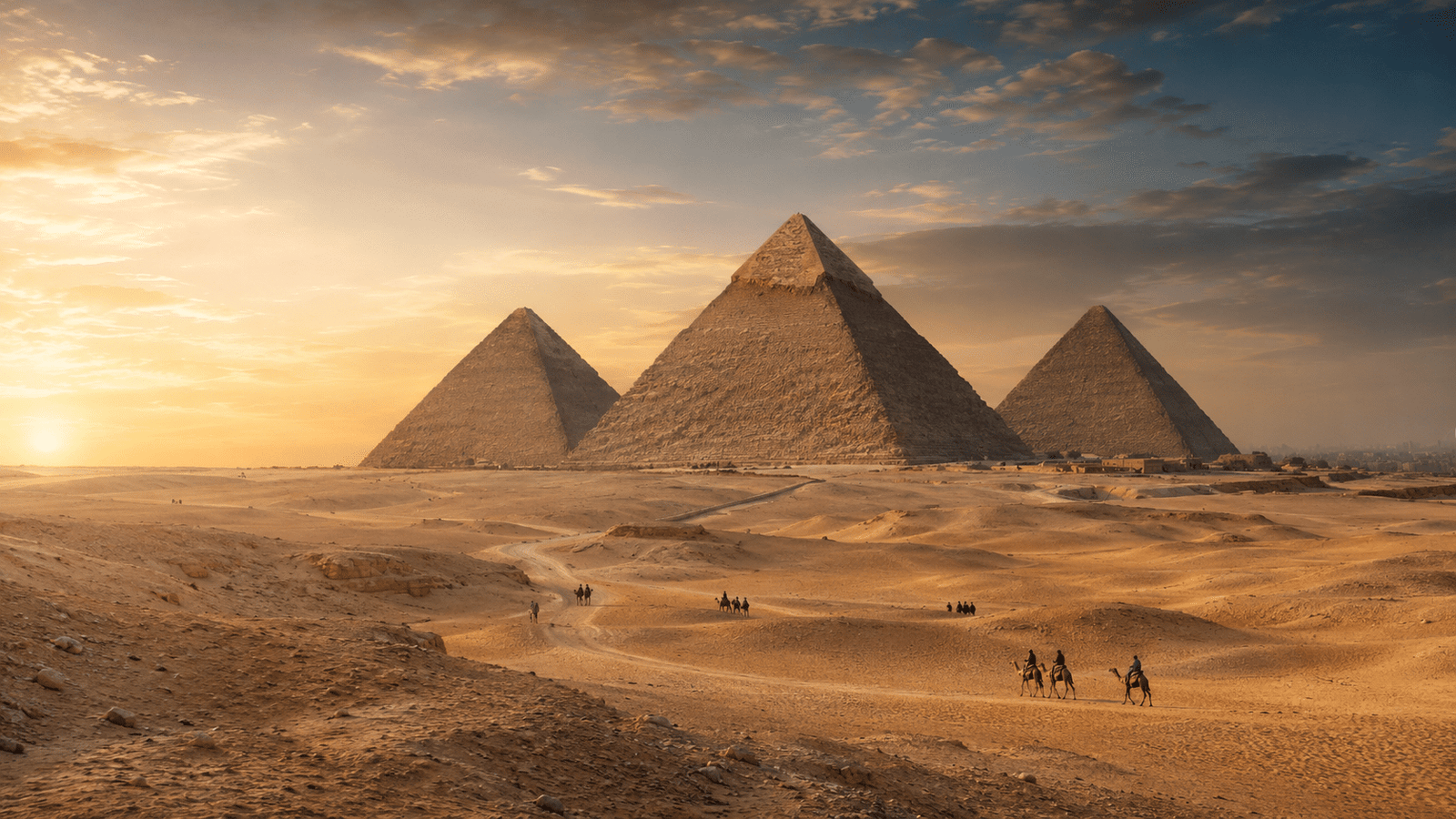
Shoot early or late for the best light. The harsh midday sun flattens detail on the limestone surfaces; early morning and late afternoon light brings out texture and creates more dramatic shadows.
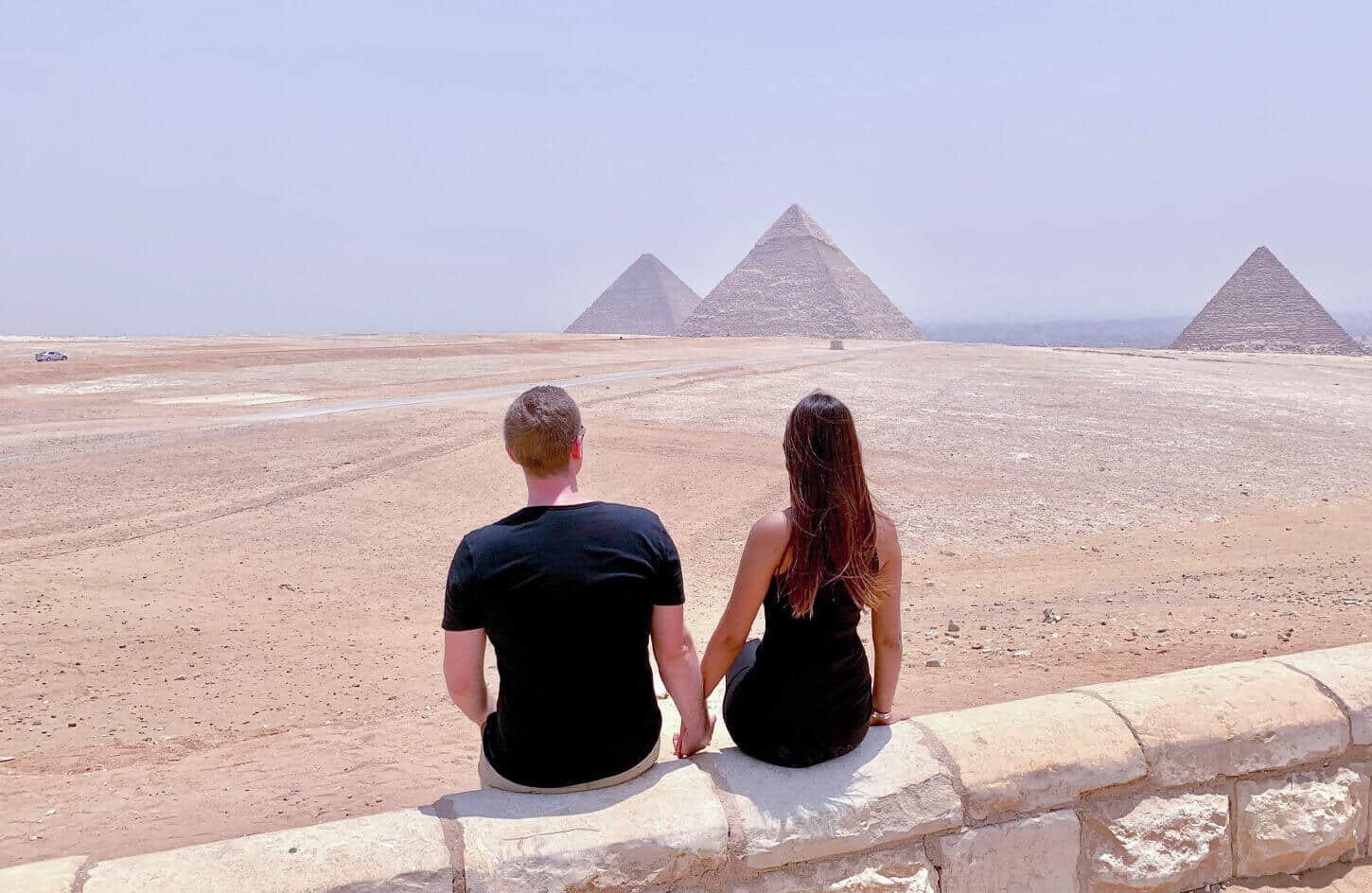
The panoramic viewpoint, set back from the plateau’s main cluster, captures all three pyramids together in a single frame — this is the classic wide shot most visitors are looking for, and it requires moving away from the pyramids themselves rather than standing close to any single one.
Avoid midday haze in summer. Cairo’s heat and dust can create a visible haze in photographs taken during the hottest hours, particularly affecting wider shots; morning visits generally produce clearer images.
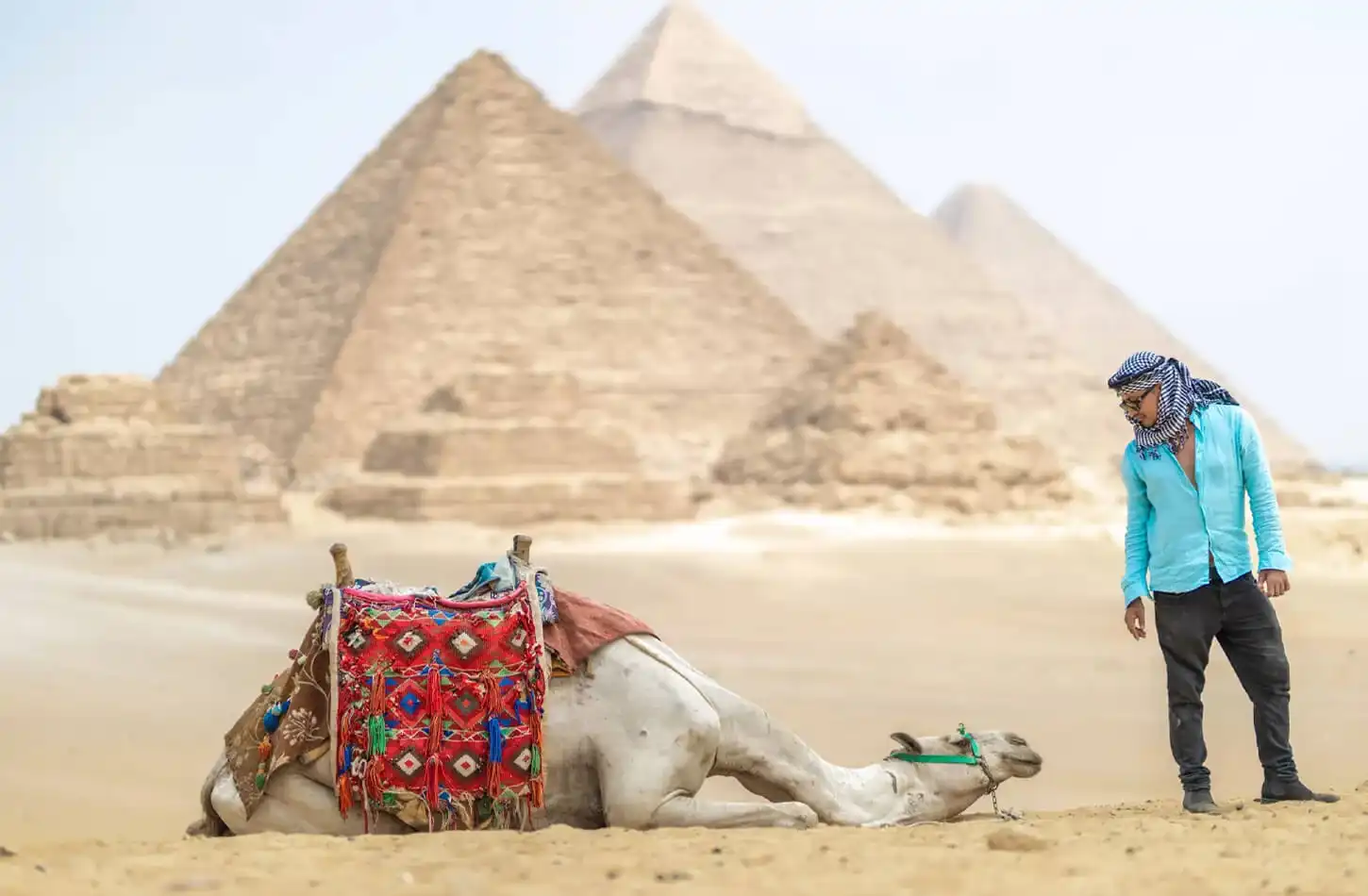
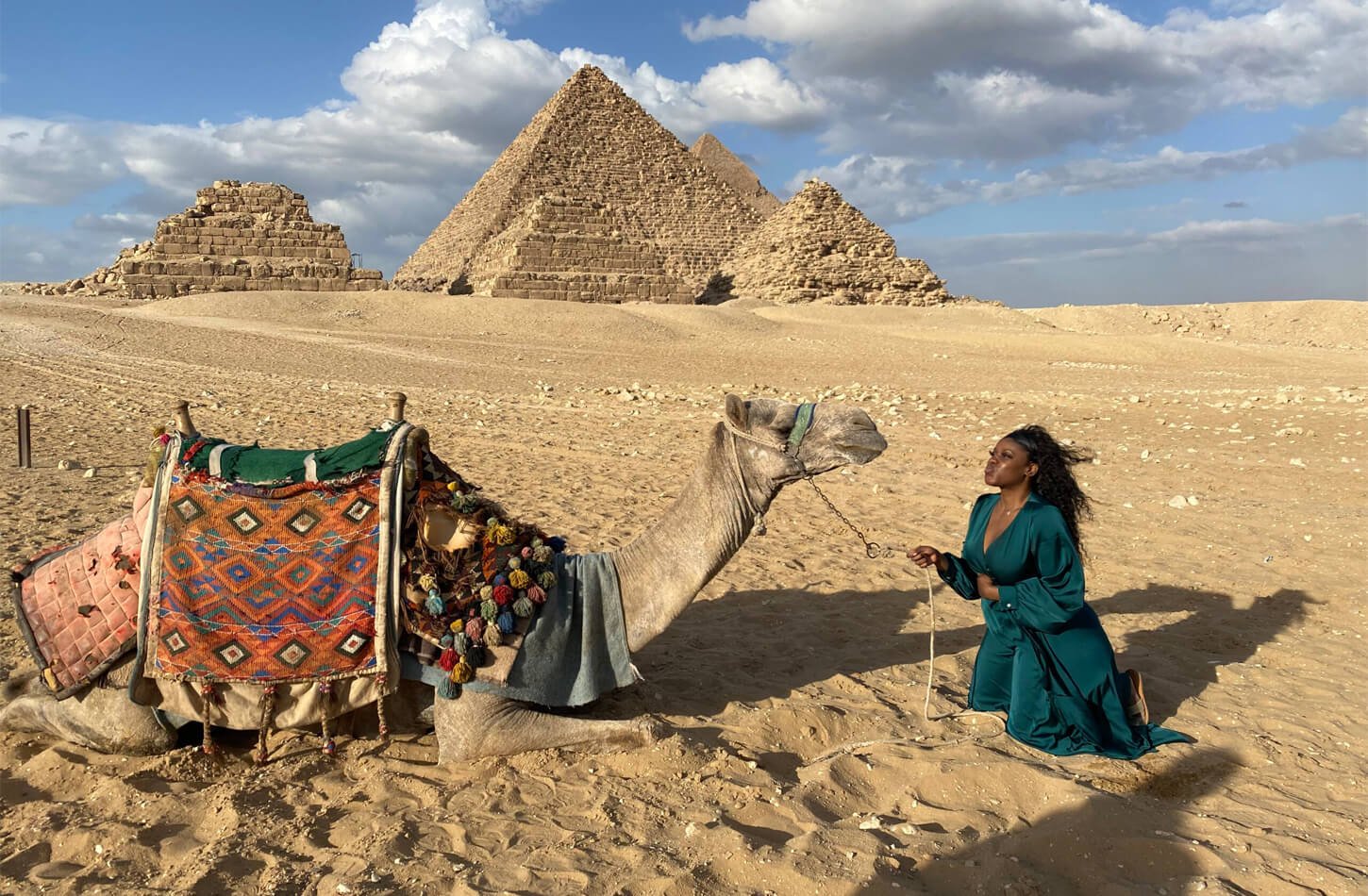
Camel and horse photo ops are widely available around the plateau, but agree on a price beforehand to avoid the common tourist frustration of inflated post-photo charges.
What’s the Difference Between the Three Pyramids?
Visitors often assume the three Giza pyramids are roughly interchangeable, but each has distinct characteristics worth knowing before you visit:
The Great Pyramid (Khufu) is the largest, the most architecturally complex internally, and the only one where visitors can pay an additional fee to enter the upper chambers, including the King’s Chamber.
The Pyramid of Khafre appears the tallest from many vantage points due to its elevated bedrock foundation, retains visible original casing stone near its peak, and is directly associated with the Great Sphinx and valley temple.
The Pyramid of Menkaure is dramatically smaller, features distinctive granite casing on its lower courses, and typically draws far fewer visitors — making it a quieter stop for those wanting to escape the crowds at the other two.
Visiting the Pyramids of Giza Today
Location
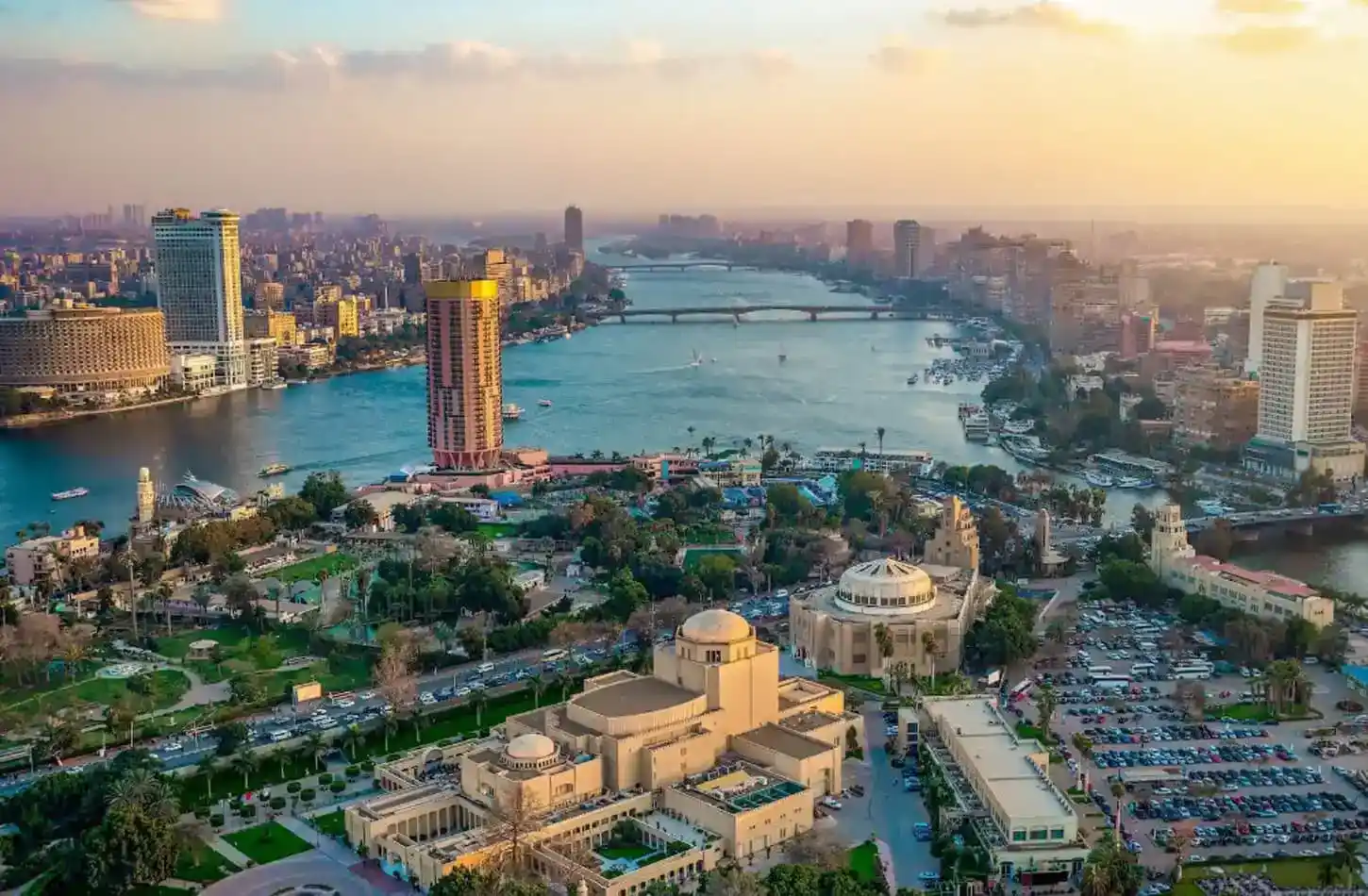
The Giza Plateau sits on the western edge of greater Cairo, roughly 18–25 kilometers from the city center, depending on your starting point — typically 30–45 minutes by car.
Tickets
General admission to the Giza Plateau covers entry to the site and exterior viewing of all three pyramids and the Sphinx. Separate, additional tickets are required to enter the interior chambers of the Great Pyramid and, on different days, the Pyramid of Khafre (interior access to the two largest pyramids is sometimes alternated or limited by site management — confirm current access policy before your visit). As of 2026, expect general plateau admission in the range of 200–500 EGP for foreign visitors, plus separate fees for interior pyramid access.
Opening Hours
The plateau is generally open daily from early morning until sunset, with seasonal hour adjustments between summer and winter.
Best Time to Visit
- Early morning offers the coolest temperatures and the smallest crowds, particularly important during Egypt’s hot months (May–September)
- October through April provides the most comfortable overall weather for a half-day or full-day visit
- Avoid midday in summer, when temperatures regularly exceed 35°C (95°F) with little shade across the open plateau
Getting Around the Plateau
The three pyramids and the Sphinx are spread across a fairly large area. Many visitors choose camel or horse rides between sites — a classic, if touristy, experience — while others prefer walking or being driven between viewpoints by their guide.
A Complete Giza Plateau Itinerary
A well-paced half-day visit typically covers:
- The Great Pyramid of Khufu — exterior views, with optional interior entry
- The panoramic viewpoint — the classic wide shot of all three pyramids together
- The Pyramid of Khafre — including its remaining original casing stone
- The Pyramid of Menkaure — typically the quietest stop
- The Great Sphinx and Sphinx Temple — the finale of most itineraries
- Optional: the Solar Boat Museum, displaying a full-size funerary boat excavated beside the Great Pyramid
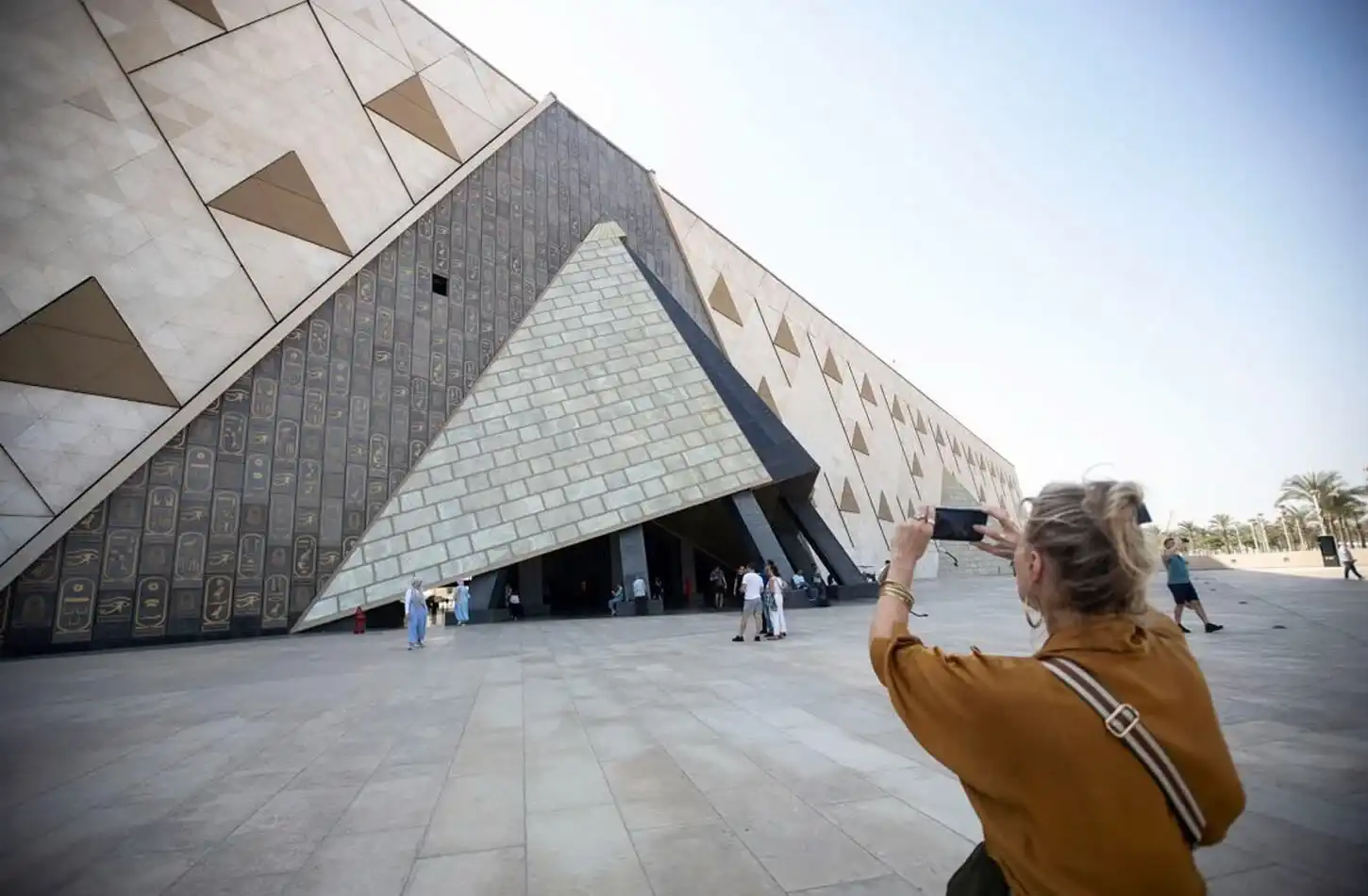
For travelers wanting to extend their Cairo history itinerary beyond Giza itself, our guides to Saqqara’s Step Pyramid — Egypt’s earliest monumental pyramid, predating Giza by several decades — and the Grand Egyptian Museum cover the rest of Cairo’s essential ancient Egypt circuit.
🏛️ Want to explore the Giza Plateau with an expert Egyptologist guide? Pure Nile Tours offers private guided tours covering all three pyramids, the Sphinx, and the Solar Boat Museum — with skip-the-confusion logistics and the historical depth that makes the difference between seeing the pyramids and understanding them. Book a Private Pyramids Tour →
Frequently Asked Questions
How old are the Pyramids of Giza?
The Great Pyramid dates to approximately 2600–2560 BCE, making it roughly 4,500 years old. The Pyramids of Khafre and Menkaure followed within the next several decades, all built during Egypt’s Fourth Dynasty.
Which pyramid is the largest?
The Great Pyramid of Khufu is the largest, originally standing 146.6 meters (481 feet) tall. It remained the tallest human-made structure on Earth for roughly 3,800 years.
Can you go inside all three pyramids?
Interior access varies and is sometimes limited by site management for conservation reasons. The Great Pyramid typically offers interior access for an additional fee; access to the other two pyramids’ interiors can vary, so it’s worth confirming current policy before your visit.
How were the pyramids built without modern technology?
Ancient Egyptian builders used ramps, sledges, levers, and an exceptionally well-organized labor and logistics system, including a Nile-connected harbor network for transporting stone. The exact ramp configuration used to raise blocks to height remains debated among Egyptologists.
Were the pyramids built by slaves?
Modern archaeological evidence — including a dedicated workers’ village, organized labor gangs, and respectful worker burials — strongly suggests the pyramids were built primarily by a paid, organized labor force, not enslaved workers, contrary to popular historical assumption.
How many pyramids are there at Giza in total?
Beyond the three main pyramids, the Giza complex includes several smaller satellite (or “queens'”) pyramids, along with numerous mastaba tombs belonging to officials and family members of the pharaohs.
What is the best time of day to visit the pyramids?
Early morning, right at opening, offers the coolest temperatures, best light for photography, and smallest crowds — particularly valuable during Egypt’s warmer months.
Final Thoughts
The Pyramids of Giza have survived nearly 4,500 years of weather, looting, war, and tourism, and they remain — by any measure — one of the most extraordinary engineering achievements in human history. What makes them genuinely fascinating isn’t just their age or size, but how much of their construction story is still actively studied and debated by archaeologists today. Visiting Giza isn’t just seeing ancient monuments; it’s standing inside an open question that has occupied historians and engineers for over a century.
🏛️ Ready to see the Pyramids of Giza in person? Pure Nile Tours’ private Egyptologist-guided tours bring the history, the engineering debates, and the insider details to life — far beyond what a guidebook or a rushed group tour can offer. Explore Private Pyramids Tours →