ramesses ii facts
Ramesses II ruled Egypt for 66 years, fathered more than 100 children, built more monuments than any other pharaoh, and signed the world’s oldest surviving peace treaty. Known to history as Ramesses the Great, he remains the single most recognizable ruler of ancient Egypt, and his legacy is still visible today across temples, statues, and inscriptions from Abu Simbel to Karnak. This guide covers the essential facts about his life, reign, family, monuments, and death — and where you can still see his legacy in Egypt today.
Quick Facts: Ramesses II
Who Was Ramesses II?
Ramesses II was the third pharaoh of Egypt’s 19th Dynasty, ascending the throne in his early twenties after the death of his father, Seti I, around 1279 BCE. He would go on to rule for 66 years, one of the longest reigns in ancient Egyptian history, presiding over a period of exceptional military strength, territorial expansion, and monumental construction. By the time of his death, he had outlived so many of his own heirs that the throne eventually passed to his thirteenth son, Merneptah.
His reign is often considered the peak of Egyptian imperial power and cultural achievement, and ancient Egyptians themselves regarded him so highly that later pharaohs frequently invoked his name for the prestige it carried.
Ramesses II’s Military Career
The Battle of Kadesh
The defining military event of Ramesses II’s early reign was the Battle of Kadesh, fought around 1274 BCE against the Hittite Empire near the Orontes River in present-day Syria. Egyptian temple inscriptions describe the battle as a great personal triumph for Ramesses, who reportedly rallied his forces after being caught in a Hittite ambush. In reality, most historians view the battle as a strategic stalemate, with neither side achieving a decisive victory, though Ramesses ensured it was immortalized across Egypt as a heroic personal feat.
The World’s Oldest Known Peace Treaty
Sixteen years after Kadesh, Ramesses II and the Hittite King Hattusili III signed a formal peace treaty, generally recognized as the oldest surviving peace treaty in world history. Copies of the treaty survive in both Egyptian hieroglyphs and Hittite cuneiform, and a replica of it is displayed at the United Nations headquarters as a symbol of early international diplomacy. The treaty was later reinforced by Ramesses’ marriage to a Hittite princess, cementing peaceful relations between the two former rivals.
Ramesses II the Builder: His Greatest Monuments
Few rulers in history have left as vast a physical legacy as Ramesses II, who commissioned an extraordinary number of temples, statues, and inscriptions across Egypt and Nubia.
Abu Simbel
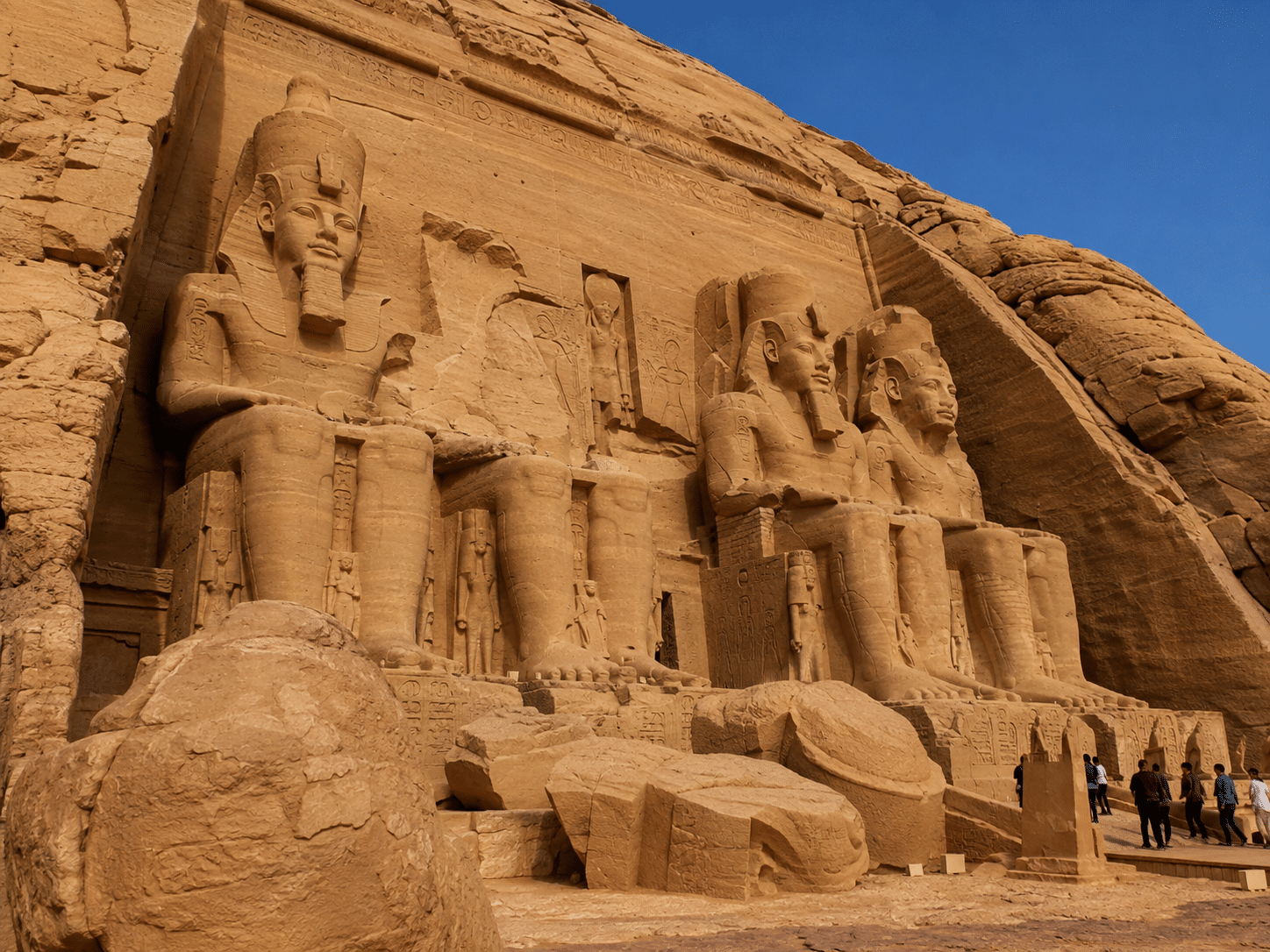
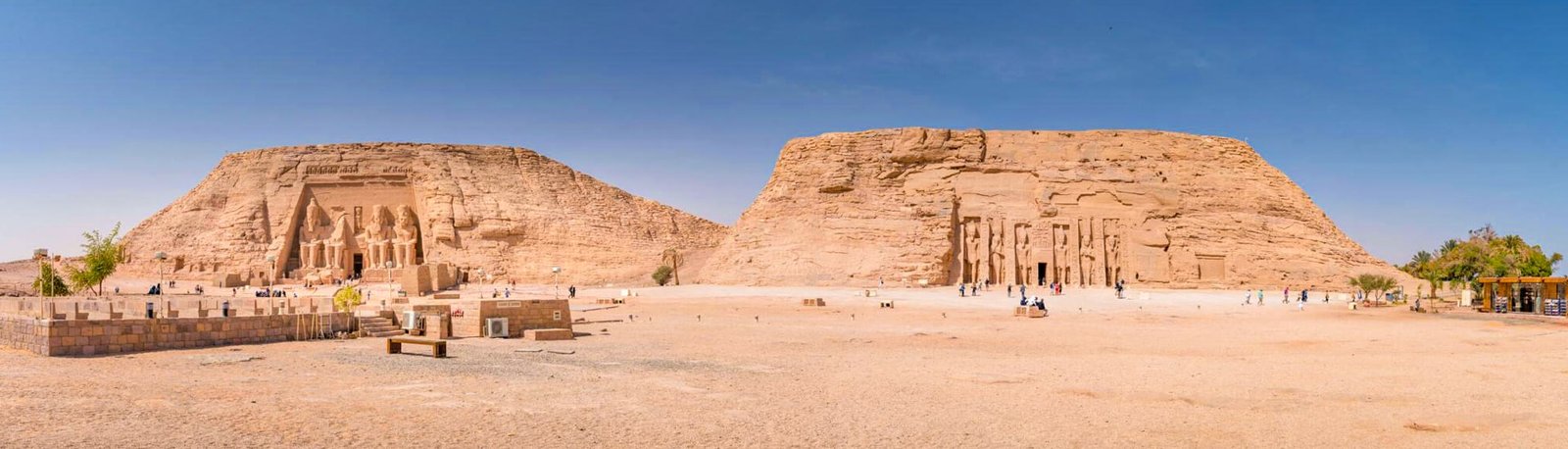
The twin rock-cut temples of Abu Simbel, carved directly into a mountainside in southern Egypt near the border with Sudan, remain Ramesses II’s most spectacular achievement. The larger temple is dominated by four colossal seated statues of Ramesses himself, each around 20 meters tall, while the smaller temple honors his chief wife, Queen Nefertari. Remarkably, both temples were relocated in the 1960s, block by block, to higher ground to save them from being submerged by the rising waters of Lake Nasser after the Aswan High Dam was built.
The Ramesseum
On the west bank at Luxor, Ramesses built his mortuary temple, known today as the Ramesseum, intended to serve his funerary cult after death. Though much of the temple is now in ruins, a fallen colossal statue of the pharaoh, once among the largest ever carved in Egypt, still lies on the site — believed to have inspired the poet Percy Bysshe Shelley’s famous poem “Ozymandias.”
Karnak and Luxor Temple
Ramesses II added extensively to both Karnak Temple and Luxor Temple, including the completion of the Great Hypostyle Hall at Karnak, one of the most awe-inspiring architectural spaces to survive from the ancient world, filled with 134 massive columns covered in inscriptions.
Pi-Ramesses: The New Capital
Ramesses II moved Egypt’s capital to a newly constructed city in the eastern Nile Delta, called Pi-Ramesses (“House of Ramesses”), positioning it strategically closer to Egypt’s Near Eastern territories and trade routes. Though the city was later abandoned as the Nile shifted course, its scale during Ramesses’ reign rivaled that of Thebes itself.
Ramesses II’s Family Life
Wives and Queens
Ramesses II had numerous wives throughout his long life, but his chief consort was Queen Nefertari, whom he clearly held in extraordinary esteem — dedicating the smaller Abu Simbel temple to her, an honor rarely given to a queen during that era. Other principal wives included Isetnofret and, later in his reign, two of his own daughters, a practice that, while unusual to modern readers, was consistent with certain royal traditions intended to preserve bloodline purity.
Children
Ramesses II is believed to have fathered more than 100 children across his many wives, an extraordinary number that reflects both his long reign and his large household. Many of his sons served in military and administrative roles, and several predeceased him, which is part of why his eventual successor, Merneptah, was already well into middle age by the time he inherited the throne.
The Death and Mummy of Ramesses II
Ramesses II died around 1213 BCE at approximately 90 years old, an exceptionally advanced age for the ancient world. Analysis of his mummy indicates he suffered from severe arthritis, dental problems, and hardened arteries in his later years. His mummy was moved multiple times by ancient priests to protect it from tomb robbers, eventually being hidden in a royal cache at Deir el-Bahari, where it was rediscovered in the 19th century.
In a striking historical footnote, Ramesses II’s mummy was flown to Paris in 1976 for conservation treatment against a fungal infection — and, following Egyptian customs requirements at the time, was issued an official Egyptian passport for the journey, listing his occupation as “King (deceased).”
Ramesses II and Abu Simbel: Why the Connection Matters
Of all his monuments, Abu Simbel remains most closely tied to how Ramesses II is remembered today. For a complete look at the temple complex itself, including how it was carved, why it was built at this remote location, and how it was moved to save it from the waters of Lake Nasser, see our companion guide on Ramesses II’s temple at Abu Simbel. Visiting the temple in person remains one of the most direct ways to grasp the sheer scale of ambition behind his reign.
Ramesses II vs. Other Great Pharaohs
Frequently Asked Questions
How long did Ramesses II rule Egypt?
Ramesses II ruled for approximately 66 years, from around 1279 to 1213 BCE, making his reign one of the longest in ancient Egyptian history.
Why is Ramesses II called “the Great”?
He earned the title through the sheer scale of his military campaigns, diplomatic achievements like the peace treaty with the Hittites, and an unprecedented volume of monumental construction across Egypt and Nubia.
How many children did Ramesses II have?
Historians estimate Ramesses II fathered more than 100 children across his numerous wives, reflecting both his long life and large royal household.
Did Ramesses II really win the Battle of Kadesh?
Egyptian records present it as a triumph, but most modern historians consider the battle a strategic stalemate between Egypt and the Hittite Empire, with neither side gaining a decisive advantage.
Where is Ramesses II buried?
He was originally buried in tomb KV7 in the Valley of the Kings, though his mummy was later moved by priests to protect it from looters and eventually rediscovered in a royal cache at Deir el-Bahari.
What is Ramesses II’s most famous monument?
The twin temples at Abu Simbel are widely considered his most famous and impressive architectural achievement, particularly the four colossal seated statues of the pharaoh at the entrance.
How old was Ramesses II when he died?
He died at approximately 90 years old, an extraordinarily long lifespan for the ancient world, having outlived many of his own children.
Final Thoughts
Few figures in ancient history left as vast and enduring a mark as Ramesses II. From the battlefield diplomacy of Kadesh to the towering statues of Abu Simbel, his reign represents ancient Egypt at the height of its power, confidence, and ambition. Seeing his monuments in person — particularly Abu Simbel and the halls of Karnak — remains one of the most powerful ways to understand exactly why, more than 3,000 years later, he’s still remembered as Ramesses the Great.
🏛️ Want to see Ramesses II’s legacy for yourself? Pure Nile Tours offers private guided tours to Abu Simbel, Karnak, and Luxor Temple, where his monuments still stand after three millennia. View Tours → (https://pureniletours.com)