Why Is the Nile River Important
Without the Nile River, there is no ancient Egypt, and there is no modern Egypt either. This single waterway, stretching more than 6,650 kilometers from its sources in East Africa to the Mediterranean Sea, is why one of history’s greatest civilizations rose out of what would otherwise be an unbroken stretch of desert. Today, more than 95% of Egypt’s population still lives within a few kilometers of its banks, and the river continues to supply the water, food, transport, and tourism income that the country depends on. This guide explains exactly why the Nile matters — historically, agriculturally, culturally, and economically — and why a Nile cruise remains one of the most meaningful ways to understand Egypt itself.
The Nile River at a Glance
Why the Nile Was the Birthplace of Ancient Egyptian Civilization
A Predictable Flood That Created Fertile Land
Before the construction of the Aswan High Dam in the 1960s, the Nile flooded every single year with remarkable predictability, arriving in mid-summer and receding by autumn. This annual flood, known as the inundation, deposited a fresh layer of dark, mineral-rich silt across the floodplain, replenishing the soil’s fertility without any need for artificial fertilizer. Ancient Egyptians called their land Kemet, the “Black Land,” in direct reference to this fertile black silt, distinguishing it from Deshret, the “Red Land” of the surrounding desert.
This predictability mattered enormously. Unlike the Tigris and Euphrates, whose floods were often violent and unpredictable, the Nile’s rhythm allowed Egyptian farmers to plan their entire agricultural calendar around it, dividing the year into three seasons: Akhet (the flooding season), Peret (the growing season), and Shemu (the harvest season). That reliability gave rise to food surpluses, which in turn freed up labor for monument-building, administration, writing, and the arts — the foundations of civilization itself.
A Highway for Trade, Administration, and Unity
The Nile didn’t just grow Egypt’s food — it also held the country together. Since the river flows from south to north while the prevailing wind blows from north to south, boats could sail upstream against the current and drift downstream with it, creating one of the most efficient natural transportation systems in the ancient world. This made it possible for pharaohs to move armies, administrators, and goods across a kingdom that stretched for over 1,000 kilometers, and it’s a major reason Egypt became one of the first centralized nation-states in human history.
The Religious and Symbolic Heart of Ancient Egypt
The Nile was not just an economic resource to ancient Egyptians — it was sacred. The god Hapi personified the annual flood and was honored with offerings to ensure a good inundation each year. Many of Egypt’s most important temples, including Philae Temple near Aswan, were deliberately built along the riverbanks, reflecting the belief that the Nile connected the world of the living with the realm of the gods.
Why the Nile Is Still Essential to Egypt Today
The Primary Source of Fresh Water
Egypt is, geographically, one of the driest countries on Earth, receiving almost no meaningful rainfall across the vast majority of its territory. The Nile supplies roughly 90% or more of Egypt’s fresh water needs, covering drinking water, irrigation, and industrial use for a population of over 105 million people. Without it, the overwhelming majority of the country would simply be uninhabitable desert.
Agriculture and Food Security
Even with modern irrigation technology, Egyptian agriculture remains deeply tied to the Nile. Crops such as cotton, wheat, rice, sugarcane, and a wide range of fruits and vegetables are grown almost exclusively in the narrow strip of fertile land bordering the river and across the Nile Delta. This narrow ribbon of green, visible clearly from space against the surrounding desert, produces the majority of the country’s domestic food supply.
Hydroelectric Power
The Aswan High Dam, completed in 1970, transformed the Nile from a seasonally flooding river into a controlled, year-round water and power source. The dam’s hydroelectric station has historically supplied a substantial share of Egypt’s electricity, while also ending the destructive floods and droughts that had periodically devastated Egyptian agriculture for millennia. The dam also created Lake Nasser, one of the largest artificial lakes in the world, which enabled the relocation of the Abu Simbel temples to save them from being submerged.
Transportation and Modern Trade
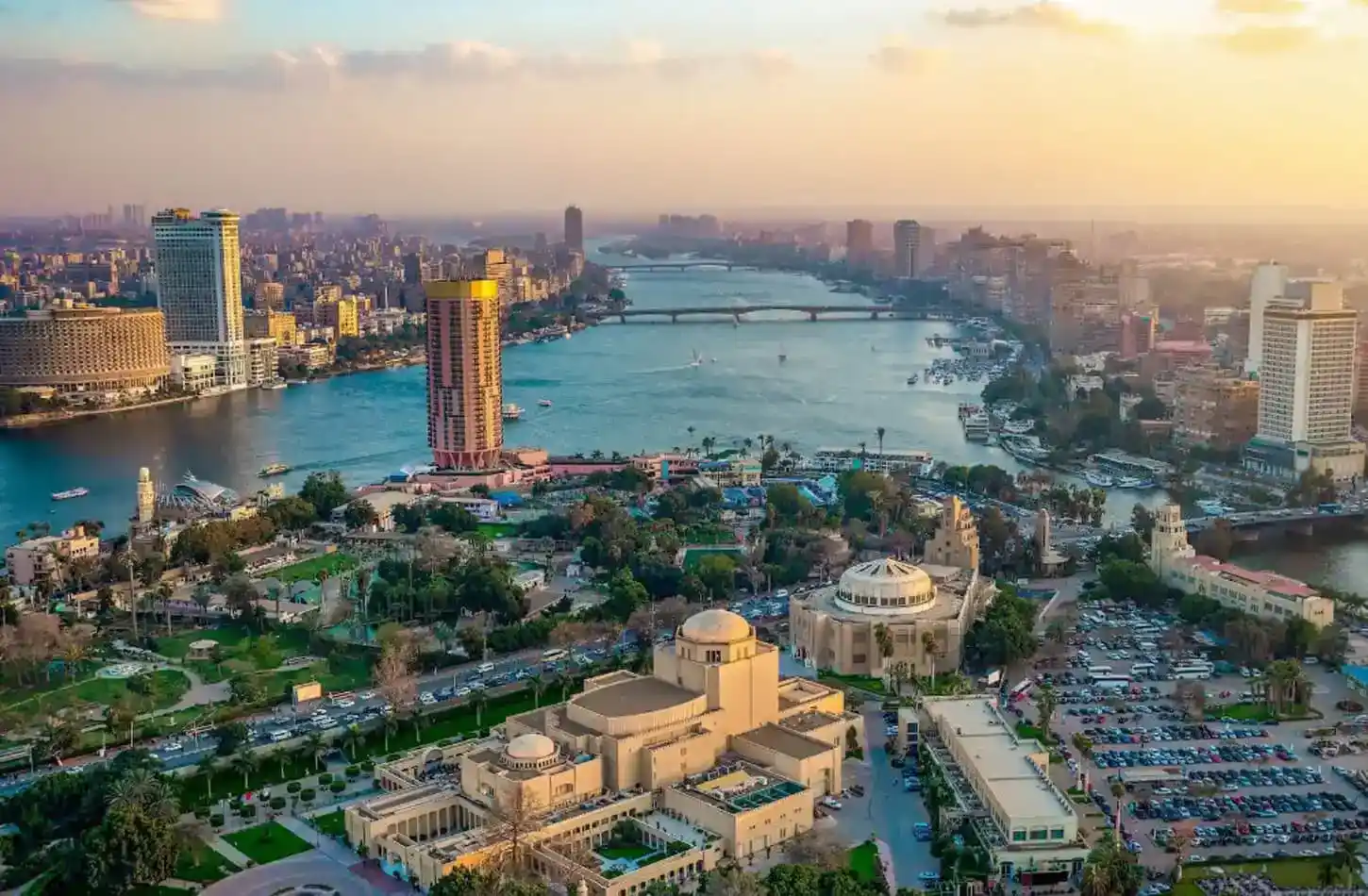
While road and rail networks have taken over much of Egypt’s domestic transport, the Nile still plays a role in moving goods, particularly bulk agricultural products, between Upper and Lower Egypt. Its historic role as a unifying transportation corridor also shaped where Egypt’s major cities — Cairo, Luxor, Aswan, and the Delta cities — were built, a pattern still visible on any map of the country today.
The Nile and Egypt’s Tourism Economy
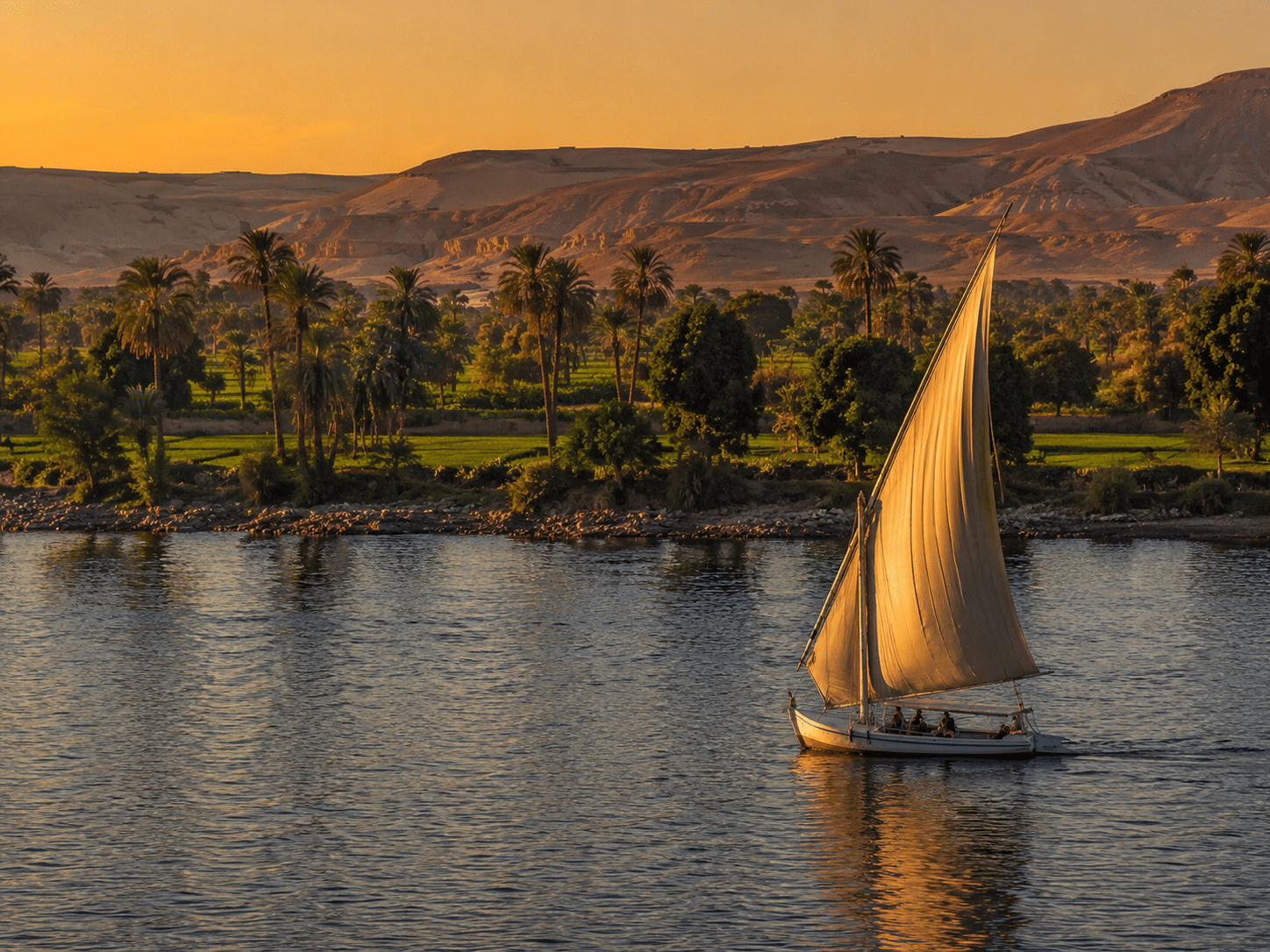
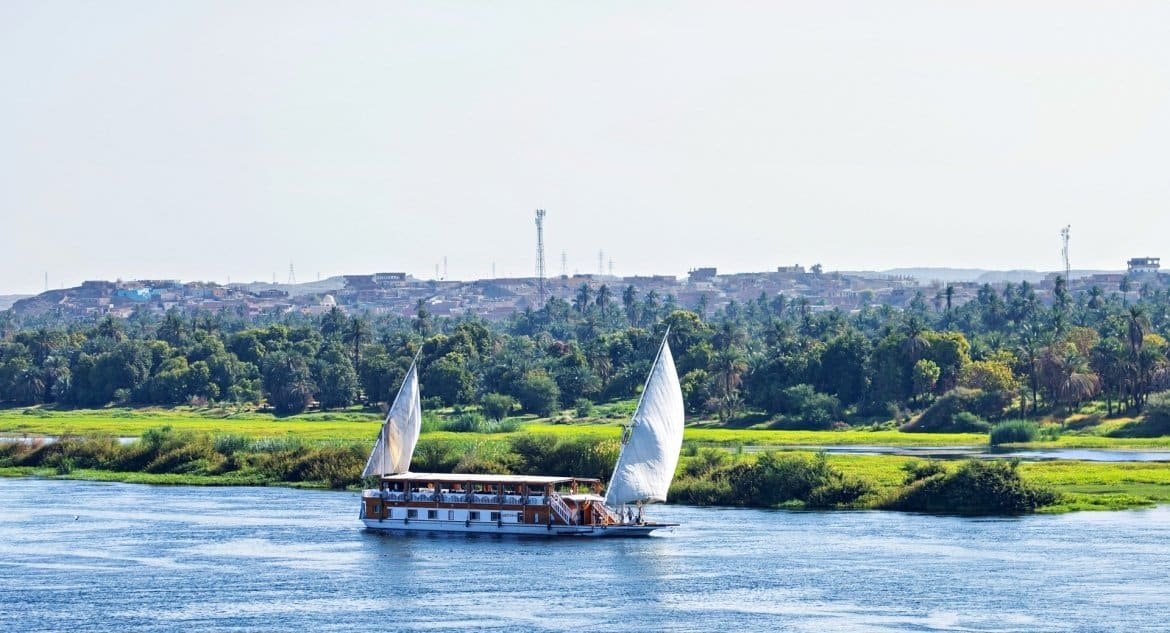
Tourism is one of Egypt’s most important industries, and the Nile sits at the very center of it. A Nile cruise between Luxor and Aswan remains one of the most popular ways for visitors to experience ancient Egypt, sailing past temples, tombs, and villages that have lined the riverbanks for thousands of years. Along the way, travelers pass through the First Cataract, visit temples built directly on the water’s edge, and see rural Egyptian life that has changed only gradually since pharaonic times.
Why a Nile Cruise Is the Best Way to Understand Egypt’s History
Most of Egypt’s greatest monuments — Karnak, Luxor Temple, the Valley of the Kings, Kom Ombo, Edfu, and Philae — were deliberately built along or near the Nile, because the river was both the practical transportation route for construction materials and the spiritual axis of the civilization. Traveling the same route by boat today offers a genuinely different perspective than flying between cities, letting visitors watch the landscape and daily river life unfold gradually, much as ancient travelers, priests, and pharaohs would have experienced it.
Best Time to Sail the Nile
The cooler months from October through April are widely considered the best window for a Nile cruise, with comfortable daytime temperatures for sightseeing at open-air temple sites. For a full breakdown of weather patterns and planning advice across the whole country, see our guide to the best time to visit Egypt.
The White Nile and the Blue Nile: Two Rivers, One System
The Nile that reaches Egypt is actually the product of two major tributaries meeting at Khartoum, Sudan:
The Blue Nile, despite being shorter, historically contributed the majority of the water and nearly all of the silt responsible for the ancient floods, while the White Nile provided a more consistent baseline flow throughout the year. Understanding this dual system helps explain both the historical reliability of the flood and the modern geopolitics around the river, since it now flows through 11 different countries with competing water needs.
Modern Challenges Facing the Nile
Population Growth and Water Scarcity
Egypt’s population has grown dramatically over the past century, placing increasing pressure on a water supply that has not grown at the same rate. Water scarcity is now considered one of Egypt’s most pressing long-term challenges, driving increased investment in irrigation efficiency, water treatment, and agricultural reform.
Regional Water Politics
The construction of dams upstream, particularly in Ethiopia, has become one of the most significant diplomatic issues in the region, since any reduction in the Nile’s flow reaching Egypt has direct consequences for its water and food security. These negotiations remain an active and evolving topic among the Nile Basin countries.
Pollution and Environmental Pressure
Industrial runoff, agricultural chemicals, and untreated wastewater all pose ongoing risks to the Nile’s water quality, prompting government and environmental initiatives aimed at protecting the river that the country still depends on so completely.
Frequently Asked Questions
Why is the Nile River so important to Egypt?
The Nile supplies the vast majority of Egypt’s fresh water, irrigates nearly all of its agricultural land, historically enabled the rise of ancient Egyptian civilization through predictable annual floods, and remains central to the country’s transportation, energy, and tourism industries today.
What would happen to Egypt without the Nile?
Without the Nile, the overwhelming majority of Egypt would be uninhabitable desert. The river makes it possible for over 105 million people to live, farm, and build cities in what is otherwise one of the driest regions on Earth.
How long is the Nile River?
The Nile is approximately 6,650 kilometers (4,132 miles) long, making it one of the longest rivers in the world, though it competes with South America’s Amazon River for the exact top ranking depending on measurement methodology.
Why does the Nile flow north instead of south?
Rivers flow according to elevation, not compass direction. The Nile’s source lies at a higher elevation in East Africa, and the land gradually slopes downward toward the Mediterranean Sea in the north, which is why the river flows northward.
What is the difference between the White Nile and the Blue Nile?
The White Nile originates at Lake Victoria and provides a steady year-round flow, while the Blue Nile originates at Lake Tana in Ethiopia and historically contributed most of the seasonal floodwater and fertile silt. The two rivers meet at Khartoum, Sudan, to form the main Nile.
Is the Nile still used for transportation today?
Yes, though to a lesser extent than in ancient times. The Nile is still used for moving certain goods domestically and remains the primary route for Nile cruise tourism between Luxor and Aswan.
Can tourists still experience the Nile the way ancient Egyptians did?
In many ways, yes. A traditional felucca sail or a multi-day Nile cruise between Luxor and Aswan follows much the same route ancient Egyptians used, passing many of the same temples and riverside villages.
Final Thoughts
It’s difficult to overstate how much of Egypt’s identity — past and present — traces back to a single river. The Nile didn’t just support ancient Egyptian civilization; it created the conditions that made it possible in the first place, and it continues to sustain the country’s people, economy, and culture today. For any visitor hoping to genuinely understand Egypt, sailing the Nile isn’t just a scenic add-on to a trip — it’s arguably the most direct way to experience the same lifeline that has shaped this civilization for over 5,000 years.
🛥️ Ready to experience the river that built a civilization? Pure Nile Tours offers guided Nile cruises between Luxor and Aswan, taking you past the same temples and landscapes that shaped ancient Egypt. View Tours → (https://pureniletours.com)