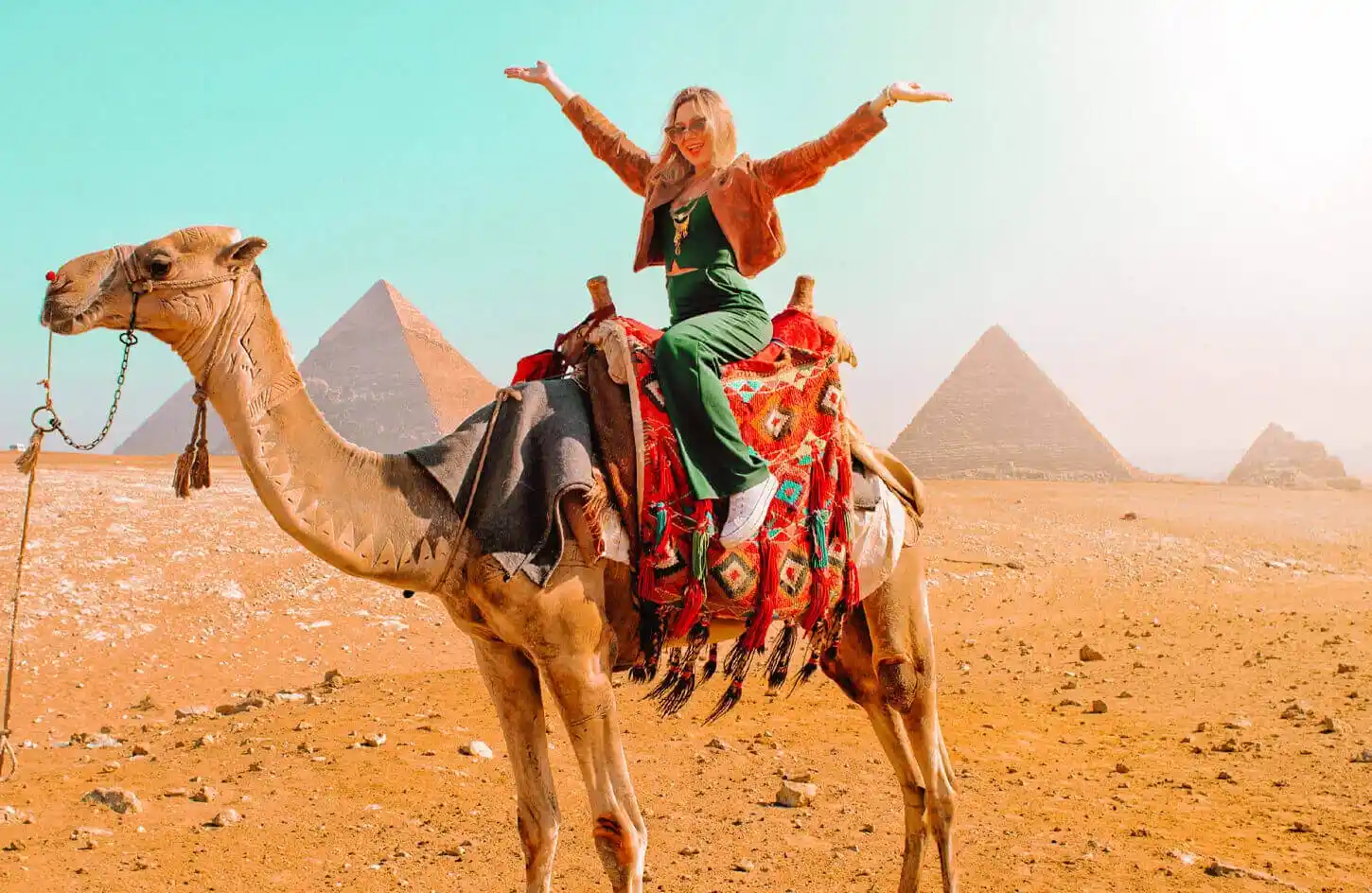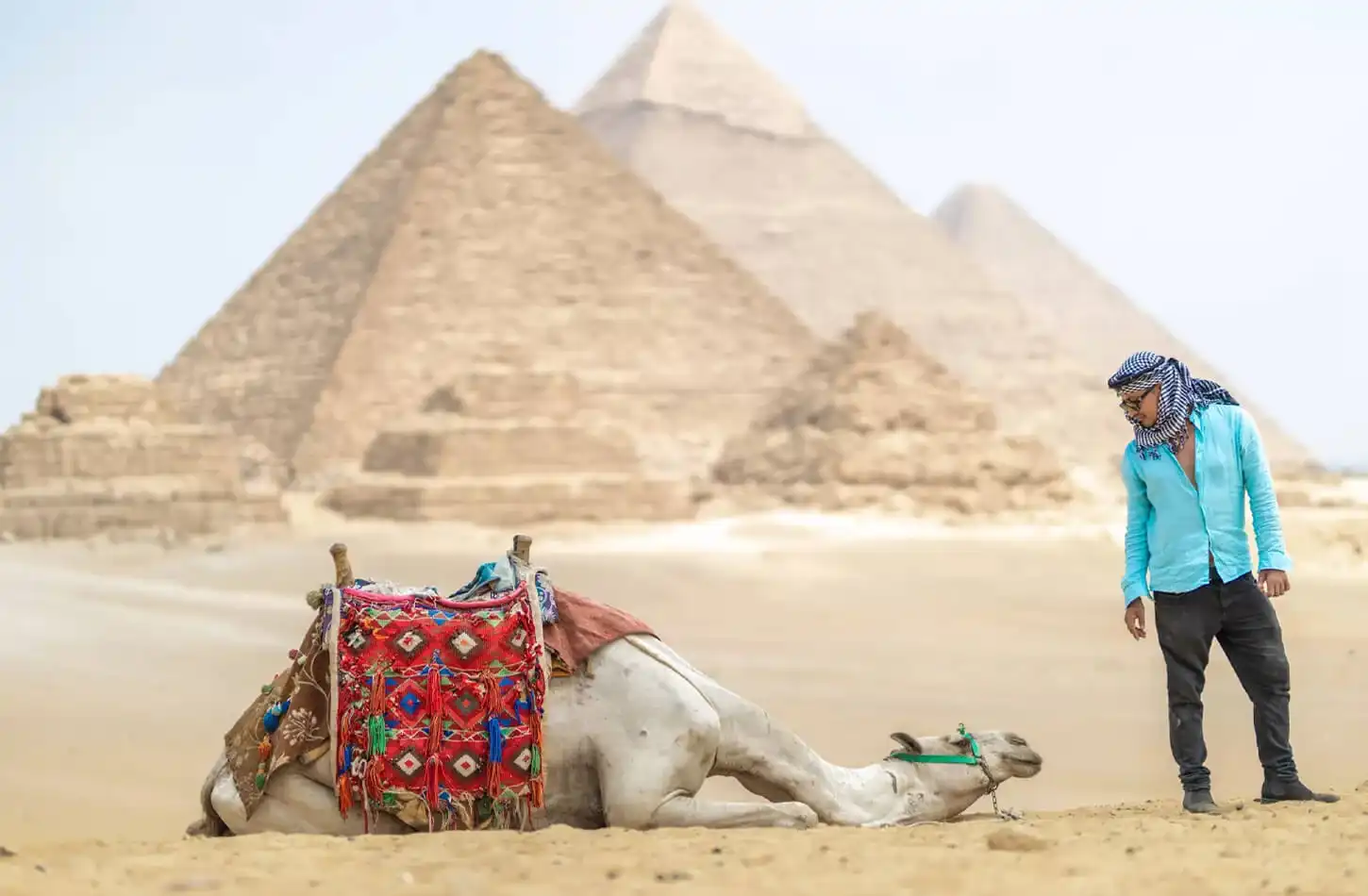

7 Days in Egypt. Nearly 7,000 years of human civilization waiting to be explored.
The most common question Egypt travelers ask before booking is: can I really do Egypt justice in a week? The honest answer is yes — but only with the right plan. A poorly structured week in Egypt means rushing through temples, suffering midday desert heat, and spending too much time in transit. A well-structured week means standing inside the Valley of the Kings at dawn, watching the sun rise from the deck of a Nile cruise ship, and arriving at Karnak Temple before the crowds arrive.
This guide gives you the well-structured version. A day-by-day 7-day Egypt itinerary designed specifically for first-time visitors, covering the essential highlights — Cairo, the Pyramids of Giza, a Nile Cruise from Luxor to Aswan — without the exhaustion that comes from trying to do too much too fast.
Is 7 Days Enough for Egypt?
Yes — seven days is the ideal duration for a first visit, provided you plan strategically. One week gives you:
- Cairo and Giza (2 days): The Pyramids, the Sphinx, and the Grand Egyptian Museum
- Luxor (1 day): Karnak Temple, Luxor Temple, Valley of the Kings
- Nile Cruise (3 nights / 4 days): Sailing from Luxor to Aswan via Edfu and Kom Ombo
- Aswan (1 day): High Dam, Philae Temple, and the Nile at its most beautiful
The key to making it work is domestic flights. The drive from Cairo to Luxor takes 8–9 hours by road. Flying takes 1 hour. A 7-day Egypt itinerary built around domestic flights is completely different from one built around trains or coaches — and dramatically more rewarding.
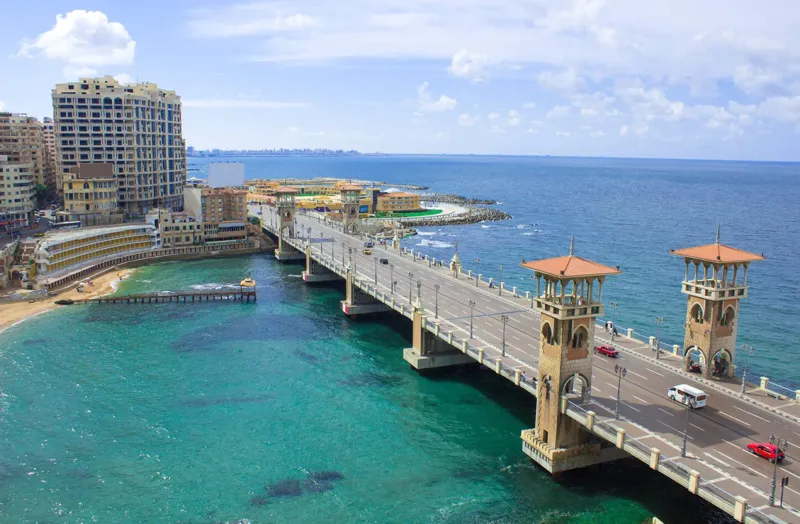
For travelers who want more depth, a 10-day or 14-day Egypt private tour allows you to add Abu Simbel, the Siwa Oasis, or Alexandria without rushing. But for a first visit, 7 days built around this itinerary is close to perfect.
The 7-Day Egypt Itinerary: Day by Day
Day 1: Arrive Cairo — First Impressions
Arrive at Cairo International Airport
Most international flights arrive in Cairo in the morning or afternoon. After clearing immigration (Egypt e-Visa or visa on arrival, approximately $25 USD), your private transfer takes you to your hotel.
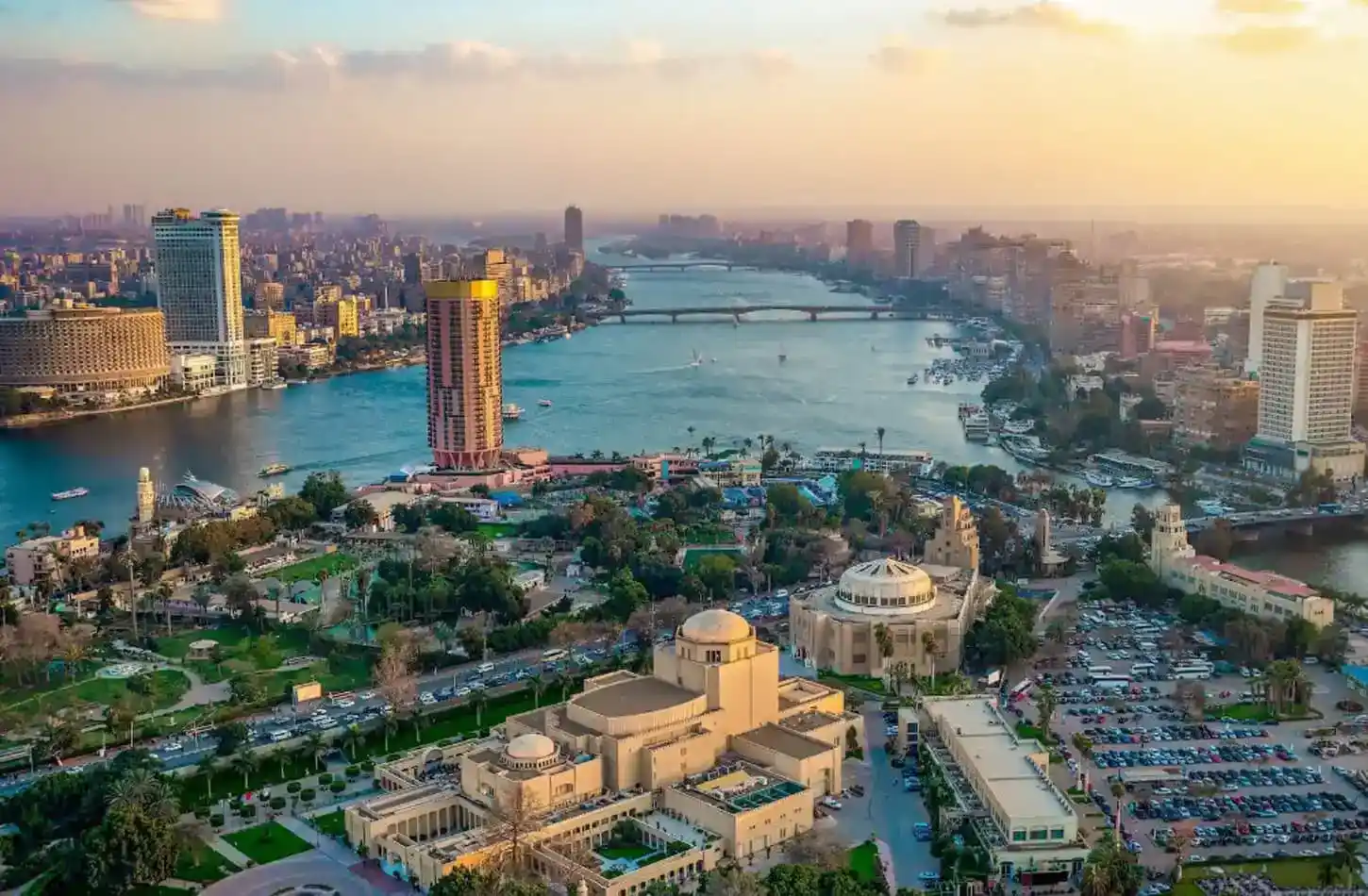
For a 7-day itinerary, we recommend staying in the Giza / Pyramids area for the first two nights — this puts you within 10 minutes of the Giza Plateau and avoids losing time in Cairo traffic.
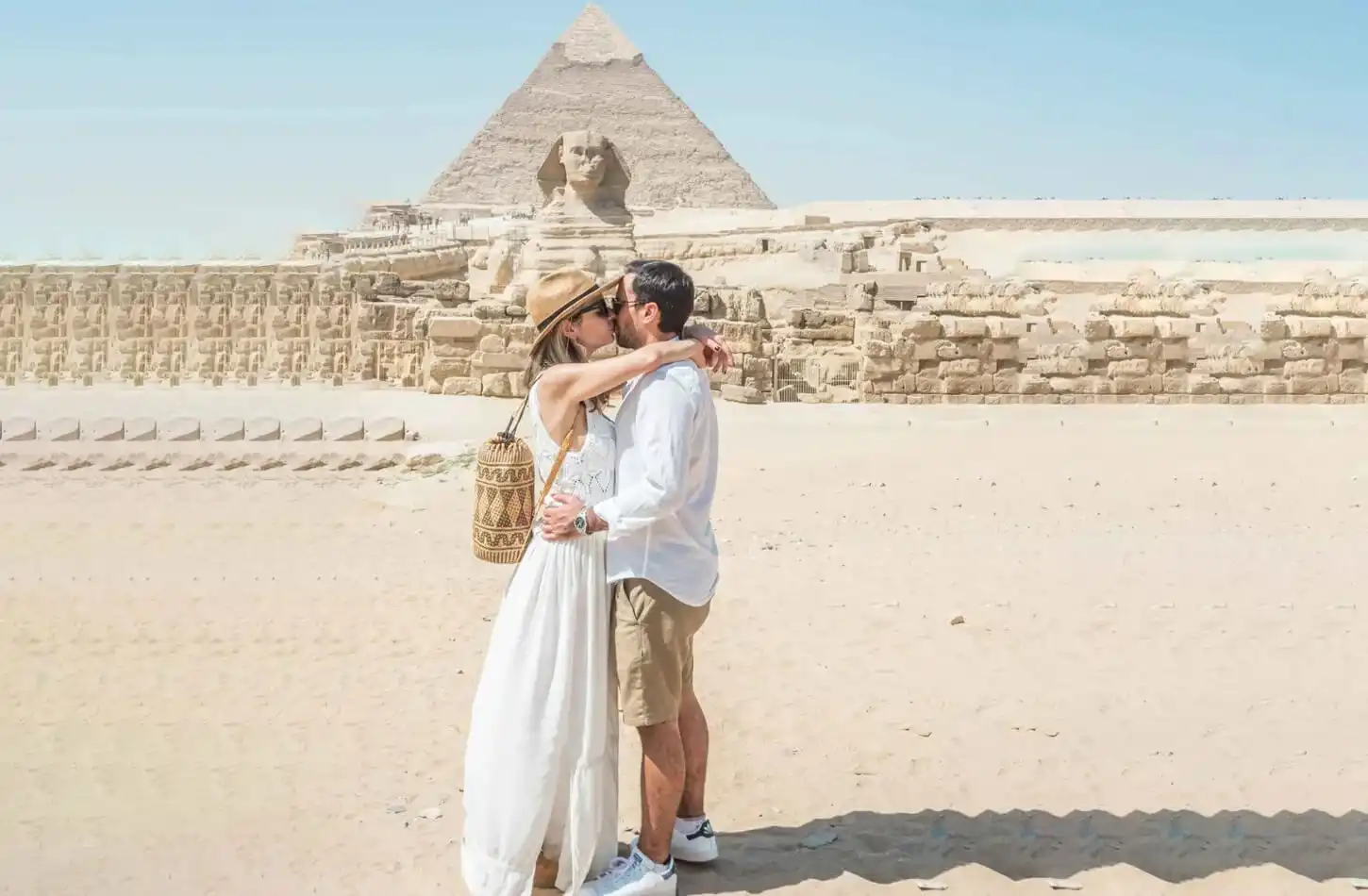
Afternoon: Settle in and recover
Jet lag is real. Don’t schedule monuments on Day 1 evening. Instead, find a rooftop restaurant with a view of the Pyramids, have dinner, and sleep early. The Pyramids will still be there tomorrow morning.
Practical tips for Day 1:
- Egypt entry visa: available on arrival or pre-apply at evisa.eg.gov.eg
- Local currency: exchange at the airport or use ATMs in the city (Egyptian Pound, EGP)
- SIM card: available at the airport (Vodafone Egypt, Orange Egypt) — recommended for maps and ride-hailing
- Uber and Careem work well in Cairo for independent transport
Day 2: The Pyramids of Giza and Grand Egyptian Museum
Morning (6:30 AM): Pyramids of Giza
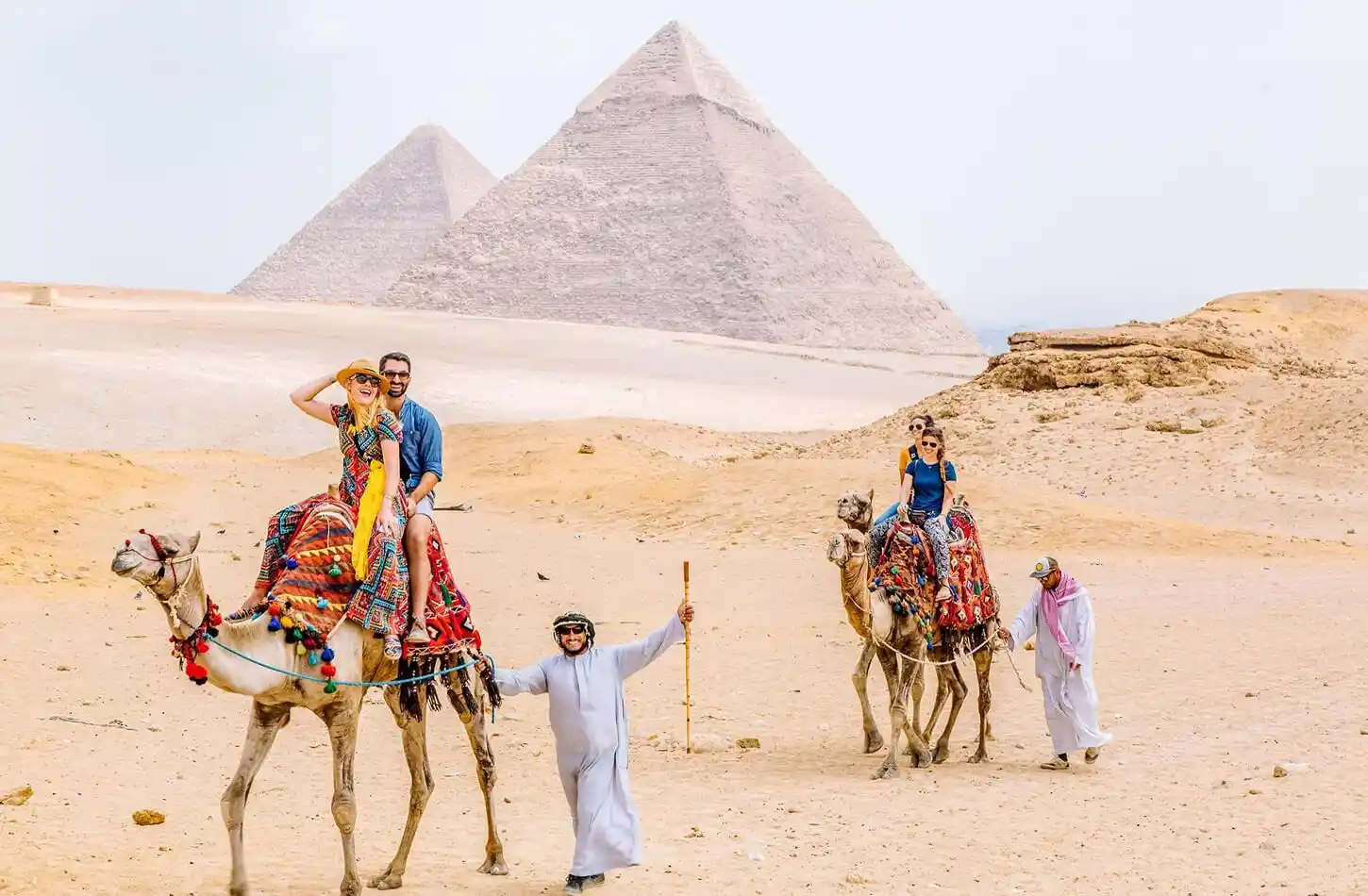
Arrive at the Giza Plateau as early as possible — 6:30 AM if the entrance allows (official opening is 7:00 AM). The hour between 7:00 and 8:00 AM, before the first tour buses arrive, is when the Pyramids are most magnificent: quiet, cool, and bathed in golden morning light.
The Giza complex includes:
- The Great Pyramid of Khufu (Cheops) — the only surviving Wonder of the Ancient World. Entry to the interior is possible but requires a separate ticket (limited numbers per day).
- The Pyramid of Khafre — appears taller due to its elevated position, still retains part of its original limestone casing at the peak
- The Pyramid of Menkaure — the smallest of the three, but with an atmospheric setting away from the crowds
- The Great Sphinx — 71 meters long, carved from a single limestone outcrop. The best viewpoint is from the eastern side looking west, with the pyramids behind
- Solar Boat Museum — houses an actual 4,500-year-old cedar boat reassembled from 1,224 pieces found in a sealed pit beside the Great Pyramid
With a private Egyptologist guide, 2.5–3 hours at Giza is ideal. Without a guide, allow 3–4 hours.
Midday: Break during peak heat
From 11:00 AM – 1:00 PM, midday heat makes outdoor monuments uncomfortable (and genuinely dangerous in summer). Have lunch, return to the hotel for an hour, or visit an indoor attraction.
Afternoon (2:00–5:00 PM): Grand Egyptian Museum (GEM)
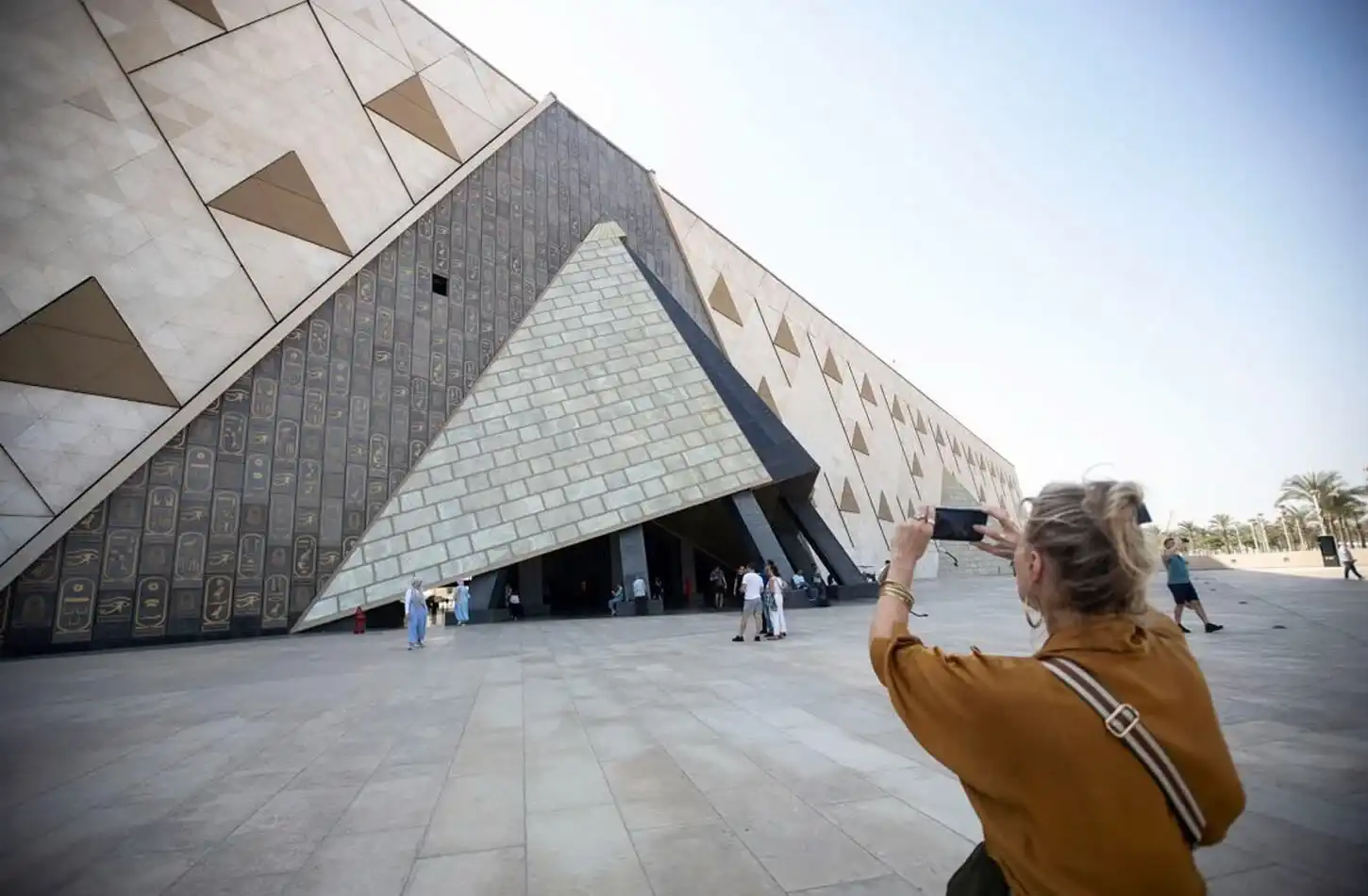
The Grand Egyptian Museum, opened in 2023 near the Giza Plateau, houses the most comprehensive collection of ancient Egyptian artifacts ever assembled in one space. The centerpiece is the complete Tutankhamun collection — over 5,000 objects from his tomb, now displayed together for the first time, including the golden death mask.
Allow 2.5–3 hours minimum for the GEM. A guided visit with an Egyptologist transforms the experience from impressive to extraordinary.
Evening: Giza or Cairo dinner
Optional: watch the Sound and Light Show at the Pyramids — illuminated with colored lights and narrated history, runs approximately 45 minutes from the Sphinx viewing area.
Day 3: Cairo Islamic Quarter, Then Fly to Luxor
Morning (8:00–11:00 AM): Islamic Cairo
A half-morning in Islamic Cairo gives a powerful contrast to the ancient monuments. Priorities:
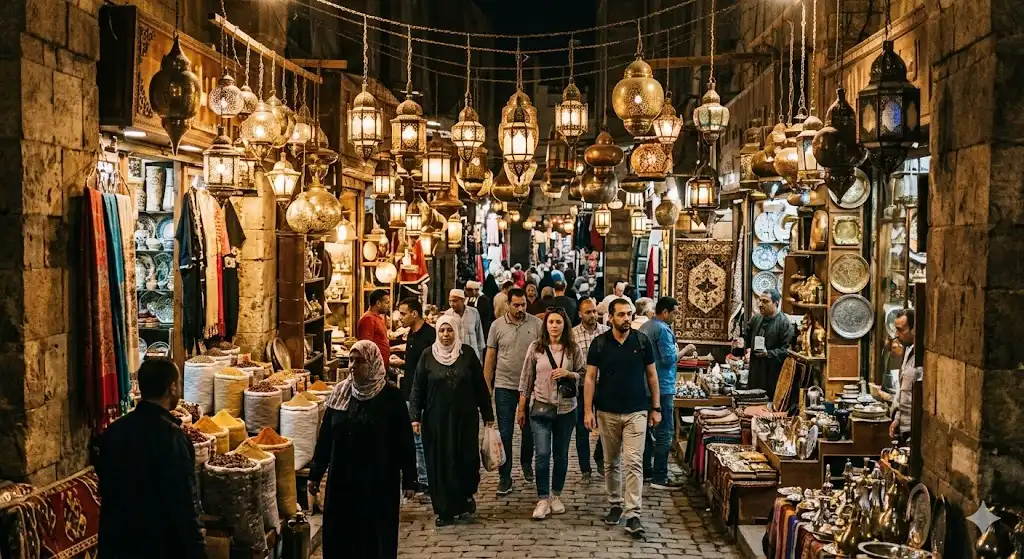
- Khan el-Khalili Bazaar — Cairo’s medieval market, dating from 1382. Go for atmosphere and coffee at El Fishawy café (Cairo’s oldest, open since 1773), not for shopping under pressure from vendors
- Al-Azhar Mosque — one of the world’s oldest universities, founded 970 CE. Non-Muslim visitors welcome with appropriate dress
- Al-Hussein Square — the emotional heart of old Cairo, best experienced over a tea or mint lemonade at a sidewalk café
Afternoon: Domestic flight Cairo → Luxor
Flight time: approximately 1 hour. Depart around 1:00–2:00 PM to arrive in Luxor by mid-afternoon.
This flight is one of the most important decisions in a 7-day Egypt itinerary. Do not take the overnight train unless you have specific reasons — the 9-hour journey eats an entire day and arrives with significant fatigue. The domestic flight costs $80–$120 per person and saves 8+ hours.
Late afternoon in Luxor: Check in and Luxor Temple
Arrive in Luxor, check in to your hotel or board your Nile Cruise ship if starting the cruise today.
Luxor Temple at sunset: Located on the Corniche in the center of the city, Luxor Temple is one of Egypt’s few monuments open late (until 10:00 PM) and illuminated at night. The warm amber light on the 3,300-year-old sandstone columns at sunset is one of the most beautiful sights in Egypt. Do not skip this evening visit. See our full Luxor Temple history guide for context before visiting.
Day 4: Luxor West Bank — Valley of the Kings
Full day on Luxor’s West Bank (depart 6:30 AM)
The West Bank of Luxor is where the ancient Egyptians buried their dead — and where some of the most extraordinary monuments in the world survive.
Valley of the Kings (6:30–9:30 AM)
Arrive before 8:00 AM. The Valley of the Kings contains 63 royal tombs cut into the limestone cliffs, decorated floor-to-ceiling with religious texts and painted mythology. Your standard ticket covers 3 tombs; the tomb of Tutankhamun (KV62) requires a separate additional ticket.
Recommended combination for first-time visitors:
- KV9 (Ramesses V/VI) — astronomical ceiling paintings, most complete decoration
- KV11 (Ramesses III) — unique everyday life scenes in side chambers
- KV62 (Tutankhamun) — small but historically unmissable (separate ticket ~300 EGP)
See our complete Valley of the Kings guide for tomb selection advice.
Temple of Hatshepsut — Deir el-Bahri (9:30–10:30 AM)
The mortuary temple of Egypt’s great female pharaoh, built around 1480 BCE and rising in three colonnaded terraces against a dramatic limestone cliff. The contrast between the horizontal elegance of the architecture and the sheer vertical cliff behind it is one of the most striking visual experiences in Egyptian travel.
Colossi of Memnon (10:45 AM — brief stop)
Two 18-meter seated statues of Amenhotep III, standing alone in open farmland at the entrance to the West Bank monuments. A photo stop of 15–20 minutes.
Lunch in Luxor
Karnak Temple (2:00–5:00 PM)
Karnak is the largest religious complex ever built by any civilization — covering over 100 hectares and built over nearly 2,000 years by dozens of pharaohs. The centerpiece is the Great Hypostyle Hall: 134 colossal sandstone columns, the tallest reaching 21 meters, creating a forest of stone that is one of the most awe-inspiring interior spaces in the ancient world.
Visit in the late afternoon when light creates dramatic shadows between the columns and crowds thin from the morning peak. See our Karnak Temple visit guide for insider tips.
Evening: Board Nile Cruise or hotel in Luxor
If starting your cruise today, board the ship for dinner and overnight. The ship sails overnight toward Edfu.
Day 5: Nile Cruise — Edfu and Kom Ombo
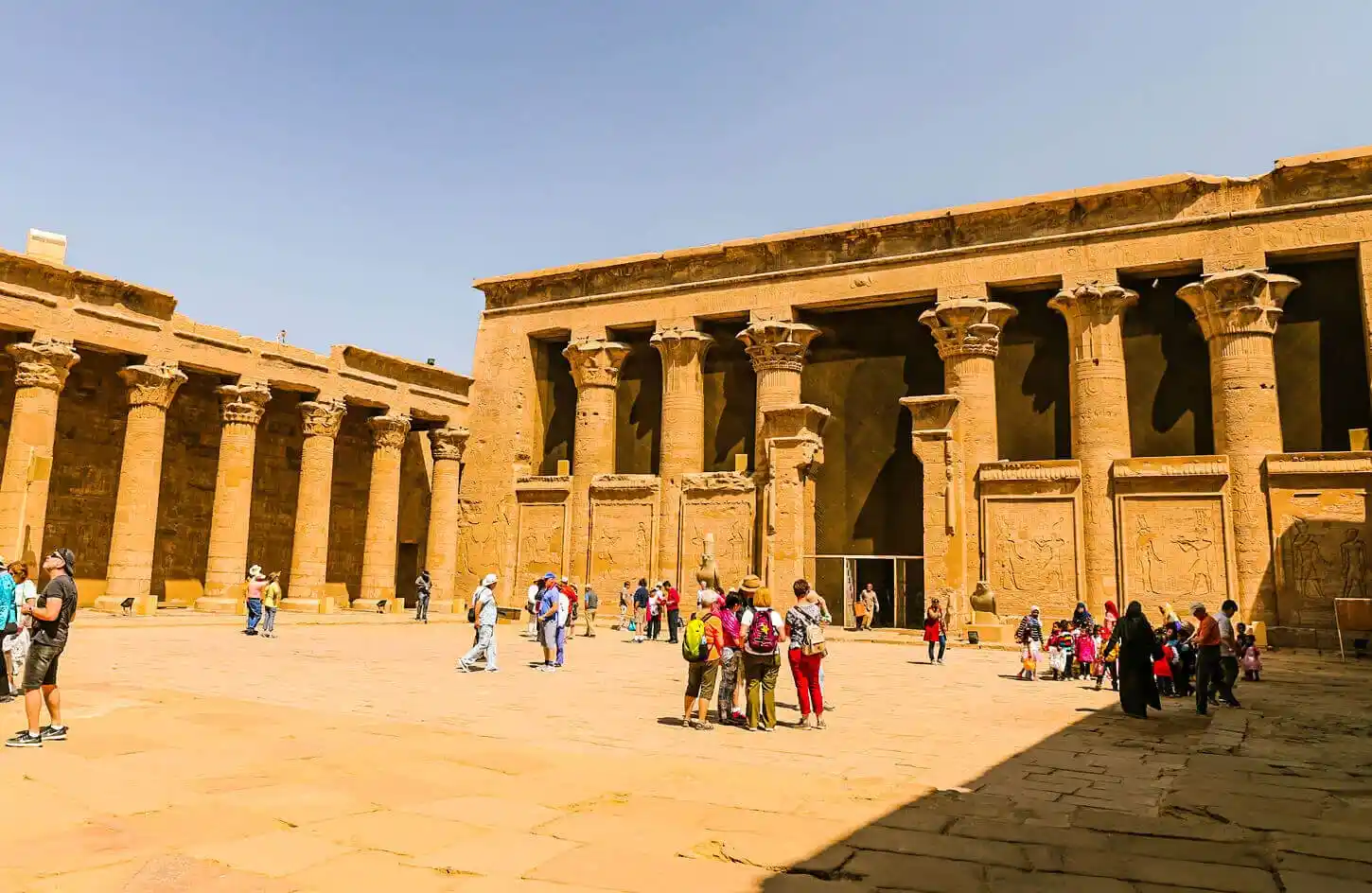
Morning: Wake up on the Nile
One of the defining experiences of a Nile Cruise is the first morning you wake up moving — the riverbanks sliding past your cabin window, palm trees and egrets and feluccas visible in the morning light. No description prepares you for it.
Temple of Horus at Edfu (9:00–11:00 AM)
Edfu is the best-preserved temple in Egypt — its roof is intact, its paint still vivid in sheltered sections, and its scale genuinely overwhelming. Transfer from the ship to the temple by horse-drawn carriage (a 19th-century tradition maintained purely for atmosphere). The Temple of Horus, built during the Ptolemaic period (237–57 BCE), is dedicated to the falcon god and contains some of the most complete mythological inscription programs anywhere in ancient Egypt.
Return to ship: lunch on the Nile
Sail from Edfu toward Kom Ombo. The Nile between Edfu and Kom Ombo passes through agricultural land and small Nubian villages — some of the most beautiful river scenery of the entire route.
Temple of Kom Ombo (3:00–4:30 PM)
Kom Ombo is Egypt’s only double temple, perfectly symmetrical and dedicated to two gods: Sobek (the crocodile god, protector of the Nile) on one side, and Haroeris (Horus the Elder, god of kingship) on the other. Located directly on the Nile bank, it is one of the most atmospherically situated temples in Egypt.
Don’t miss the Crocodile Museum within the complex, which contains dozens of mummified crocodiles that were sacred offerings to Sobek.
Evening: Sail to Aswan
Dinner and entertainment on board (typically an Egyptian folkloric show or Galabeya Party). Overnight sailing to Aswan.
Day 6: Aswan — Ancient and Modern
Morning: Aswan High Dam and Unfinished Obelisk
Aswan High Dam — the engineering project that transformed modern Egypt. Built with Soviet assistance between 1960 and 1970, the dam created Lake Nasser (the world’s largest artificial lake), controls the Nile flood that both sustained and threatened ancient Egypt, and generates 10% of Egypt’s electricity. Essential context for understanding how modern Egypt works.
Unfinished Obelisk — still lying in its ancient granite quarry exactly where it was abandoned approximately 3,500 years ago when a crack appeared in the stone. At 42 meters long and an estimated weight of 1,200 tons, it would have been the largest obelisk ever created. The quarry provides an extraordinary window into ancient stoneworking methods that produced every obelisk in Egypt (and the ones now in Paris, London, Rome, and New York).
Midday: Philae Temple
Philae Temple — reached by motorboat across the Nile — is the island sanctuary of Isis, goddess of love and magic. Rescued stone by stone from rising Nile waters in one of UNESCO’s greatest heritage preservation operations and rebuilt on a new island, Philae combines extraordinary architectural beauty with one of archaeology’s most remarkable survival stories.
The 5-minute boat crossing to the island, with the temple rising from the water, is one of the most iconic visual moments in Egyptian travel. See our complete Philae Temple guide for the full story.
Afternoon: Aswan at leisure
Aswan is the most relaxed major city in Egypt. Options for the afternoon:
- Felucca on the Nile — a traditional wooden sailboat navigating between the granite islands of the ancient First Cataract zone. A sunset felucca ride is the most atmospheric way to spend an Aswan afternoon
- Elephantine Island — the main island in the ancient cataract zone, home to the Aswan Museum and Nilometer
- Kitchener Island Botanical Garden — a lush garden on a Nile island, peaceful contrast to the desert and monuments
- Old Cataract Hotel terrace — Agatha Christie wrote Death on the Nile here. The view from the terrace over the granite rocks, feluccas, and desert is simply beautiful
Optional: Abu Simbel day trip
For travelers who want to add Abu Simbel — the colossal rock-cut temples of Ramesses II, 280 km south of Aswan — a 45-minute domestic flight from Aswan Airport allows a morning visit and return by noon. This is strongly recommended if budget allows: Abu Simbel is among the most awe-inspiring sites in Egypt and is rarely possible to combine with a standard Cairo visit.
Day 7: Return Cairo — Departure
Morning: Fly Aswan → Cairo
Early domestic flight Aswan to Cairo (approximately 1 hour). Arrive Cairo by mid-morning.
If departure is in the evening:
A half-day in Cairo on the final day can include:
- Coptic Cairo — the oldest Christian quarter in Egypt, including the Hanging Church (Al-Mu’allaqa), Ben Ezra Synagogue, and ancient fortress walls. Compact and walkable in 2 hours
- Egyptian Museum, Tahrir Square — if you want to see the older Cairo museum alongside the new GEM
- Final meal at a good Cairo restaurant before airport transfer
If departure is in the morning:
Proceed directly from the domestic terminal to your international departure. Cairo International Airport handles both domestic and international flights — allow 2.5 hours before international departure.
Alternative 7-Day Egypt Itineraries
Option B: 7 Days Without a Nile Cruise (Land-Based)
For travelers who prefer hotels to ships, or who have motion sensitivity:
- Days 1–2: Cairo (Pyramids, GEM, Islamic Cairo)
- Day 3: Fly to Luxor; East Bank
- Day 4: Luxor West Bank
- Day 5: Drive or fly to Aswan
- Day 6: Aswan (High Dam, Unfinished Obelisk, Philae)
- Day 7: Optional Abu Simbel; fly to Cairo
Option C: 7 Days Cairo + Red Sea
For travelers who want history and beach:
- Days 1–3: Cairo (Pyramids, GEM, Islamic Cairo)
- Day 4: Fly Cairo → Luxor; Valley of the Kings + Karnak
- Day 5: Fly Luxor → Hurghada; Red Sea arrival
- Days 6–7: Red Sea (snorkeling, Giftun Island, desert safari)
See our guide to a Hurghada to Luxor day trip for details on combining both.
Practical Information for Your 7-Day Egypt Trip
Best Time to Go
October through April offers the most comfortable conditions for a 7-day Egypt itinerary. The outdoor monuments — Pyramids, Valley of the Kings, Karnak — are all exposed desert environments. In summer (June–August), midday temperatures in Luxor and Aswan regularly exceed 42°C, making outdoor visits from 10:00 AM–3:00 PM genuinely dangerous. See our complete best time to visit Egypt guide for month-by-month advice.
Visa Requirements
Most nationalities can obtain an Egypt tourist visa on arrival at Cairo International Airport ($25 USD, single entry, 30 days). Many nationalities can also apply for an e-Visa before travel at evisa.eg.gov.eg. Check your specific nationality’s requirements before booking.
Internal Flights
For a 7-day Egypt itinerary, domestic flights are essential:
- Cairo → Luxor: ~1 hour, $80–$120 USD per person
- Aswan → Cairo: ~1 hour, $80–$120 USD per person
- Aswan → Abu Simbel → Aswan: ~45 minutes each way, $120–$160 USD per person
Book domestic flights as early as possible, especially in peak season (December–February).
Transport Within Cities
For detailed guidance on getting around Egypt, see our complete transportation in Egypt for tourists guide.
Budget Guide
Prices exclude international flights and travel insurance.
Frequently Asked Questions: 7-Day Egypt Itinerary
Is 7 days enough to see Egypt properly?
For a first visit, yes — if you follow a well-structured itinerary with domestic flights. You will cover the Pyramids, Karnak, Valley of the Kings, Edfu, Kom Ombo, Philae, and the Nile cruise experience. You will not cover everything in Egypt (nobody does in 7 days), but you will see the absolute highlights.
Should I start in Cairo or Luxor?
Start in Cairo. Cairo contains the Pyramids and the Grand Egyptian Museum, and most international flights arrive in Cairo. Flying to Luxor after 2 days in Cairo is the most logical and efficient route.
Is a Nile Cruise necessary for a 7-day Egypt itinerary?
Not strictly necessary, but strongly recommended for a first visit. The Nile Cruise between Luxor and Aswan includes Edfu and Kom Ombo, which are otherwise difficult to visit on a tight timeline. It also provides the river experience that is one of Egypt’s defining travel moments. If you genuinely prefer hotels, see Option B (land-based) above.
What type of Nile Cruise is best for 7 days?
For a 7-day itinerary, a 4-night Nile Cruise (Luxor to Aswan, Monday departure) fits best. Combine it with 2 days in Cairo and 1 day in Aswan. See our best Nile cruise in Egypt guide for ship comparisons.
Can I visit Abu Simbel on a 7-day Egypt itinerary?
Yes, but it requires sacrificing something else or accepting a very early morning. The most practical option: fly from Aswan to Abu Simbel on Day 6 morning (45 minutes), visit for 2 hours, fly back, and continue with the Aswan afternoon itinerary. It adds approximately $150–$200 per person but is worth it.
Do I need a guide for a 7-day Egypt itinerary?
A private Egyptologist guide at major monuments (Karnak, Valley of the Kings, Philae) dramatically improves the experience. Without expert context, these sites are impressive but opaque. With a good guide, they become narratives — alive with stories, characters, and meanings that transform the experience entirely. Pure Nile Tours provides private Egyptologist guides for all Egypt private tour packages.
What should I pack for 7 days in Egypt?
- Light, breathable clothing (long sleeves recommended for temples and mosques)
- Comfortable walking shoes (temples involve extensive walking on uneven stone)
- Sun hat, high-SPF sunscreen, and sunglasses (essential at all outdoor sites)
- Scarf or light cardigan (for entering mosques and for cool Nile evenings)
- Cash in Egyptian Pounds (for tips, markets, and small purchases)
- Power bank (for photography-heavy monument days)
Book Your 7-Day Egypt Tour with Pure Nile Tours
Pure Nile Tours builds custom 7-day Egypt itineraries tailored to your interests, budget, and travel style. Every tour includes:
- Private Egyptologist guides at all monuments
- Private air-conditioned vehicles and drivers
- All domestic flights and airport transfers
- Nile Cruise booking and management
- 24/7 WhatsApp support throughout your trip
- No hidden costs, no pressure, no surprises
Your first Egypt trip deserves to be done properly. One week, planned well, changes how you see the ancient world permanently.
🛥️ Build your custom 7-day Egypt itinerary: Contact Pure Nile Tours and receive your personalized plan within 24 hours. Start Planning Your 7-Day Egypt Tour → | Browse Nile Cruise Options →