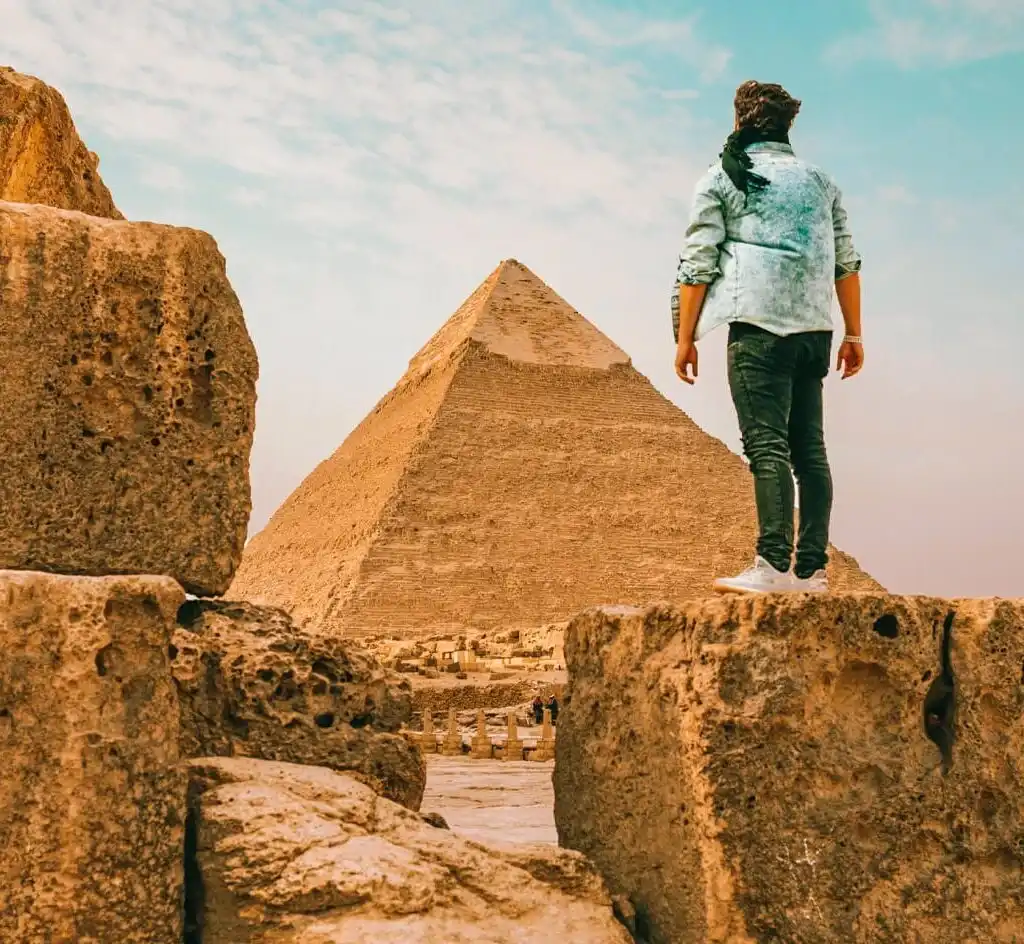
If you’re planning a trip to Egypt and asking “can you tour the pyramids in Egypt?” — the answer is a clear yes. But there’s a lot more to understand beyond that simple confirmation: what’s actually included in the visit, what different ticket options exist, whether you can go inside the pyramids, how to avoid the most common mistakes, and how to combine a pyramid tour with a Nile cruise or Cairo package for the complete Egypt experience.
This guide answers every question a first-time visitor to the Egyptian pyramids typically has, with practical detail that goes far beyond “yes, you can visit.”
Can You Tour the Pyramids in Egypt? Yes — Here’s What That Means
The Giza Pyramid Complex on the Giza Plateau, 12 km southwest of central Cairo, is open to tourists every day of the year. Visiting the pyramids is one of the world’s most accessible iconic experiences — Egypt’s government has invested substantially in tourist infrastructure at Giza, and the site receives millions of visitors annually.
A standard pyramid tour gives you:
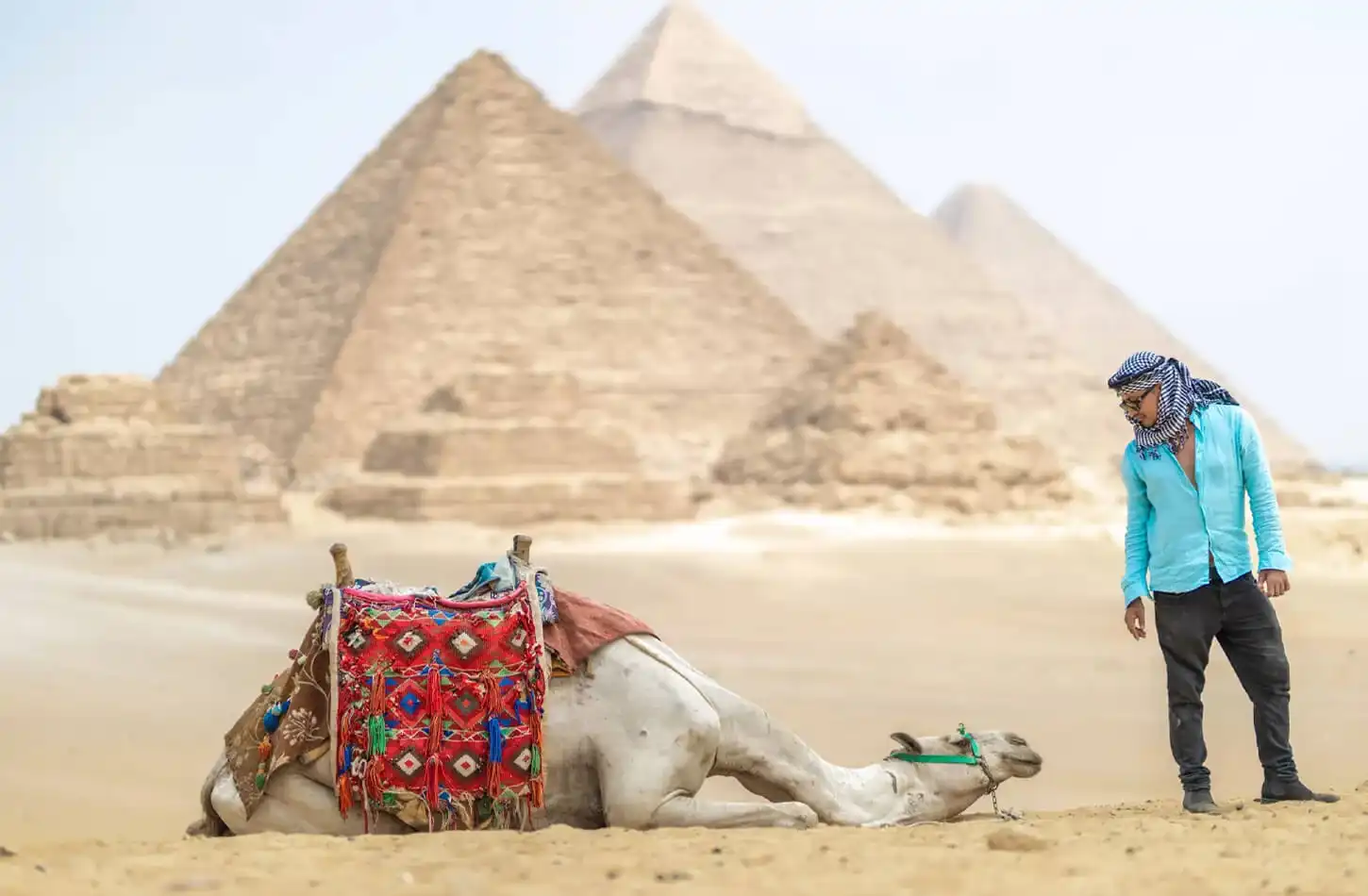
- Walking access around the exterior of all three major pyramids (Khufu, Khafre, Menkaure)
- Entry to the Solar Boat Museum (the remarkable ancient cedar boat found alongside the Great Pyramid)
- Access to the area of the Sphinx and Sphinx Temple
- Views across the plateau with the Cairo skyline in the distance
- The opportunity to enter one pyramid interior (included in the general ticket on a rotation basis)
Beyond the standard access, additional tickets allow entry to specific pyramid interiors, the Pyramid of Menkaure, and the recently opened Grand Gallery of the Great Pyramid of Khufu.
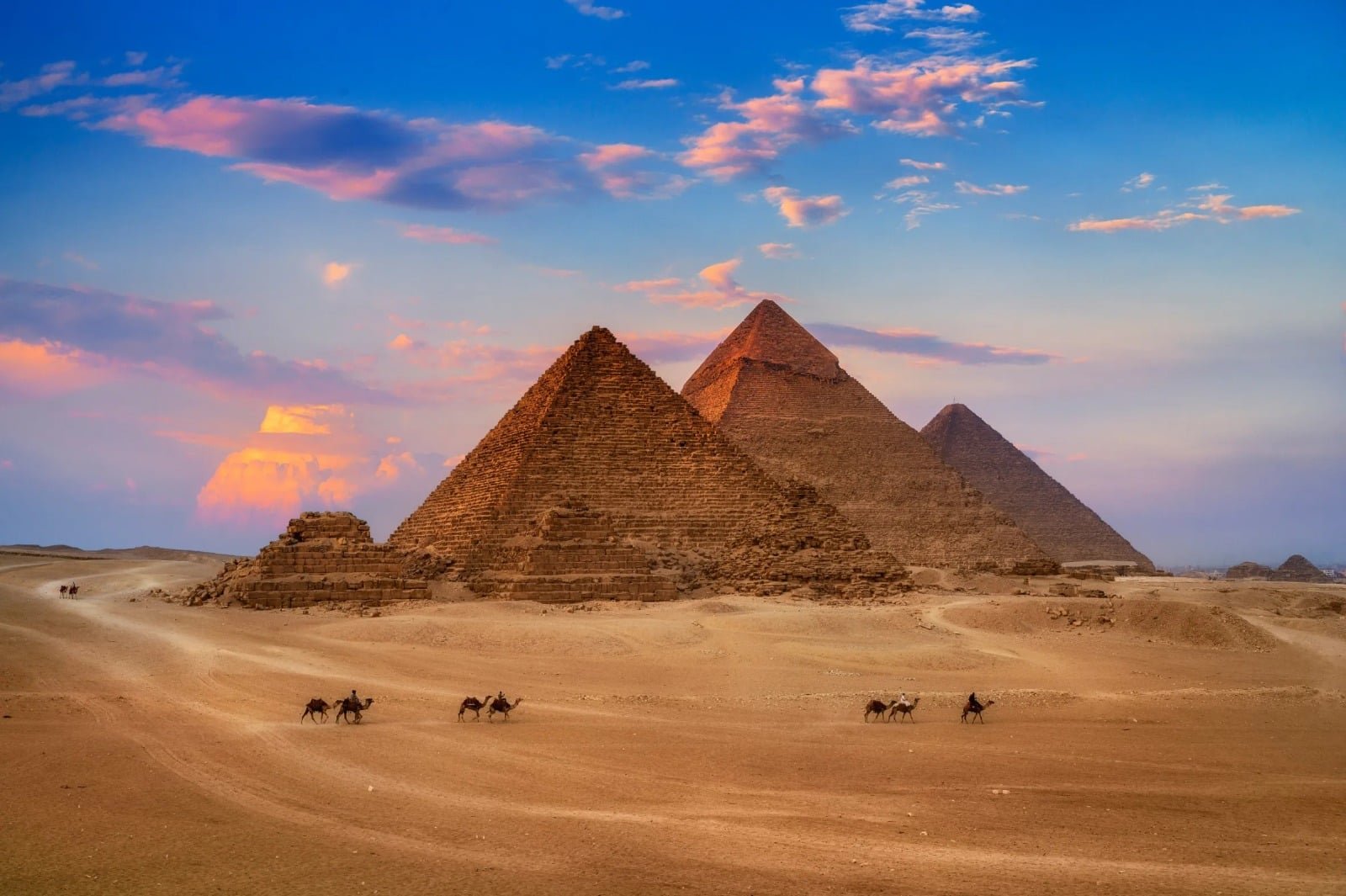
The Giza Pyramids: What You’re Actually Visiting
The Great Pyramid of Khufu (Cheops)
The oldest and largest of the three — the only surviving Wonder of the Ancient World. Built approximately 2560 BCE, it originally stood 146.5 meters tall (now 138.8 meters due to erosion of the outer casing). The interior contains three chambers: the King’s Chamber, the Queen’s Chamber, and the unfinished Subterranean Chamber, connected by ascending and descending corridors.
Interior access: Available via a separate additional ticket (~EGP 500 / ~$16 USD). The ascent through the Grand Gallery is steep, hot, and physically demanding — genuinely extraordinary once you reach the King’s Chamber. Not recommended for claustrophobic travelers or those with mobility limitations.
The Pyramid of Khafre
The second-largest pyramid, appearing taller than Khufu due to its higher positioning on the plateau. Retains a portion of its original smooth white Tura limestone casing at the apex — giving a visual impression of how all three pyramids originally appeared. The Sphinx immediately in front is believed to depict Khafre’s face.
Interior access: Available with the general admission ticket on a rotation basis, or via a separate premium ticket.
The Pyramid of Menkaure
The smallest of the three main pyramids, but the most photogenic for showing the full trio in a single frame. The interior is accessible and less crowded than Khufu.
The Great Sphinx
The largest monolithic statue on Earth — carved directly from the bedrock of the Giza Plateau. At 73 meters long and 20 meters tall, the Sphinx faces due east toward the rising sun. Scholars debate its exact date of construction, but most attribute it to the reign of Khafre (~2530 BCE).
Visitors can walk directly in front of the Sphinx at close range from the lower viewing area. The panoramic view from behind (with all three pyramids) is accessed from the upper plateau level.
The Solar Boat Museum
One of Egypt’s most remarkable artifacts — a full-scale ancient cedar boat (43 meters long) found dismantled in a sealed pit alongside the Great Pyramid in 1954. Reassembled and now displayed in a purpose-built museum, the Solar Boat is believed to have been used to transport Khufu’s body and was buried to serve him in the afterlife.
Ticket Prices for the Pyramids (2026)
Prices correct as of 2026. Student discounts available with valid ISIC card.
Important: Only a limited number of tickets to pyramid interiors are sold each day. Tickets to the Great Pyramid interior in particular sell out. Arrive early (site opens at 8:00 AM) or book through a tour operator who can pre-arrange interior access.
Can You Go Inside the Pyramids?
Yes — all three main pyramids at Giza allow interior access, though each requires a separate additional ticket beyond general admission.
Great Pyramid of Khufu interior: The most popular and most physically demanding. The Grand Gallery is a 47-meter ascending corridor, approximately 1 meter wide and 8.5 meters tall, requiring you to climb at a steep incline. At the top, the King’s Chamber is a bare granite room with the empty red granite sarcophagus. The experience is profound; the physical challenge is real.
Pyramid of Khafre interior: A shorter, less demanding descent into the burial chamber. The chamber retains the original floor pavement and an empty sarcophagus.
Pyramid of Menkaure interior: The least visited of the three, and the most accessible physically. Interesting relief carvings in the antechamber.
Not all visitors should enter: Claustrophobic individuals should be aware that the corridors are genuinely narrow and low. Those with heart conditions, mobility limitations, or severe heat sensitivity should think carefully before entering Khufu especially — the interior is warm (approximately 25–28°C) and stuffy.
How to Visit the Pyramids: Practical Guide
Getting to Giza
The Giza Plateau is approximately 12 km from central Cairo. Options:
- Private transfer: Most convenient. Approximately $20–30 USD round trip from most Cairo hotels. Can be combined with a Cairo tour.
- Taxi/ride-hailing: Uber and Careem operate reliably in Cairo. Approximately $5–12 each way.
- Cairo Metro + taxi: Metro to Giza station, then taxi to the site entrance (~10 minutes).
Best Time to Visit
Early morning (8:00–10:00 AM): Best light for photography (especially the Sphinx, which faces east), cooler temperatures, and fewer crowds before tour coaches arrive. Interior tickets sell out in this window.
Late afternoon (3:00–5:00 PM): The crowds thin significantly and the light becomes warm and directional. Excellent for exterior photography.
Avoid 10:00 AM–2:00 PM: Peak crowd hours, maximum heat.
What to Bring
- Comfortable walking shoes (the plateau is uneven sandy terrain)
- Hat and high-SPF sunscreen — there is virtually no shade on the plateau
- Reusable water bottle (water available at the site but at inflated prices)
- Cash in Egyptian pounds for tickets, tips, and purchases
- Camera — tripods are not permitted without a permit
Sound and Light Show
The Giza Sound and Light Show runs most evenings, projecting lights onto the pyramids and Sphinx while narrating their history. Tickets approximately EGP 350–400. An atmospheric experience, though the narration is dated. Worth experiencing once.
Combining the Pyramids with a Nile Cruise
For most travelers visiting Egypt, the Giza Pyramids and a Nile cruise are the two essential experiences — and they’re designed to be combined.
The standard Egypt trip structure:
- Cairo (2–3 days): Pyramids, Sphinx, Grand Egyptian Museum, Islamic Cairo
- Fly to Luxor (1 hour domestic flight)
- Nile Cruise (4–5 nights): Luxor → Aswan via Edfu and Kom Ombo
- Aswan (1–2 days): Philae Temple, Abu Simbel, High Dam
- Return to Cairo (fly or train)
All Pure Nile Tours Cairo packages include expert-guided visits to the Giza Pyramids and can be seamlessly combined with a Nile cruise departure. Customize your complete Egypt itinerary to combine both.
10 Frequently Asked Questions About Touring the Pyramids
1. Can you tour the pyramids in Egypt independently?
Yes — the Giza Pyramid Complex is accessible independently by taxi or ride-hailing app. You can buy tickets at the gate and walk the site freely. However, a guided tour significantly enhances the experience — context, history, and orientation are all greatly improved with a knowledgeable Egyptologist.
2. Is it safe to visit the pyramids?
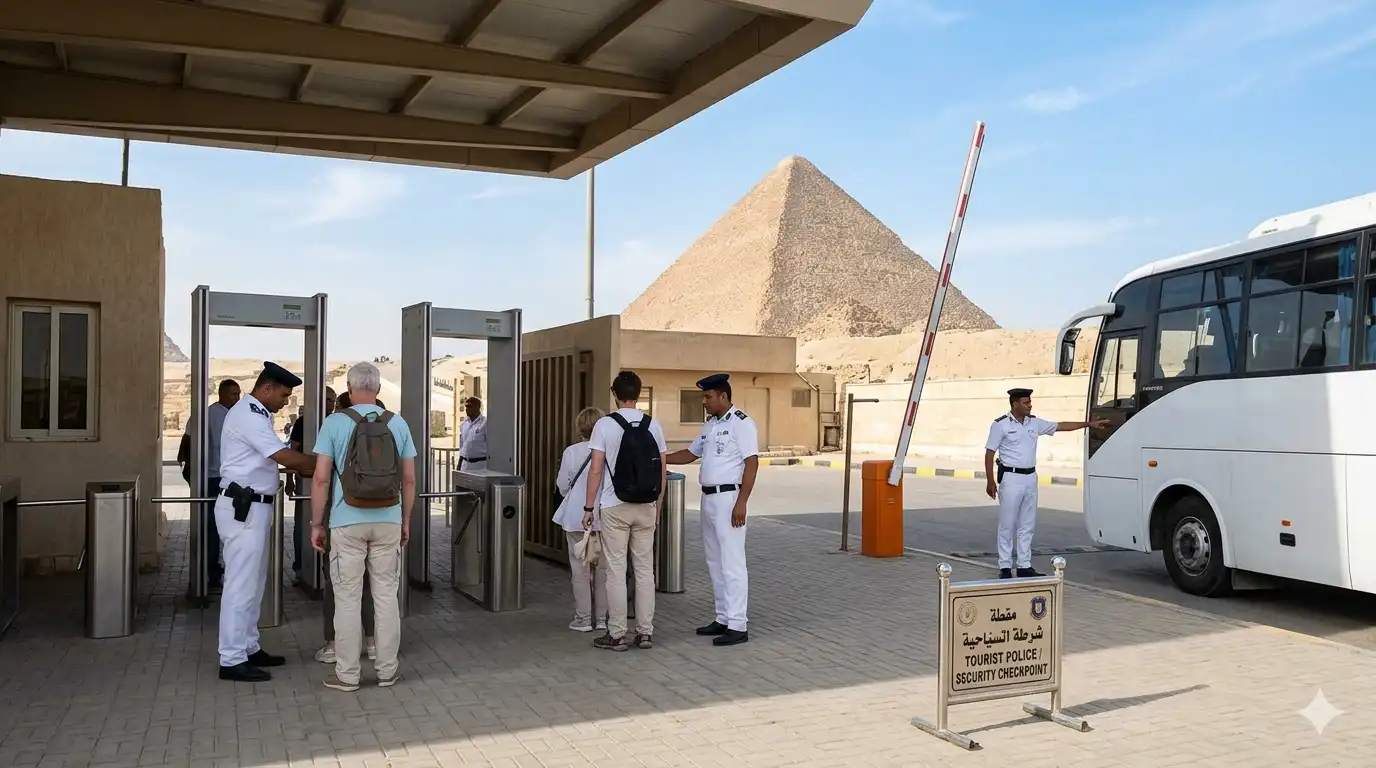
Yes — the Giza Plateau has substantial tourist police and security presence. The site is one of the most heavily visited attractions in the world. Standard urban precautions apply: use reputable taxis, be firm with unofficial “guides” who approach uninvited.
3. How long does it take to tour the pyramids?
Allow 3–4 hours for a thorough visit covering the three main pyramids, Sphinx, and Solar Boat Museum. A half-day tour (4–5 hours) combining the pyramids with the Grand Egyptian Museum is the standard format.
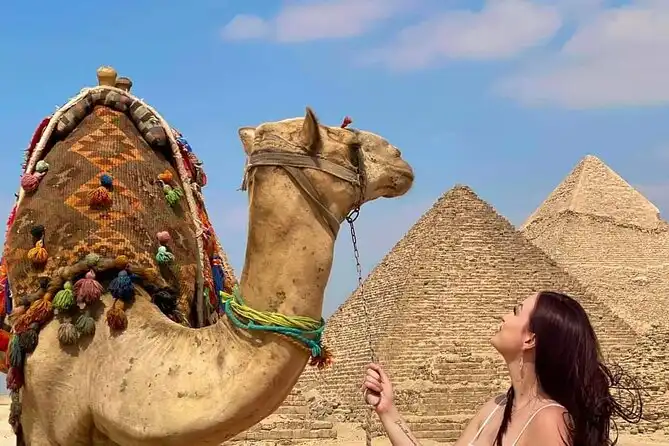
4. Can you ride a camel at the pyramids?
Yes — camel and horse rides are available at the site perimeter. Prices are negotiable; always agree the full price (including “getting off” the camel) before mounting.
5. Can you touch the pyramids?
You can touch the exterior stones of the pyramids — the lower courses are accessible. Climbing the pyramids is strictly prohibited and carries significant fines.
6. What is the best way to photograph the pyramids?
The classic three-pyramid line-up shot requires positioning at the southwest of the plateau (the “Panorama” viewpoint). The Sphinx-with-Pyramid-of-Khafre shot is taken from the lower level facing northwest. Sunrise from the eastern approach gives dramatic low-angle light on the Sphinx. Professional photography permits are required for commercial shoots.
7. Are the pyramids worth visiting?
Absolutely — standing in front of the Great Pyramid, the oldest and largest of the three, is one of humanity’s most profound experiences. These structures have endured for 4,500 years and remain astonishing feats of engineering even with modern understanding of their construction.
8. How much does a guided pyramid tour cost?
A half-day private guided tour of the Giza Pyramids costs approximately $60–120 USD per person including transport, guide, and entrance fees. Full-day tours including the Egyptian Museum cost $100–180 USD. Pure Nile Tours’ Cairo packages include pyramid visits with expert Egyptologist guides.
9. What else can I see near the pyramids?
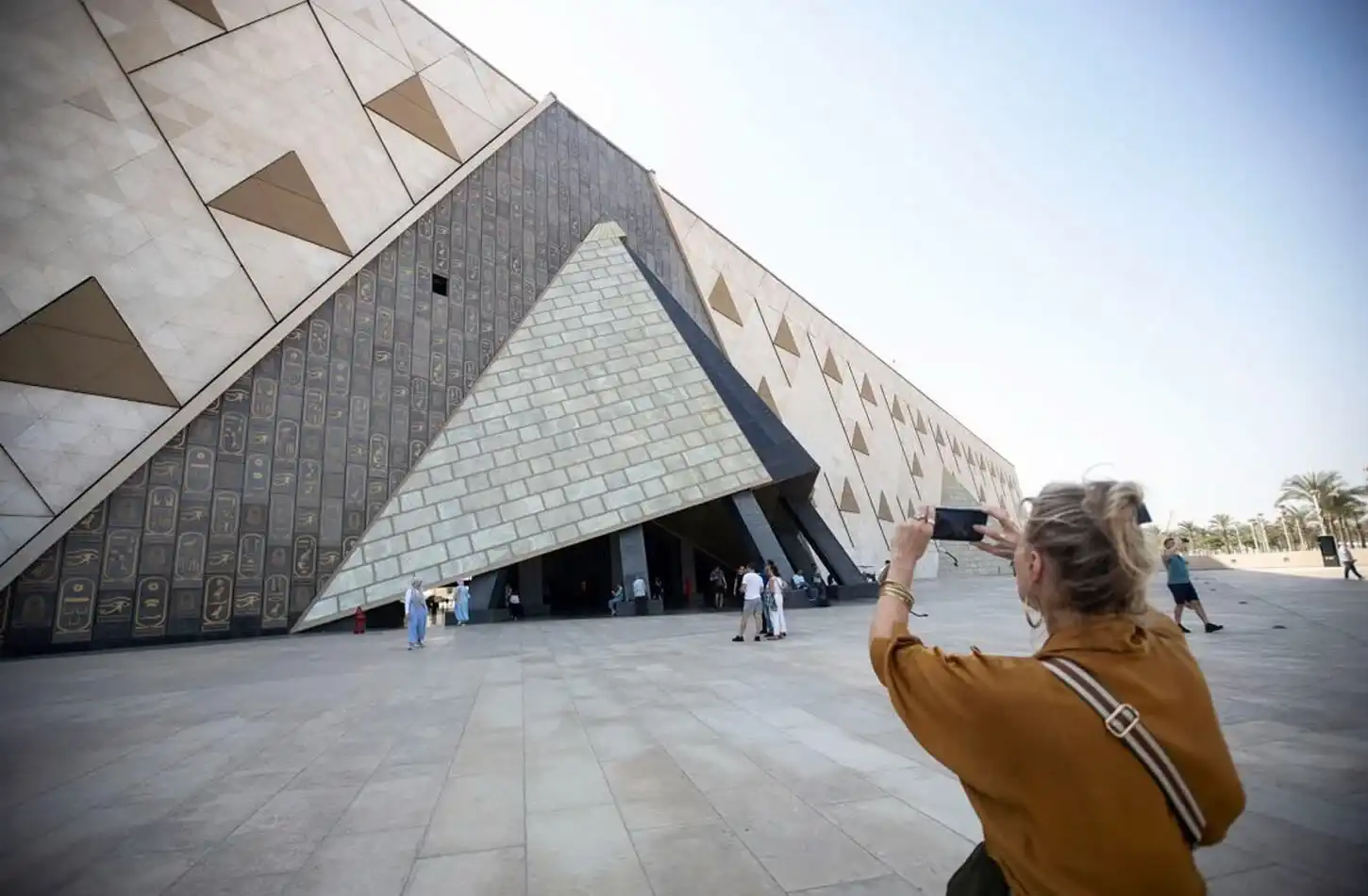
Nearby: the Grand Egyptian Museum (10 minutes from the pyramids, opened fully in 2023), the ancient capital of Memphis and the Step Pyramid at Saqqara (30 minutes south), the Dahshur pyramids including the Bent Pyramid (40 minutes south).
10. How do I book a Cairo and pyramids tour with a Nile cruise?
Contact Pure Nile Tours — we design complete Egypt itineraries combining Cairo pyramid visits with Nile cruise departures. Browse our Cairo packages or customize your trip.
Visit the Pyramids with Pure Nile Tours
The pyramids of Giza are the starting point for most Egypt visits — and the beginning of a journey that continues down the Nile to the temples of Luxor and Aswan.
Pure Nile Tours creates complete Egypt experiences that begin at the pyramids and don’t stop there:
- Cairo Packages — Pyramids, museums, and city experiences
- Cairo Destination Guide — Full overview of Egypt’s capital
- Nile Cruises — Sail from Luxor to Aswan after your Cairo days
- All Egypt Tours — Browse the complete collection
- Customize Your Egypt Trip — Build the perfect itinerary
Contact Pure Nile Tours today and let us create the Egypt experience you’ve always imagined.