Last updated: January 2026
What “Drinking in Public” Actually Means in Egypt
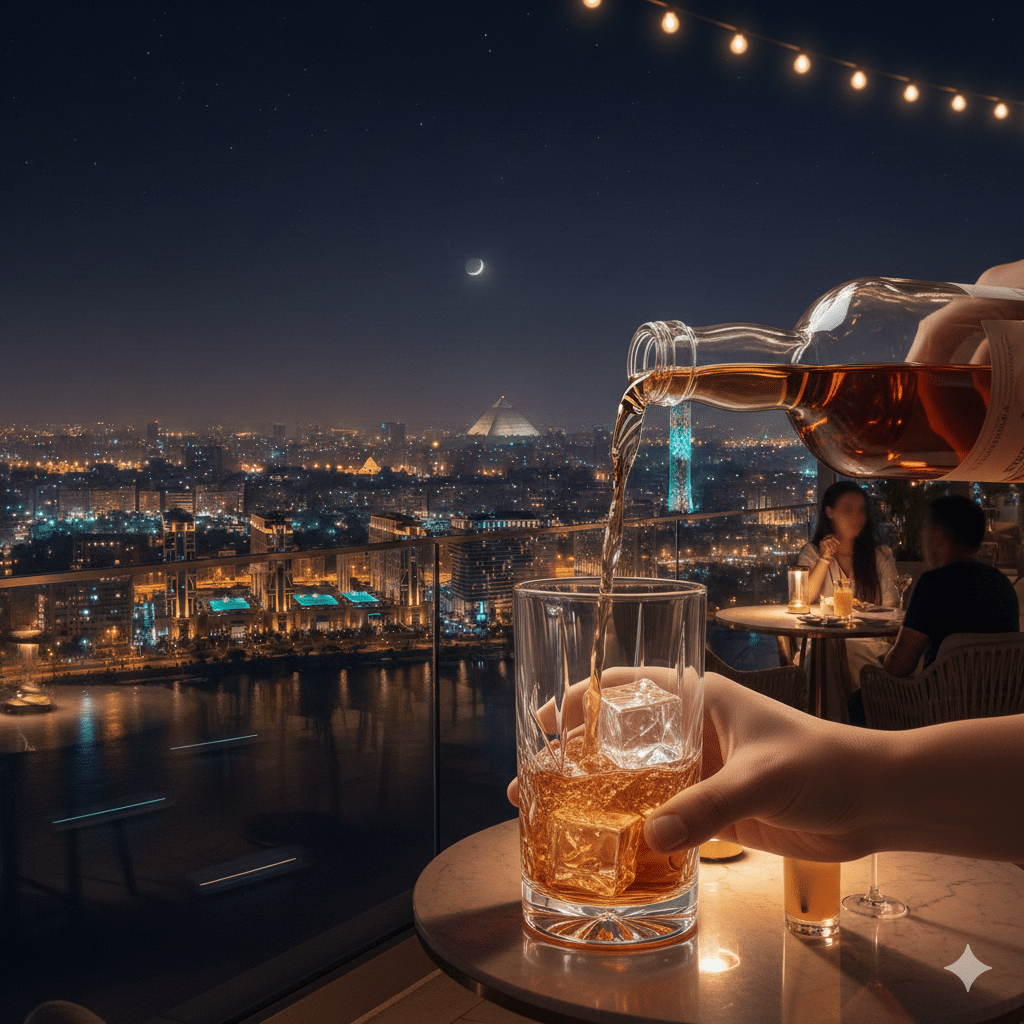
Many tourists arrive in Egypt with the assumption that resort towns are relaxed about alcohol everywhere. That assumption can lead to serious trouble. In Egypt, the rule is simple: alcohol stays inside licensed venues. The moment you step outside — onto the street, into a park, onto a public beach, or into a taxi with an open bottle — you are in illegal territory.
This is not just a cultural suggestion. It is the law, and it applies to every visitor regardless of nationality.
This guide explains:
- Where exactly public drinking is illegal and why the line matters
- What happens if you are caught (and what to do)
- Why resort towns are not exceptions to this rule
- How Ramadan changes the risk level
- What safe alternatives look like in practice
Where Public Drinking Is Illegal in Egypt
Direct answer: Any space that is not a licensed venue is considered public space in Egypt. That includes places that might feel “private” to a tourist but are not legally private under Egyptian law.
High-Risk Public Spaces — Avoid Alcohol Entirely
- Streets and pavements — including walking between two venues with an open drink
- Public parks and public gardens
- Public beaches — not the same as a private resort beach
- Public transport — buses, the Cairo Metro, shared taxis, microbuses
- Public squares and open plazas
- Areas near mosques and religious sites
- Unlicensed restaurants and local cafés
- Ride-hailing and taxi cars — carrying an open container is risky even in a private hire car
The “Short Walk” Mistake
One of the most common errors tourists make is carrying a drink between two venues — even just for a few minutes. The legal reality is that any open container in a public space is a risk, regardless of how short the distance is. The safe rule: finish your drink inside, then leave without one.
The “Hidden Cup” Mistake
Some tourists try to conceal alcohol in a disposable coffee cup or soft drink bottle. This reduces visibility, but it does not change the legal situation. If a police officer or security guard suspects you are drinking alcohol in a public place, the container does not protect you.
Table: Public Drinking Risk by Location
| Location | Public Drinking Risk | Safe Alternative |
|---|---|---|
| Street between venues | High risk | Finish drink inside; leave without open container |
| Public beach | High risk | Use private resort beach only |
| Public park | High risk | Use hotel garden or resort area |
| Cairo Metro or bus | High risk | Never carry alcohol on public transport |
| Taxi with open container | Risky | Sealed bottles only; consume on arrival |
| Resort pool area | Usually safe (inside resort) | Follow resort rules; stay inside boundaries |
| Licensed hotel bar | Safe | Stay inside; do not take drinks outside |
Why Resort Cities Are Not an Exception
Tourists often assume that cities like Hurghada and Sharm el-Sheikh operate under different rules because of their reputation as party destinations. This is a dangerous misunderstanding.
What is true: Inside your resort compound, alcohol service is normal and usually unrestricted by the resort itself.
What is not true: That the streets, public beaches, or public areas of those cities operate under resort rules. They do not.
- A resort wristband is a hospitality product, not a legal pass to drink anywhere in the city.
- The street outside your resort gate is a public space subject to Egyptian law.
- The public beach adjacent to your resort is a public space — not part of your resort’s licensed area unless it is physically within the resort boundary.
If you want to move between venues in a resort town, use a taxi or ride-hailing, travel without open containers, and drink at the next venue when you arrive.
Looking for Luxor tours or Nile cruise packages where alcohol is served responsibly on board? Browse our options.
What Happens If You Are Caught Drinking in Public
Direct answer: The consequences range from a warning and having to leave the area, to a fine, arrest, or detention. The actual outcome depends on the location, the officer’s discretion, whether you are cooperative, and whether your behavior is causing a disturbance.
Most Likely Outcomes (in order of frequency)
- Asked to stop and leave — the most common outcome if you are cooperative and not causing a scene
- Fined — a monetary penalty on the spot or at a police station
- Detained — taken to a police station for questioning, especially if you resist or argue
- Arrested — more likely if you are visibly drunk, aggressive, or have been warned before
What to Do If You Are Stopped
- Stay calm. Do not argue or raise your voice.
- Put the drink down immediately. Do not try to hide it.
- Be polite and cooperative. Apologizing calmly often de-escalates the situation.
- Show your passport or ID if asked. Not having ID makes the situation worse.
- Do not offer a bribe. This can make the situation significantly worse.
- Call your hotel if you are unsure what to do — hotel staff are often experienced in helping guests navigate these situations.
Useful Emergency Numbers
- Tourism police: 126
- Emergency: 122 (police general)
- Ministry of Tourism and Antiquities hotline: 19654
Public Drinking During Ramadan — Extra Risk
During Ramadan, the risk level around public alcohol consumption increases significantly. This is not only a legal issue but a deeply cultural and social one.
What Changes During Ramadan
- Even eating and drinking non-alcoholic beverages in public during daylight hours is considered disrespectful.
- Alcohol in public is viewed much more seriously — both by members of the public and by enforcement officers.
- There is more police presence in public areas during Ramadan in some cities.
- Even in tourist areas, the tolerance for visible drinking outside licensed zones drops considerably.
How to Behave During Ramadan as a Tourist
- Drink only inside licensed hotel and resort areas.
- Do not eat, drink, or smoke in public during daylight hours — including non-alcoholic items.
- Dress modestly when outside resort zones.
- Be quieter and more considerate in public spaces generally.
- Ask your hotel what services are available and when — hours often change daily.
Safe Alternatives to Public Drinking
Knowing where you can drink legally and comfortably is the key to enjoying Egypt without creating problems.
The Safest Options for Tourists
- Your hotel bar or restaurant — always the lowest-risk choice
- Your resort pool bar or beach club — inside the licensed resort area
- A licensed restaurant recommended by your hotel concierge
- A Nile cruise bar — on board, following ship rules
- Your hotel room — with alcohol purchased from Drinkies or duty-free, kept sealed until you are inside
The Safest Pattern for a Night Out
- Drink at a licensed venue (hotel bar, resort bar, licensed restaurant).
- Pay the bill and tip before leaving.
- Ask staff to arrange a taxi or use a reputable ride-hailing app.
- Travel to your hotel with no open containers.
- Continue drinking in your hotel room if you wish — with sealed bottles from a licensed shop.
This pattern keeps you inside the legal framework at every stage of the evening.
Frequently Asked Questions
1) Is drinking in public illegal in Egypt?
Yes, drinking alcohol in public places such as streets, parks, public beaches, and public transport is illegal in Egypt and can lead to arrest or a fine. Alcohol must be consumed only in licensed venues.
2) Can tourists drink alcohol in public in Egypt?
No. The same public drinking laws apply to tourists as to residents. Being a tourist does not protect you from arrest or a fine if you are caught drinking in a public place.
3) What happens if you drink in public in Egypt?
If caught drinking in public in Egypt, you could face a warning, a fine, detention, or arrest. The outcome depends on location, your behavior, and the officer’s discretion. Staying calm, polite, and putting the drink down immediately is the safest response.
4) Can you drink alcohol on the street in Egypt?
No. Drinking on the street or carrying open containers in public is illegal and high-risk in Egypt. Even in tourist cities, public drinking outside licensed resort areas can create serious legal problems.
5) Is it OK to drink in public in Hurghada or Sharm el-Sheikh?
No. Even in resort cities, public drinking outside licensed resort areas and venues is illegal. A resort wristband does not give permission to drink in public streets or on public beaches.
6) Can you drink alcohol on a public beach in Egypt?
No. Public beaches in Egypt are not appropriate places to drink alcohol. On a private resort beach, alcohol may be served under resort rules. Always confirm with your resort what is permitted and where the resort boundary ends.
7) Is drinking in public worse during Ramadan in Egypt?
Yes. During Ramadan, even eating and drinking non-alcoholic beverages in public during daylight hours is considered disrespectful. Alcohol in public during Ramadan carries a much higher risk of enforcement and social tension.
8) Can I carry a sealed bottle of alcohol in Egypt?
Carrying a sealed bottle of alcohol purchased from a licensed shop (such as Drinkies) from the shop to your hotel is generally lower risk than carrying an open container. Keep it sealed, discreet, and go directly to your accommodation.
Related articles:
- Can You Drink Alcohol in Egypt? Full Tourist Guide (2026)
- Buying Alcohol in Egypt: Drinkies, Duty-Free & Licensed Shops
- Alcohol in Egypt Hotels & All-Inclusive Resorts
- Ramadan in Egypt for Tourists: Food, Alcohol & Etiquette (2026)
Explore Egypt safely with us: Cairo Tours | Nile Cruises | All Egypt Packages