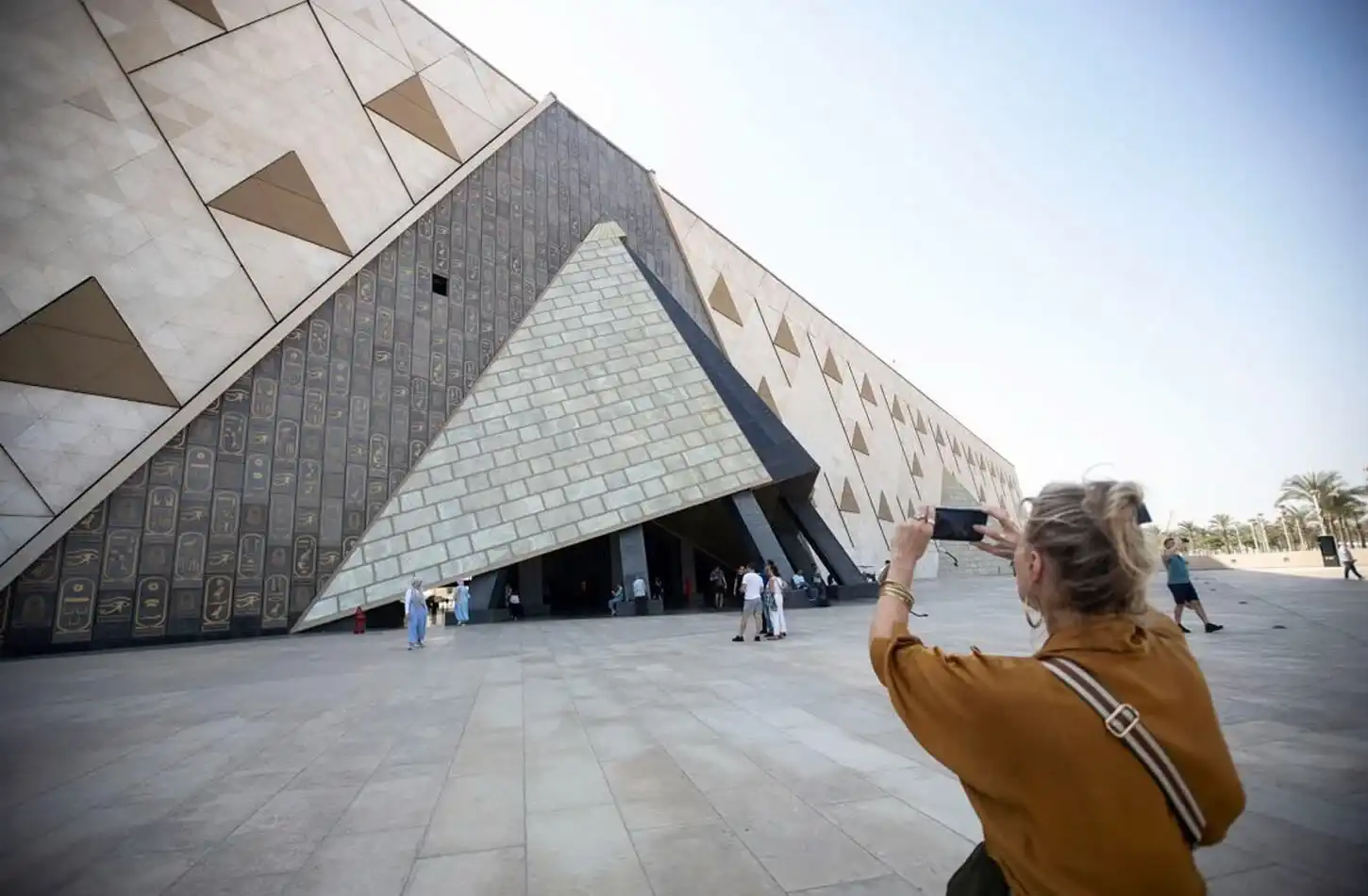
For more than a century, the Egyptian Museum in Tahrir Square was the single place on Earth to see ancient Egypt’s greatest treasures gathered under one roof. With the Grand Egyptian Museum (GEM) now open near Giza and the National Museum of Egyptian Civilization (NMEC) established in Old Cairo, Egypt’s most famous artifacts have been redistributed across three institutions — and the natural question for any 2026 visitor is: is the old Tahrir museum still worth visiting, and what’s actually left to see there?
The short answer: yes, it’s still open, still significant, and still genuinely worth your time — but knowing what’s moved and what remains will help you plan a far more satisfying visit.
Is the Egyptian Museum in Tahrir Square Still Open?
Yes. As of 2026, the museum remains fully open and active, and Egypt’s Ministry of Tourism confirmed in January 2026 that it will continue operating at Tahrir Square at least until 2030, with a phased renovation planned for 2027–2029 that will not require a full closure. The two museums — Tahrir and GEM — coexist deliberately, rather than one simply replacing the other.
What’s Moved to the Grand Egyptian Museum
To understand what you’ll actually see at Tahrir today, it helps to know what’s relocated:
- The majority of the Tutankhamun collection — over 5,000 objects from the tomb’s discovery — has moved to the GEM, where the complete find is displayed together for the first time in history
- Khufu’s Solar Boat, previously housed in a modest structure beside the Great Pyramid, has moved to a purpose-built hall within the GEM
- A large statue that previously stood outside Cairo’s main railway station has also relocated to the GEM, now displayed in a more dignified, monumental setting within the new museum
What Remains at the Egyptian Museum, Tahrir Square
This is where sources occasionally conflict, since the transition has happened in phases — some reports indicate the Tutankhamun golden mask and the original Royal Mummies collection moved to the GEM and NMEC respectively, while other recent sources state the iconic golden mask and a royal mummies hall remain at Tahrir. Given this is an active, ongoing transition, confirm current display locations with your guide or hotel concierge before planning your day — but here’s what’s reliably still on view at Tahrir as of 2026:
The Akhenaten and Amarna Collection
One of the museum’s standout remaining sections: a substantial collection of objects from the Amarna period, the brief but artistically revolutionary era under Pharaoh Akhenaten. The grand central hall displays large sections of floor and wall decoration recovered from Akhenaten’s palace, alongside colossal statues of Amenhotep III and Queen Tiye — material that hasn’t relocated to the newer museums and remains a genuine highlight of a Tahrir visit.
A Vast General Collection
Even with major pieces relocated, the Tahrir museum still holds an enormous quantity of ancient Egyptian artifacts spanning the full chronological breadth of pharaonic history — statuary, sarcophagi, jewelry, papyri, and everyday objects that never made the cut for the GEM’s curated highlight galleries simply due to the sheer scale of Egypt’s archaeological holdings. Many visitors and reviewers describe the Tahrir museum’s atmosphere as having a distinctive “dense, attic-of-treasures” quality precisely because of this — room after room of artifacts in a more traditional, less curated museum environment than the GEM’s modern gallery design.
Possible Continued Display: The Golden Mask and Royal Mummies
Depending on the current phase of the ongoing museum transition, Tutankhamun’s golden funerary mask and a royal mummies hall may still be on display at Tahrir — though as the GEM and NMEC collections have continued to develop, this is genuinely subject to change. If seeing the golden mask specifically is a priority for your trip, verify its current location before your visit, since recent reporting has placed it at different museums at different points during this transition.
Egyptian Museum vs. GEM vs. NMEC: How They Compare
Cairo now offers three major museums covering Egyptian history, each with a distinct character:
Most experienced guides and recent travel reporting recommend visiting in this order if you have time for all three: GEM first (for scale and modern storytelling), NMEC second (for the Royal Mummies Hall and accessible, bilingual context), and the Egyptian Museum at Tahrir last (for the dense, raw volume of artifacts, best appreciated once you already have historical context from the other two).
If your time only allows for one, the GEM is generally considered the priority for first-time visitors given its scale, comfort, and the Tutankhamun collection — but the Tahrir museum remains the better choice for travelers specifically interested in the Amarna period, or those who prefer a more traditional, less curated museum experience with genuinely enormous breadth.
Visiting the Egyptian Museum, Tahrir Square
Location
The museum sits directly on Tahrir Square in downtown Cairo, making it easily accessible from most central Cairo hotels by taxi, rideshare, or the Cairo Metro (Sadat station, on the square itself).
What to Expect on Arrival
Visitors pass through a security checkpoint entering from Tahrir Square. At the exit, an additional security check ensures no artifacts leave with visitors — standard practice reflecting the museum’s role as custodian of an enormous and historically significant collection. Beyond the exit, a bazaar-style area with souvenir shops, including official replica vendors, gives visitors a chance to purchase mementos; it’s worth keeping receipts for any purchases, since travelers are occasionally asked at the airport to confirm that purchased items are reproductions rather than genuine antiquities.
Tickets and Hours
Ticket prices and operating hours have been subject to periodic adjustment during the ongoing transition involving the GEM and NMEC; confirm current rates and hours directly before your visit, since both have changed multiple times during this multi-year transition period.
How Much Time to Budget
Given the museum’s dense, less linearly organized layout compared to the newer GEM, budget at least 2–3 hours for a meaningful visit, more if the Amarna collection or specific historical periods particularly interest you.
A Note on the Museum’s Renovation
Beyond the redistribution of artifacts to GEM and NMEC, the Tahrir museum itself has undergone targeted renovation work in recent years, including a notable wing reopening in 2023 that improved infrastructure, archiving, and digitization of the collection — part of an ongoing effort, as museum officials have described it, to allow the historic institution to continue developing and remain competitive alongside Egypt’s newer, larger museums. Further phased renovation is planned for 2027–2029, without a full closure expected during this period.
A Brief History of the Egyptian Museum
The Egyptian Museum in Tahrir Square has a history nearly as significant as the artifacts it houses. The current building opened in 1902, designed by French architect Marcel Dourgnon following an international design competition — making it, as of 2026, a 124-year-old institution. It replaced several earlier, smaller predecessor museums dating back to efforts begun in the 1850s by French Egyptologist Auguste Mariette to centralize and protect Egypt’s antiquities from looting and uncontrolled export, which had been a significant problem throughout the 19th century.
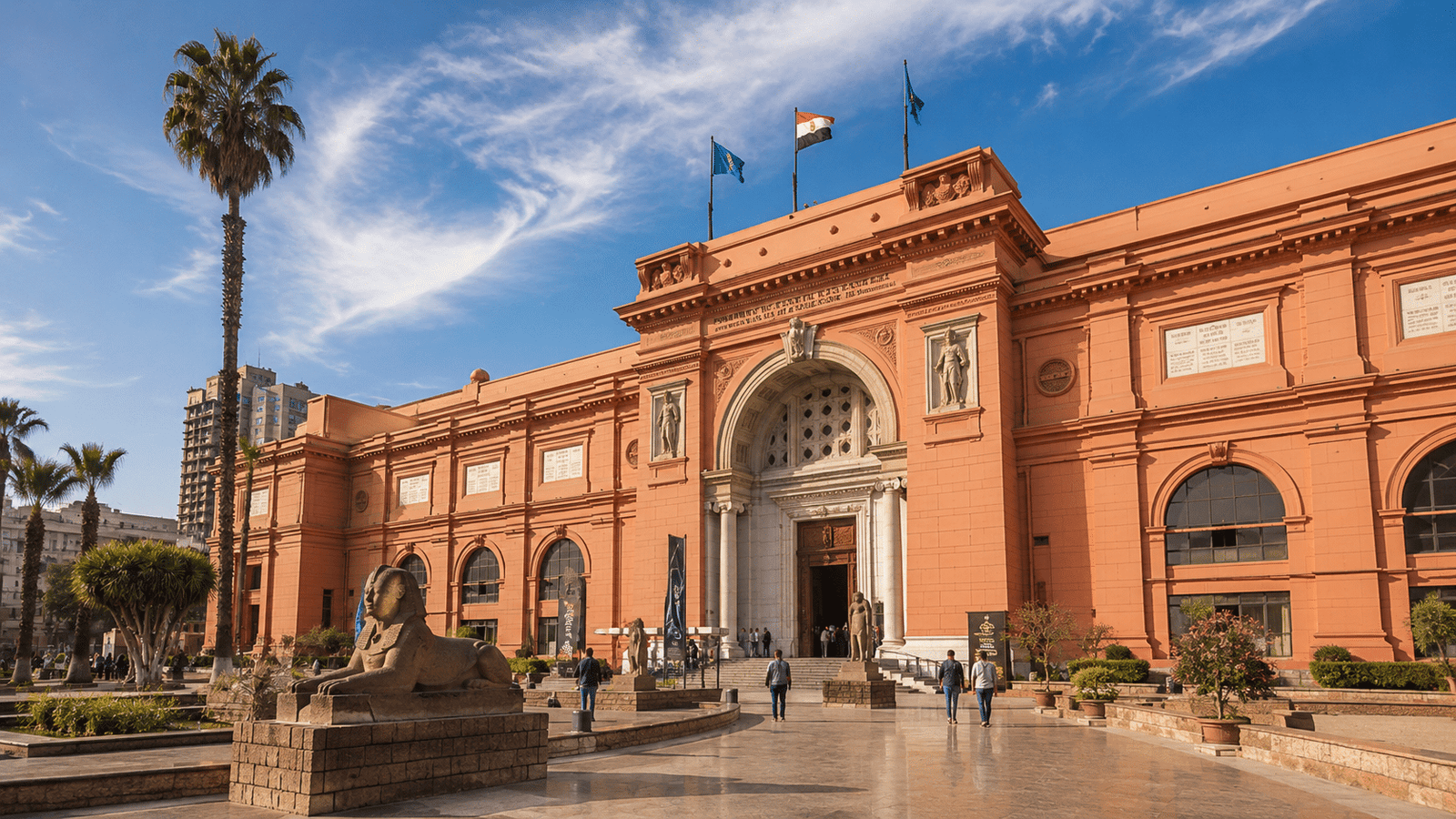
For more than a century, the museum served as the primary repository for virtually every major archaeological discovery made in Egypt, including Howard Carter’s 1922 Tutankhamun find — meaning many of the objects now relocating to the GEM and NMEC actually spent decades on display, or in storage, at Tahrir before this most recent transition. The building itself, with its distinctive neoclassical facade and salmon-pink coloring, remains a recognizable Cairo landmark independent of its contents, and is itself sometimes considered a piece of architectural and museological history worth appreciating on a visit.
This long history is part of why many visitors and reviewers describe the Tahrir museum’s atmosphere so differently from the GEM’s: where the newer museum was purpose-built from scratch with contemporary museum design principles, Tahrir reflects over a century of accumulated collection growth, periodic reorganization, and the genuine character of a working, historic institution rather than a single coordinated modern design vision.
Historic Highlights the Museum Is Known For
Beyond the Amarna collection covered above, the Tahrir museum’s century-plus history as Egypt’s primary archaeological repository means it has, at various points, displayed or stored virtually every significant discovery in modern Egyptology — and its remaining collection still reflects that breadth.
The mummy room, when open and staffed (confirm current status before visiting, since this has been subject to occasional closures and relocations during the broader museum transition), has historically housed an extraordinary collection of royal mummies, predating the establishment of NMEC’s dedicated Royal Mummies Hall.
Old Kingdom statuary, including significant pieces from the era of the pyramid builders themselves, offers visitors a chance to see artistic representations of the same pharaohs — Khufu, Khafre, and others — whose monuments dominate the Giza Plateau, providing a more personal, human-scale counterpoint to the massive architecture.
Middle and New Kingdom collections, spanning the centuries between the pyramid age and Tutankhamun’s era, fill out the broader chronological context that helps visitors understand how Egyptian art, religion, and kingship evolved across nearly three thousand years of pharaonic history — context that complements rather than duplicates what’s available at the more curated, highlight-focused GEM.
Practical Visitor Tips
Photography policies have varied over the years and may differ from current GEM rules — confirm current photography policy at entry, including any rules around phone cameras versus dedicated cameras.
The museum’s layout is less linear than the GEM’s, organized more by accumulated curatorial history than a single coordinated chronological journey — bringing a guide or a clear plan for which galleries matter most to you can meaningfully improve the visit, particularly given the sheer density of objects on display.
Combine your visit with other downtown Cairo sites. Given its central Tahrir Square location, the museum pairs naturally with other downtown Cairo attractions and neighborhoods, unlike the GEM and NMEC, which require dedicated transport to reach from most hotel locations.
Expect crowds to vary significantly depending on cruise ship and tour group schedules, since downtown Cairo day-tour itineraries frequently include the museum as a single stop among several — arriving earlier in the day generally means a calmer visit.
Should You Visit the Egyptian Museum If You’re Also Going to GEM?
For most travelers with at least two to three days in Cairo, the answer is yes — the two museums are genuinely complementary rather than redundant. The GEM offers unmatched scale, comfort, and the complete Tutankhamun collection in a modern setting; the Tahrir museum offers a different, more traditional kind of archaeological density, plus the Amarna collection’s artistic and historical significance, which remains a genuine highlight not replicated elsewhere.
Travelers with very limited time (a single day in Cairo) should generally prioritize the GEM, particularly when paired with a Giza Plateau visit given their proximity. See our complete Grand Egyptian Museum tour guide and Tutankhamun treasures guide for full details on planning that visit.
🏛️ Want expert guidance on which Cairo museums to prioritize for your trip? Pure Nile Tours’ private Egyptologist-guided itineraries can combine the Egyptian Museum, GEM, and NMEC based on your specific interests and available time. Book a Private Cairo Tour →
Frequently Asked Questions
Is the Egyptian Museum in Tahrir Square still worth visiting now that GEM is open?
Yes. While many headline artifacts, including most of the Tutankhamun collection, have moved to the GEM, the Tahrir museum retains a vast general collection and the significant Amarna period collection, making it a worthwhile complementary visit rather than a redundant one.
Has the Tutankhamun golden mask moved to the Grand Egyptian Museum?
This has been reported differently across sources during an ongoing transition period — some recent reporting places the mask at the GEM, while other equally recent sources indicate it remains at Tahrir. Confirm its current location before your visit if seeing it is a priority.
Where can I see the Royal Mummies in 2026?
The Royal Mummies Hall is generally located at the National Museum of Egyptian Civilization (NMEC) in Old Cairo, though confirm current arrangements given the ongoing redistribution of collections across Cairo’s three major museums.
How long should I spend at the Egyptian Museum, Tahrir Square?
Budget a minimum of 2–3 hours for a meaningful visit, given the museum’s dense collection and less linear layout compared to the newer GEM.
Is the Egyptian Museum closing permanently?
No. Egypt’s Ministry of Tourism confirmed in January 2026 that the museum will remain open at least until 2030, with a phased renovation planned for 2027–2029 that will not require a complete closure.
What’s the difference between the Egyptian Museum, GEM, and NMEC?
The Egyptian Museum (Tahrir) offers a dense, traditional collection including the Amarna material; the GEM (Giza) offers the complete Tutankhamun collection in a vast modern setting; and NMEC (Fustat) offers the Royal Mummies Hall in a curated, accessible timeline format.
Can I visit all three Cairo museums in one trip?
Yes, with sufficient time — most guides recommend visiting GEM first, NMEC second, and the Egyptian Museum at Tahrir last, allowing context from the newer museums to deepen appreciation of the denser, less curated Tahrir collection.
Final Thoughts
The Egyptian Museum in Tahrir Square is no longer the single, essential stop it was for over a century — but it hasn’t become obsolete either. What it offers in 2026 is a genuinely different kind of experience from the GEM’s polished modern galleries: a dense, atmospheric collection with real historical weight, anchored by the remarkable Amarna period material that remains one of Cairo’s most underrated museum highlights. For travelers with the time to see more than one Cairo museum, it remains a meaningful, distinctive part of any complete ancient Egypt itinerary.
🏛️ Planning your Cairo museum itinerary? Pure Nile Tours’ private guided tours help you prioritize the right combination of the Egyptian Museum, GEM, and NMEC based on your interests and schedule. Explore Private Cairo Tours →