Great Sphinx of Giza
There is a moment, walking down from the Giza plateau toward the Sphinx enclosure, when the statue suddenly appears below you at eye level — and it stops most visitors mid-sentence. Photographs never quite prepare you for the scale, or for how close the modern city of Cairo presses right up against something that has been sitting in this exact spot for roughly 4,500 years.
The Great Sphinx of Giza is one of the most photographed monuments on Earth, yet it remains one of the least understood. Who built it? Why does it have a lion’s body? Why is its nose missing? This guide answers the real facts behind the Sphinx — separating what Egyptologists actually know from the myths that have grown up around it — and gives you everything you need to plan a visit.
What Is the Great Sphinx of Giza?
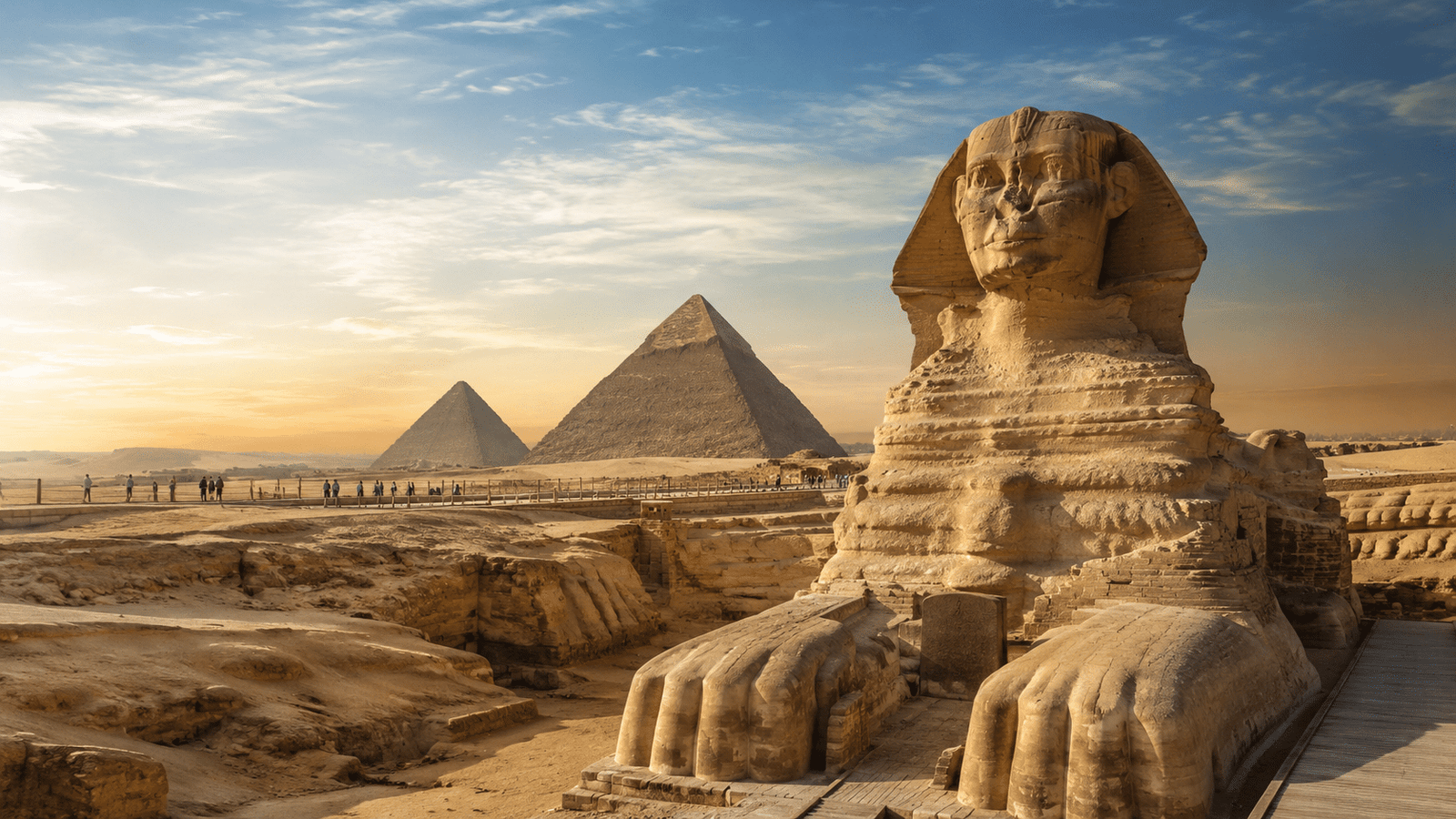
The Great Sphinx is a colossal limestone statue with the body of a lion and the head of a human, located on the Giza Plateau on the west bank of the Nile, just outside modern Cairo. It sits directly beside the causeway leading to the Pyramid of Khafre, facing due east toward the rising sun.
Quick facts:
Unlike the pyramids beside it, which were built block by block from quarried stone, the Sphinx was carved in place out of the natural limestone ridge left behind after workers extracted blocks for Khafre’s pyramid complex. This makes it not a constructed building but a single, monolithic sculpture — one of the largest ever made by human hands.
Who Built the Great Sphinx — and When?
This is the question every visitor asks, and the honest answer is: Egyptologists are confident about the era, less certain about the exact pharaoh, and there is no inscription on the statue itself that settles the debate definitively.
The Mainstream View: Khafre, Around 2500 BCE
The most widely accepted theory among credentialed Egyptologists is that the Great Sphinx was commissioned by Pharaoh Khafre as part of his pyramid complex, somewhere around 2558–2532 BCE, during Egypt’s Fourth Dynasty. This places its construction firmly within the Old Kingdom, the era that also produced the Great Pyramid of Khufu (Khafre’s father) and the slightly smaller Pyramid of Menkaure.
The evidence supporting Khafre’s authorship is largely circumstantial but reasonably consistent:
- The Sphinx sits directly on the causeway leading to Khafre’s pyramid and valley temple, suggesting it was designed as part of the same architectural complex.
- A life-size statue of Khafre, found nearby in the so-called Valley Temple, bears a facial resemblance to the Sphinx.
- The Sphinx Temple immediately in front of the statue uses the same construction techniques and stone as Khafre’s nearby valley temple.
The Competing Theory: Khufu or Djedefre
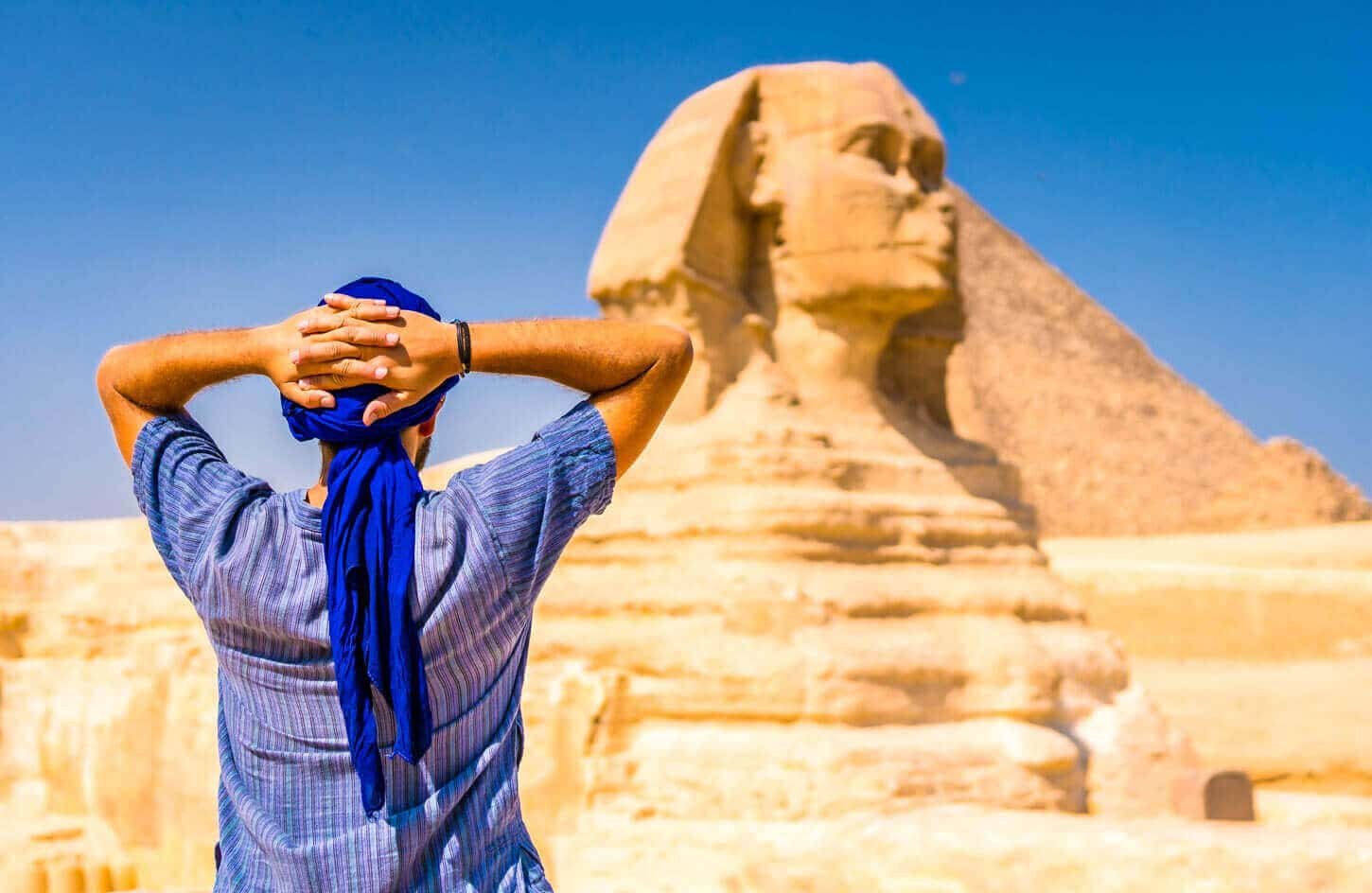
Not every Egyptologist accepts the Khafre attribution without question. A minority of researchers argue that the Sphinx’s face more closely resembles depictions of Khufu, Khafre’s father and builder of the Great Pyramid — and that the statue may have been commissioned by Khufu himself, or by his other son, Djedefre, as a memorial to his father.
This theory points to subtle stylistic differences in the Sphinx’s facial proportions compared with confirmed statues of Khafre, and notes that no contemporary inscription anywhere at Giza explicitly credits Khafre with the Sphinx’s construction. The debate has never been conclusively resolved, largely because the Sphinx itself carries no founding inscription — a gap that has fueled both legitimate scholarly disagreement and a long tail of fringe speculation.
Fringe Theories: Older Than Egypt Itself?
Outside mainstream Egyptology, a handful of researchers have proposed that the Sphinx is dramatically older than 4,500 years — citing erosion patterns on its enclosure walls that some interpret as water damage from a much wetter climate period, potentially pushing the date back several thousand years or more.
These theories are not accepted by the academic mainstream. The geological evidence is disputed, and there’s no archaeological, inscriptional, or stratigraphic evidence elsewhere at Giza that supports a civilization sophisticated enough to carve a monument like the Sphinx during the proposed earlier period. For visitors, it’s worth knowing this debate exists — guides at Giza will sometimes mention it — but it remains firmly outside the scholarly consensus.
Why Does the Sphinx Have a Lion’s Body?
The combination of a human head and a lion’s body was not an Egyptian invention exactly — but the symbolism was deeply Egyptian. The lion represented strength, royal power, and protection. By giving the statue a pharaoh’s head (likely wearing the royal nemes headdress) atop a lion’s body, the sculptors created an image that fused the pharaoh’s human authority with the lion’s raw physical power — a guardian figure watching over the necropolis and, symbolically, over the sun’s daily journey across the sky.
The Sphinx faces due east, directly into the rising sun, which reinforces this solar symbolism. In later periods, the Egyptians associated the Sphinx with the sun god Ra-Horakhty, and during the New Kingdom — more than a thousand years after its construction — it became the focus of its own dedicated religious cult.
What Happened to the Sphinx’s Nose?
This is the single most-asked question at the site, and the popular answer is wrong.
The myth: Napoleon Bonaparte’s soldiers shot the nose off with cannon fire during the French campaign in Egypt in 1798.
The reality: Sketches and written descriptions of the Sphinx missing its nose exist from before Napoleon was even born — including a drawing by the Danish explorer Frederic Louis Norden made in 1737, and written descriptions from 15th-century Arab historian al-Maqrizi describing the damage. The nose was already gone by the time Napoleon’s army arrived.
The actual cause remains uncertain. The most credible explanations include:
- Deliberate destruction by iconoclasts at some point during the medieval period, possibly motivated by religious objections to the figure
- Natural erosion and stone weathering, since the nose was a narrow, structurally vulnerable protrusion likely to crumble or break off over thousands of years
- A specific (but unverified) medieval account attributes the damage to a Sufi mystic named Muhammad Sa’im al-Dahr in the 14th century, who allegedly defaced the statue
No definitive evidence confirms any single explanation, but the Napoleon story can be confidently ruled out.
The Sphinx’s Missing Beard
Beyond the nose, the Sphinx also originally had a ceremonial false beard — a common feature on depictions of Egyptian pharaohs, symbolizing divine authority. Fragments of this beard, carved separately and attached to the statue’s chin, were discovered during 19th- and 20th-century excavations and are now displayed in the British Museum in London and the Egyptian Museum in Cairo.
The beard’s existence is one of the pieces of evidence that helps confirm the Sphinx was deliberately carved to represent a pharaoh, rather than purely as a generic mythological lion figure.
How Was the Sphinx Carved?
Because the Sphinx is carved from the bedrock itself rather than assembled from blocks, its construction method differs fundamentally from the pyramids beside it. Ancient workers used copper chisels and stone tools to cut away the surrounding limestone, gradually exposing and shaping the lion-bodied figure from the existing rock ridge — a method that required extraordinary planning, since mistakes could not easily be corrected on a monolithic structure of this scale.
The limestone at Giza varies in hardness through different geological layers, which is part of why the Sphinx shows uneven weathering today: softer layers near the base have eroded more than the harder layers higher up the body.
The Sphinx was buried up to its neck in desert sand for long stretches of its history. The first recorded excavation attempt was carried out by Thutmose IV around 1400 BCE — over a thousand years after the statue was built — after he reportedly dreamed that the Sphinx promised him the throne of Egypt if he cleared away the sand. He recorded this story on a granite slab known as the Dream Stele, which still stands between the Sphinx’s paws today.
The Sphinx Temple
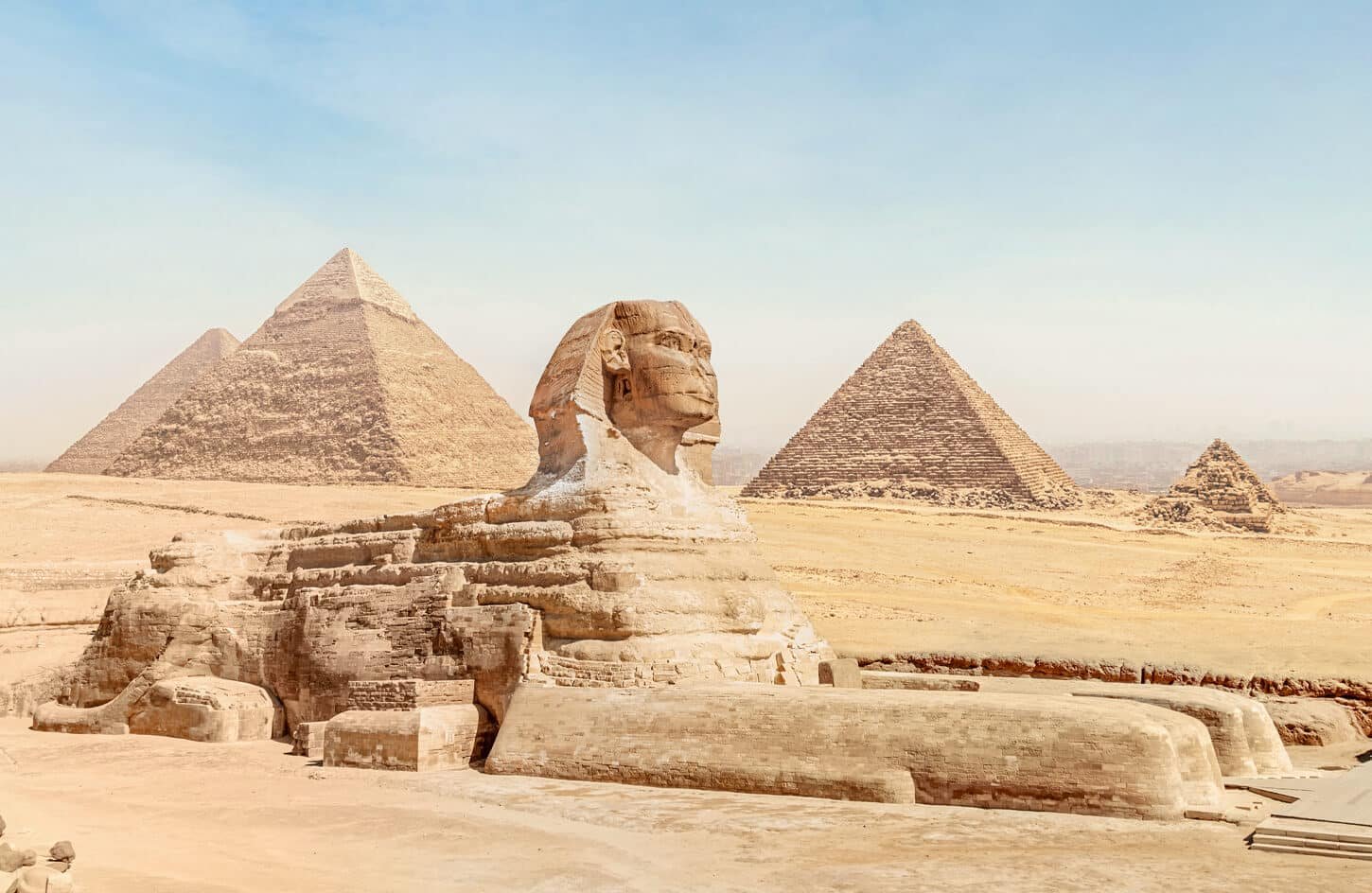
Directly in front of the Sphinx lies the Sphinx Temple, a structure built from massive limestone blocks using the same architectural style as Khafre’s nearby valley temple. Its purpose was almost certainly connected to solar worship — its layout suggests it was used for rituals tracking the sun’s movement, possibly tied to ceremonies celebrating the pharaoh’s divine, solar-linked kingship.
Much of the temple’s interior structure has eroded or collapsed over the millennia, but enough remains for visitors to clearly see its scale and layout from the surrounding viewing areas.
Visiting the Great Sphinx of Giza Today
Location
The Sphinx sits on the Giza Plateau, approximately 18–25 km southwest of central Cairo (around 30–45 minutes by car depending on traffic), directly adjacent to the pyramid complex of Khafre.
Tickets and Access
A general admission ticket to the Giza Plateau (covering the pyramids, the Sphinx, and the surrounding area) is required to enter. Tickets are typically priced separately from the optional interior pyramid entry tickets. As of 2026, expect to pay in the range of 200–500 EGP for general plateau access as a foreign visitor; prices are periodically revised, so confirm current rates before your visit.
Opening Hours
The Giza Plateau, including the Sphinx, is generally open from early morning until sunset, with seasonal variation between summer and winter hours.
Best Time to Visit
- Early morning (right at opening) offers the coolest temperatures, softest light for photography, and the smallest crowds — particularly valuable in the warmer months.
- Late afternoon, closer to sunset, gives you golden-hour lighting on the statue’s face, though crowds tend to build again as day-trip groups arrive for sunset photos.
- October through April is the most comfortable season overall, avoiding the intense heat of the Egyptian summer.
Best Viewpoints
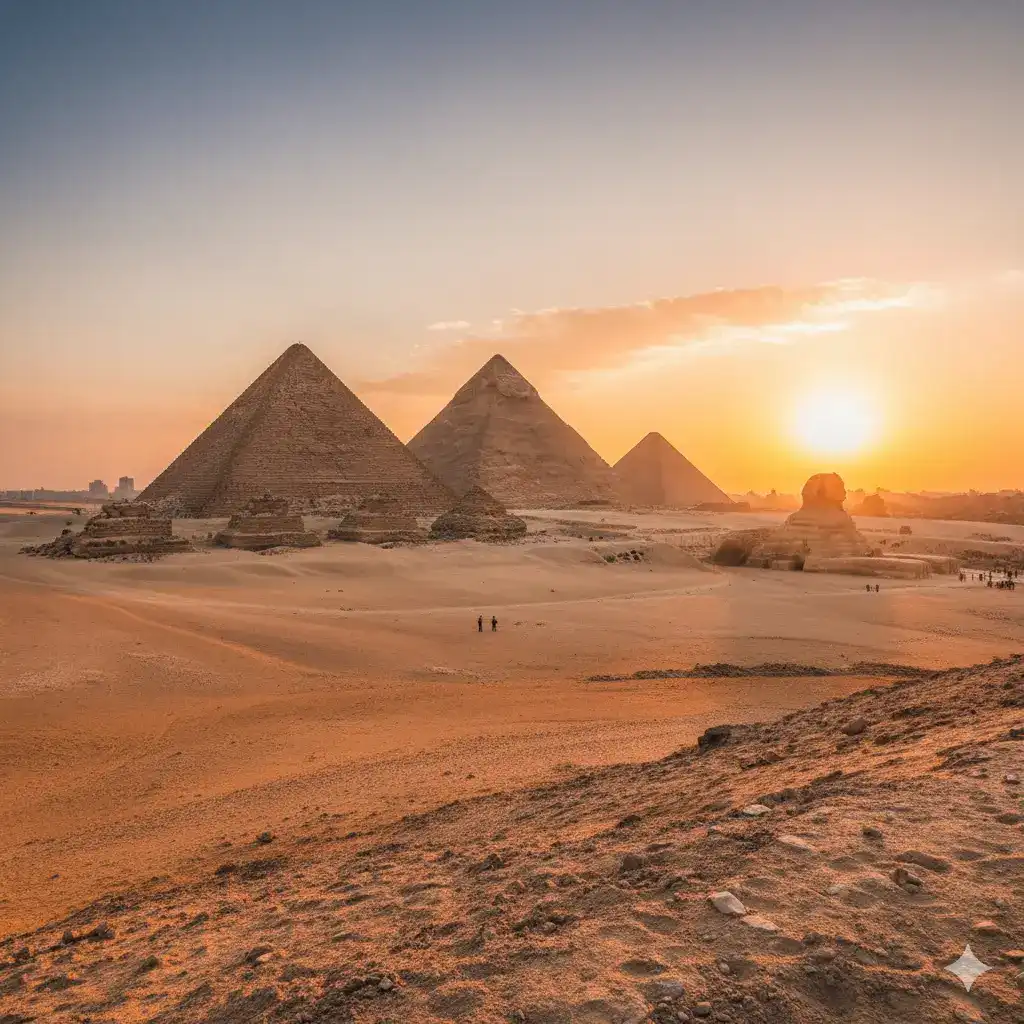
Most visitors see the Sphinx from the elevated viewing platform near the Sphinx enclosure, which gives the classic front-on photo with the statue and the pyramids in the background. For a different perspective, the panoramic viewpoint slightly further back on the plateau captures all three pyramids alongside the Sphinx in a single wide shot — a favorite for photographers.
The Sphinx Through History: A Timeline
Understanding the Sphinx’s full timeline helps explain why so much of its history is uncertain — it has been buried, excavated, reburied, and excavated again multiple times across nearly five millennia.
c. 2558–2532 BCE — Construction. Carved during Khafre’s reign (under the mainstream theory), as part of his pyramid and valley temple complex.
c. 1400 BCE — First recorded excavation. Prince Thutmose (later Pharaoh Thutmose IV) clears sand away from the buried Sphinx after reportedly dreaming the statue promised him the throne in exchange for freeing it from the sand. He records the event on the Dream Stele, still standing between the Sphinx’s paws.
New Kingdom period (c. 1550–1070 BCE) — Religious cult status. The Sphinx becomes associated with the solar deity Ra-Horakhty and develops its own dedicated religious cult, with shrines and votive offerings left by visitors and pilgrims.
Greco-Roman period — Continued fame. Greek and Roman writers reference the monument, though by this point it had already been partly buried by sand multiple times.
Medieval period — Damage to the face. Most modern scholars place the destruction of the nose and beard somewhere in this broad window, though the exact date and culprit remain unconfirmed.
1798 — Napoleon’s Egyptian campaign. Contrary to popular legend, the Sphinx’s nose was already missing by this point — visual records from decades earlier confirm this.
1817 — First modern excavation. Genoese explorer Giovanni Battista Caviglia leads the first major modern effort to clear sand from around the Sphinx, though it would be buried again within years.
1925–1936 — Major 20th-century excavation. French engineer Émile Baraize conducts the most extensive clearing of the Sphinx in the modern era, finally exposing the full body and the Sphinx Temple to the level visible today.
1980s–2000s — Restoration controversies. Several restoration attempts using modern materials caused stone to crack and detach due to incompatible expansion rates, leading to revised, more carefully managed conservation approaches still used today.
How the Great Sphinx Compares to Other Sphinxes
The Giza Sphinx is by far the most famous sphinx in the world, but it is not unique — sphinx-form statues appear throughout ancient Egyptian art and architecture, and the broader “sphinx” concept exists in several other ancient cultures as well.
Other Egyptian sphinxes: Smaller sphinx statues line the Avenue of Sphinxes connecting Luxor Temple and Karnak Temple in Luxor, though these feature ram heads (representing the god Amun) rather than human heads. Egyptian temples and tomb complexes throughout the country feature smaller sphinx figures as guardian statues.
Greek sphinxes: In Greek mythology, the sphinx was typically depicted as female, with wings, and was best known for the riddle she posed to travelers near Thebes in the Oedipus myth — a very different cultural role from the protective, royal symbolism of the Egyptian original.
Mesopotamian and other Near Eastern variants: Lamassu figures from ancient Assyria — winged bulls or lions with human heads — share conceptual similarities with the Egyptian Sphinx, though they developed independently as guardian figures for palace gateways.
What makes the Great Sphinx of Giza unique among all of these is its sheer scale and age — no other sphinx-form monument from the ancient world approaches its size, and none has survived from as early a period.
Photography Tips for the Sphinx
Because the Sphinx is one of the most-photographed monuments on Earth, getting a shot that doesn’t look identical to a million others takes a little planning.
Avoid the midday flat light. Between roughly 11 AM and 2 PM, harsh overhead sun flattens the statue’s features and washes out detail. Early morning or late afternoon side-lighting brings out the texture of the weathered limestone far better.
The “kissing the Sphinx” forced-perspective shot is a classic tourist photo taken from a specific angle near the viewing platform — ask your guide to show you the exact spot, since a few meters in either direction ruins the illusion.
For the wide panorama shot showing the Sphinx with all three pyramids behind it, move further back along the plateau’s panoramic viewpoint rather than shooting from directly in front of the statue.
Avoid the crowds in your frame by visiting right at opening time, before the bulk of tour buses arrive — by mid-morning, the viewing platforms can be quite packed, especially during peak season (December–February).
Common Myths About the Sphinx, Debunked
Beyond the Napoleon nose myth already covered above, several other persistent claims circulate about the Sphinx that are worth addressing directly:
Myth: The Sphinx was built by aliens or a lost advanced civilization. There is no credible archaeological evidence supporting this claim. The tools, construction techniques, and surrounding archaeological context all align consistently with Old Kingdom Egyptian capability and culture.
Myth: There are hidden chambers beneath the Sphinx containing lost technology or the Hall of Records. This idea, popularized by some alternative history writers, has no supporting archaeological evidence. Ground-penetrating radar surveys conducted around the Sphinx have found some small voids and cavities consistent with natural limestone formations or minor historical excavation work, but nothing resembling a hidden chamber complex.
Myth: The Sphinx’s body shows clear evidence of water erosion proving it’s over 10,000 years old. This remains a genuinely disputed claim among a small number of researchers, but it has not gained acceptance among mainstream Egyptologists or geologists specializing in the region, who attribute the weathering patterns to wind erosion and the natural variability of the limestone layers.
Myth: The Sphinx was originally built with a different head, later recarved. Some researchers have proposed the head was reshaped from an original lion’s head into a human head at a later date, based on perceived proportional inconsistencies between the head and body. This remains a minority theory without conclusive supporting evidence.
Combining the Sphinx with the Rest of the Giza Plateau
The Sphinx is almost always visited as part of a broader Giza Plateau tour rather than as a standalone stop, since it sits just steps from the pyramids themselves. A typical half-day or full-day Giza itinerary includes:
- The Great Pyramid of Khufu
- The Pyramid of Khafre
- The Pyramid of Menkaure
- The Great Sphinx and Sphinx Temple
- Optional: the Solar Boat Museum, displaying a full-size reconstructed funerary boat buried beside the Great Pyramid
For travelers wanting to go deeper into the history and engineering behind the plateau’s other monuments, our guides to who built the pyramids of Giza, Pyramids of Giza facts, and what it’s like inside the Great Pyramid cover the rest of the plateau in full detail.
🏛️ Want to see the Sphinx with an expert Egyptologist guide? Pure Nile Tours offers private guided tours of the full Giza Plateau, with insider access and historical context most visitors miss entirely. Explore Private Pyramids Tours →
Frequently Asked Questions
How old is the Great Sphinx of Giza?
The Sphinx is generally dated to around 2558–2532 BCE, during the reign of Pharaoh Khafre, making it approximately 4,500 years old. Some alternative theories propose a much older date, though these are not accepted by mainstream Egyptology.
Who built the Great Sphinx?
Most Egyptologists credit Pharaoh Khafre, based on its position within his pyramid complex and stylistic links to a statue of him found nearby. A minority view credits his father Khufu or brother Djedefre instead. No inscription definitively settles the question.
Why is the Sphinx’s nose missing?
The exact cause is unknown, but it was already missing before Napoleon’s troops arrived in Egypt in 1798 — disproving the popular cannon-fire myth. Deliberate destruction during the medieval period or natural erosion are the leading explanations.
How big is the Great Sphinx?
The Sphinx measures approximately 73 meters (240 feet) long and 20 meters (66 feet) tall, carved from a single mass of limestone bedrock.
Can you go inside the Sphinx?
No, the Sphinx’s interior is not open to the public. Small internal tunnels and chambers do exist within the structure, used historically for research and maintenance access, but they are not part of the visitor experience.
Is the Sphinx older than the pyramids?
No — mainstream Egyptology dates the Sphinx to the same general period as the Pyramid of Khafre, making it roughly contemporary with (not older than) the Giza pyramids, despite some fringe claims to the contrary.
Do you need a separate ticket for the Sphinx?
The Sphinx is included within the general Giza Plateau admission ticket; no separate ticket is required to view it from the standard viewing areas.
Final Thoughts
The Great Sphinx of Giza has spent 4,500 years facing the sunrise, watched empires, religions, and entire civilizations rise and fall around it, and still draws millions of visitors who stand at its base trying to make sense of its silent, weathered face. The honest answer to most of the big questions — who built it exactly, why its nose is missing, what its original purpose fully meant to the people who carved it — is that we don’t know with total certainty. That unresolved mystery is, in its own way, part of why the Sphinx remains one of the most compelling monuments on Earth.
Standing in front of it for the first time, scale and silence do more to convey its age than any fact sheet can.
🏛️ Planning your Giza Plateau visit? Pure Nile Tours’ private Egyptologist-guided tours cover the Sphinx, all three pyramids, and the Solar Boat Museum — with the historical context and insider access that make the difference between seeing the Sphinx and actually understanding it. Book a Private Pyramids Tour →