Karnak Temple Visit Guide: History, Tips & What to See
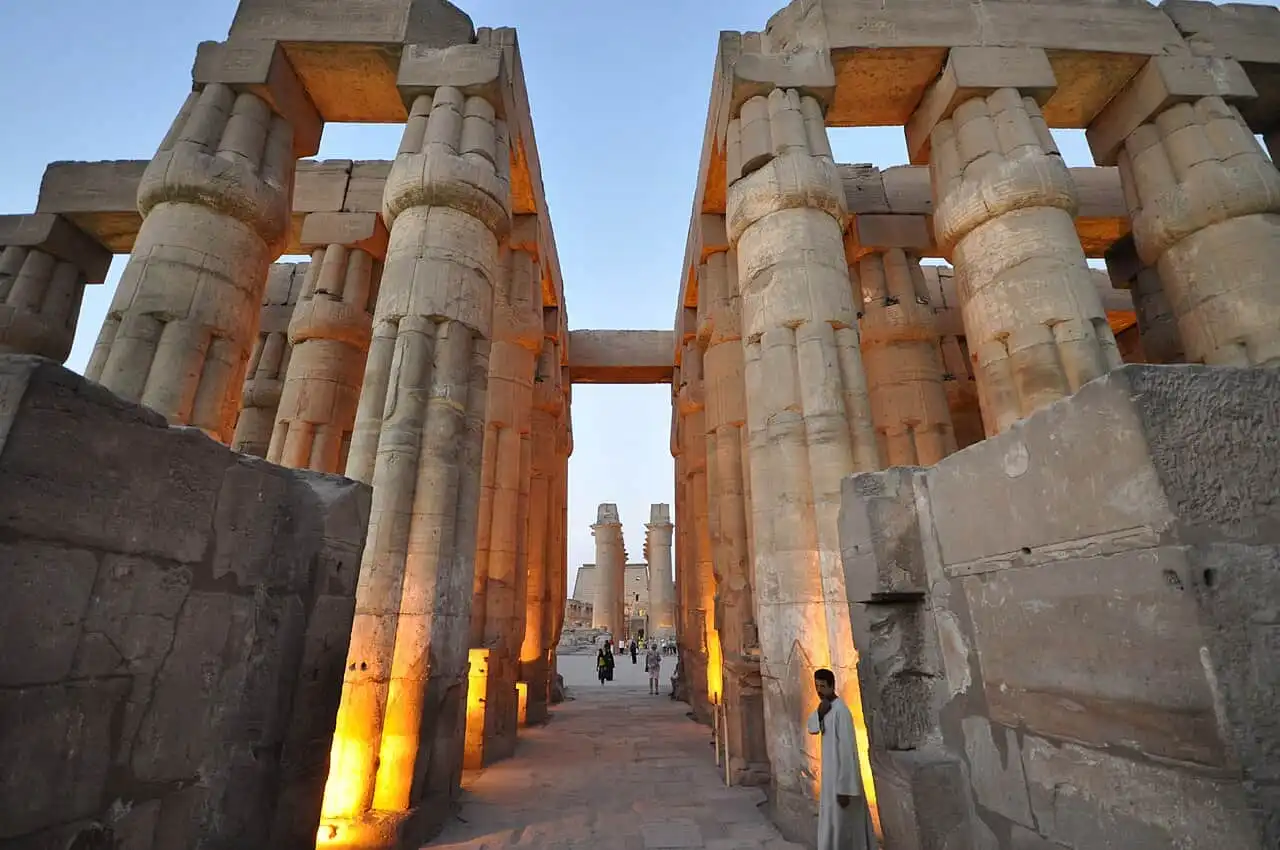
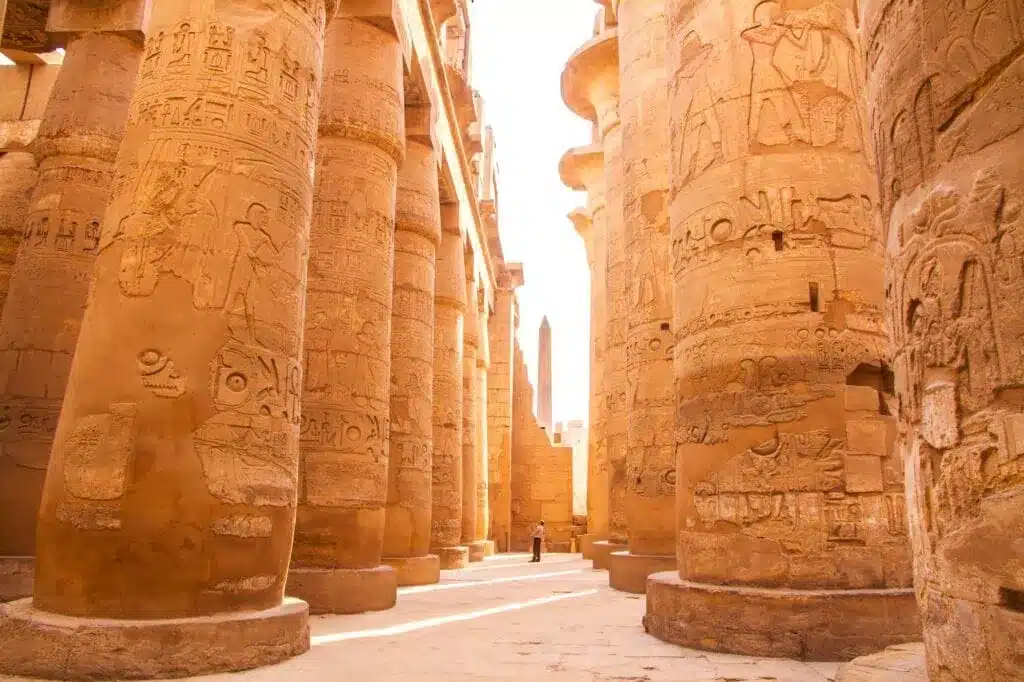
karnak temple visit guide There is a moment that happens to almost every visitor at Karnak Temple. You walk through the First Pylon, step into the Great Hypostyle Hall, and stop. You cannot help it. The sheer scale of what surrounds you — 134 colossal sandstone columns, many of them 21 meters tall, arranged in a forest of stone that swallows the sky — triggers something that goes beyond admiration. It feels closer to awe, the kind of sensation the ancient Egyptians specifically designed this space to produce.
Karnak is the largest religious complex ever built by any civilization in the ancient world. It covers over 100 hectares, roughly the size of several city blocks, and was constructed and expanded by dozens of pharaohs over a period of nearly 2,000 years. Understanding it properly requires more than a fast walk-through. It deserves preparation, time, and ideally, a guide who knows how to unlock its secrets.
This complete visitor guide covers everything you need to know to get the most from your visit to Karnak Temple — its history, what to see, how to navigate, tickets, opening hours, best times to visit, and insider tips that most tourists miss.
What Is Karnak Temple?
Karnak Temple — officially the Karnak Temple Complex — is a vast ancient Egyptian sanctuary located on the east bank of the Nile River in Luxor (ancient Thebes), about 3 kilometers north of Luxor Temple. It was the most important religious center in ancient Egypt during the New Kingdom period (1550–1070 BCE), the heart of the cult of Amun-Ra, the king of the gods.
Unlike most Egyptian temples, which were built by a single pharaoh or small group of rulers, Karnak grew continuously over approximately 2,000 years. From the Middle Kingdom period (around 2000 BCE) through the Ptolemaic era (ending 30 BCE), almost every major pharaoh in Egyptian history added something to Karnak — a pylon, a court, an obelisk, a chapel, a hall. The result is an architectural encyclopedia of Egyptian history, where you can trace the ambitions, styles, and stories of dozens of rulers in a single visit.
Karnak consists of three main temple precincts:
The Precinct of Amun-Ra — by far the largest and the focus of most visitor attention
The Precinct of Mut — dedicated to Amun’s consort, partially accessible
The Precinct of Montu — dedicated to the war god, currently closed to tourists
The complex also includes the Sacred Lake, multiple smaller temples and chapels, a forest of obelisks, and the famous Avenue of Sphinxes that once connected Karnak to Luxor Temple 3 kilometers away.
History of Karnak Temple
The Middle Kingdom Origins
The earliest known religious structures at Karnak date to the reign of Senusret I (1971–1926 BCE) during Egypt’s Middle Kingdom period. A small alabaster chapel built by Senusret I — known as the White Chapel — was later dismantled by subsequent pharaohs to use as fill material inside a new pylon, where its blocks were accidentally preserved. Today, the reassembled White Chapel stands in Karnak’s Open Air Museum and represents one of the finest examples of Middle Kingdom artistry in existence.
The site Senusret I chose was already considered sacred. Tradition held that the original sacred mound of creation — the spot where the god Amun arose from the primordial waters at the beginning of time — was located here. Building a temple at Karnak was therefore not merely an act of devotion but a statement that the pharaoh controlled the physical center of the universe.
The New Kingdom: Karnak at Its Peak
Karnak reached its greatest splendor during the New Kingdom (1550–1070 BCE), when Egypt was at the height of its power and wealth. The great pharaohs of the 18th, 19th, and 20th dynasties poured captured war wealth, tribute from subject peoples, and the labor of thousands into transforming Karnak into the most magnificent religious complex in the ancient world.
Thutmose I (1504–1492 BCE) erected two massive pylons (the Fourth and Fifth) and two towering obelisks — one of which still stands, the other toppled by later pharaohs.
Hatshepsut (1473–1458 BCE), Egypt’s great female pharaoh, raised two of the tallest obelisks ever created in ancient Egypt at Karnak. One of her obelisks still stands, at approximately 29 meters, the tallest surviving obelisk in Egypt. She also built a beautiful red quartzite chapel (the Red Chapel) that can be seen reassembled in the Open Air Museum.
Thutmose III (1458–1425 BCE) undertook one of the most extensive building programs at Karnak, including the extraordinary Festival Hall (Akh-Menu) at the rear of the complex. This unusual hall, built to commemorate Thutmose’s jubilee, has columns designed to look like tent poles — a deliberate military reference honoring his campaigns in Syria and Palestine.
Amenhotep III (1390–1352 BCE) added the magnificent Third Pylon and built extensively across the complex. His reign was a golden age of artistic refinement, and Karnak’s decorations from this period show a particularly exquisite sensitivity in the carving of reliefs.
Ramesses II (1279–1213 BCE) built the Great Hypostyle Hall’s outer sections, installed dozens of his own statues throughout the complex, and added the First and Second Pylons. The Hypostyle Hall is now so associated with his name that many visitors mistakenly believe he built the entire structure — in fact, it was begun under Seti I and completed under Ramesses II, a joint achievement across two reigns.
Ramesses III (1184–1153 BCE) built a complete small temple to Amun within the First Court, which remains one of the best-preserved structures in the complex.
The Later Periods
After the New Kingdom’s decline, Karnak continued to be used and embellished through the Third Intermediate Period, the Late Period, and into the Ptolemaic era. Nubian pharaohs of the 25th Dynasty, Persian rulers, and finally the Ptolemaic Greek kings all added their contributions to the complex.
The Ptolemies were the last rulers to build significantly at Karnak, completing several structures that had been started by earlier pharaohs and adding their own decorative programs. By the Roman period, Karnak had effectively ceased functioning as an active cult center, though it remained a landmark and tourist attraction for ancient visitors — some of whom scratched their own graffiti on the walls, just as tourists do today (please don’t).
What to See at Karnak Temple: A Room-by-Room Guide
The Avenue of Sphinxes (Ram-Headed Sphinxes)
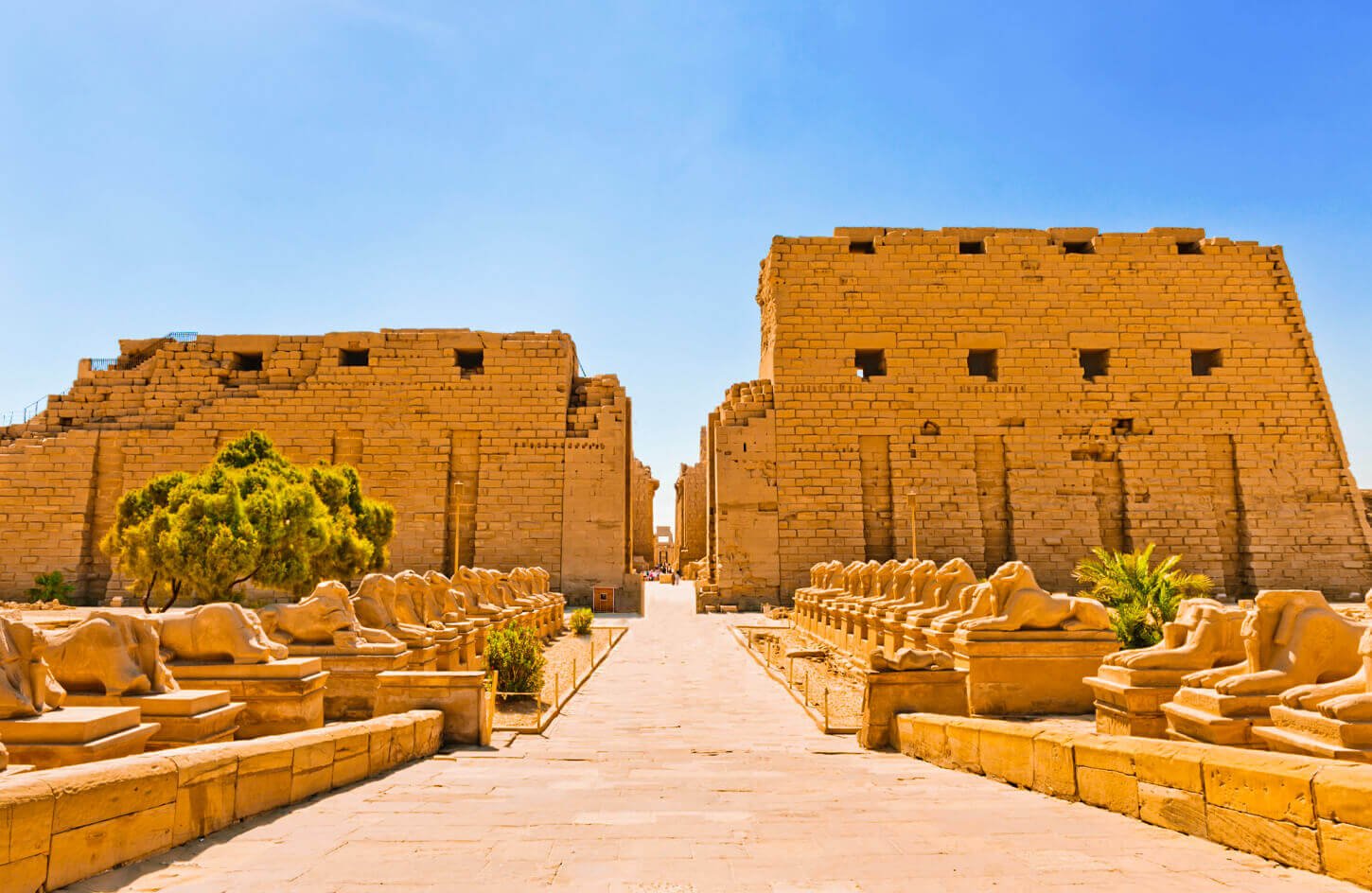
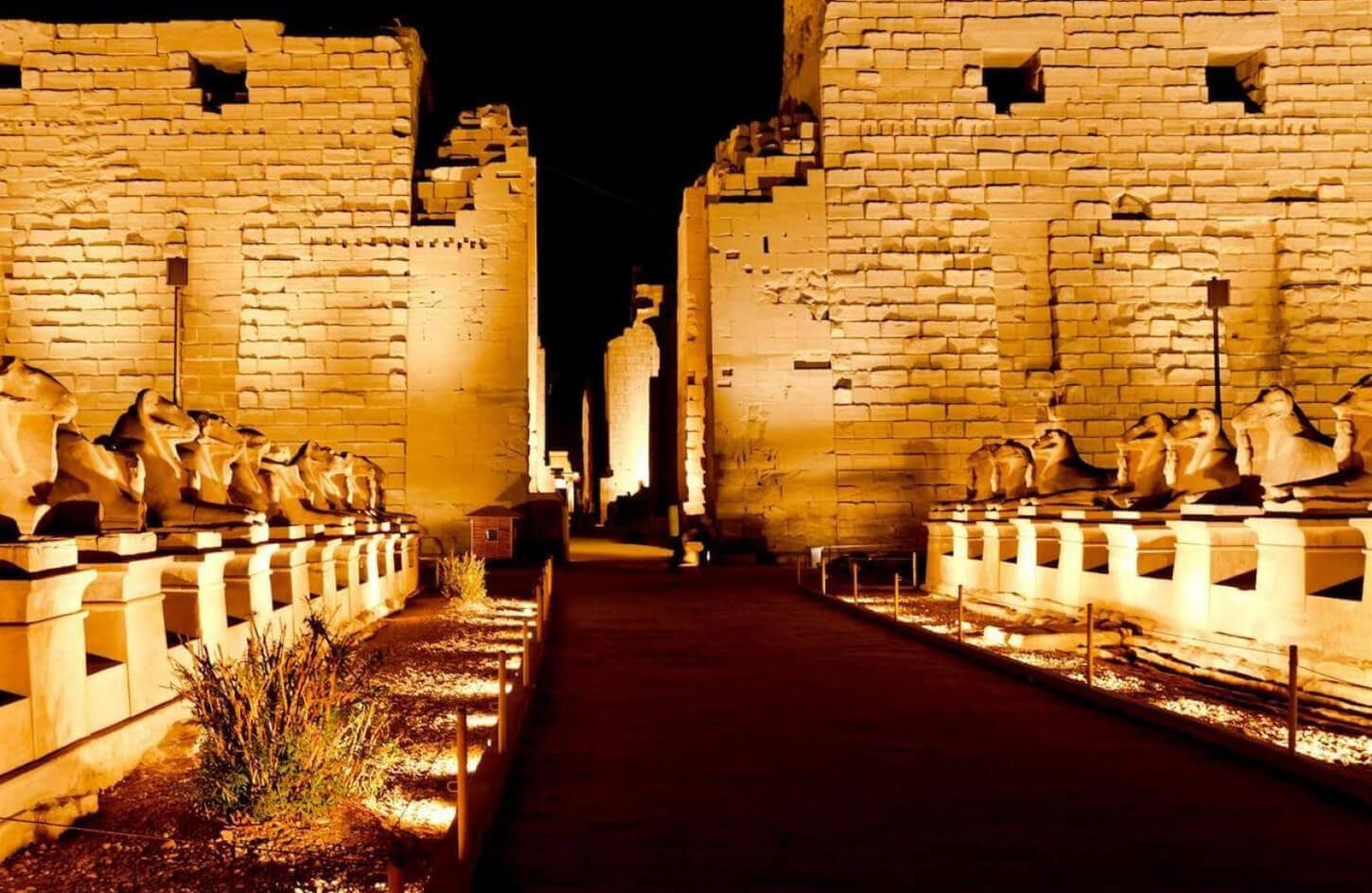
Your visit begins before you even reach the temple gates. The processional avenue leading to the First Pylon is lined with ram-headed sphinxes — a distinctive Karnak symbol, with the body of a lion and the head of a ram, the sacred animal of Amun. Each sphinx cradles a small royal statue between its paws.
This avenue once connected the Nile quay to Karnak’s main entrance, and during the Opet Festival (Karnak’s most important annual ceremony), the golden statue of Amun would be carried in procession along this path to Luxor Temple.
The First and Second Pylons
The First Pylon is the main entrance to Karnak and the most recent of all the pylons — it was built in the 30th Dynasty (around 380–362 BCE) and was never completed. If you look carefully at the top, you can see the unfinished mudbrick ramp construction workers left behind when they abandoned the project. The pylon towers are among the largest ever built in ancient Egypt.
The First Court beyond is a wide open space that includes the small temple of Ramesses III (on your left), several colossal statues, and a row of sphinxes. The Second Pylon leads into the complex’s most famous space.
The Great Hypostyle Hall
This is the showstopper, the space that makes Karnak unlike anything else in the ancient world. The Great Hypostyle Hall covers 5,000 square meters — larger than the Notre-Dame Cathedral in Paris — and contains 134 massive papyrus-shaped columns arranged in 16 rows.
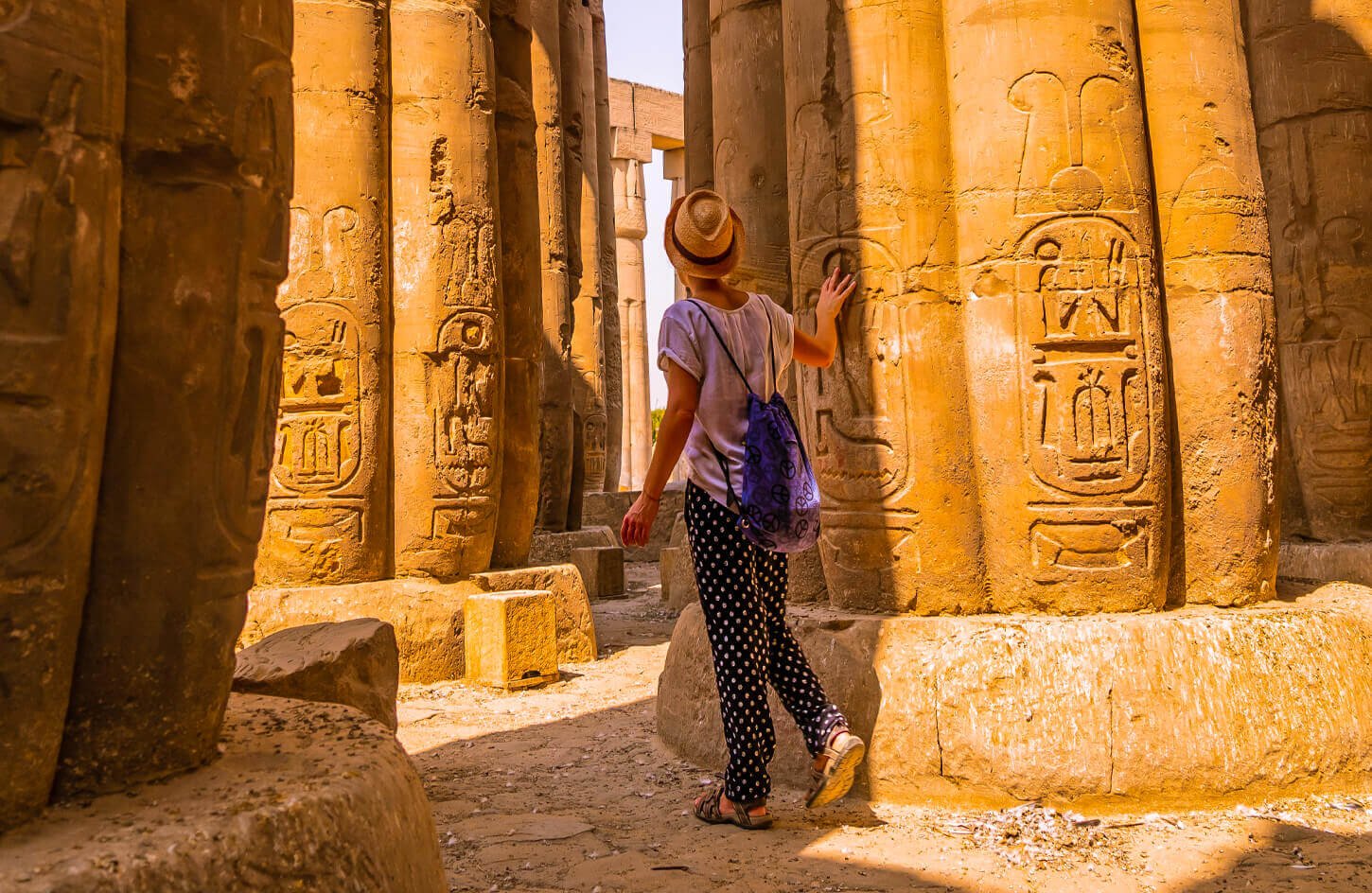
The 12 central columns are the largest, reaching 21 meters in height with capitals in the open papyrus flower form, each wide enough to stand 100 people on top. The remaining 122 columns use closed papyrus bud capitals and are slightly smaller at 14 meters. All of the columns were once painted in brilliant colors, and traces of pigment can still be seen on protected surfaces, particularly on reliefs near the tops of the columns.
The hall was built in stages: the central nave and 12 great columns were started by Seti I and completed by Ramesses II. The northern side of the hall (on your left as you enter) shows Seti I’s reliefs — fine, sensitive carving typical of the early 19th Dynasty. The southern side shows Ramesses II’s additions — bolder, more propagandistic imagery celebrating his military victories.
Look for the battle reliefs on the outer walls of the hall, where both Seti I and Ramesses II depicted their military campaigns in Syria-Palestine. These are among the most detailed battle scenes in ancient Egyptian art.
The Festival Hall of Thutmose III (Akh-Menu)
At the far eastern end of the Amun Precinct, past multiple courts and pylons, stands one of Karnak’s most unusual and rewarding structures — the Festival Hall built by Thutmose III to celebrate his jubilee and honor his military victories.
The hall’s columns are unique: instead of the standard papyrus forms found elsewhere in Karnak, these columns are shaped like tent poles, their tapering shafts designed to evoke the royal tent in which Thutmose III celebrated military victories. It is one of the few places in ancient Egypt where you can see a deliberate architectural metaphor for military life rather than divine ritual.
The rear chambers of the Festival Hall contain the remarkable Botanical Garden reliefs, where Thutmose III recorded the exotic plants and animals he encountered on his campaigns in Syria, Palestine, and Nubia. These carefully observed natural history illustrations, carved on the walls of a royal temple more than 3,400 years ago, are both scientifically interesting and aesthetically extraordinary.
Look also for the room with early Christian paintings: parts of the Festival Hall were converted into a Coptic church, and some chambers still show fragmentary early Christian frescoes and inscriptions layered over the ancient Egyptian carvings.
The Obelisks
Karnak originally contained at least seven pairs of obelisks. Today, the most notable surviving examples are:
The Obelisk of Hatshepsut — at approximately 29 meters, this is the tallest standing obelisk in Egypt. It was originally one of a pair; the other was toppled in antiquity. Hatshepsut’s stepson Thutmose III, who appears to have had complicated feelings about his predecessor, later built walls around her obelisks — apparently intending to hide them while leaving them structurally intact, perhaps out of respect for the religious significance of the stones themselves.
The Obelisk of Thutmose I — one of the earliest obelisks at Karnak, standing at the center of the Precinct of Amun. Its pair was transported to Rome in antiquity and now stands in front of the Church of San Giovanni in Laterano.
The Sacred Lake
Near the center of the Amun Precinct lies the Sacred Lake — a large rectangular artificial lake lined with stone quays. The lake measured approximately 120 meters by 77 meters and was used for ritual purification. Priests would bathe in the lake before performing temple ceremonies, and sacred barques (boats) carrying the golden statue of Amun were rowed across its surface during festival processions.
Today, the Sacred Lake is still filled with water and surrounded by shaded seating — a good place to rest midway through your visit, particularly in the heat of midday. At night, the Sound and Light show uses the lake’s northern shore as the main seating area, with the temple illuminated in the background.
Look for the large granite scarab statue at the lake’s northwestern corner. This scarab (a dung beetle, symbol of the sun god Khepri and of regeneration) was placed here by Amenhotep III and is considered by Egyptians to bring good luck. Tradition holds that walking around the scarab seven times will grant a wish — you will almost certainly see other visitors doing exactly this.
The Open Air Museum
Inside the Karnak complex, just to the north of the main axis, lies a small but important open-air museum containing reassembled structures and fragments that were found disassembled within the later pylons. The most important exhibits include:
The White Chapel of Senusret I — arguably the finest piece of Middle Kingdom architecture surviving in Egypt. Built around 1960 BCE from fine white limestone, the chapel’s columns are carved with exquisite precision and its decorations show the quality of craftsmanship at Karnak’s oldest phase.
The Red Chapel of Hatshepsut — a magnificent quartzite shrine built by Egypt’s female pharaoh to house the sacred barque of Amun. Its 300+ blocks are carved with detailed scenes of Hatshepsut performing religious rituals, and it provides an intimate window into Hatshepsut’s reign.
The Sound and Light Show
Every evening, Karnak hosts one of Egypt’s most elaborate Sound and Light shows. Visitors walk through parts of the temple as it is illuminated with dramatic lighting and accompanied by a recorded narration covering 4,000 years of Egyptian history. The show ends at the Sacred Lake, where the audience sits and watches the temple reflected in the water.
The show runs in different languages on different nights and typically lasts about 75 minutes. It is not a substitute for a proper daytime visit — the information presented is quite general — but the illuminated experience of the Hypostyle Hall and the view of the complex reflected in the Sacred Lake at night are genuinely beautiful.
Practical Information: How to Visit Karnak Temple
Getting There
Karnak Temple is located approximately 3 kilometers north of central Luxor on the east bank of the Nile. Options for reaching it include:
Walking: From Luxor Temple along the Corniche (riverbank promenade), Karnak is about a 35–45 minute walk. The walk is pleasant in the early morning or evening.
Taxi or Uber/Careem: 10–15 minutes from central Luxor, approximately 30–50 EGP each way.
Horse carriage (calèche): A traditional option popular with tourists, available along the Corniche. Negotiate the price before setting off.
Tour vehicle: If you are visiting with a private tour guide, all transport is typically arranged for you.
Entrance Tickets (2026)
Adult (Foreign): 450 EGP (approximately $15 USD)
Student (Foreign with valid ID): 225 EGP
Egyptian Adult: 100 EGP
Egyptian Student: 50 EGP
Open Air Museum (additional): 100 EGP (highly recommended)
Tickets are purchased at the main ticket office just outside the temple entrance.
Opening Hours
Summer (April–September): 6:00 AM – 6:30 PM
Winter (October–March): 6:00 AM – 5:30 PM
The Sound and Light show begins at approximately 7:00 PM (first show) and 8:15 PM (second show), with a third show at 9:30 PM in some seasons.
How Much Time Do You Need?
Minimum: 2 hours (covers main structures only)
Recommended: 3–4 hours (main structures + Open Air Museum + Sacred Lake)
For history enthusiasts: 5–6 hours (full complex in detail)
Best Time to Visit Karnak
Best Time of Day
Early morning (6:00–9:00 AM) is by far the best time to visit. The light is soft and golden, the temperatures are bearable even in summer, and the crowds are significantly thinner than at midday. The Hypostyle Hall at sunrise, with shafts of light filtering between the massive columns, is one of the transcendent visual experiences of Egyptian travel.
Late afternoon (3:00–5:00 PM) is the second-best option. Crowds thin as midday visitors leave, the temperature begins to drop, and the light takes on beautiful warm tones for photography.
Avoid: 10:00 AM to 2:00 PM in summer. Temperatures in Luxor regularly exceed 40°C in this window from June through August, and standing in an open-air temple complex in this heat is genuinely hazardous.
Best Season
October through April offers the most comfortable visiting conditions. November through February is the peak tourist season — expect more visitors at major monuments, but the weather is simply superb. March and April are increasingly popular shoulder months with good weather and slightly fewer crowds.
Insider Tips for Visiting Karnak
Hire a licensed Egyptologist guide. Karnak is one of those places where a great guide makes an exponential difference to the experience. The political intrigue (Hatshepsut’s obelisks, the erasure of Akhenaten), the religious symbolism (what all those columns actually represent), and the hidden details (the botanical garden, the early Christian church within the Festival Hall) are invisible without someone who knows where to look and what to say. Pure Nile Tours provides private Egyptologist guides for all Luxor tours.
Include the Open Air Museum. Most visitors skip it because it requires a separate ticket (100 EGP) and is slightly out of the way. This is a mistake. The White Chapel of Senusret I alone is worth the extra fee — it is arguably the most beautiful object in Karnak.
Look up. It sounds simple, but most visitors move through the Hypostyle Hall looking at the column bases and the lower reliefs. Look up at the carved column capitals, the traces of original paint, and the clerestory windows that once filtered light into the hall. The scale is different from up there.
Don’t miss the Festival Hall of Thutmose III. Located at the far eastern end of the complex, it receives far fewer visitors than the front sections. The tent-pole columns, the Botanical Garden reliefs, and the remnants of early Christian painting make it one of the most layered and intellectually interesting spaces in all of ancient Egypt.
Buy water before entering. There are vendors outside the ticket office and near the Sacred Lake, but prices inside are higher. Bring at least 1.5 liters per person in summer, 1 liter in winter.
Allow time at the Sacred Lake. The area around the Sacred Lake offers shade (rare at Karnak), seating, and excellent views back toward the Hypostyle Hall. It is a good place to rest, process what you have seen, and prepare for the second half of your visit.
Combining Karnak with Other Luxor Sites
Karnak is best visited as part of a full day or multi-day exploration of Luxor’s extraordinary concentration of ancient monuments.
Karnak + Luxor Temple (East Bank Day)
The two great temples of ancient Thebes are 3 kilometers apart, connected by the recently restored Avenue of Sphinxes. A full east bank day typically includes:
Morning: Karnak Temple (3–4 hours)
Afternoon: Rest during peak heat
Sunset/Evening: Luxor Temple (1.5–2 hours)
Luxor Temple is particularly beautiful at sunset and in the early evening when it is illuminated — a perfect complement to the morning at Karnak.
West Bank Day: Valley of the Kings, Hatshepsut Temple, and More
The west bank of the Nile at Luxor contains an equally extraordinary concentration of monuments, including:
Valley of the Kings — the royal necropolis of the New Kingdom pharaohs, with 63 tombs including Tutankhamun’s
Temple of Hatshepsut (Deir el-Bahri) — the stunning mortuary temple of Egypt’s great female pharaoh, carved into a limestone cliff
Colossi of Memnon — two 18-meter seated statues of Amenhotep III at the entrance to the west bank monuments
Medinet Habu — the mortuary temple of Ramesses III, less visited but equally impressive
A comprehensive Luxor itinerary typically requires two full days: one for the east bank (Karnak + Luxor Temple) and one for the west bank.
Karnak as Part of a Nile Cruise
For travelers on a Nile Cruise between Aswan and Luxor, Karnak Temple is one of the signature stops. It is typically visited on the first morning in Luxor (if cruising from Aswan) or on the day before departure (if beginning in Luxor).
🛥️ Pure Nile Tours includes a private guided visit to Karnak Temple as part of all Luxor-based Nile Cruise itineraries. Our expert Egyptologist guides unlock the full depth of Karnak’s history and symbolism in a way that transforms the experience from impressive to unforgettable. View Nile Cruise Packages →
Frequently Asked Questions About Karnak Temple
How long does it take to visit Karnak Temple?
A minimum of two hours for the main structures. Three to four hours is the recommended duration for a satisfying visit that includes the Open Air Museum and Sacred Lake. History enthusiasts can spend five to six hours without running out of things to examine.
What is the best time to visit Karnak Temple?
Early morning, between 6:00 and 9:00 AM, for the best light, coolest temperatures, and smallest crowds. October through April offers the most comfortable seasonal conditions overall.
Is Karnak Temple suitable for children?
Yes, though the scale requires some energy. The Great Hypostyle Hall is genuinely awe-inspiring for children who can grasp the concept of ancient civilizations. The scarab at the Sacred Lake is invariably popular — children love circling it seven times for a wish.
Do I need a guide for Karnak?
Not technically required, but strongly recommended. Karnak’s historical and symbolic depth is largely inaccessible without explanation. The difference between visiting with and without a knowledgeable Egyptologist guide is substantial.
What is the difference between Karnak and Luxor Temple?
Both are ancient Egyptian temples in modern Luxor. Karnak is much larger, more complex, and covers a longer historical span — it was the main cult temple of Amun. Luxor Temple is smaller, better preserved in places, and was specifically used for the annual Opet Festival. They were connected by the Avenue of Sphinxes. Visit both if possible.
Can I see the Sound and Light Show without visiting during the day?
Technically yes, but it is not recommended. The daytime visit provides the context and visual familiarity that makes the evening illuminations meaningful. The show narration assumes some prior knowledge of the site.
Is Karnak Temple bigger than the Pyramids of Giza?
The Karnak Temple Complex covers approximately 100 hectares, making it the largest religious complex ever built. The Great Pyramid of Giza covers about 5.3 hectares. In terms of total site area, Karnak is larger. In terms of height and individual monument scale, the Great Pyramid is incomparable.
Conclusion: Why Karnak Temple Belongs on Every Egypt Itinerary
Karnak Temple is not one of those places that you can see adequately in a hurry. It rewards preparation, time, and curiosity. The more you know when you arrive, the more you will see. The more time you spend, the more it reveals.
What Karnak offers — if you allow it — is a direct encounter with the ambitions, beliefs, and artistry of a civilization that shaped the ancient world for three thousand years. Every pylon, every column, every obelisk, every carved relief is a record of a specific pharaoh’s desire to leave something permanent in the world. Standing in the Great Hypostyle Hall, surrounded by 134 columns that have been standing for 3,200 years, that desire feels not ancient but immediate.
That is what Karnak does to you. It collapses time.
🏛️ Planning a visit to Luxor and Karnak Temple? Pure Nile Tours offers private day tours of Luxor’s east and west banks, with expert Egyptologist guides who make every monument come alive. We also offer complete Nile Cruise packages that include Karnak as part of a full Luxor–Aswan itinerary. Book a Luxor Private Tour →