siwa oasis egypt travel guide
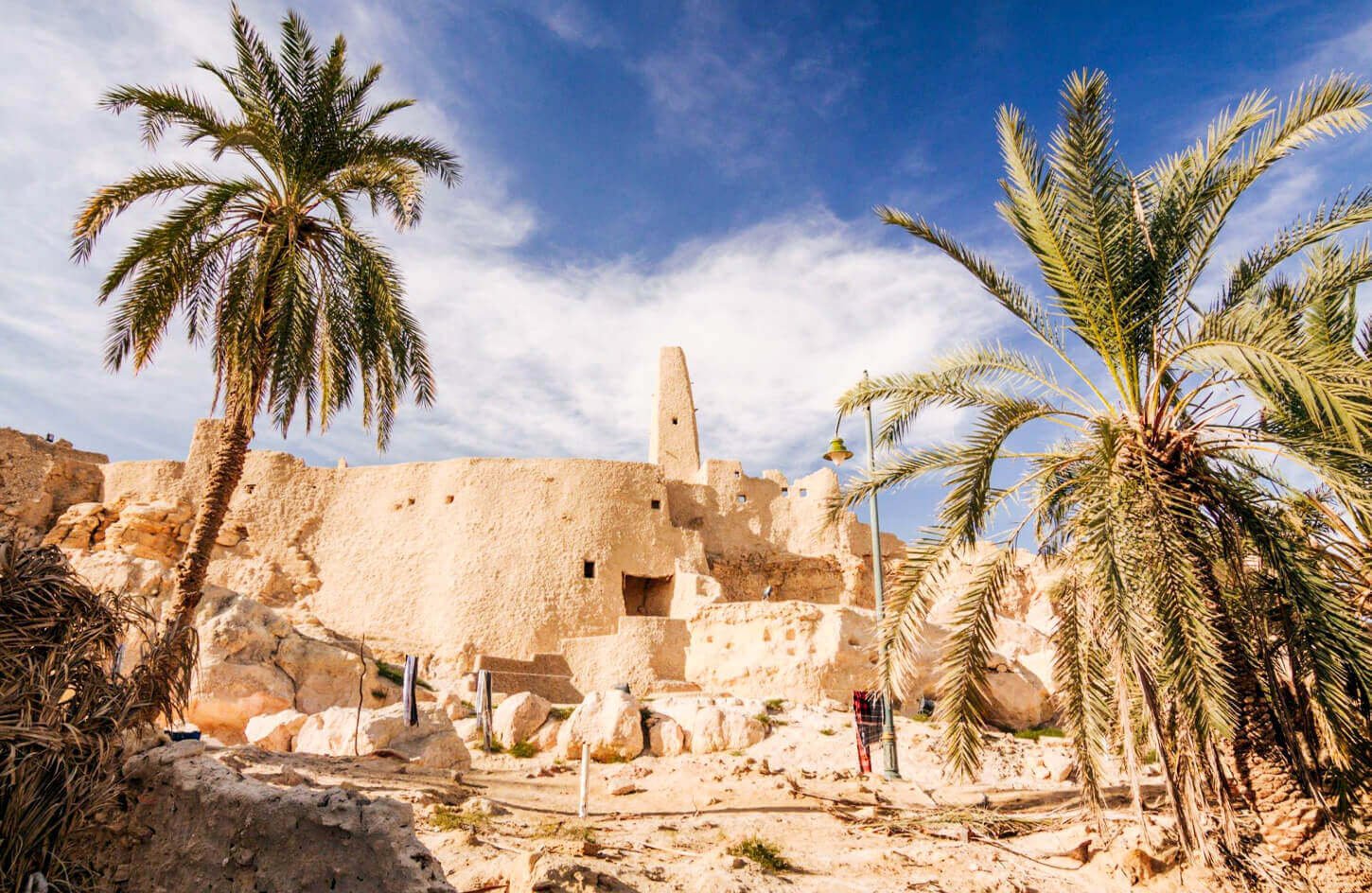
Most Egypt itineraries follow the same path: Cairo, Luxor, Aswan, maybe a Nile cruise in between. Siwa Oasis sits well outside that loop — 750 kilometers west of Cairo, near the Libyan border, reachable only by road, with no train and no commercial airport. That isolation is exactly why it feels so different from the rest of the country: turquoise salt lakes you can float in effortlessly, a crumbling mud-brick fortress rising from the palm groves, an oracle temple where Alexander the Great once came seeking confirmation of his divinity, and a Berber-descended culture with its own language, distinct from anywhere else in Egypt.
This guide covers what Siwa actually is, how to get there, what there is to do, and how to plan a trip that does the oasis justice rather than rushing through it.
Where Is Siwa Oasis, and What Makes It Different?
Siwa sits in Egypt’s Western Desert, in the Qattara Depression, roughly 50 kilometers from the Libyan border and about 560 kilometers from Cairo as the crow flies (closer to 750 km by the actual road route). Until a paved highway connected it to the coastal town of Marsa Matrouh in the 1980s, Siwa was almost completely cut off from the rest of Egypt — a degree of isolation that shaped everything about it.
That isolation produced a genuinely distinct culture. Siwans are ethnically and linguistically Amazigh (Berber), speaking their own language, Siwi, related to Berber languages of North Africa rather than Arabic. Traditional building techniques use karshif — a local material combining salt and clay — visible throughout the old town’s crumbling, almost sculptural architecture. Unlike Luxor or Aswan, Siwa has comparatively few pharaonic monuments; what it offers instead is landscape, atmosphere, and a sense of having found something most visitors to Egypt never see.
A Brief History of Siwa
Siwa’s documented history stretches back roughly 3,000 years, though archaeological evidence suggests people have inhabited the area considerably longer. In antiquity, Siwa’s defining moment of fame came through the Temple of the Oracle of Amun, one of the most celebrated oracles in the ancient world. In 331 BCE, Alexander the Great made the difficult desert crossing specifically to consult the oracle, which reportedly confirmed him as the son of the god Amun and a legitimate pharaoh of Egypt — a moment that helped cement his authority across the region he had just conquered.
Beyond Alexander’s visit, Siwa functioned for centuries as a stopping point on desert trade and pilgrimage routes connecting the Mediterranean coast with the wider Sahara, which is part of why it absorbed influences from ancient Egyptian, Greek, Roman, and later Islamic culture while still developing a genuinely independent regional identity.
What to See in Siwa: The Essential Attractions
Shali Fortress
The old town’s defining landmark: a hilltop fortress of mud-brick buildings, built in the 13th century from karshif, designed to protect the Siwan community from desert raids. Much of Shali was abandoned after unusually heavy rains in 1926 caused significant structural damage, and the Siwans rebuilt their homes on the surrounding plains — leaving the fortress as a weathered, partially collapsed but still climbable landmark. Reaching the top rewards you with sweeping views across the palm groves and the modern town below. Entry is generally free.
The Temple of the Oracle of Amun
Located at Aghurmi, about 4 kilometers from the town center, this is Siwa’s most historically significant site — the temple where Alexander the Great’s visit took place. Though now in ruins, enough remains to make out the temple’s layout: an open court, an inner sanctuary, and a well believed to have been used in oracle rituals. The hilltop setting also offers fine views over the surrounding palm groves.
Gebel al-Mawta (Mountain of the Dead)
A small mountain on the edge of town, honeycombed with rock-cut tombs dating to the 26th Dynasty (664–525 BCE) through the Greco-Roman period — originally used as burial sites for Siwan nobles. Some tombs retain painted wall decoration; the site was repurposed as a hiding place by locals during World War II air raids. Photography inside the tombs is typically not permitted.
Siwa’s Salt Lakes
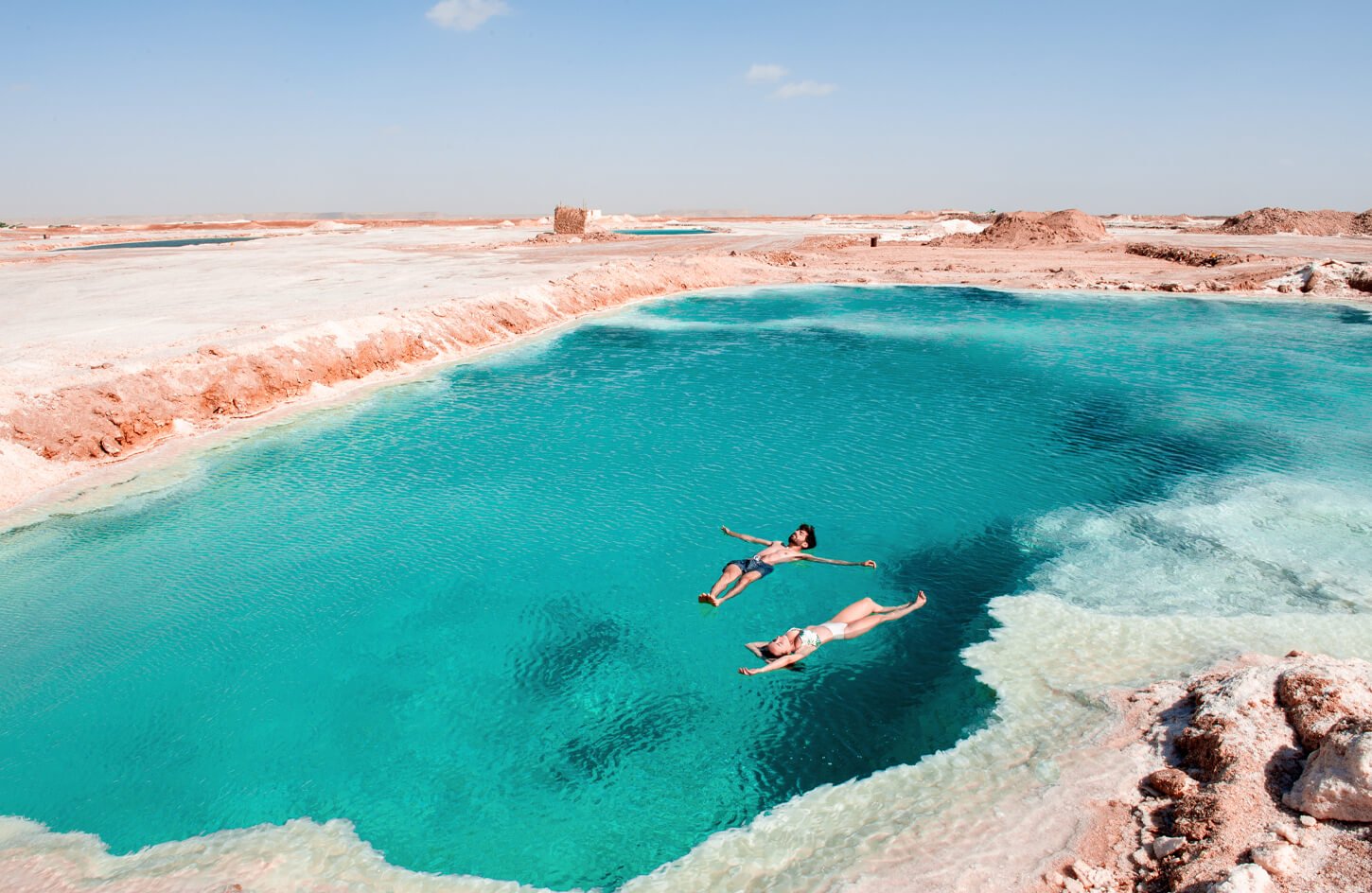
The image most associated with Siwa online: a series of striking turquoise salt lakes where the water’s high mineral content makes floating almost effortless, similar to the Dead Sea experience. Worth knowing before you go: most of the famous “salt pool” photos come from pools within an active salt quarry rather than a fully natural setting, and the access roads can be rough. Modest dress is expected, particularly for women, when swimming in springs and pools around the oasis.
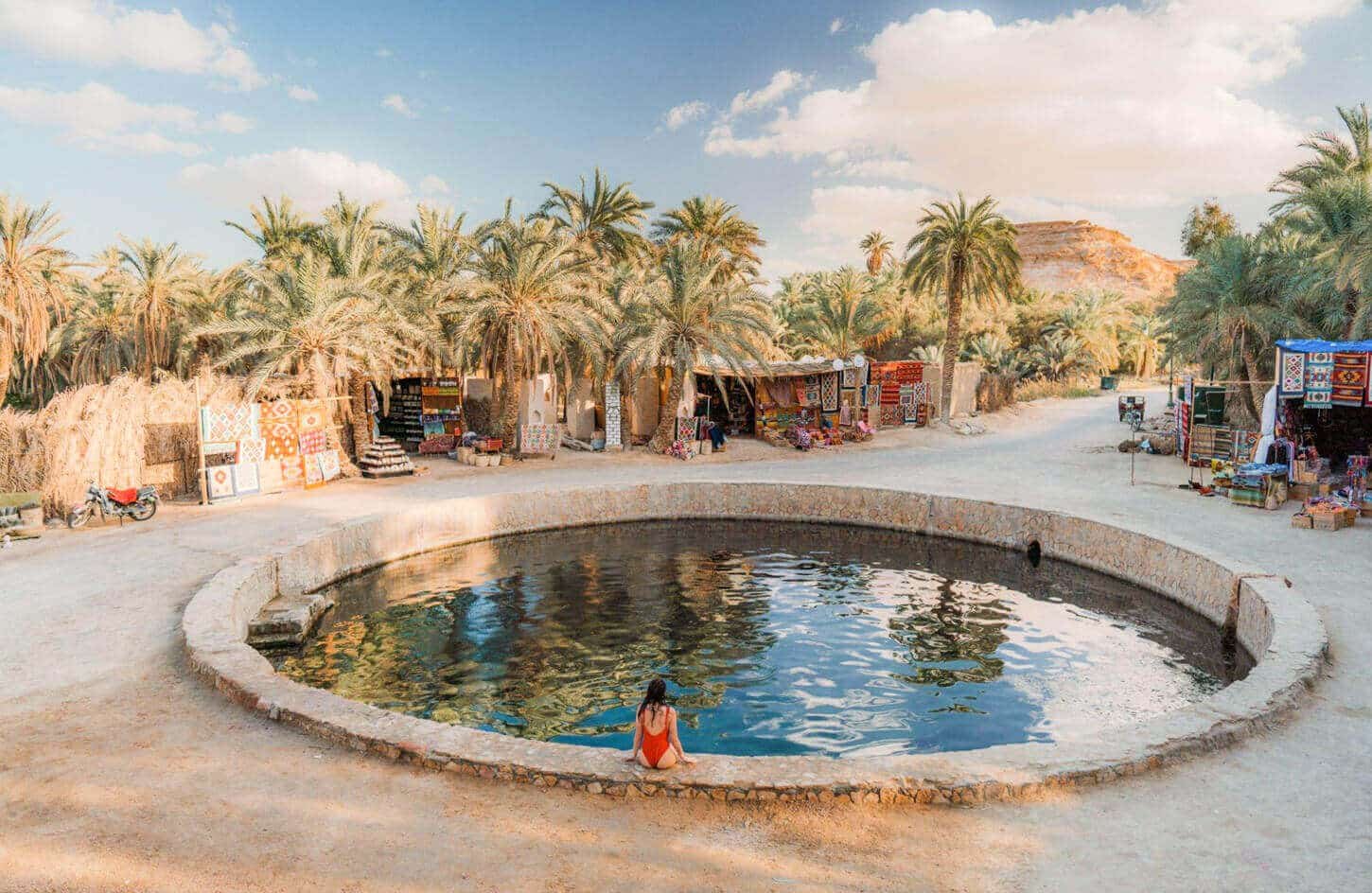
Cleopatra’s Spring
A natural spring near the Temple of the Oracle, long associated by local legend with Cleopatra, who is said to have bathed here during a visit to Siwa — a claim historians treat as folklore rather than confirmed fact, but one that remains a popular part of the local storytelling around the site.
Fatnas Island
A small peninsula on Birket Siwa (Siwa Lake), connected by a causeway and lined with palm trees, popular as a sunset spot. The shallow lake water here offers a calmer, more low-key swimming experience than the salt lakes further out.
The Great Sand Sea
On the edge of the Sahara proper, the Great Sand Sea is a vast expanse of towering dunes, accessible via 4×4 desert safari. Activities typically include dune driving, sandboarding, and overnight desert camping under genuinely dark skies, far from any light pollution. Independent desert driving is strongly discouraged — dunes shift, GPS reliability is inconsistent, and a licensed local guide is considered essential for safety.
Siwa House Museum
A small, locally focused museum established with Canadian government support to preserve Siwan architectural and cultural heritage, housing traditional jewelry, clothing, musical instruments, and crafts. Opening hours can be limited, so it’s worth asking your hotel to confirm or arrange a visit in advance.
Traveling Responsibly in Siwa
Siwa’s tourism numbers have grown steadily in recent years, and the oasis’s fragile desert ecosystem and small local community make responsible travel choices particularly meaningful here. Choosing locally owned guesthouses and homestays over larger operations channels tourism income more directly into the Siwan community. Plastic pollution is a genuine concern in the oasis, so minimizing single-use plastic and being mindful of water and energy use — both more precious resources here than in cities along the Nile — makes a tangible difference. Respecting local customs around dress and behavior, particularly around the salt lakes and springs, also goes a long way toward maintaining the welcoming relationship between Siwans and the visitors who increasingly seek out this remote corner of Egypt.
Where to Stay in Siwa
Accommodation in Siwa ranges from simple desert camps to comfortable eco-lodges, with no large international hotel chains present — part of what keeps the town feeling distinctly local rather than resort-like.
Budget guesthouses and camps offer basic but charming rooms, often centered around a shared courtyard, with prices considerably lower than equivalent options in Cairo or Luxor. Many include traditional Siwan breakfast as part of the stay.
Mid-range eco-lodges are increasingly popular, often built using traditional karshif construction techniques and local materials, with some offering swimming pools — a genuine asset given Siwa’s climate, since open swimming in natural pools and springs requires modest dress, while a private hotel pool offers more freedom.
Desert camps near Bir Wahed, on the oasis’s southwestern edge, offer a more immersive Bedouin-style experience, typically as part of a multi-day desert safari package rather than a standalone stay.
Most accommodation is concentrated in or near Downtown Siwa, within easy reach of the main attractions, making a car unnecessary for getting around once you’ve settled in.
What to Eat in Siwa
Siwan cuisine reflects the oasis’s distinct identity, with several dishes and ingredients found nowhere else in Egypt. Dates and olives, grown locally in vast quantities, feature heavily across Siwan cooking. Local specialties worth trying include Siwa-style camel meat, traditional flatbreads served with a wide range of fillings (including, somewhat unexpectedly, chocolate versions aimed at travelers), and herbal teas made from desert plants. Restaurant options are simple and locally run rather than international in style — part of the broader charm of a destination that has largely avoided large-scale tourism infrastructure.
How to Get to Siwa Oasis from Cairo
This is the single most important planning question for any Siwa trip, since the journey itself is a genuine undertaking.
By overnight bus — the most common option. West & Mid Delta Bus Company and Siwa Bus operate routes from Cairo’s Turgoman (Cairo Gateway) station, typically departing in the evening and arriving in Siwa the following morning, with the journey taking roughly 9–12 hours. Traveling overnight saves the cost of a night’s accommodation and maximizes time at the destination, which is why it’s the preferred option for many independent travelers.
By private car or transfer — a more comfortable, flexible option, typically completing the roughly 750-kilometer drive in 8–9 hours. This suits travelers prioritizing comfort over budget, or those traveling in small groups.
By guided tour from Cairo — the simplest option for travelers who’d rather not manage logistics themselves. Multi-day private tours typically bundle transport, accommodation, and guided activities (desert safari, salt lake visits, historical sites) into a single planned itinerary.
By flight to Marsa Matrouh plus road transfer — flying to the coastal city of Marsa Matrouh, then continuing by road for roughly 3–4 hours, can shorten the overall journey time, though it adds a flight leg and isn’t always significantly faster once transfer logistics are factored in.
There is currently no commercial airport in Siwa itself and no direct train service — every route ultimately requires a road journey for at least part of the trip.
How Long Should You Spend in Siwa?
Given how far Siwa is from anywhere else in Egypt, a rushed visit doesn’t really work. Most experienced visitors and guides recommend a minimum of 2 full days, with 3 to 5 days considered the comfortable sweet spot — enough time to recover from the journey, see the historical sites, spend a full day on desert activities, and still have unhurried time around the palm groves and salt lakes. A single overnight stop is generally considered too short to do the oasis justice, since a significant portion of day one is typically spent recovering from the overnight journey.
Best Time to Visit Siwa
October through April is the recommended window, with daytime temperatures in the comfortable 22–30°C (72–86°F) range and cooler nights (10–18°C / 50–64°F). Summer months (May–September) regularly exceed 40°C (104°F), making outdoor desert activities considerably less pleasant and, at times, genuinely risky.
February to April brings occasional desert wildflowers, adding seasonal color to the landscape. If your trip coincides with October, you may be able to experience the local Siyaha Festival, a traditional Siwan cultural celebration.
Getting Around Once You’re There
Siwa town itself is small and flat, making bicycle rental one of the most popular and practical ways to get around — many hotels and shops rent bikes affordably by the day. Tuk-tuks are widely available for short hops around town. Donkey carts, still used by some local families, double as a charmingly traditional way to explore the narrow lanes. For trips to the salt lakes, Great Sand Sea, or sites further from the town center, hiring a local driver or joining an organized excursion is the practical choice, since distances and road conditions make walking or cycling impractical.
Practical Tips Before You Go
Pack for temperature swings. Even in the comfortable winter season, desert nights get notably cold — pack warm layers regardless of how hot the daytime temperature is.
Dress modestly. Siwa is a conservative community; covering shoulders and knees is appreciated, and women should wear a cover-up over swimwear at salt pools and springs out of respect for local customs.
Expect security checkpoints. The road from Cairo passes through several routine checkpoints where passengers may be asked to show ID. This is standard practice, not cause for concern.
Don’t attempt independent desert driving. The Great Sand Sea is genuinely hazardous without an experienced local guide — shifting dunes and unreliable GPS make this a real safety consideration, not just an upsell.
Bring cash. Siwa’s banking and card-payment infrastructure is more limited than in Cairo or Luxor; carrying sufficient cash for your stay is advisable.
Is Siwa safe for solo travelers, including women? Generally yes — Siwa is widely regarded as one of Egypt’s more relaxed, welcoming destinations for independent travel, including for solo women, though the same modest-dress guidance applies.
Pairing Siwa With the Rest of Your Egypt Trip
Because of the distance involved, Siwa works best either as a dedicated extension at the start or end of a broader Egypt itinerary, or combined with Egypt’s other Western Desert oases — Bahariya and the White Desert — as part of a longer desert-focused multi-day route, rather than as a quick add-on to a Cairo or Nile-focused trip.
🏜️ Ready to experience Siwa Oasis without managing the logistics yourself? Pure Nile Tours’ guided Siwa Oasis adventures handle transport, accommodation, and desert safari arrangements, so you can focus on the salt lakes, the ruins, and the silence of the Great Sand Sea. Explore Our Siwa Oasis Tour →
Frequently Asked Questions
How far is Siwa Oasis from Cairo?
Approximately 750 kilometers by road (around 560 km as the crow flies), with the journey typically taking 8–12 hours depending on transport method.
Is there a flight to Siwa Oasis?
No, Siwa has no commercial airport. The closest airport is in Marsa Matrouh, roughly 300 km away, requiring a further road journey of about 3–4 hours.
How many days do you need in Siwa Oasis?
A minimum of 2 full days is recommended, with 3–5 days considered ideal to comfortably cover the historical sites, a desert safari, and unhurried time at the salt lakes without feeling rushed.
What is the best time of year to visit Siwa?
October through April, when daytime temperatures are a comfortable 22–30°C. Summer months regularly exceed 40°C and are not recommended for outdoor exploration.
Is Siwa Oasis safe to visit?
Yes, Siwa is generally considered one of Egypt’s safer, more relaxed destinations, including for solo travelers and women, with routine security checkpoints along the route rather than any particular cause for concern.
Do you need a guide to visit the Great Sand Sea?
Yes, strongly recommended. Independent desert driving carries genuine risk due to shifting dunes and unreliable GPS signals; a licensed local guide is considered essential.
What is Siwa Oasis famous for?
Its turquoise salt lakes, the ancient Temple of the Oracle of Amun (visited by Alexander the Great), the mud-brick Shali Fortress, and its distinct Amazigh (Berber) culture and language, separate from the rest of Egypt.
Can you combine Siwa with other Egyptian oases?
Yes. Siwa is often paired with Bahariya Oasis and the White Desert as part of a longer Western Desert itinerary, particularly for travelers with a strong interest in desert landscapes.
Final Thoughts
Siwa rewards a particular kind of traveler: one willing to spend a long day on the road for a destination that looks, sounds, and feels unlike anywhere else in Egypt. There are no crowds jostling for photos here, no rows of souvenir stalls pressing in on every side — just salt lakes that turn an impossible shade of blue, a fortress slowly dissolving back into the desert it was built from, and a silence in the Great Sand Sea that’s hard to find almost anywhere else in the country. For travelers who’ve already covered Cairo, Luxor, and Aswan and are looking for something genuinely different, Siwa is very much worth the journey.
🏜️ Planning your Egypt itinerary and want to add Siwa Oasis? Pure Nile Tours can build Siwa into a custom desert and Nile itinerary, with transport, accommodation, and expert local guiding handled from start to finish. Plan Your Siwa Oasis Trip →