
Siwa Salt Lake Egypt
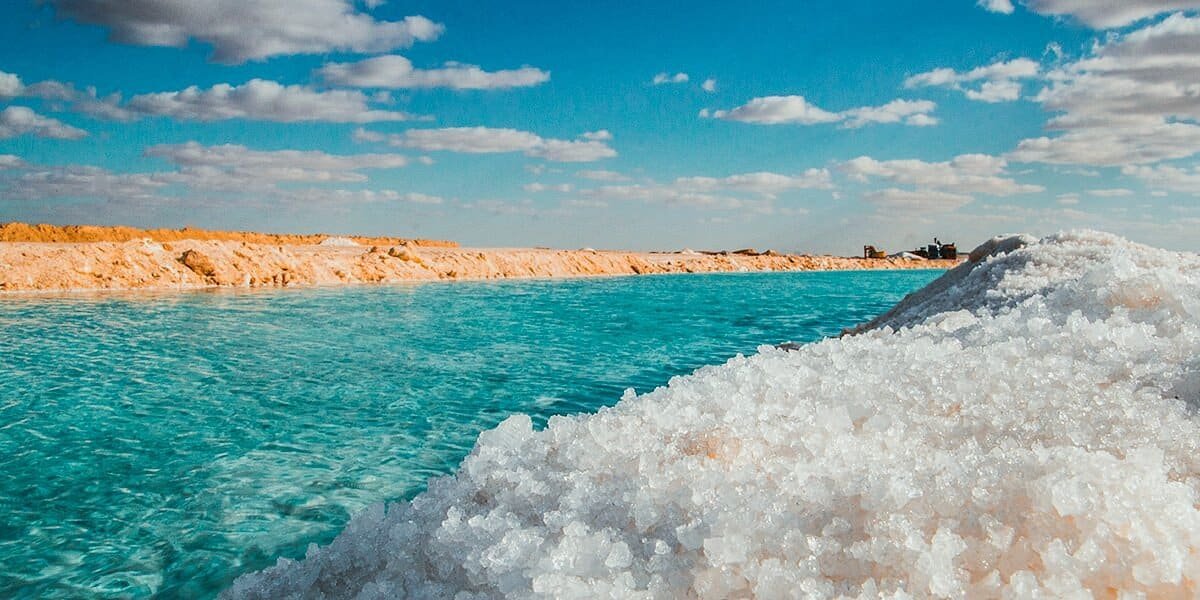
The photos have been circulating on social media for years — an impossible blue-green pool against white salt banks, surrounded by golden desert and palm trees on the horizon. Siwa’s salt lakes are one of those rare cases where the reality lives up to the image. The water’s salinity is so extreme that floating requires no effort whatsoever, your body sits high on the surface without any swimming stroke, and the sensation of lying back in the middle of the Egyptian desert while the sky stretches overhead is genuinely unlike anything most travelers have experienced.
This guide covers what the salt lakes actually are, where the different pools are, what to expect on your visit, and the practical information that makes the difference between a great experience and a frustrating one.
What Are the Siwa Salt Lakes?
Siwa Oasis sits in a geological depression in Egypt’s Western Desert, fed by underground aquifer networks that create hundreds of natural springs. Over thousands of years, water has collected, evaporated in the intense desert climate, and deposited mineral salts at extremely high concentrations — reaching up to 95% salinity in some areas. For comparison: the Dead Sea has a salinity of around 34%. Siwa’s salt pools are roughly three times saltier.
Beyond the naturally-formed lakes, Siwa’s salt mining industry has created an additional network of extraction pools — and it’s these man-made mining pools, with their particularly vivid turquoise color and clean edges, that have become the most photographed spots in the oasis.
The Different Salt Lake Experiences in Siwa
Birket Siwa (Siwa Lake)
The main natural salt lake: a large, shallow expanse east of town, several kilometers long, with pinkish-white salt formations along its edges. Beautiful from above and at sunset. Swimming is possible but the experience differs from the mining pools — shallower, less vivid in color, broader natural shoreline.
Fatnas Island — a small palm-covered peninsula connected by causeway on the western end of Birket Siwa — is the most popular sunset spot on the oasis, offering a calmer swimming experience on the edge of the lake.
The Salt Mining Pools (Maraqi / Taghaghien)
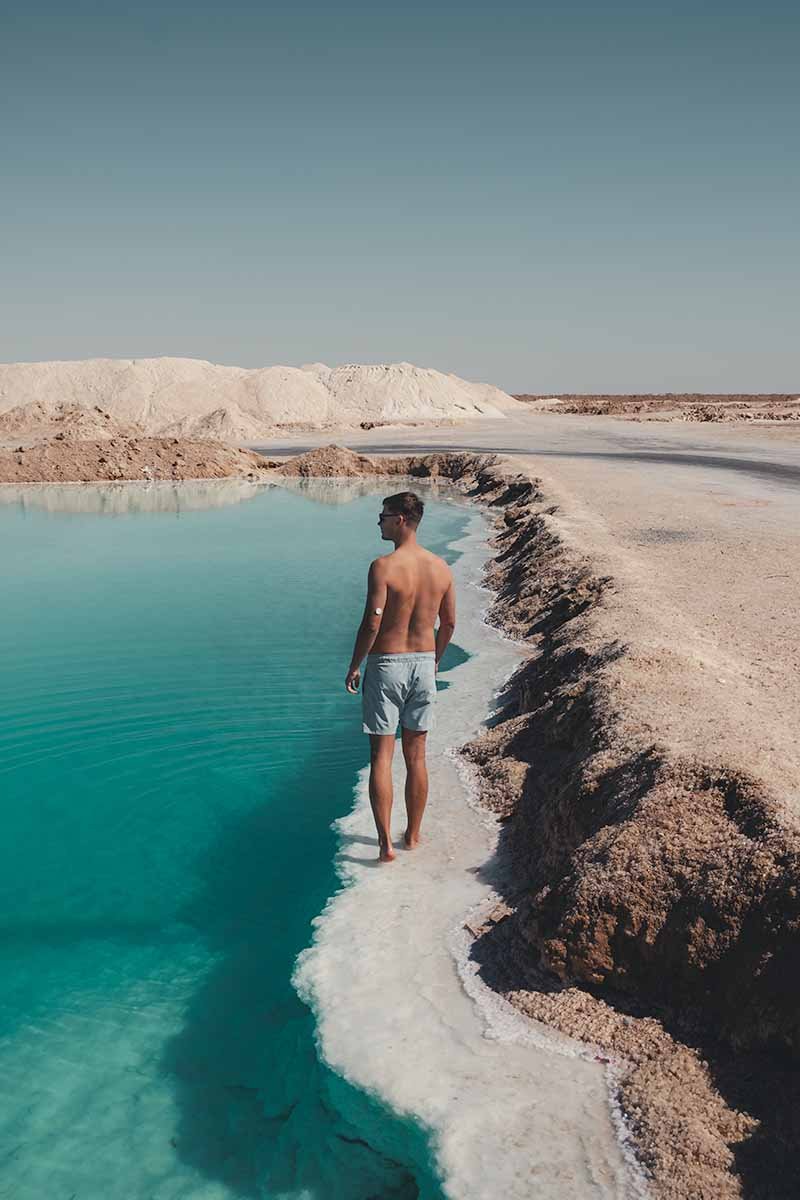
The most photographed spots in Siwa. These are pools formed within active salt quarrying operations — deep, brilliantly turquoise pools of extremely concentrated brine, with walls of excavated white salt surrounding them. A few things to know:
- These exist within a working salt quarry, not a purpose-built tourist attraction
- Entry is informal and typically free or very low-cost
- The most impressive pools lie deeper into the mine complex — a local driver who knows the site takes you past the busy front pools to the best spots
- Pool depth varies from ankle-deep to several meters
Best time for photography: 11:00 AM–2:00 PM, when direct overhead light penetrates the water for the most vivid turquoise colors.
Bir Wahed
A different experience: a combination of a cold freshwater lake and a natural hot water spring, located in the Great Sand Sea, 45 minutes by 4×4 from Siwa town. Best at sunset when dune light is dramatic. Requires a guided desert safari and possibly a permit.
The Floating Experience: What to Actually Expect
You genuinely cannot sink. At 95% salinity, your body floats not at the surface but slightly above it. Lying back and releasing tension, your legs, torso, and arms all stay on the surface with no effort. Many visitors spend 15–25 minutes simply floating motionless and staring at the sky.
What the water feels like. Slightly slippery or oily compared to ordinary water — an effect of the high mineral concentration. It’s noticeably heavy, and moving through it feels more resistant than swimming in the sea.
Skin sensations. Generally soothing. However: if you have cuts, scrapes, or recently shaved skin, the salt concentration causes significant stinging. Don’t shave any part of your body in the 24 hours before visiting.
The History of Salt in Siwa
Salt has been central to Siwa’s economy for centuries — supplying desert trade routes, used in traditional karshif mud-brick construction, and traded across the Sahara. The current salt quarrying operations run by the Siwa Salt Group represent a modernized continuation of extraction methods dating back hundreds of years. The vivid mining pools are a byproduct of that long history rather than a purpose-designed visitor attraction, which is why the site has the character it does: active trucks and machinery coexisting with extraordinary natural beauty.
Practical Tips for Visiting the Salt Lakes
Rinse immediately after swimming. The mineral-rich water crystallizes rapidly on skin, hair, and swimwear as it dries. Most visitors rinse at Cleopatra’s Spring on the way back — warm year-round at around 29–30°C. Bring a bottle of fresh water as backup.
What to wear. Normal swimsuit. Women often add a T-shirt for modest-dress and sun protection. Water shoes or sturdy sandals are useful — the salt-encrusted ground can be sharp underfoot.
Pack light, pack smart. Swimsuit, towel, flip-flops, sunscreen, sunglasses, fresh water bottle (for rinsing), cash for the driver. No lockers or facilities at the mining pools.
Stay hydrated. Desert heat dehydrates quickly, compounded by heat radiating off white salt surfaces.
Bring mosquito repellent. The oasis’s abundant water sources make mosquitoes more present than most desert destinations — particularly at dawn and dusk.
Photography. Midday (11 AM–2 PM) gives most vivid water colors. Wide-angle or panorama mode works well.
Common Mistakes to Avoid
Stopping at the first pools. The front area has the highest visitor concentration. The most beautiful pools are further inside — don’t accept the first pool you see.
Going without a local driver. A driver who knows the site navigates to the best pools and avoids the busy tour group areas. The difference between a mediocre and memorable visit often comes down to this.
Not bringing enough fresh water. Both for drinking and rinsing. Running out with salt crystallizing on your skin and a long tuk-tuk ride back is the most common complaint about poorly planned visits.
Wearing jewelry or valuables into the water. The concentrated mineral solution can damage metal jewelry and tarnish certain materials. Leave valuables in the vehicle.
Wellness Benefits: What’s Real and What’s Folklore
Salt baths have documented therapeutic applications for skin conditions including psoriasis and eczema, and the buoyancy experience is widely used in flotation therapy for relaxation and stress reduction. These are genuine, if modest, benefits. Claims about dramatic cures should be approached cautiously — the Siwa salt pools are deeply relaxing and potentially beneficial for skin and joint conditions, but not a substitute for medical treatment.
Best Time to Visit the Salt Lakes
Spring (March–May): Pleasant water temperatures and comfortable air. Late March–April is ideal.
Autumn (September–November): Warm water from summer with cooling air temperatures.
Winter (December–February): Comfortable air but water can be cold for prolonged floating.
Summer (June–August): Water provides heat relief but minimal shade makes midday visits difficult.
How to Get to the Salt Lakes from Siwa Town
The main mining pools are approximately 4–5 km from Siwa town center, reachable by tuk-tuk (fastest and cheapest), bicycle (possible on the main road), or as part of a guided desert safari 4×4 if combining with Bir Wahed.
Most visitors combine the mining pools with Cleopatra’s Spring (rinsing) and Fatnas Island (sunset) — a natural afternoon loop covering three distinct water experiences.
Combining the Salt Lakes with Other Siwa Highlights
A well-planned Siwa afternoon: mining pools (floating, ~30–45 minutes) → Cleopatra’s Spring (rinsing, ~20 minutes) → Fatnas Island (sunset). For a fuller picture of all Siwa’s main attractions — the Temple of the Oracle, Shali Fortress, and Great Sand Sea — see our Siwa Oasis Egypt travel guide.
🏜️ Want the salt lake experience as part of a complete Siwa itinerary? Pure Nile Tours’ private Siwa Oasis tours include the salt lakes, Cleopatra’s Spring, desert safari, and historical sites — all logistics handled from Cairo. Explore Our Siwa Oasis Adventure Tour →
Frequently Asked Questions
Can you swim in the Siwa salt lakes? Yes — floating is more accurate. The extreme salinity (up to 95%) makes sinking impossible.
Are the Siwa salt pools natural or man-made? Both. Birket Siwa is a natural lake. The most-photographed turquoise pools are extraction pools within an active salt quarry.
Will salt water sting cuts or shaved skin? Yes, significantly. Avoid shaving in the 24 hours before visiting.
Is there a fee to enter? Entry to the mining area is typically informal and free or very low-cost.
Best time of day to photograph? Midday (11 AM–2 PM) for the most vivid turquoise and blue colors.
Is floating similar to the Dead Sea? Similar but more extreme. Siwa’s mining pools reach ~95% salinity vs the Dead Sea’s ~34%.
Do I need a guide? Not for the main mining pools (tuk-tuk from town). For Bir Wahed in the Great Sand Sea, a guided 4×4 excursion is required.
Final Thoughts
The Siwa salt lakes deliver exactly what the photos promise, which is rarer than it sounds for a destination this photogenic. Whether you float motionless in a vivid turquoise pool surrounded by white salt banks, watch the sun go down over Birket Siwa from Fatnas Island, or soak in the Bir Wahed hot spring as dunes cool around you in the dark, Siwa’s water experiences are genuinely extraordinary — and genuinely unlike anything else in Egypt.
🏜️ Planning a trip to Siwa Oasis? Pure Nile Tours handles the logistics of getting there, accommodation, and the full Siwa experience. Explore Our Siwa Oasis Adventure Tour →