
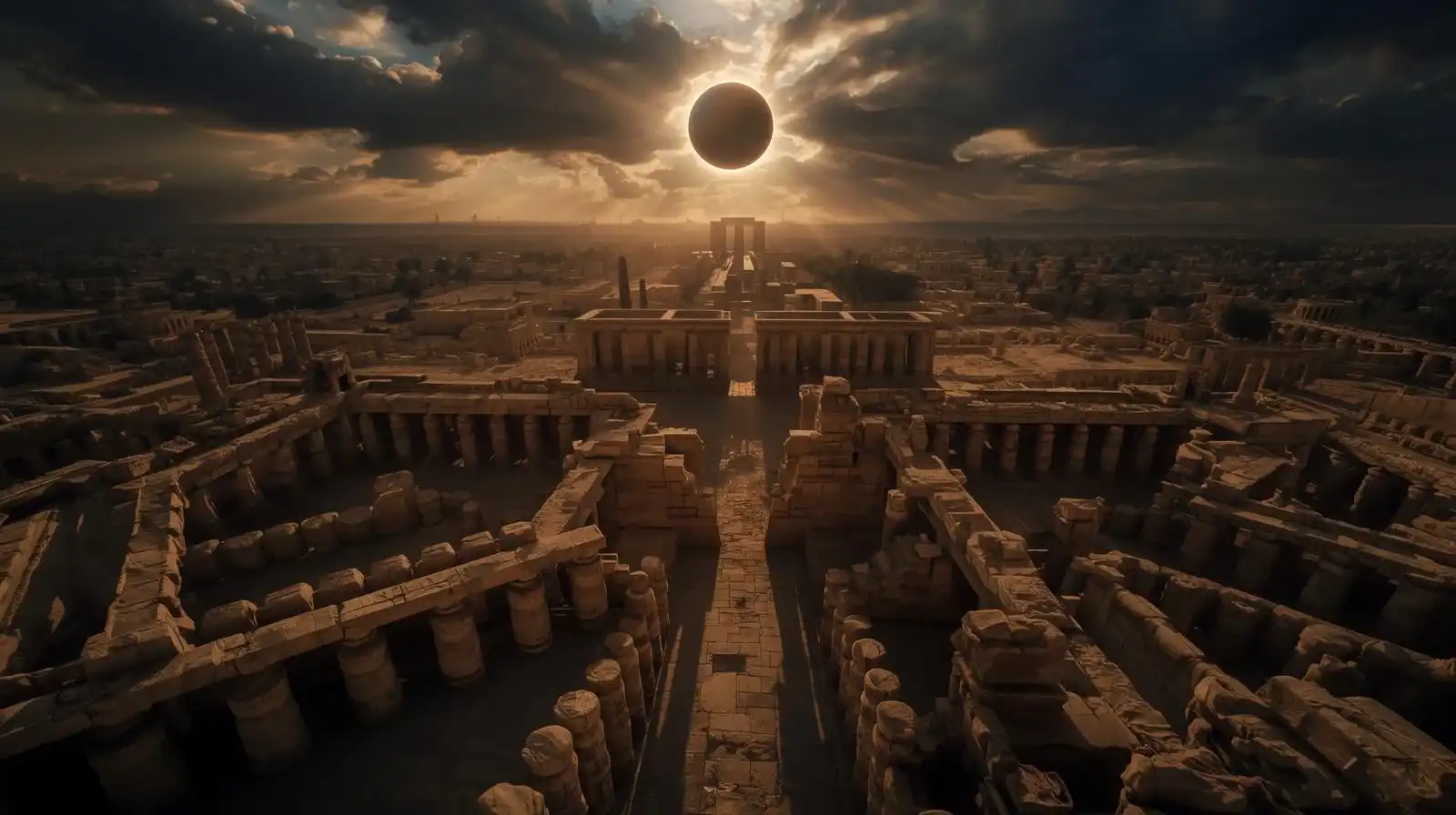
On Monday 2 August 2027, a total solar eclipse will cross Egypt from the Western Desert to the Nile Valley and the Red Sea coast. Luxor will experience about 6 minutes 22 seconds of totality, with the Sun approximately 82 degrees above the horizon. This will be the longest total solar eclipse visible from land between 1991 and 2114, making Egypt a significant destination for eclipse observers, researchers, photographers and international visitors.
However, not every Egyptian destination will experience totality. Luxor, Qena, Sohag, Siwa Oasis, Bahariya Oasis and Marsa Alam are within the total eclipse path, while Cairo, Giza, Aswan, Hurghada and Sharm El Sheikh will see only a partial eclipse. The distinction is essential when choosing accommodation, transport or an organised viewing location.
In short:
- Date: Monday 2 August 2027.
- Totality path: Siwa Oasis, Bahariya, the Black Desert, parts of the Nile Valley including Luxor, and sections of the Red Sea coast including Marsa Alam.
- Luxor eclipse times: Partial eclipse begins at 11:40, totality runs from 13:02:06 to 13:08:27 at Karnak, and the eclipse ends at 14:26.
- Luxor totality duration: About 6 minutes 22 seconds, depending on the precise viewing position and lunar limb profile.
- Partial-only destinations: Cairo, Giza Pyramids, Alexandria, Aswan, Hurghada, Safaga, Sharm El Sheikh, Farafra, Kharga and Dakhla.
- Weather prospects: Siwa and Bahariya offer particularly favourable historical cloud conditions. Luxor also has generally favourable conditions, although thin cirrus, dust and extreme heat require planning.
- Time zone: All local eclipse times in this guide use Egypt Summer Time (EEST, UTC+3).
2027 Egypt eclipse: key facts at a glance
The following reference table brings together the principal astronomical and geographical facts of the 2 August 2027 eclipse. It is intended for travellers comparing destinations, journalists preparing coverage and eclipse observers planning equipment and viewing locations.
| Fact | Value |
|---|---|
| Event | Total solar eclipse of 2 August 2027 |
| Day and date | Monday, 2 August 2027 |
| Eclipse classification | Total solar eclipse, Saros series 136 |
| Greatest eclipse time | 10:07:50 Terrestrial Dynamical Time (TD), approximately 13:07 EEST |
| Greatest eclipse location | Approximately 25.5°N, 33.2°E, inside Egypt near Luxor |
| Maximum totality | About 6 minutes 23 seconds |
| Approximate path width | 258 kilometres |
| Longest-totality distinction | Longest total solar eclipse visible from land between 1991 and 2114 |
| Luxor East Bank totality | 13:02:06 to 13:08:27 EEST, about 6 minutes 22 seconds |
| Luxor maximum eclipse | 13:05:17 EEST at Karnak |
| Solar altitude at Luxor | Approximately 82° above the horizon |
| Western Desert viewing areas | Siwa Oasis, Bahariya Oasis and the Black Desert |
| Other totality locations | Qena, Abydos, Sohag, Asyut, Minya, Edfu, Kom Ombo, El Quseir and Marsa Alam |
| Major partial-only cities | Cairo, Alexandria, Aswan, Hurghada and Sharm El Sheikh |
| Previous total eclipse in Egypt | 29 March 2006, visible from Salloum on the Mediterranean coast |
| Eye protection | ISO 12312-2 compliant solar viewers required throughout all partial phases |
Local times and durations in this guide were calculated by Pure Nile Tours from the JPL DE421 ephemeris and cross-checked against independent eclipse calculators. The greatest-eclipse figures are NASA’s. The greatest-eclipse time is expressed in TD, an astronomical time scale, while the city-specific contact times use local Egyptian summer time. These two time scales should not be treated as interchangeable.
For the global eclipse circumstances and NASA’s published eclipse resources, consult the NASA Eclipse Website. Local contact times and totality durations can vary by a few seconds with the precise coordinates, elevation and profile of the Moon’s edge.
What happens on 2 August 2027 and why it is called the eclipse of the century
How a total solar eclipse works
A total solar eclipse occurs when the Moon passes directly between Earth and the Sun, temporarily blocking the Sun’s bright photosphere for observers within a narrow geographical corridor. Although the Sun is much larger than the Moon, their apparent sizes in Earth’s sky can be similar enough for the Moon to cover the solar disc completely.
The Moon casts two important shadow regions across Earth. The darker central shadow is called the umbra. Anyone positioned within the umbra during the relevant moments can experience totality, provided the Sun is visible and local atmospheric conditions permit observation.
The surrounding, lighter shadow is the penumbra. Observers inside this broader area see the Moon cover only part of the Sun. This is why an eclipse can be total in Luxor while remaining partial in nearby Egyptian destinations.
Four astronomical contacts describe the progress of a total solar eclipse at a particular viewing location:
- First contact (C1): The Moon first touches the apparent edge of the Sun. The partial eclipse begins, and the Moon gradually covers more of the solar disc.
- Second contact (C2): The last visible point of direct sunlight disappears behind the Moon. Totality begins for an observer within the umbral path.
- Third contact (C3): The first bright point of direct sunlight reappears. Totality ends, and the second partial phase begins.
- Fourth contact (C4): The Moon completely moves away from the solar disc. The eclipse is finished at that location.
At Karnak on Luxor’s East Bank, C1 occurs at 11:40 EEST. Totality begins at 13:02:06, maximum eclipse occurs at 13:05:17, and direct sunlight returns at 13:08:27. The final partial phase ends at approximately 14:26.
The period between C2 and C3 is the critical observing window. During this interval, the solar corona, the Sun’s faint outer atmosphere, becomes visible around the dark lunar silhouette. The surrounding landscape also darkens noticeably, producing conditions that cannot be replicated during even a very deep partial eclipse.
For eye safety, certified eclipse viewers must remain in place throughout the partial phases. They may be removed only during complete totality, after the final bright bead disappears, and must be replaced immediately when the first bright point returns.
Why the 2027 eclipse lasts more than six minutes
Most total solar eclipses offer substantially less totality than the maximum predicted for 2 August 2027. Several orbital and geographical factors combine to produce the unusually long duration, particularly along the central section of the eclipse path in Egypt.
The first factor is the Moon’s distance from Earth. The Moon travels around Earth in an elliptical orbit, so its apparent diameter changes. Near perigee, the closest part of that orbit, the Moon appears relatively large and can take longer to cross the Sun’s apparent disc.
The second factor is Earth’s distance from the Sun. Earth is relatively close to aphelion, the farthest portion of its annual orbit, during early August. The Sun consequently appears slightly smaller than it does when Earth is nearer perihelion.
Together, a relatively large apparent Moon and a relatively small apparent Sun favour longer totality. The precise duration also depends on the observer’s position inside the shadow path and the motion of the shadow across Earth’s rotating surface.
The third factor is the height of the Sun. At Luxor it stands about 82° above the horizon at mid-eclipse, almost overhead. Observers there are on the part of the Earth closest to the Moon, where the shadow is widest, and the Earth’s rotation carries them eastward in the same direction the shadow is travelling. Both effects slow the shadow relative to the ground and stretch totality to more than six minutes.
The result is approximately 6 minutes 23 seconds of maximum totality near the greatest-eclipse region. In central Luxor, the predicted duration is about 6 minutes 22 seconds, an unusually long opportunity for naked-eye observation of the corona during the safe total phase.
Saros 136 and the 1991 to 2114 record
The 2027 eclipse belongs to Saros series 136, an astronomical family of eclipses linked by recurring alignments of the Sun, Moon and Earth. Eclipses within a Saros series have related geometric characteristics, although their exact ground tracks, durations and visibility regions change between occurrences.
The event is frequently described as the “eclipse of the century” because of its exceptional duration and its accessibility from inhabited regions of North Africa and the Middle East. The expression is an informal description rather than an official astronomical classification.
The more precise claim is that the 2 August 2027 event will provide the longest totality visible from land between 1991 and 2114. This distinction concerns totality duration and terrestrial visibility, not the absolute length of every eclipse occurring during the twenty-first century.
For travellers, that distinction still matters. A longer total phase allows more time to observe the corona, recognise bright planets and stars, experience the changes in daylight, and carry out planned photography without having to compress every activity into a very short interval.
Where else in the world will see the eclipse?
The eclipse begins its passage across inhabited land in southern Spain and the Gibraltar region before crossing Morocco, Algeria, Tunisia and Libya. Its umbral path then enters Egypt through the Siwa region and continues south-east across the Western Desert.
Within Egypt, the path crosses the Bahariya area and Black Desert, reaches the Nile Valley between Minya and Kom Ombo, and continues towards the Red Sea coast between El Quseir and Berenice. The shadow subsequently crosses parts of Saudi Arabia, including the Jeddah and Mecca regions, before reaching Yemen and Somalia.
Egypt combines extended totality, favourable historical summer cloud conditions and multiple accessible viewing regions. Luxor offers established visitor infrastructure and archaeological sites, while Siwa and Bahariya offer especially favourable climatological prospects for clear skies.
The principal disadvantage is the August heat. Luxor’s average high temperature for 2 August is approximately 42°C, with a historical record of 46°C. Visitors must consider heat exposure, water supplies, shaded waiting areas and equipment temperature alongside the astronomical advantages.
Western Desert sites can also experience dust, while thin cirrus is a potential concern around Luxor. Cloud generally becomes a greater consideration towards the Red Sea. Weather analysis by eclipse meteorologist Jay Anderson is available in the 2027 eclipse climatology guide.
These conditions help explain why no single destination is automatically best for everyone. Luxor may be preferable for extended totality and visitor facilities, while Siwa or Bahariya may appeal to observers prioritising historical cloud statistics. The Luxor versus Red Sea eclipse viewing comparison examines two of the main travel choices.
Egypt’s previous total solar eclipse in 2006
Egypt last experienced a total solar eclipse on 29 March 2006, when the path of totality crossed the Mediterranean coastal region around Salloum, near the Libyan border.
The 2027 event follows a different route. Instead of concentrating Egyptian totality along the north-western Mediterranean coast, the shadow will cross the Western Desert, a substantial section of the Nile Valley and the southern Red Sea coast.
This geographical difference gives visitors more choices between archaeological destinations, desert environments and coastal locations. It also makes accurate local eclipse circumstances essential, because the totality boundary passes close to several well-known tourist centres.
Is it total or partial where you are? The difference matters
The most important planning question is not simply how much of the Sun will be covered. It is whether the observer will be inside the Moon’s umbra during the eclipse. A location experiencing 99.9% solar obscuration remains outside totality if any part of the bright photosphere stays visible.
Eclipse magnitude versus solar obscuration
Two commonly confused measurements describe a partial eclipse. Eclipse magnitude measures the fraction of the Sun’s apparent diameter covered by the Moon along a defined line. Solar obscuration measures the percentage of the Sun’s apparent disc area hidden by the Moon.
These measurements are not interchangeable. A stated percentage of obscuration refers to area, while magnitude refers to a linear measurement across the solar disc.
In this guide, percentages such as Aswan’s 99.9% and Hurghada’s 98.6% refer specifically to solar obscuration, meaning the approximate area of the solar disc covered at maximum eclipse.
Why 99.9% in Aswan is not the same as totality
Aswan is predicted to experience approximately 99.9% solar obscuration at maximum eclipse, around 13:08:27 EEST. Despite that remarkably high figure, Aswan remains outside the total eclipse path.
Even a narrow uncovered portion of the solar photosphere is intensely bright. Observers in Aswan will not experience the complete disappearance of direct sunlight, the fully visible solar corona or the characteristic darkness of totality.
Consequently, certified solar protection remains necessary throughout the entire eclipse in Aswan. There is no safe interval for direct, unfiltered solar viewing at a partial-only location, regardless of how close its obscuration percentage comes to 100%.
The same principle applies to Hurghada, Cairo and every other location outside the umbra. Travellers who specifically want to experience totality must arrange transport to a confirmed site within the total eclipse corridor.
Famous Egyptian destinations that will see only a partial eclipse
- Aswan: 99.9% obscuration, maximum at approximately 13:08:27.
- Hurghada: 98.6% obscuration, maximum around 13:05.
- Cairo: 94.8% obscuration, maximum around 12:56.
- Giza Pyramids: 95.3% obscuration.
- Alexandria: 93.4% obscuration.
- Sharm El Sheikh: 95.6% obscuration.
- Safaga: 99.6% obscuration, maximum around 13:06.
- Farafra: 99.8% obscuration, maximum around 12:53.
- Kharga Oasis: 99.5% obscuration, maximum around 13:01.
- Dakhla Oasis: 97% obscuration, maximum around 12:58.
- Abu Simbel: Approximately 92% obscuration, maximum around 13:09.
The difference between Aswan and Luxor illustrates why destination selection matters more than a high percentage on an eclipse forecast. Travellers staying in Aswan can observe a deep partial eclipse, but must move into the totality path to see the corona and experience complete solar coverage.
Visitors comparing the two Nile Valley cities can consult the Luxor versus Aswan eclipse viewing guide. For those planning around the central eclipse path, the Luxor total solar eclipse tour provides a starting point for organising travel around the 2 August 2027 event.
Path of totality in Egypt: map and route
On Monday 2 August 2027, the Moon’s central shadow will cross Egypt from north-west to south-east, entering from Libya through the Siwa region, travelling across the Western Desert and Nile Valley, and leaving Egypt over the Red Sea coast. The path of totality is approximately 258 kilometres wide, but the duration of total darkness varies significantly depending on how close a viewing location is to the centre line. Luxor and the Black Desert will experience more than six minutes of totality, while some locations near the path boundaries will see only a few minutes or no totality at all.
Western Desert: Siwa, Bahariya, Black Desert and White Desert
The eclipse enters Egypt from Libya through the Western Desert near Siwa Oasis. At longitude 25°E, the totality corridor extends approximately from 28.8°N to 31.3°N. Siwa lies comfortably within the path, with totality beginning at 12:42:36 EEST and ending at 12:48:05. The duration is about 5 minutes 30 seconds, with the Sun approximately 76 degrees above the horizon.
Siwa offers open desert landscapes and favourable historical cloud conditions. However, it is a remote destination, and visitors should arrange accommodation, transport, drinking water and their viewing location in advance. A desert excursion should not depend on finding a suitable observation point on the morning of the eclipse.
From Siwa, the shadow moves south-east towards Bahariya Oasis. Bawiti, the main settlement in Bahariya, experiences totality from 12:50:21 until 12:56:37, lasting about 6 minutes 17 seconds. The oasis is an established base for desert excursions, making it practical to combine accommodation with transport to an open viewing site.
The nearby Black Desert has an even longer predicted duration. Totality begins at 12:50:43 and ends at 12:57:03, lasting about 6 minutes 21 seconds. The Sun will stand approximately 79 degrees high, so an unobstructed southern sky is more important than finding an elevated viewpoint.
The White Desert requires more careful geographical planning. The main White Desert camping area north of Farafra lies near the southern edge of the umbral corridor, where totality lasts only about 3 minutes 27 seconds, from 12:51:41 to 12:55:07. Other positions within the wider desert region may have different eclipse circumstances.
Visitors should not assume that every White Desert campsite lies inside the totality path. The familiar chalk formations are useful landmarks for photography, but their appearance does not indicate whether a site is inside the umbra. Confirm the campsite’s exact coordinates before selecting it for eclipse observation.
For the Western Desert, the practical decision is between the established oasis bases, longer totality near Bahariya and the Black Desert, and specific landscape compositions elsewhere. The central shadow path should take priority over proximity to a particular rock formation.
Middle Egypt and the Nile Valley: Minya to Kom Ombo
After crossing the Western Desert, the shadow reaches the Nile Valley in Middle Egypt. The northern section includes Minya, Tell el-Amarna, Asyut, Sohag and Abydos, followed by Qena, Dendera, Luxor, Edfu and Kom Ombo farther south. These locations provide several alternatives to Luxor, although their totality durations are not identical.
At Minya, totality begins at 12:55:40 and lasts about 4 minutes 04 seconds. Farther south, Tell el-Amarna experiences about 5 minutes 31 seconds, while Asyut has approximately 6 minutes 06 seconds. Sohag and Abydos each have about 6 minutes 22 seconds, making them competitive with Luxor for duration.
Qena and Dendera experience approximately 6 minutes 14 seconds of totality, beginning at 13:01:31. Dendera is an important archaeological destination, but anyone intending to observe from a temple area must verify access arrangements, authorised opening hours and whether eclipse viewing will be permitted at the chosen location.
Luxor is especially significant because the centre of the eclipse path passes close to the city. At Karnak on the East Bank, totality runs from 13:02:06 until 13:08:27, lasting about 6 minutes 22 seconds. On the West Bank near the Valley of the Kings, totality begins at 13:01:58 and lasts about 6 minutes 21 seconds.
Both banks therefore offer almost the same totality duration. The more practical differences involve accommodation, traffic, transport across the Nile, access to designated viewing areas and exposure to the August heat. Visitors should not cross between banks shortly before totality merely to gain a few seconds.
Farther south, Edfu receives about 5 minutes 32 seconds of totality, beginning at 13:04:10. Kom Ombo receives about 3 minutes 29 seconds, beginning at 13:06:10. These destinations remain within the umbral corridor, but their decreasing durations indicate that the route is approaching the southern boundary.
The southern edge of totality passes between Kom Ombo and Aswan, roughly 20 kilometres north of Aswan city. Aswan itself remains outside the umbra, despite approximately 99.9% of the Sun being obscured at maximum eclipse.
For visitors based in Aswan, the distinction is operationally important. Travelling north towards Kom Ombo or Edfu can provide access to totality, but the selected viewing point must be checked against the path boundary rather than identified only by the nearest town.
Red Sea coast: Hurghada, Safaga, El Quseir and Marsa Alam
After crossing the Nile Valley, the umbra continues east towards Egypt’s Red Sea coast. Hurghada and Safaga lie outside the northern edge and will experience partial eclipses. El Quseir lies near the totality boundary, while Marsa Alam is substantially farther inside the path.
Hurghada reaches approximately 98.6% solar obscuration around 13:05, and Safaga reaches approximately 99.6% around 13:06. Neither city experiences totality, despite the large fraction of the solar disc covered.
El Quseir receives about 2 minutes 21 seconds of totality, from 13:06:45 until 13:09:05. Its position near the northern edge makes precise location selection especially important, since modest changes in viewing position can materially affect the available duration.
Marsa Alam offers considerably longer totality, beginning at 13:08:05 and ending at 13:13:33, approximately 5 minutes 29 seconds. Visitors staying along the Red Sea should distinguish between the specific coordinates of their resort and the wider destination name.
The Luxor versus Red Sea eclipse comparison explains the differences between inland and coastal viewing. Travellers arriving through Hurghada can also review the 2027 Red Sea eclipse tour options for an organised journey towards the totality corridor.
Why totality becomes shorter near the path edges
The umbra is not a rectangle with equal totality duration throughout its width. Near the centre line, the Moon’s shadow takes longer to pass over an observer. Closer to either edge, the observer crosses a narrower section of the shadow, so totality becomes progressively shorter.
The Nile Valley provides a clear example: Luxor receives about 6 minutes 22 seconds, Edfu about 5 minutes 32 seconds, Kom Ombo about 3 minutes 29 seconds, and Aswan receives no totality. In the Western Desert, Bahariya and the Black Desert exceed six minutes, while the main White Desert camping area receives only about 3 minutes 27 seconds.
This is why an accurate eclipse map and verified GPS coordinates matter more than a destination’s general reputation. A short journey towards the centre line can substantially increase observing time, while moving across a boundary can eliminate totality completely.
Eclipse times by city: when totality starts in Luxor, Siwa, Hurghada and more
The following city table provides the local timing of the 2 August 2027 eclipse across Egypt. It distinguishes places experiencing totality from destinations receiving a partial eclipse only, and identifies the relevant contacts, maximum eclipse and duration where applicable. All times are Egypt Summer Time (EEST, UTC+3).
| Place | Partial begins (C1) | Totality begins (C2) | Maximum | Totality ends (C3) | Partial ends (C4) | Totality |
|---|---|---|---|---|---|---|
| Nile Valley | ||||||
| Luxor East Bank (Karnak) | 11:40 | 13:02:06 | 13:05:17 | 13:08:27 | 14:26 | 6 min 22 s |
| Luxor West Bank (Valley of the Kings) | 11:40 | 13:01:58 | 13:05:08 | 13:08:18 | 14:26 | 6 min 21 s |
| Qena and Dendera Temple | 11:39 | 13:01:31 | 13:04:38 | 13:07:44 | 14:25 | 6 min 14 s |
| Abydos (Temple of Seti I) | 11:38 | 12:59:51 | 13:03:01 | 13:06:12 | 14:24 | 6 min 22 s |
| Sohag | 11:37 | 12:58:48 | 13:01:59 | 13:05:09 | 14:23 | 6 min 22 s |
| Asyut | 11:35 | 12:56:56 | 12:59:58 | 13:03:01 | 14:21 | 6 min 06 s |
| Tell el-Amarna | 11:34 | 12:55:56 | 12:58:41 | 13:01:26 | 14:20 | 5 min 31 s |
| Minya | 11:33 | 12:55:40 | 12:57:42 | 12:59:43 | 14:19 | 4 min 04 s |
| Edfu | 11:41 | 13:04:10 | 13:06:55 | 13:09:41 | 14:28 | 5 min 32 s |
| Kom Ombo | 11:42 | 13:06:10 | 13:07:54 | 13:09:38 | 14:29 | 3 min 29 s |
| Aswan | 11:42 | – | 13:08:27 | – | 14:29 | Partial only, 99.9% covered |
| Abu Simbel | 11:42 | – | 13:08:41 | – | 14:30 | Partial only, 92% covered |
| Western Desert | ||||||
| Siwa Oasis | 11:22 | 12:42:36 | 12:45:20 | 12:48:05 | 14:08 | 5 min 30 s |
| Bahariya Oasis (Bawiti) | 11:29 | 12:50:21 | 12:53:29 | 12:56:37 | 14:15 | 6 min 17 s |
| Black Desert | 11:29 | 12:50:43 | 12:53:53 | 12:57:03 | 14:15 | 6 min 21 s |
| White Desert | 11:29 | 12:51:41 | 12:53:24 | 12:55:07 | 14:15 | 3 min 27 s (near edge) |
| Farafra | 11:28 | – | 12:53:25 | – | 14:16 | Partial only, 99.8% covered |
| Kharga | 11:36 | – | 13:01:20 | – | 14:23 | Partial only, 99.5% covered |
| Dakhla | 11:32 | – | 12:57:57 | – | 14:20 | Partial only, 97% covered |
| Red Sea and Sinai | ||||||
| Marsa Alam | 11:45 | 13:08:05 | 13:10:49 | 13:13:33 | 14:31 | 5 min 29 s |
| El Quseir | 11:43 | 13:06:45 | 13:07:55 | 13:09:05 | 14:28 | 2 min 21 s (near edge) |
| Safaga | 11:41 | – | 13:06:14 | – | 14:26 | Partial only, 99.6% covered |
| Hurghada | 11:41 | – | 13:05:08 | – | 14:25 | Partial only, 98.6% covered |
| Sharm El Sheikh | 11:41 | – | 13:05:07 | – | 14:24 | Partial only, 95.6% covered |
| Cairo and the north | ||||||
| Cairo | 11:33 | – | 12:55:52 | – | 14:16 | Partial only, 94.8% covered |
| Giza Pyramids | 11:33 | – | 12:55:46 | – | 14:16 | Partial only, 95.3% covered |
| Alexandria | 11:29 | – | 12:51:42 | – | 14:12 | Partial only, 93.4% covered |
Local Egypt summer time (EEST, UTC+3), Monday 2 August 2027. Calculated by Pure Nile Tours from the JPL DE421 ephemeris and cross-checked with independent calculators. Durations can differ by a few seconds with your exact position and the Moon’s limb profile. Free to cite with a link to this page.
How to read the eclipse times table
- C1: First contact, when the Moon begins moving across the Sun and the partial eclipse starts.
- C2: Second contact, when the Sun becomes completely covered and totality begins. This occurs only inside the totality path.
- Maximum: The moment of greatest eclipse at the specified location.
- C3: Third contact, when direct sunlight returns and totality ends.
- C4: Fourth contact, when the Moon leaves the solar disc and the eclipse finishes.
- EEST: Egypt Summer Time, three hours ahead of Coordinated Universal Time (UTC+3).
- Precision: Contact times may vary by a few seconds depending on exact coordinates, elevation and the lunar limb. Check your precise viewing position with a reliable eclipse calculation app before eclipse day, and confirm the circumstances again on the day.
Totality starts first in the west
The eclipse does not reach every Egyptian city simultaneously. Siwa enters totality at 12:42:36, followed by Bahariya at 12:50:21, Luxor at 13:02:06 and Marsa Alam at 13:08:05. The shadow therefore travels from the western oasis region to the Red Sea in roughly 25 minutes.
The umbra moves across Egypt faster than a jet airliner. Its arrival depends on geographical position, not on when a town’s partial eclipse begins. For example, observers in different regions may already be watching the partial phase while the central shadow is still approaching from the west.
For organised groups, each viewing destination needs its own timetable. A schedule prepared for Luxor cannot simply be reused in Siwa or Marsa Alam. Equipment setup, protective eyewear instructions, photography sequences and group announcements must follow local contact times.
Common myths about where you can see totality
Can I see totality in Aswan?
No. Aswan experiences a partial eclipse with approximately 99.9% solar obscuration, but the Moon never completely covers the Sun. Visitors must travel north into the path, towards a verified location near Kom Ombo or Edfu. The Luxor versus Aswan eclipse guide explains the differences.
Is Hurghada in the path of totality?
No. Hurghada is outside the northern boundary and experiences approximately 98.6% obscuration. Visitors seeking totality should arrange an excursion into the Nile Valley or to another confirmed viewing site, rather than assuming the eclipse will become total at their beach hotel.
Will Cairo or the Giza Pyramids go dark?
Neither location experiences totality. Cairo reaches approximately 94.8% obscuration, while the Giza Pyramids reach approximately 95.3%. The Sun remains partly visible, so visitors will not see the fully exposed corona or the darkness associated with the umbra.
Is the White Desert a good place to watch?
It can be, but only at a verified location inside the path. The main White Desert camping area receives about 3 minutes 27 seconds of totality because it lies near the southern edge. The Black Desert offers approximately 6 minutes 21 seconds, so travellers should compare viewing coordinates before choosing a campsite.
Is 99% obscuration almost the same as 100%?
No. The remaining exposed photosphere is still bright enough to prevent the full total-eclipse experience. At 99%, or even Aswan’s 99.9%, observers must retain ISO 12312-2 compliant eye protection throughout the eclipse. Only complete totality permits temporary removal of certified solar viewers.
Can I drive into the path on the morning of the eclipse?
It is possible to travel by road, but relying on a last-minute departure is risky. Aswan to the Kom Ombo or Edfu area generally requires about 1 to 1.5 hours by road, depending on the destination. Hurghada to Qena via the desert road takes roughly 2.5 to 3 hours, while Safaga to Qena takes about 2 hours.
Those are ordinary driving estimates, not guaranteed eclipse-day journey times. Additional traffic, checkpoints, vehicle queues and access restrictions may cause delays. Arrange transport beforehand, select a confirmed viewing site and, wherever practical, stay within the totality area the night before.
Does the eclipse happen at the same moment everywhere?
No. The shadow travels west to east, so totality begins in Siwa more than 25 minutes before it begins in Marsa Alam. Even nearby locations such as Luxor’s East and West Banks have slightly different contact times. Always use the timing calculated for your actual viewing coordinates, not another city’s schedule.
Best places to watch the 2027 eclipse in Egypt
The best place to watch the total solar eclipse on 2 August 2027 depends on more than totality duration. Luxor offers approximately 6 minutes 22 seconds of darkness and established tourist infrastructure, while Bahariya and the Black Desert combine similarly long totality with exceptionally favourable historical cloud conditions. Siwa offers a quieter desert setting, and Marsa Alam provides a coastal alternative with over five minutes of totality.
Accommodation availability, August temperatures, road access, permits and the exact viewing coordinates should determine the final choice. The following comparison uses typical weather patterns and expected visitor demand, not guaranteed eclipse-day conditions.
| Place | Totality | Weather odds | Heat | Crowds | Best for |
|---|---|---|---|---|---|
| Luxor | About 6 min 22 sec | Very good | Extreme | Heavy | Long totality, temples, hotels and organised tours |
| Qena and Dendera | About 6 min 14 sec | Very good | Extreme | Moderate | Temple visits and alternatives to central Luxor |
| Abydos and Sohag | About 6 min 22 sec | Very good | Extreme | Light | Long totality and archaeological sites |
| Edfu | About 5 min 32 sec | Very good | Extreme | Moderate | Aswan-based visitors and Nile cruise passengers |
| Black Desert and Bahariya | About 6 min 17 sec to 6 min 21 sec | Excellent | Very high | Moderate | Desert camps, photography and clear-sky prospects |
| Siwa Oasis | About 5 min 30 sec | Excellent | Very high | Light | Remote desert viewing and extended oasis stays |
| Marsa Alam | About 5 min 29 sec | Good | Very high | Moderate | Beach resorts and coastal viewing |
| El Quseir | About 2 min 21 sec | Good | Very high | Moderate | Travellers already staying near the northern coastal boundary |
Luxor: temples, the longest totality and the best infrastructure
Luxor is the most practical overall choice for many international visitors. Totality lasts approximately 6 minutes 22 seconds at Karnak, beginning at 13:02:06 EEST. The Sun will be about 82 degrees high, and Luxor offers an international airport, established hotels, private transport, guides and medical facilities.

On the East Bank, Karnak Temple, Luxor Temple and the Nile Corniche are the principal landmarks. Hotels along the river may provide convenient viewing areas, particularly where terraces or open grounds have an unobstructed view of the high southern sky. However, access to archaeological sites during the eclipse should never be assumed without official confirmation.
The West Bank offers the Valley of the Kings, the Temple of Hatshepsut and the Colossi of Memnon. Beyond these sites are agricultural fields, villages and open desert-edge landscapes. Totality near the Valley of the Kings lasts about 6 minutes 21 seconds, almost identical to the East Bank duration.
The West Bank can suit photographers seeking a desert foreground or groups preferring accommodation away from the central Corniche. Nevertheless, narrow village roads, archaeological access controls and limited shade require advance planning. The Luxor East Bank versus West Bank eclipse guide examines these practical differences.
Nile cruise passengers have another possibility: watching from a vessel moored in Luxor. A sundeck can provide open sky, seating and nearby cabins, but awnings, upper structures and other vessels may obstruct part of the view. The Nile cruise eclipse viewing guide and cruise deck versus land comparison explain what to confirm before booking.
Luxor’s disadvantages are expected visitor demand and extreme summer heat. The average high temperature on 2 August is approximately 42°C, with a historical record of 46°C. Hotels, shaded waiting areas, reliable transfers and early arrival at the observation site should be arranged well ahead of the event.
For accommodation and guided arrangements, travellers can review the Luxor total solar eclipse tour or explore Nile cruise options. Confirm the actual eclipse-day viewing arrangements separately from the ordinary sightseeing itinerary.
Dendera, Abydos and Sohag: temples with fewer crowds
Qena, Dendera, Abydos and Sohag offer alternatives for visitors who want long totality without staying in central Luxor. Qena and Dendera receive approximately 6 minutes 14 seconds, while Abydos and Sohag receive about 6 minutes 22 seconds. These are substantial durations, comparable to Luxor itself.
Dendera is known for its Temple of Hathor and its astronomical ceiling decorations, including the famous zodiac. The site’s historical connection with celestial imagery makes it relevant to an eclipse-themed itinerary, although modern eclipse observation remains a separate astronomical activity.
Dendera is approximately 1 to 1.5 hours from Luxor by road under ordinary conditions. Abydos, home to the Temple of Seti I, is roughly 2.5 to 3 hours away. These estimates exclude sightseeing stops, traffic delays and any additional eclipse-day security procedures.
Security arrangements, permits or escorted movements may apply on particular routes. Hotels and visitor services are also less extensive than in Luxor. Visitors should arrange a private vehicle, confirm archaeological access and establish an alternative open viewing site rather than depending on admission to a temple courtyard.
Edfu and Kom Ombo: options for travellers based in Aswan
Edfu and Kom Ombo are important alternatives for travellers staying in Aswan, which is outside the totality path. Edfu receives approximately 5 minutes 32 seconds of totality, while Kom Ombo receives about 3 minutes 29 seconds. Both are inside the umbra, unlike Aswan itself.
Edfu is known for the Temple of Horus, while Kom Ombo has a riverside temple associated with Sobek and Horus. Standard Nile cruises between Luxor and Aswan commonly include visits to both sites, but the scheduled docking arrangements vary by vessel and itinerary.
Ask the cruise operator exactly where the ship will be moored at 13:00 on 2 August 2027. A ship travelling between ports is not automatically positioned within the totality corridor, and a planned temple visit does not guarantee an unobstructed eclipse viewing location.
By road, journeys from Aswan towards Kom Ombo or Edfu generally take about 1 to 1.5 hours, depending on the destination. An organised excursion should allow additional time for traffic, security checks and site access. See the Luxor versus Aswan eclipse comparison before selecting a departure city.
Black Desert and Bahariya: the best mix of duration and clear skies
Bahariya Oasis and the nearby Black Desert are particularly strong choices for dedicated eclipse observers. Bawiti receives approximately 6 minutes 17 seconds of totality, while the Black Desert receives about 6 minutes 21 seconds. Historical August cloud records are exceptionally favourable across this part of the Western Desert.
Bahariya is approximately 4.5 to 5 hours from Cairo by road under normal conditions. Bawiti provides local accommodation and a base for desert excursions, while the surrounding Black Desert is characterised by dark volcanic hills and open desert landscapes.
Observation sites away from established roads generally require organised four-wheel-drive transport. Desert permits, checkpoint arrangements, experienced drivers and verified GPS coordinates are essential. Visitors should not attempt independent off-road navigation immediately before totality.
Local Bahariya operators such as Solar Eclipse Tours, based in Bawiti, run dedicated eclipse camps in the desert around the oasis, with the final viewing point confirmed after field checks inside the path of totality.
The main difficulty is exposure. Open desert sites may offer little natural shade, and visitors need a prepared camp with drinking water, covered seating, sanitation and emergency transport arrangements. Cameras and batteries also require protection from direct heat and blowing dust.
The Bahariya Oasis and White Desert eclipse tour covers organised desert travel. For eclipse viewing, confirm that the actual observation camp is positioned within the longer-duration part of the shadow path rather than near the southern boundary of the White Desert.
Siwa Oasis: remote, beautiful and statistically clear
Siwa is one of Egypt’s strongest locations for visitors prioritising historical clear-sky conditions. Totality begins at 12:42:36 and lasts about 5 minutes 30 seconds, with the Sun approximately 76 degrees above the horizon. Siwa is among the first Egyptian destinations reached by the Moon’s shadow.
Reaching Siwa normally requires approximately 8 to 9 hours by road from Cairo via Marsa Matruh, or around 4 hours from Marsa Matruh itself. These are substantial journeys, making a same-day eclipse excursion from Cairo impractical.
The oasis offers salt lakes, the historic Shali fortress, traditional settlements and access to the Great Sand Sea dunes. Visitors can combine eclipse observation with an extended oasis stay, provided the chosen viewing site has clear access to the Sun and sits within the calculated totality corridor.
Siwa has hotels and eco-lodges, but accommodation capacity is limited compared with Luxor or larger Red Sea resorts. Transport, fuel, desert permissions and supplies should be organised before arrival. Visitors can explore the Siwa Oasis total solar eclipse tour for an itinerary centred on the oasis.
Marsa Alam and the southern Red Sea coast
Marsa Alam is the strongest coastal option among the destinations covered here. Totality lasts approximately 5 minutes 29 seconds, beginning at 13:08:05. The area has beach resorts, airport access and established tourism services, making it suitable for travellers combining the eclipse with a Red Sea holiday.
Sea breezes may provide some relief from the heat, although humidity can make conditions uncomfortable. Historical cloud risk is generally higher over the Red Sea than in the Western Desert, and offshore clouds may affect observation even when inland skies are clearer.
El Quseir is also inside the path but receives only about 2 minutes 21 seconds of totality. Travellers with flexible transport should consider a verified location farther south towards Marsa Alam rather than automatically observing from El Quseir.
Hurghada and Safaga are partial-only destinations. Guests may travel south towards Marsa Alam, approximately 3.5 hours from Hurghada under ordinary road conditions, or inland towards Qena. The Hurghada to Qena journey takes roughly 2.5 to 3 hours, while Safaga to Qena takes about 2 hours.
These journeys should be planned for the preceding day where possible. The Red Sea eclipse tour from Hurghada and Luxor versus Red Sea viewing guide help travellers compare coastal and inland arrangements.
Cairo and Giza: what you will see if you stay
Cairo and Giza will experience a substantial partial solar eclipse, but not totality. Maximum eclipse occurs around 12:56, with approximately 94.8% of the Sun obscured in Cairo and 95.3% at the Giza Pyramids.
Daylight will become noticeably dimmer, and small crescent-shaped projections of the Sun may appear through gaps between tree leaves. However, there will be no complete darkness or fully exposed solar corona. ISO 12312-2 compliant viewers remain necessary throughout the event.
For visitors whose main objective is totality, flying from Cairo to Luxor about one or two days beforehand is a practical alternative. The flight normally takes around one hour, excluding airport procedures and transfers. Arriving early reduces dependence on eclipse-day domestic flights and allows time to inspect the selected observation site.
How to choose: a quick decision guide
The preferred destination depends on the balance between astronomy, accommodation, road access and personal travel priorities. Use these choices as a starting point, then confirm the exact viewing coordinates and local arrangements.
- If you want long totality with the strongest tourist infrastructure: Choose Luxor, preferably with accommodation and a confirmed observation site arranged in advance.
- If you want archaeological sites with potentially fewer visitors: Consider Dendera, Abydos or Sohag, with private transport and verified access arrangements.
- If you are staying in Aswan: Travel north to a confirmed location within the path near Edfu or Kom Ombo rather than watching from Aswan city.
- If clear-sky probability is your highest priority: Consider Bahariya or the Black Desert, where historical August cloud conditions are especially favourable.
- If you want a remote oasis holiday: Choose Siwa, allow several days for travel and reserve accommodation well ahead.
- If you prefer a beach resort: Choose Marsa Alam, while accepting greater cloud uncertainty than the inland desert regions.
- If you are already booked in Hurghada or Safaga: Arrange an overnight journey into the totality corridor rather than relying on a last-minute transfer.
- If you are travelling with children, older visitors or substantial camera equipment: Prioritise reliable transport, shade, nearby facilities and a safe viewing position over a marginal increase in totality duration.
Whichever destination you choose, confirm three details before making non-refundable arrangements: the exact observation coordinates, whether the site can legally and safely accommodate visitors, and how your group will remain sheltered during the hours before and after totality. In Egypt’s August conditions, these practical arrangements are as important as the eclipse duration itself.
Weather on eclipse day: clear skies, heat and dust
Egypt offers some of the most favourable weather conditions along the 2 August 2027 total solar eclipse path. Summer cloud cover is exceptionally low across the Western Desert, while Luxor normally has clear skies but extreme afternoon temperatures. The main weather risks are thin high-level cloud, occasional dust and heat exposure during the hours surrounding totality.
Cloud odds across Egypt
The Western Desert is among the clearest regions on Earth for this eclipse. Historical satellite observations show extremely low August cloud cover across Libya and western Egypt. In parts of the eclipse track, no August cloud was recorded on the eclipse date during a 23-year observational period.
Siwa Oasis, Bahariya Oasis and the Black Desert offer particularly favourable prospects. Their dry desert climate and limited summer cloud formation make them attractive to eclipse photographers who place clear skies above accommodation convenience.
Luxor also has very good historical viewing conditions. Its main cloud risk is thin cirrus at high altitude. This may allow the bright inner corona to remain visible while reducing contrast in the fainter outer corona, particularly in long-exposure photographs.
The Red Sea coast has somewhat greater cloud uncertainty than the Western Desert. Marsa Alam remains a practical coastal viewing destination, but offshore cloud and atmospheric moisture should be considered when selecting between a beachfront resort and an inland observation point.
These differences are documented in eclipse meteorologist Jay Anderson’s 2027 total solar eclipse weather analysis. Historical averages describe probability rather than a guarantee, so final decisions should also consider forecasts immediately before the event.
The heat: 42°C average, 46°C record
Luxor’s average high temperature on 2 August is approximately 42°C, with a historical record of 46°C. Totality occurs shortly after 13:00, around the hottest part of the day. Visitors may spend several hours outdoors before the Moon completely covers the Sun.
As the eclipse progresses, air temperature may fall by a few degrees around totality. Wind conditions can also change as solar heating decreases. However, the ground, roads, walls and exposed rocks continue radiating stored heat, so the temporary cooling should not be treated as protection against heat illness.
Desert camps should provide substantial shade before and after totality. In Luxor, air-conditioned vehicles or nearby indoor facilities offer important recovery spaces. Photographers should avoid leaving equipment on exposed stone, vehicle dashboards or metal surfaces.
Dust and haze
Dust is an occasional concern in both the Western Desert and Nile Valley. Suspended particles can reduce contrast, make the sky appear pale and affect photographs of the faint outer corona. A dusty sky does not necessarily prevent observation of totality, but stronger dust events can substantially reduce visibility.
Pure Nile Tours recommends reviewing weather forecasts from approximately three days before the eclipse and monitoring changes until observation begins. A practical itinerary should identify a backup viewing site approximately one to two hours away where road conditions and permissions allow.
Moving to a backup site is useful only when forecasts indicate a realistic improvement. Driving through uncertain traffic or across restricted desert routes immediately before totality could create a greater risk than remaining at the original location.
Eye safety: how to watch the eclipse without damaging your eyes
Direct solar viewing requires proper protection throughout every partial phase of the eclipse. Ordinary sunglasses are not sufficient, even when most of the Sun is covered. Only observers inside the path of totality may briefly remove their solar viewers during complete totality.
Approved eclipse glasses (ISO 12312-2)
Choose eclipse glasses or handheld solar viewers that comply with the international ISO 12312-2 standard. Purchase them from established manufacturers or authorised sellers identified through the American Astronomical Society and its reputable solar-viewer suppliers list.
A printed ISO label alone does not prove that a product has been independently tested. Avoid unfamiliar sellers offering unusually cheap glasses without verifiable manufacturer information.
Before use, inspect each viewer for scratches, punctures, tears or damaged filters. Discard defective glasses rather than attempting repairs. Children should be supervised whenever they use solar viewers, especially when removing or replacing them.
Never substitute ordinary sunglasses, smoked glass, exposed X-ray film or dark plastic. Watching through a phone screen is not a substitute for certified eye protection, and pointing an unfiltered camera towards the Sun may also damage its sensor.
When is it safe to look without glasses?
How long can you look at a solar eclipse without glasses? Only during the complete totality phase, between second contact (C2) and third contact (C3), when the bright solar photosphere is entirely hidden. Outside totality, there is no safe duration for deliberately looking directly at the Sun without suitable protection.
At Karnak in Luxor, totality is predicted from approximately 13:02:06 to 13:08:27 EEST, giving about 6 minutes 22 seconds. Eclipse glasses may be removed only after the final bright bead of sunlight disappears.
As a conservative precaution, begin replacing glasses at least 10 seconds before the predicted third contact. This is an additional safety margin, not permission to watch an emerging bright edge. If direct sunlight reappears sooner than expected, immediately look away and use your viewers.
Do not rely solely on a countdown, because contact times vary slightly with viewing position and the Moon’s irregular edge. An experienced eclipse guide should announce the end of safe unaided viewing.
In Aswan, Hurghada, Cairo, Safaga, Sharm El Sheikh and all other partial-only locations, glasses must remain in use whenever looking directly at the Sun. This applies even to Aswan’s 99.9% obscuration.
Binoculars, telescopes and cameras need filters on the front
Binoculars, telescopes and telephoto camera lenses concentrate sunlight. They require purpose-made solar filters securely fitted over the front optical opening during partial phases. Filters placed only near the eyepiece are unsafe.
Never look through binoculars or a telescope while wearing ordinary eclipse glasses as the only protection. Concentrated sunlight can damage the glasses and cause serious eye injury.
Filters may be removed for totality only when the Sun is completely covered and the operator can replace them safely before direct sunlight returns. Photographers unfamiliar with this procedure should practise beforehand or use an experienced eclipse photography guide.
Pinhole projection and the colander trick
Indirect projection offers a simple way for families to follow the partial eclipse without looking towards the Sun. Make a small hole in cardboard and allow sunlight to pass through it onto a shaded white surface. The projected image will show the changing shape of the partially covered Sun.
A kitchen colander produces a similar effect. Hold it so sunlight passes through its holes onto the ground or a sheet of white paper. Each opening can project a small crescent-shaped image during the partial phases.
Children can observe these projections safely provided they look at the projected images rather than through the holes towards the Sun. The method needs no optical magnification and can be used throughout the partial eclipse.
What to do if you think your eyes were damaged
Solar retinopathy is damage to the light-sensitive retina caused by intense solar exposure. Looking directly at the Sun may cause injury without immediate pain, because the retina itself has no pain receptors.
Symptoms can include blurred central vision, distorted straight lines, a dark or missing spot in the centre of vision, or unusual sensitivity to light. Symptoms may appear after exposure rather than immediately.
If you suspect solar eye damage, stop observing and seek prompt assessment by an ophthalmologist. Do not wait for pain or assume that symptoms will resolve without medical examination.
Heat safety for an August eclipse
Heat preparation should begin before departure from the hotel, particularly for Luxor, Qena, Sohag and desert viewing camps. International visitors may be unfamiliar with spending several hours outdoors during an Egyptian August afternoon.
A well-organised eclipse viewing area should have the following arrangements:
- Shade structures: Provide covered seating, preferably with sufficient space for the whole group. Secure temporary structures against wind and avoid blocking the observation area.
- Drinking water: Plan approximately 3 to 4 litres per person for an extended hot-weather viewing day, adjusting for individual needs, activity and medical advice. This is a supply-planning allowance, not an instruction to consume a fixed amount regardless of thirst or health conditions.
- Electrolytes: Make appropriate rehydration drinks available for people sweating heavily. Avoid excessive plain-water consumption and follow medical guidance where fluid or salt intake is restricted.
- Protective clothing: Wear lightweight, breathable, long-sleeved clothing, a wide-brimmed hat and comfortable footwear suitable for hot ground and uneven terrain.
- Cooling materials: Keep damp towels or wet cloths available for the neck and skin. Cooling supplies should remain accessible throughout the afternoon.
- Air-conditioned breaks: Where vehicles are available, allow passengers to rest in an air-conditioned bus or other cooled space during the long partial phases.
- Buddy system: Pair travellers so that someone notices early signs of illness, particularly among children, older visitors and people working alone with camera equipment.
- Medical supplies: Carry a first-aid kit, essential personal medication, rehydration supplies and details of the nearest accessible medical facility.
- Equipment protection: Keep phones, batteries and cameras shaded. Some equipment may reduce performance or shut down when temperatures approach 45°C, depending on its design and operating limits.
Heat exhaustion may cause heavy sweating, dizziness, weakness, headache, nausea and rapid heartbeat. Move the affected person to a cool place, begin cooling and obtain medical help if symptoms persist or worsen.
Heat stroke is a medical emergency. Warning signs include confusion, altered consciousness, collapse, seizures or a dangerously high body temperature. Call emergency medical services immediately and begin rapid cooling while help is arranged. Do not give drinks to someone who is confused or unable to swallow safely.
At desert camps, shaded seating should be positioned close to the observation area so visitors can move between protection and the viewing equipment. In Luxor, avoid scheduling prolonged outdoor temple visits immediately before the eclipse.
Our August heat safety guide for Luxor’s 2027 eclipse provides more detailed preparation advice for visitors planning an extended outdoor observation session.
Crowds, transport and security on eclipse weekend
Eclipse day is a Monday. Most international visitors will arrive during the last week of July, so airports, hotels and transfers will be under pressure from about 28 July onwards. Luxor will likely experience particularly high demand because of its long totality and established tourism infrastructure.
When to arrive and where to stay
Aim to reach your main eclipse destination by Saturday 31 July 2027. This allows time to check accommodation, inspect the viewing site, purchase final supplies and resolve transport problems before eclipse day.
Domestic flights from Cairo to Luxor, Aswan and Marsa Alam may fill early or become more expensive as demand increases. Flight schedules can change, so bookings should leave enough time for alternative arrangements if a service is delayed or cancelled.
Some hotels may introduce minimum-stay requirements or special eclipse packages. Confirm the number of nights, payment deadlines, cancellation terms and whether any advertised viewing access is actually included.
Road transport and checkpoints
Egyptian highways and desert roads may have police or security checkpoints. Carry your passport, any applicable travel documents and printed copies of hotel and tour reservations. Drivers and operators should verify whether permits or advance route notifications are needed.
Avoid planning a long road transfer on eclipse morning. Even normally straightforward routes may experience unusually heavy traffic as visitors move towards the totality path.
For private tours, confirm the pickup point, vehicle details, driver contact information and final observation site before departure. Keep essential water, protective glasses and medication with you rather than in inaccessible luggage.
Drones, archaeological sites and local etiquette
Drone importation and operation in Egypt are tightly controlled and generally prohibited without prior government approval. Travellers should not bring or fly a drone for eclipse photography unless the necessary permissions have been obtained in advance.
Archaeological sites have their own photography, access and equipment rules. Professional equipment, tripods or organised filming may require additional permission. A normal entrance ticket does not automatically authorise an eclipse observation event inside a temple.
When using local drivers and guides, agree on the itinerary, included services and any expected gratuities beforehand. Tipping is customary in Egyptian tourism but should remain voluntary and reflect the service received.
Finally, confirm a specific meeting point and communication plan for after totality. Mobile networks may become congested near popular viewing areas, while desert camps can have limited coverage. A clearly agreed departure arrangement helps groups leave safely without unnecessary delays.
What you will see and feel during the eclipse
On 2 August 2027, observers in Luxor will experience a gradual partial eclipse followed by approximately 6 minutes 22 seconds of totality. At Karnak, the eclipse begins at 11:40 EEST, totality starts at 13:02:06, and direct sunlight returns at 13:08:27. The entire eclipse finishes at approximately 14:26.
The changes become increasingly noticeable as totality approaches. Understanding the sequence helps visitors recognise important phenomena without spending the whole event looking through a camera.
The first bite at 11:40
At 11:40, the Moon begins crossing the Sun’s apparent disc. Through certified eclipse glasses, observers will notice a small dark indentation appearing at the solar edge. The Moon gradually covers more of the Sun as the partial phase progresses.
Initially, the surrounding landscape looks almost normal. The uncovered portion of the Sun remains intensely bright, and ordinary daylight does not immediately reveal how much of the solar disc is hidden.
Use ISO 12312-2 compliant solar viewers throughout this phase. Visitors using cameras, telescopes or binoculars must also have suitable front-mounted solar filters.
The last 15 minutes: strange light, cooler air, sharp shadows
From approximately 12:47 onwards, changes in the landscape become more noticeable. The remaining sunlight develops an unusual quality, with reduced overall brightness and changes in perceived colours. White buildings, limestone surfaces and the surrounding desert may appear different from their normal midday appearance.
Shadows can become unusually sharp because the uncovered portion of the Sun acts as a narrower light source. Under trees, gaps between leaves project crescent-shaped images of the partially eclipsed Sun onto the ground.
Air temperature may begin to fall as solar heating decreases. The reduction can amount to a few degrees around totality, although Luxor’s ground and buildings continue releasing stored heat from the August afternoon.
Birds and other animals may respond to the changing light. Some birds become quieter or return towards resting places, although behaviour varies and should not be expected at every observation site. Wind speed or direction may also change as the atmosphere responds to reduced solar heating.
Shadow bands and the approaching shadow
Shortly before totality, some observers may notice shadow bands: faint, rapidly moving patterns of alternating light and dark. They result from atmospheric turbulence affecting the remaining narrow sunlight. They are easiest to detect on a smooth, pale surface.
A white sheet spread on the ground can help visitors watch for these bands without looking towards the Sun. They may be subtle or absent depending on atmospheric conditions.
The approaching lunar shadow is another possible sight. In Luxor, look towards the western or north-western horizon shortly before totality. From a suitable elevated viewpoint, observers may notice the distant landscape darkening as the umbra approaches.
This effect depends on visibility, terrain and atmospheric clarity. Dust or haze can obscure distant features, while buildings and surrounding hills may limit the view.
Baily’s beads and the diamond ring
Seconds before approximately 13:02, the remaining sunlight breaks into small bright points along the Moon’s irregular edge. These are Baily’s beads, produced when sunlight passes through valleys between lunar mountains.
As the final bright point remains visible beside the dark Moon, the arrangement can resemble a diamond ring. This is one of the most recognisable moments of a total solar eclipse, but it involves direct sunlight and requires particular care.
Keep eclipse glasses on while any bright photosphere or Baily’s beads remain visible. Remove them only when the final bright point has disappeared and complete totality has begun. Never use an unfiltered optical viewfinder to observe the diamond-ring phase.
Six minutes of totality
At 13:02:06, totality begins at Karnak. The Sun’s bright photosphere disappears completely behind the Moon, revealing the solar corona, the extended outer atmosphere surrounding the dark lunar disc.
The corona appears as a pale, structured glow extending beyond the Moon. Its exact shape depends on solar activity. Streamers and other features may extend farther than the bright inner region, although haze or thin cirrus can reduce visibility of the faint outer corona.
Observers may also notice reddish solar prominences around the lunar edge. These are structures of hot solar plasma extending above the Sun’s visible surface. Their number, position and size cannot be predicted precisely for an individual viewing location this far in advance.
The sky becomes dark, but not as dark as a normal night. Conditions more closely resemble deep twilight, with a band of sunset-like colour potentially visible around much of the horizon. The effect results from sunlight continuing to illuminate areas beyond the central shadow.
At maximum eclipse, approximately 13:05:17 in Luxor, the Sun stands about 82 degrees above the horizon. Visitors will need to look almost directly overhead to see the eclipsed Sun.
Spend part of totality observing without a camera. The corona, surrounding sky, changing landscape and reactions of nearby people are all temporary, and the full experience lasts only about six minutes.
Planets and stars in the daytime sky
The darkened sky during totality allows several bright planets and stars to become visible, depending on atmospheric transparency and the observer’s eyesight.
Venus will be particularly prominent, approximately 3 degrees west of the Sun. Its brightness and proximity to the eclipsed Sun should make it an important visual feature near the corona.
Mercury will lie approximately 10 degrees west of the Sun. It is normally difficult to observe in daylight, but totality provides an opportunity to look for it against the darkened sky.
Jupiter will appear approximately 22 degrees east of the Sun, close to the bright star Regulus. This pairing gives observers a useful reference when identifying objects visible during totality.
Mars will be farther east, approximately 61 degrees from the Sun. The stars Procyon and Pollux may also become visible under sufficiently clear conditions.
These objects will not necessarily be equally obvious. Venus should be much easier to locate than fainter stars, especially if thin cloud or atmospheric dust reduces contrast. Visitors should familiarise themselves with the expected sky arrangement beforehand rather than spending totality searching a phone application.
The return of the light at 13:08
At approximately 13:08:27, the first bright point of direct sunlight returns at Karnak. Baily’s beads and a second diamond-ring effect may briefly appear as the Moon moves away from the Sun’s edge.
Replace eclipse glasses before direct sunlight reappears, using a conservative advance warning rather than waiting to see the first bright point. Unfiltered direct observation must stop immediately when totality ends.
Daylight returns quickly, and the corona disappears from unaided view. Shadows and colours gradually return to normal as the Moon continues moving away from the solar disc.
The final partial phase continues until approximately 14:26. Visitors can follow it safely through certified viewers or indirect projection, but should avoid immediately dismantling equipment or leaving in heavy traffic while still affected by heat and fatigue.
How to photograph the 2027 solar eclipse
Eclipse photography requires different settings for the bright partial phases, the brief diamond-ring transitions and the much darker corona. The most important preparation is deciding what to photograph before eclipse day, then practising the equipment sequence.
Plan one simple goal
First-time eclipse observers should avoid attempting every possible photograph. A few successful images and several minutes of unaided observation are preferable to spending the entire totality adjusting camera settings.
Choose one primary objective: a close-up of the corona, a wide landscape photograph or a video recording the changes in daylight. Prepare the equipment for that objective and keep additional photography optional.
If travelling with companions, one person can operate the camera while others observe. Agree beforehand who will manage contact-time announcements, filters and equipment.
Smartphone photography
Smartphones are most useful for recording the landscape, approaching darkness and reactions of observers. During partial phases, a suitable solar filter must cover any smartphone lens directed at the Sun. Never substitute ordinary sunglasses or dark plastic.
During complete totality, the filter can be removed for photographs of the eclipsed Sun. Lock focus and exposure where the phone allows, and avoid automatic adjustments that turn the darkened scene excessively bright.
A wide shot including a temple silhouette, desert horizon or Nile riverbank may communicate the environment better than a small image of the corona. A short video can also record the sudden change in daylight.
Use a small tripod or stable support. Practise switching between filtered and unfiltered photography without pointing the screen or camera towards other observers in a distracting way.
Camera and lens choices
For detailed corona photography, a telephoto lens in the approximate 200–600 mm range offers useful framing options. The appropriate focal length depends on sensor size, the desired amount of outer corona and whether the camera is tracking the Sun.
For landscape images, a wide-angle lens around 14–35 mm is more suitable. This allows photographers to include the surrounding terrain, horizon glow and the changing atmosphere.
Every lens aimed directly at the Sun during partial phases needs a suitable, securely mounted front solar filter. Camera neutral-density filters, unless specifically designed and approved for direct solar observation, should not be treated as substitutes.
Exposure guide
The following settings are approximate starting points rather than guaranteed exposures. Corona brightness, camera response, aperture, filter transmission and atmospheric conditions all affect the results.
| Phase | Typical starting settings |
|---|---|
| Partial eclipse with approved solar filter | ISO 100, f/8, 1/1000 to 1/250 second |
| Baily’s beads and diamond ring, unfiltered transition photography | ISO 100, 1/1000 to 1/4000 second |
| Prominences during totality | ISO 100, 1/1000 to 1/500 second |
| Inner corona | ISO 100, 1/250 to 1/60 second |
| Outer corona | ISO 100, 1/15 second to 1 second |
| Earthshine on the lunar disc | ISO 400, approximately 1 to 2 seconds |
| Wide landscape during totality | ISO 400–800, 1/30 second to 1 second |
Use exposure bracketing during totality because the inner corona is much brighter than its outer extensions. A single exposure rarely captures the full brightness range. Review test images beforehand and save photographs in RAW format where possible.
The unfiltered diamond-ring settings are intended only for carefully prepared, remotely operated camera sequences at the contacts. Bright photospheric sunlight can damage eyes and photographic equipment. Never look through an unfiltered optical viewfinder, and follow the camera and solar-filter manufacturer’s instructions.
For a more detailed equipment workflow, consult the Luxor eclipse camera settings guide.
Automate it
Camera automation reduces the number of decisions required during totality. An intervalometer or compatible eclipse-sequence application can control shutter releases and exposure brackets while the photographer observes the event.
Test the complete sequence on 1 August at approximately the same time of day as the following afternoon’s eclipse. Check framing, tripod stability, battery performance, memory-card capacity and the procedure for safely handling the solar filter.
Practise the transition from partial-phase photography to totality and back again. Use local contact times for the exact observation coordinates rather than relying on a generic national countdown.
Heat and your gear
Egypt’s August temperatures create a practical risk for cameras, batteries and smartphones. Some electronic equipment may throttle performance or shut down when operating temperatures approach 45°C, depending on the model.
Keep spare batteries and phones in shaded bags, not on vehicle dashboards. A light-coloured cloth can provide shade for equipment, provided it does not obstruct ventilation or create instability around the tripod.
Prepare a shaded working area and minimise unnecessary live-view operation. Avoid repeatedly changing lenses in dusty desert locations, and keep cleaning materials available for exposed surfaces.
Photographing with temples and desert landscapes
In Luxor, the Sun’s altitude of approximately 82 degrees makes it difficult to frame the eclipsed Sun together with nearby temples. A very wide lens, vertical composition or greater distance from the foreground structure may be necessary.
Photographers should inspect proposed compositions before eclipse day. A monument that looks suitable during an ordinary sunset may be poorly positioned for an eclipse occurring almost overhead.
The Black Desert provides volcanic hills and relatively open horizons. Siwa offers dunes, oasis landscapes and historic structures. These settings are useful for wide photographs of the changing light, even when the eclipsed Sun itself is outside the frame.
Pack spare batteries, memory cards, certified solar filters, lens protection and suitable clothing. The Egypt eclipse packing guide covers additional equipment and travel essentials.
Photography rules and permits
Drone photography in Egypt generally requires prior government authorisation, and unauthorised drone importation or operation can result in serious legal problems. Do not bring a drone without confirming the necessary approvals.
Tripods, professional equipment and organised filming at archaeological sites may require separate permission. Confirm the rules with the relevant authorities before planning a composition inside Karnak, Luxor Temple or another protected location.
Finally, keep tripods and cables clear of public walkways, respect restricted areas and avoid obstructing other observers. The eclipse is visible without a camera, and protecting the viewing experience should remain the priority throughout totality.
Eclipse day in Luxor: a minute-by-minute plan
In Luxor, the partial eclipse begins at approximately 11:40 EEST on Monday 2 August 2027. At Karnak, totality starts at 13:02:06, reaches maximum at 13:05:17 and ends at 13:08:27. The schedule below is designed for a group with a confirmed viewing site, transport and shade already arranged. All times are local Egypt Summer Time (UTC+3).
| Time | What happens | What to do |
|---|---|---|
| 07:00 | Morning preparations | Eat breakfast, apply sunscreen, fill water bottles and check medication, hats and certified eclipse glasses. |
| 10:30 | Arrive at the viewing site | Confirm the meeting point, erect shade, test cameras and locate an air-conditioned rest area. |
| 11:40 | First contact (C1) | Watch the first partial phase through certified solar viewers or properly filtered optics. |
| 12:30 | Partial eclipse deepens | Take a shaded break, drink water and check the group, especially children and older visitors. |
| 12:50 | Unusual daylight becomes noticeable | Look for projected crescents and changing shadow edges without looking directly at the Sun. |
| 12:58 | Totality approaches | Finish camera adjustments, confirm the contact countdown and keep solar filters in place. |
| 13:01:50 | Final seconds before totality | Keep eclipse glasses on. Never remove them while bright beads of sunlight remain. |
| 13:02:06 | Second contact (C2) | After the last bright bead disappears, observe the corona without glasses during complete totality only. |
| 13:05:17 | Maximum eclipse | Observe the corona, horizon glow and visible planets; allow time away from the camera. |
| 13:08:15 | Totality nearly ends | Put eclipse glasses back on and replace front-mounted optical filters before direct sunlight returns. |
| 13:08:27 | Third contact (C3) | Direct sunlight returns. Do not look at the Sun without certified protection. |
| 13:30 | Second partial phase | Rest in shade, check water supplies and pack nonessential equipment gradually. |
| 14:26 | Fourth contact (C4) | The eclipse ends in Luxor. Account for all group members and prepare for departure. |
| 15:00 | Post-eclipse departures | Allow time for traffic to clear rather than joining an immediate rush onto local roads. |
This timetable is specific to the Karnak area. Totality begins about 20 minutes earlier in Siwa and approximately 6 minutes later in Marsa Alam. Contact times also vary slightly across Luxor, so use the coordinates of your actual observation point.
How to plan your 2027 Egypt eclipse trip
When to book
The eclipse falls in the middle of Egypt’s hot season but is likely to create exceptional demand in towns inside the totality path. Book accommodation around the observation location first, then build sightseeing and onward transport around the fixed eclipse date. The following planning milestones are useful even if some have already passed.
- 12 or more months before: Reserve international flights and hotels in Luxor, or accommodation near your chosen desert or coastal viewing site. Confirm cancellation conditions.
- 9 to 12 months before: Enquire about Nile cruise cabins for approximately 30 July to 3 August and ask where the vessel will be at eclipse time.
- 6 months before: Obtain your viewing coordinates in writing, confirm transport and clarify permits, shade, water and backup arrangements.
- 1 month before: Inspect or purchase ISO 12312-2 solar viewers, front-mounted camera filters and spare batteries. Practise equipment operation.
- 1 week before: Review weather forecasts, reconfirm hotel and driver details, and discuss the conditions for using a backup observation site.
How many days you need
For a first Egypt visit that includes the eclipse, allow approximately 8 to 12 days. This gives enough time for Cairo, Luxor and southern Egypt without depending on a long road journey on eclipse morning. A workable itinerary is:
- Cairo, 2 to 3 nights: Visit the Giza Pyramids and Grand Egyptian Museum, then arrange a domestic flight to Luxor.
- Luxor, 3 to 4 nights: Arrive no later than 31 July. Visit the East and West Bank sites on separate occasions, keeping 2 August free for eclipse observation and recovery.
- Nile cruise or Aswan, around 3 nights: Continue south after the eclipse to Edfu, Kom Ombo, Aswan and, where practical, Abu Simbel. Confirm cruise sailing dates before fixing this sequence.
- Optional Red Sea extension: Add resort time after the main itinerary rather than using the coast as a last-minute eclipse-day base.
Travellers already holidaying in Hurghada can plan an organised inland or southern coastal transfer through the Red Sea eclipse tour. Those prioritising open desert skies may prefer the Bahariya and Black Desert eclipse programme or the Siwa Oasis eclipse trip. These require different transport and accommodation arrangements from a Nile Valley holiday.
Budget: what affects the price
There is no useful single budget for an Egypt eclipse holiday. Dates and availability, hotel category, private versus group transport, domestic flights, Nile cruise class and the level of support at the viewing site all affect the final cost. A desert camp adds four-wheel-drive vehicles, supplies, staff and permit arrangements that a city hotel may not require.
Expect eclipse-specific demand pricing rather than ordinary summer rates, particularly in Luxor and at limited-capacity desert lodges. Request an itemised quotation that separates accommodation, entrance tickets, meals, transfers and any non-refundable services. A tailor-made Egypt itinerary can combine the eclipse with a preferred hotel standard and onward route.
Choosing an eclipse tour operator
A licensed Egyptian tour operator should be able to explain exactly where, when and how your group will watch totality. Before paying a deposit, ask for the following details in writing:
- Licence and operating details: Verify the business identity, local contacts and who is responsible for the arrangements on the day.
- Exact viewing coordinates: Confirm that the named site lies inside the totality path, not merely near a town included on an eclipse map.
- Shade, water and medical arrangements: Ask what is provided, where participants can cool down and how emergencies will be handled.
- Certified eye protection: Confirm whether ISO 12312-2 compliant solar glasses are included for every traveller.
- Weather and backup site: Establish who monitors forecasts, which alternative site is authorised and how a relocation decision will be made.
- Transport timings: Obtain pickup times, road routes, vehicle type and allowance for checkpoints or eclipse-day congestion.
- Group size and supervision: Ask how many guests share a guide and whether everyone can access shelter and the observation area.
- Cancellation and refund policy: Clarify what happens after flight disruption, official access restrictions or weather that prevents observation.
No responsible operator can guarantee a clear sky or that weather will permit a view of the corona. What an operator can provide is reliable access planning, suitable equipment, local coordination and a clearly communicated contingency plan.
For journalists, bloggers and researchers
This reference covers Egypt’s 2027 totality corridor, city contact times, totality durations, partial-eclipse obscuration, observing conditions and practical access considerations. Pure Nile Tours calculations use the JPL DE421 ephemeris with standard lunar radius values and have been cross-checked against independent eclipse calculators. Second-resolved contact times are rounded to the nearest second; durations should be treated as approximate, with variations of a few seconds depending on the lunar limb and precise viewing location.
Suggested attribution: Source: Pure Nile Tours, Total Solar Eclipse Egypt 2027 guide. When citing online, link this title to the published URL of this article so readers can verify the latest version and its local-time convention, EEST (UTC+3).
Our local team in Luxor can assist with on-the-ground information, transport context and interview requests through the Pure Nile Tours contact page. We will update this guide as official access, security, transport and site plans for August 2027 are announced; until then, proposed arrangements should not be treated as confirmed government permissions.
Our 2027 eclipse guides
- Luxor versus Red Sea eclipse viewing: Compare totality, coastal weather and transport.
- Luxor versus Aswan: Understand why Aswan sees only a partial eclipse.
- Luxor East Bank versus West Bank: Choose accommodation and observation access.
- Cruise deck versus land viewing: Assess shade, movement and sightlines.
- Watching from a Nile cruise: Confirm mooring and sundeck arrangements.
- What to pack for the eclipse: Prepare eyewear, clothing and supplies.
- August heat safety in Luxor: Plan shade, hydration and medical precautions.
- Eclipse camera settings: Prepare filters, lenses and exposure sequences.
Frequently asked questions about the 2027 eclipse in Egypt
When is the solar eclipse in Egypt?
The total solar eclipse takes place on Monday 2 August 2027. Its path crosses the Western Desert, Nile Valley and parts of the Red Sea coast; cities outside that corridor see a partial eclipse.
What time is the eclipse in Luxor?
At Karnak, the partial eclipse begins at approximately 11:40 EEST, with totality from 13:02:06 to 13:08:27. Maximum eclipse occurs at 13:05:17, and the final partial phase ends at approximately 14:26.
How long will totality last in Luxor?
Totality at Karnak lasts about 6 minutes 22 seconds. The West Bank near the Valley of the Kings receives about 6 minutes 21 seconds, so convenience and site access matter more than the small duration difference.
Where is the best place to see the 2027 eclipse in Egypt?
Luxor is a strong all-round choice for long totality and visitor infrastructure. Bahariya and the Black Desert offer similarly long durations and excellent historical cloud prospects, while Siwa and Marsa Alam suit different travel preferences.
Is Aswan in the path of totality?
No, Aswan experiences a partial eclipse with approximately 99.9% solar obscuration. Travel north towards a verified location near Kom Ombo or Edfu if your priority is to see the corona during totality.
Will Hurghada see a total eclipse?
No, Hurghada receives approximately 98.6% solar obscuration at maximum eclipse. To experience totality, arrange transport into the verified corridor, potentially towards Qena or farther south along the Red Sea coast.
Can you see the eclipse from Cairo and the Pyramids?
Yes, but it is partial: Cairo reaches approximately 94.8% obscuration and the Giza Pyramids approximately 95.3%. You must use proper solar protection throughout, and neither location experiences the darkness or corona of totality.
Is Siwa Oasis a good place for the eclipse?
Yes, Siwa combines excellent historical clear-sky prospects with about 5 minutes 30 seconds of totality beginning at 12:42:36. Its remoteness and limited accommodation make advance transport and hotel bookings especially important.
How long can you look at the eclipse without glasses?
Only during complete totality between second and third contact, after the last bright point of sunlight has disappeared and before the first returns. At every partial-only location, including Aswan, you must use certified solar viewers whenever looking directly at the Sun.
Where can I buy eclipse glasses in Egypt?
Bring verified ISO 12312-2 eclipse glasses from home because reliable local supply near the event is uncertain. Purchase through reputable suppliers identified by the American Astronomical Society and confirm that any tour-provided glasses meet the same standard.
Can I watch from a Nile cruise?
Yes, if the vessel is moored or positioned within the totality path and offers an unobstructed view. Ask the cruise operator where the ship will be around 13:00 on 2 August, and confirm deck access and shade arrangements in writing.
Is it too hot in Luxor in August?
Luxor is extremely hot in August, with an average high of approximately 42°C on 2 August and a historical record of 46°C. Viewing is possible with proper shade, water, scheduled cooling breaks and attention to heat-illness symptoms.
Is Egypt safe to travel to for the eclipse?
Tourists should check their own government’s current travel advice before booking, as conditions and permitted routes can change. Main tourist areas have established policing and security procedures; use a licensed operator, carry identification and follow local checkpoint and site instructions.
When is the next total solar eclipse in Egypt after 2027?
The next total solar eclipse in Egypt is on 20 March 2034, but only in the far south-east. Our calculations give about 3 minutes of totality around Berenice and Shalateen on the southern Red Sea coast, while Abu Simbel, Aswan, Luxor and Cairo see a partial eclipse. For most travellers, 2027 is the Egyptian eclipse of a lifetime.
To plan around the actual totality path rather than a nearby partial-eclipse city, work with a local team that can coordinate accommodation, viewing access and road transfers. Explore the 2027 Luxor solar eclipse tour or request a custom Egypt eclipse itinerary.