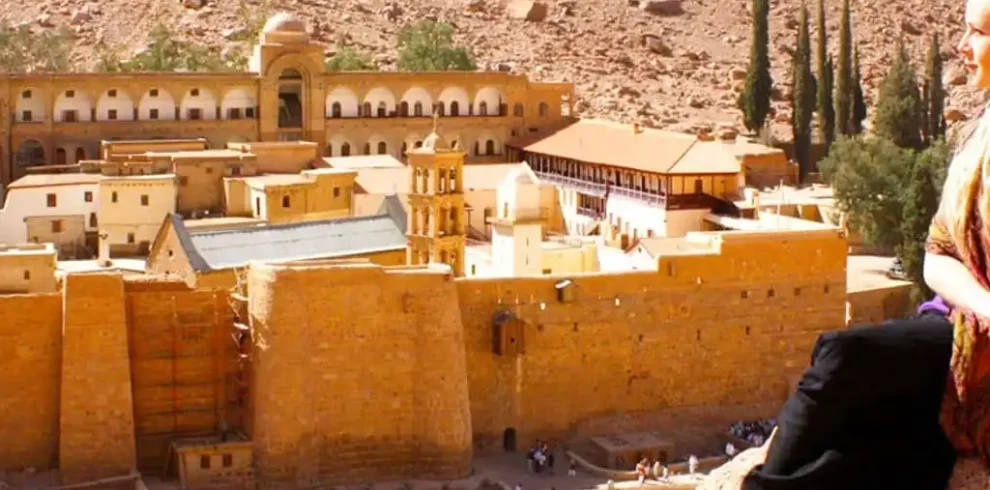
Dahabiya Nile sailing cruise Luxor to Aswan 5 days
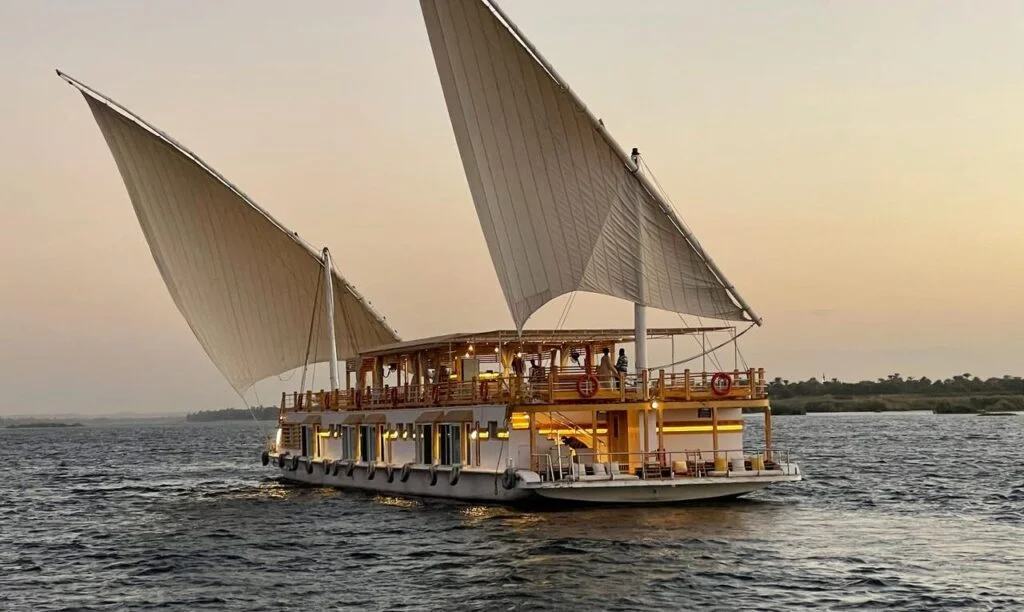
A Dahabiya Nile sailing cruise Luxor to Aswan 5 days is one of the calmest ways to see Upper Egypt’s famous temples while also enjoying long, quiet hours on the water. You get a small boat, fewer people, flexible stops, and a slower pace than large cruise ships—plus time to actually rest between big sightseeing days.
This guide explains what a dahabiya cruise Egypt experience is like, what “Luxor to Aswan” really means in practice, how to plan your hotels before and after, realistic costs, safety, tipping, dress code, and a practical Luxor to Aswan cruise itinerary for 5 days 4 nights Nile cruise planning.
Why choose a Dahabiya for Luxor to Aswan?
Direct answer: Choose a Dahabiya if you want a small, relaxed Nile journey with fewer crowds, more scenery time, and a “floating boutique” feel—without needing ultra-luxury.
What is a Dahabiya?
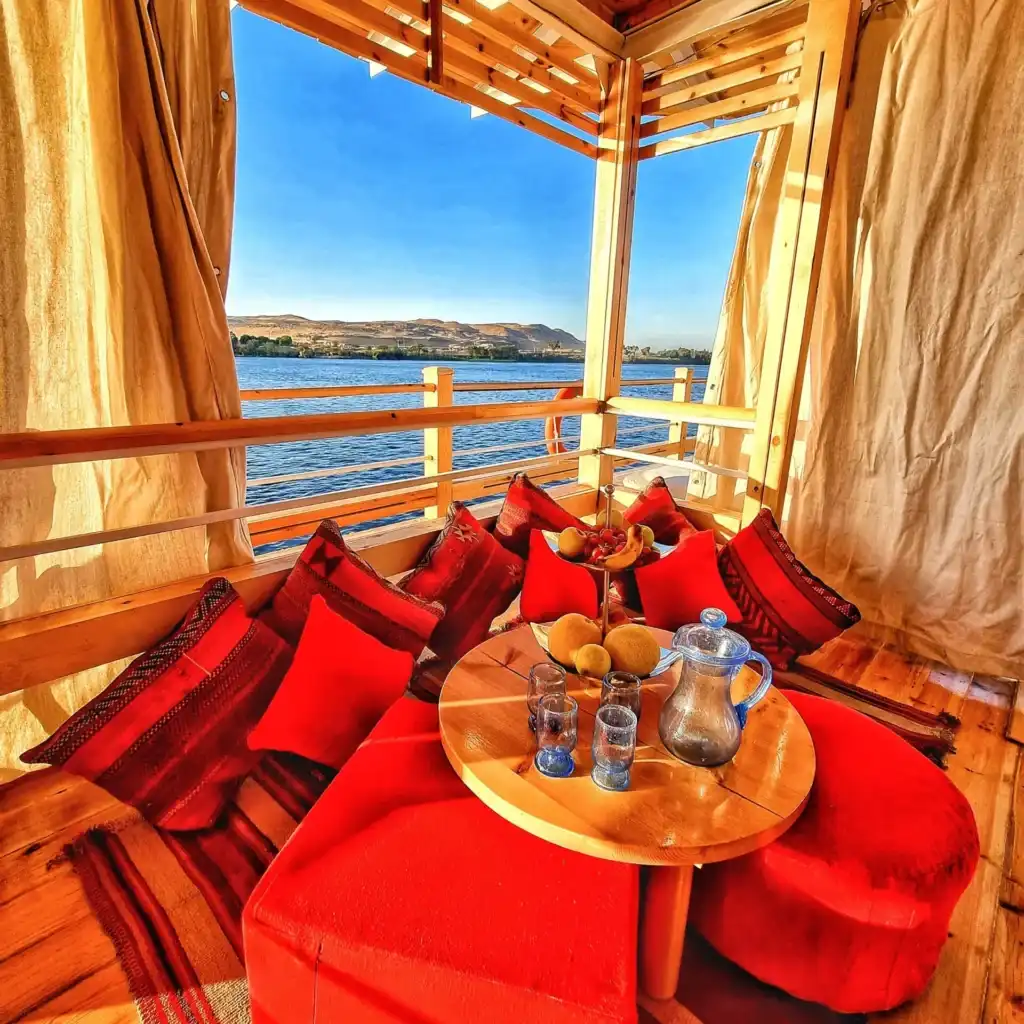
A Dahabiya is a traditional-style wooden sailing boat made for river cruising. Compared with big Nile cruise ships, it is:
-
Much smaller (often 6–12 cabins, sometimes a bit more)
-
Quieter (no big engines running all day)
-
More personal (crew usually learns your routine quickly)
-
Slower and more flexible (more time for short island or village stops)
Important reality check:
Dahabiya vs big Nile cruise ship (honest pros and cons)
Dahabiya advantages
-
Fewer passengers = fewer queues and less “group tourism” feeling
-
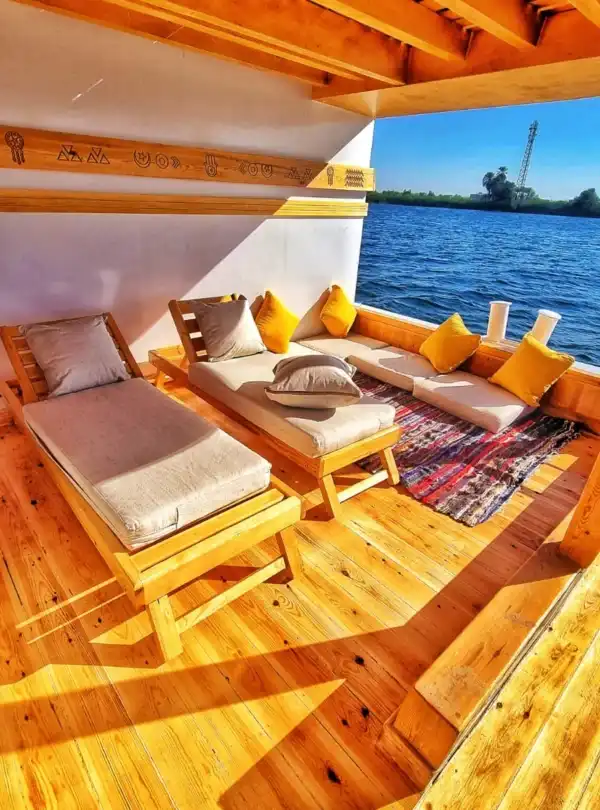
More peaceful deck time (great for reading, photos, and stargazing)
-
Often docks in quieter places (not only the main cruise ports)
-
A good balance of sightseeing + rest (especially on a 5-day plan)
Dahabiya disadvantages
-
Usually more expensive per night than a standard ship
-
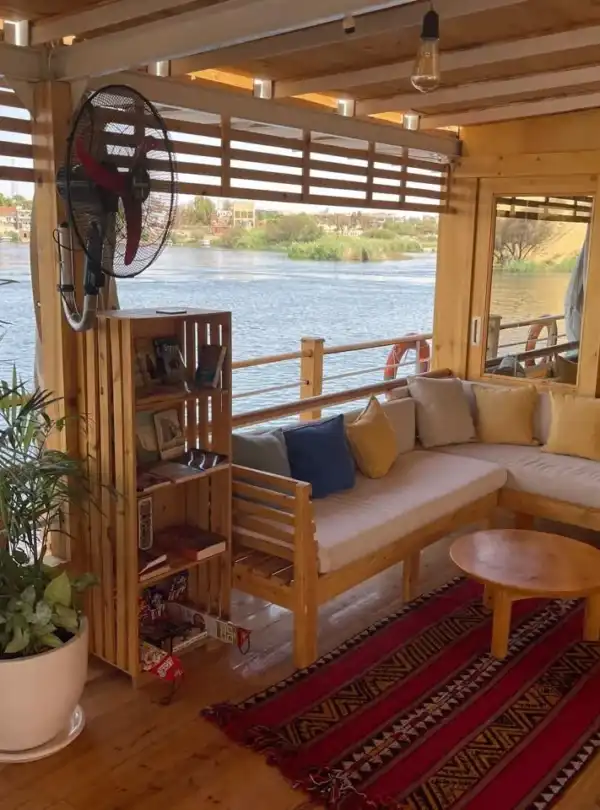
Facilities are simpler (small lounge, small deck, no big pool)
-
Wi‑Fi is often limited or unreliable (sometimes none)
-
Accessibility can be challenging (steps, narrow passages)
Who this cruise suits best
-
First-time Egypt visitors who want comfort but not a “floating hotel mall”
-
Couples and small groups
-
Travelers who prefer scenery and quiet evenings
-
People who like a structured day but not a rushed schedule
Who should think twice
-
Travelers who need strong, consistent internet for work
-
Anyone with major mobility limitations (unless the boat is verified accessible)
-
Very tight budgets (a standard cruise ship may be cheaper)
Dahabiya Luxor to Aswan at a Glance
Direct answer: The classic 5 days / 4 nights route gives enough time for Luxor’s big sites, the essential river temples (Edfu and Kom Ombo), and a smooth arrival into Aswan for Philae—without feeling like a race.
Quick planning facts
-
Ideal total trip length (recommended): 9–11 days
-
Best seasons / best time for Nile cruise: October to April (cooler days, easier temple visits)
-
Shoulder season value: late September, May (warmer but often better prices)
-
Hottest months: June to August (possible, but heat can be intense)
Key neighborhoods to know (no hotel brands)
-
Luxor: East Bank (most convenient), West Bank (quiet, scenic)
-
Aswan: Corniche/center (easy), Elephantine Island (calm), Nubian villages (cultural, relaxed)
Top highlights on this route
-
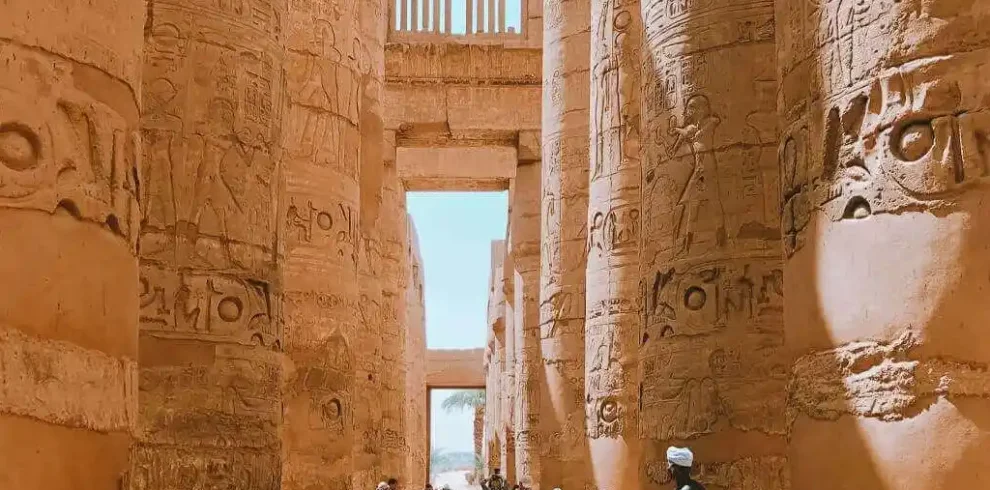
Luxor’s great temples and tombs (Karnak, Valley of the Kings, Hatshepsut)
-
Edfu temple visit (Temple of Horus)
-
Kom Ombo temple (double temple; Sobek + Horus the Elder)
-
Arriving into Aswan and visiting Philae temple
-
Watching daily life along the Nile: villages, palms, islands, birds
Budget overview (approximate, can change)
Costs vary a lot by season, cabin type, what is included, and whether your cruise includes a guide and entrance tickets. Dahabiya pricing is commonly mid-range to luxury.
Table A — Approximate daily budget ranges (USD)
| Style |
Approx daily spend (per person) |
What this usually means |
| Budget |
$180–$280 |
Cheaper season, shared transport, simple hotels pre/post, careful spending; dahabiya deals are limited |
| Mid-range (default) |
$300–$520 |
Typical dahabiya cabin, private transfers or well-run group transfers, a few paid add-ons |
| Luxury |
$600–$1,000+ |
Higher-end dahabiya or private charter, upgraded cabins, more private guiding, flights, premium add-ons |
Notes:
-
The dahabiya itself may be a large part of your daily cost (especially in peak season).
-
Temple tickets, tips, drinks, and special tomb tickets can add up quickly.
-
Prices and inclusions change—always confirm in writing before paying.
Is a Dahabiya Nile cruise safe? Is Luxor safe? Is Aswan safe?
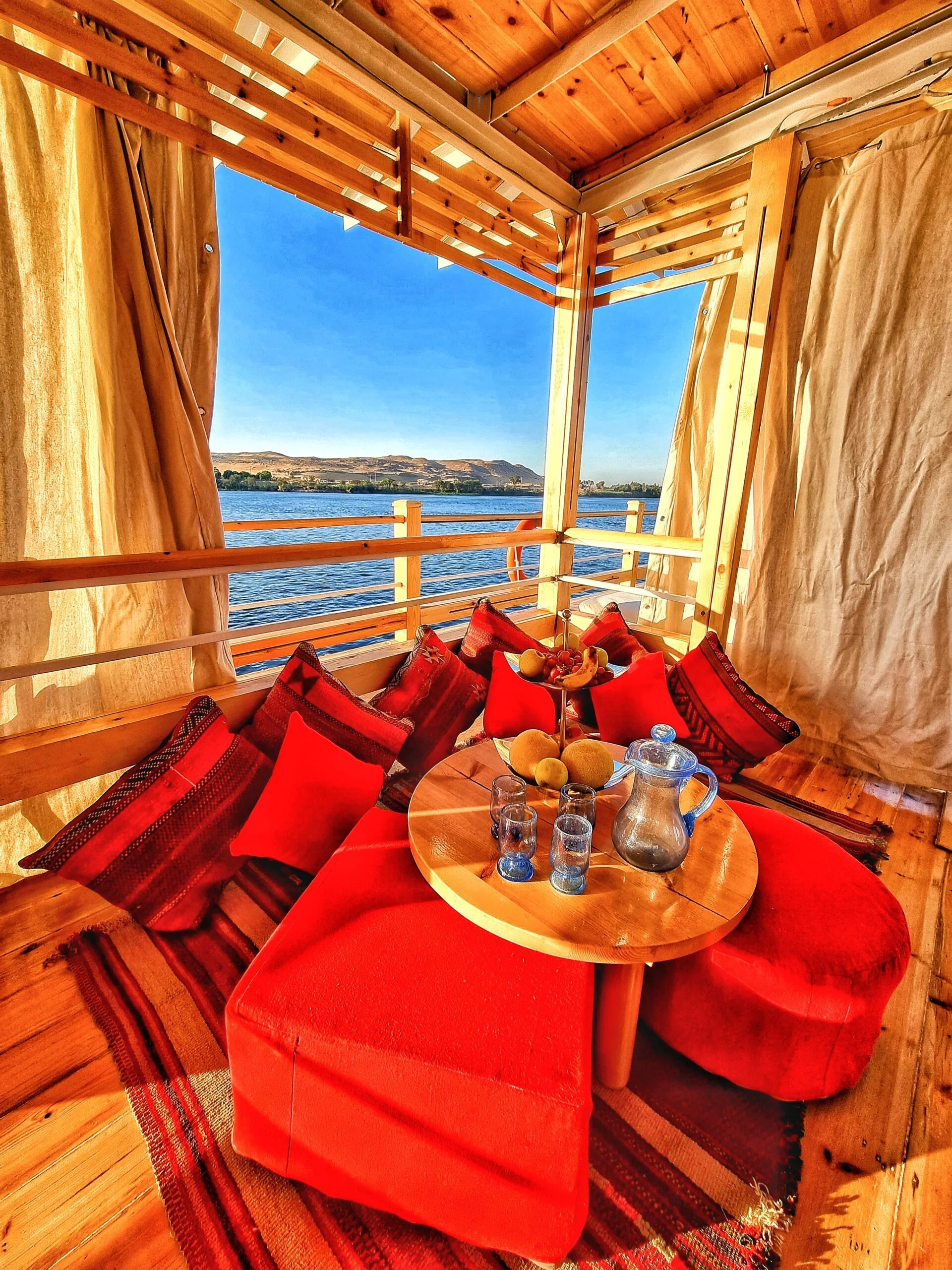
Direct answer: For most visitors, a Dahabiya cruise and visits to Luxor and Aswan are generally manageable and safe with normal travel precautions. The most common problems are scams, pushy sales tactics, occasional harassment, petty theft, and heat. As with any destination, official travel advice can change—check it close to departure.
Check official travel advice (important)
At the time of writing, the U.S. Department of State advises “Exercise increased caution” in Egypt and lists some areas as Do Not Travel. Review the full details before you go.
The UK government also maintains detailed Egypt travel advice that can be updated at any time.
Safety on a Dahabiya (onboard + docking)
Most Dahabiyas are staffed by a crew who are used to tourists. Still, use simple safeguards:
-
Cabin safety: keep passport, cash, and cards in a locked bag inside your luggage; use any cabin safe if available.
-
Night docking: ask the crew what the rule is when the boat docks (some prefer guests not to wander alone at night).
-
Deck safety: the deck can be slippery (morning dew). Wear sandals with grip.
-
Kids: supervise closely (rails exist but the river is still a risk).
-
Motion comfort: river motion is usually mild, but wind can cause gentle rocking.
Is Luxor safe for tourists?
Luxor is one of Egypt’s main tourist areas. Most visits are smooth, but common issues include:
-
Overpricing and “friendly help” scams (guides, drivers, touts)
-
Pushy shopping stops (papyrus/perfume/alabaster stores)
-
Photo requests for money (especially with animals or costumed people)
-
Traffic risk (crossing roads, fast driving)
Practical tips:
-
Use a licensed guide for West Bank tombs if you want strong context and fewer hassles.
-
Agree taxi prices before getting in.
-
Carry small notes for tips and small purchases.
Is Aswan safe for tourists?
Aswan often feels calmer than Luxor:
-
A more relaxed pace on the Corniche
-
Friendly markets, but still some sales pressure
-
Boat rides can involve bargaining
Practical tips:
-
Use official ticket areas for boats when possible (e.g., Philae boats are usually organized at the site).
-
Avoid isolated riverbank areas late at night if alone.
Common scams and how to handle them
-
“Closed today”: someone says a temple is closed and offers an alternative.
-
“Free” photo / “gift”: then demands money.
-
Fake guide: offers help without license.
-
Taxi “meter broken”: high price after the ride.
Solo female traveler notes (practical and realistic)
Experiences vary, but these steps often help:
-
Dress modestly (light long sleeves and long trousers/skirts are practical for sun and attention).
-
Use confident body language and short answers to unwanted chat.
-
Choose accommodation in central, well-lit areas (East Bank in Luxor; Corniche/center in Aswan).
-
Consider a guide or driver for West Bank days to reduce hassle and logistics stress.
Heat and health are safety issues too
The most common “trip spoilers” are not crime—they are:
Those are preventable with planning (covered below).
Best time to do the cruise (weather, crowds, river conditions)
Direct answer: The most comfortable months are usually October to April. Summer is possible but can be harsh for long temple visits.
Month-by-month feel (simple)
-
Oct–Nov: warm days, cooler evenings; good balance.
-
Dec–Feb: coolest weather; peak demand; evenings can feel chilly on deck.
-
Mar–Apr: warmer again; still good for sightseeing; busier around holidays.
-
May: getting hot; early starts become more important.
-
Jun–Aug: very hot; fewer crowds; discounts sometimes; midday sightseeing can be difficult.
-
Sep: still hot but improving late month.
Sailing conditions (what actually changes)
-
Wind affects how much “true sailing” happens. Even on a sailing boat, parts of the route may be done with assistance to keep timing.
-
River traffic and docking availability can affect exact stop times.
Practical advice for any season
How many days to stay in Luxor and Aswan around the cruise
Direct answer: Add 2–3 nights in Luxor before boarding and 2 nights in Aswan after disembarking for a first trip.
Recommended total trip lengths
Why extra nights matter
A 5-day cruise includes big sightseeing days. Extra nights:
-
help you recover from long flights
-
give buffer for delays
-
make Luxor West Bank less rushed
-
allow Abu Simbel planning from Aswan
Where to stay in Luxor (East Bank vs West Bank)
Direct answer: For first-time visitors, Luxor East Bank is usually easiest. The West Bank is quieter and scenic, but less convenient for restaurants and evening walking.
Luxor East Bank (most convenient)
Best for:
Pros:
-
closer to major city services (banks, pharmacies)
-
easier pickup points for tours/transfers
-
good base for Luxor Temple and trips to Karnak
Cons:
Luxor West Bank (quiet + local vibe)
Best for:
Pros:
Cons:
Practical tip for cruise boarding day
If your dahabiya boards at Esna (common for some operators), you may have a road transfer south of Luxor first. This is one reason many travelers prefer the East Bank for smoother logistics.
Where to stay in Aswan (Corniche vs Elephantine vs Nubian villages)
Direct answer: Stay on the Corniche/center for the easiest sightseeing and transport. Choose Elephantine for quiet and views. Choose a Nubian village for a cultural, slower stay—best with a plan for transport.
Aswan Corniche / center
Best for:
Pros:
Cons:
Elephantine Island
Best for:
-
calm stays
-
river views
-
relaxed evenings
Pros:
Cons:
Nubian villages (e.g., around Gharb Soheil)
Best for:
Pros:
Cons:
Table B — Neighborhood comparison (Luxor + Aswan)
| City |
Area |
Best for |
Pros |
Cons |
Getting around |
| Luxor |
East Bank |
First-timers |
Easy services, dining, pickups |
Busier, more touts |
Mostly taxi/private car |
| Luxor |
West Bank |
Quiet stays |
Scenic, calmer nights |
Fewer restaurants, crossings |
Taxi + river crossing/drive |
| Aswan |
Corniche/center |
Convenience |
Walkable, transport access |
Can be noisy |
Taxi + short walks |
| Aswan |
Elephantine |
Relaxation |
Peaceful, views |
Needs boat transfers |
Boat + taxi |
| Aswan |
Nubian villages |
Culture |
Local vibe, quieter |
Farther from center |
Taxi/boat arranged |
What’s included vs not included on a 5D/4N Dahabiya
Direct answer: Most Dahabiyas include your cabin and meals. Many extras—like drinks, entrance tickets, tips, and sometimes guides and transfers—can be separate. Always confirm the exact list.
Often included (common, but confirm)
-
4 nights accommodation on the dahabiya
-
Full board (breakfast, lunch, dinner)
-
Tea/coffee and snacks at set times
-
Guided sightseeing either:
-
included with a guide, or
-
arranged as group visits, or
-
optional add-on
Often NOT included (common)
-
Soft drinks and bottled water beyond basic supply (varies)
-
Alcohol (if available at all)
-
Entrance tickets to temples and tombs
-
Special tomb tickets (some famous tombs can cost extra)
-
Tips for crew, guide, drivers
-
Transfers to the boat (Luxor/Esna) and from the boat (Aswan) unless stated
-
Personal expenses (shopping, laundry)
Questions to ask before booking (save money and stress)
Ask for written answers:
-
Where is the exact boarding point (Luxor city or Esna)?
-
Are entrance tickets included? If yes, which sites exactly?
-
Is an Egyptologist guide included? Language? Group size?
-
Are transfers included (airport/train ⇄ hotel ⇄ boat)?
-
Does the cabin have air conditioning? When is it available?
-
What is the drinking water plan (bottles, filtered, refill station)?
-
What is the tipping expectation for crew and guide?
-
Cancellation and refund rules (especially in peak season)
The complete 5 days / 4 nights Luxor to Aswan cruise itinerary
Direct answer: Most 5D/4N programs follow the same spine: Luxor (East/West Bank) → Edfu → Kom Ombo → Aswan + Philae. Exact timing can change based on wind, docking, and whether you board in Luxor or Esna.
Before you start: Day 0 (optional arrival plan)
If arriving from Cairo (or internationally), a buffer day helps.
Good Day 0 plan
-
Arrive Luxor (flight or train)
-
Check in and rest
-
Short easy visit at sunset (Luxor Temple area) or a relaxed Corniche walk
-
Early night (West Bank days start early)
Time planning:
Day 1 — Luxor highlights + boarding logistics (Luxor or Esna)
Goal: see a major Luxor highlight, then board smoothly.
Typical morning options (choose based on what you did on Day 0):
Boarding reality: “Luxor to Aswan” may start at Esna
Many dahabiyas board south of Luxor (often around Esna) for navigation reasons. If so:
-
Transfer by road Luxor → Esna (often ~1 hour, traffic dependent)
-
Boarding + welcome briefing
-
First sail segment starts after settling in
Afternoon rhythm onboard:
-
Lunch on board
-
Slow sailing
-
Tea time
-
Sunset deck time
-
Dinner
Evening:
Day 2 — Luxor West Bank (Valley of the Kings + Hatshepsut) + sailing rhythm
Goal: do the “big tomb day” early, then return to the boat for rest and sailing.
Early start (recommended)
Valley of the Kings
-
Typical visit time: 2–3 hours (depending on queue and number of tombs)
-
Bring: water, hat, sunscreen, good shoes
-
Tickets and rules can change; check official sources before going
At the time of writing, official ticket info for the Valley of the Kings on Egypt’s monuments portal lists foreign adult entry pricing in EGP (and hours around early morning to late afternoon).
Hatshepsut Temple (Deir el‑Bahari)
-
Typical visit time: 1–1.5 hours
-
It is one of the most striking temple settings in Luxor.
-
At the time of writing, the official monuments portal lists opening hours and ticket pricing in EGP.
Back to the boat
Day 3 — Edfu temple visit + local stops
Goal: visit one of Upper Egypt’s best-preserved temples, then return to sailing.
Temple of Edfu (Horus)
-
Typical visit time: 1–2 hours
-
It is dedicated to Horus and is known for its strong preservation.
-
At the time of writing, the official monuments portal lists opening hours and ticket prices in EGP.
Transport note:
Afternoon
Day 4 — Gebel el‑Silsila + Kom Ombo + downtime
Goal: mix a smaller, atmospheric stop with the popular Kom Ombo temple.
Gebel el‑Silsila (often included)
-
Usually a shorter stop (45–90 minutes)
-
Known for cliffs, quarry history, and strong Nile scenery
-
Great photography in late afternoon light
Kom Ombo Temple
-
Typical visit time: 1–1.5 hours
-
Unique double dedication (Sobek and Harwer/Horus the Elder).
-
At the time of writing, official ticket pricing and hours are listed on Egypt’s monuments portal.
Optional nearby stop:
Evening
Day 5 — Aswan arrival + Philae + disembark
Goal: arrive Aswan, visit Philae, then continue to your Aswan hotel.
Philae Temple
-
Typical visit time: 1.5–2.5 hours (includes boat transfers)
-
The temple complex is closely tied to Isis worship and was relocated during the UNESCO Nubia campaign era due to the Aswan High Dam flooding risk.
-
At the time of writing, opening hours and ticket info are listed on Egypt’s monuments portal (in EGP).
Disembark
Table C — 5D/4N itinerary snapshot (typical)
| Day |
Overnight |
Main visits |
Typical time needs |
Notes |
| Day 0 (optional) |
Luxor hotel |
Easy walk / rest |
1–2 hrs light |
Buffer for delays |
| Day 1 |
Dahabiya |
Karnak or Luxor Temple + boarding |
3–6 hrs total |
Boarding may be Esna |
| Day 2 |
Dahabiya |
Valley of the Kings + Hatshepsut |
5–8 hrs |
Early start recommended |
| Day 3 |
Dahabiya |
Edfu Temple |
3–5 hrs |
Often morning stop |
| Day 4 |
Dahabiya |
Gebel el‑Silsila + Kom Ombo |
3–6 hrs |
Sunset views can be great |
| Day 5 |
Aswan hotel |
Philae + disembark |
3–6 hrs |
Boat transfer to Philae |
Top things to do along the route (beyond main temples)
Direct answer: The best “extra” moments are usually the simplest—short village walks, quiet deck time, and small local stops that large ships skip.
Ideas that often fit a dahabiya schedule:
-
Village walk near a docking point (15–45 minutes)
-
Sunset deck time with tea/coffee (daily habit that becomes a highlight)
-
Birdwatching (egrets, herons, kingfishers in calmer stretches)
-
Stargazing (very good away from city lights)
-
Local market browsing (Aswan market is great for spices and small gifts)
-
Short cooking demo onboard (if offered)
Tours/experiences to add (balloon, Abu Simbel, Nubian village, felucca)
Direct answer: Add experiences either in Luxor before the cruise (balloon) or in Aswan after (Abu Simbel, Nubian village, felucca). This avoids rushing the cruise days.
Hot-air balloon in Luxor (best before the cruise)
-
Starts extremely early (pickup often before sunrise)
-
Total time commitment: 3–5 hours
-
Best for: photographers, “once in a lifetime” views
-
Not ideal for: anyone anxious about heights or strict sleep needs
Abu Simbel day trip from Aswan (best after the cruise)
-
Very early start (often pre-dawn by road, or flight options)
-
Total time: often 8–12 hours by road day trip (varies)
-
Abu Simbel is part of the UNESCO-listed Nubian Monuments area.
-
Book through a reliable provider and confirm security/convoy rules if applicable at the time.
Nubian village visit (half-day or sunset)
-
Great for: culture, crafts, relaxed tea stops
-
Responsible travel tip: treat it like a neighborhood, not a “human zoo”—ask before photos and avoid intrusive behavior.
Felucca ride in Aswan
-
1–2 hours at sunset is often enough
-
It is calm, scenic, and feels very “Aswan”
Getting around: flights, trains, transfers, boarding point details
Direct answer: For most first-time visitors, the simplest plan is: fly or overnight train into Luxor, cruise to Aswan, then fly or overnight train out of Aswan.
Cairo ↔ Luxor / Aswan (typical options)
Flights
Trains
Egyptian National Railways has an official online presence; some booking functions may be restricted by nationality and can change over time.
Luxor local transport (getting to temples)
Common options:
-
Private driver for the day (best for West Bank efficiency)
-
Taxi with price agreed in advance
-
Small group tour through your cruise/guide
Time estimates (very approximate):
Aswan local transport (getting to Philae and around town)
Boarding and disembark details (what “Luxor to Aswan” really means)
Important planning point:
Always confirm:
Costs: How much does it really cost?
Direct answer: A dahabiya is rarely “cheap.” Expect a mid-range to luxury base cost, plus important extras like tickets, tips, and drinks. Total cost depends heavily on season and inclusions.
The big cost drivers
-
Season: Oct–Apr usually costs more than summer
-
Cabin type: standard vs suite; single supplement for solo travelers
-
Private charter vs joining a group
-
What is included: guide, transfers, entrance tickets, drinks
-
Extra tours: balloon, Abu Simbel, special tombs
Temple ticket prices (example: listed in EGP; convert roughly)
Ticket prices and opening hours can change. At the time of writing, Egypt’s official monuments portal lists foreign-adult ticket prices (EGP) for several key sites, including:
-
Karnak Temple adult EGP 600
-
Valley of the Kings adult EGP 750
-
Hatshepsut Temple adult EGP 440
-
Edfu Temple adult EGP 550
-
Kom Ombo adult EGP 450
-
Philae adult EGP 550
For a rough USD idea, exchange rates move daily. Around early March 2026, 1 USD was roughly in the high‑40s EGP range (example reference).
Using that rough rate, EGP 600 is around the low‑teens USD and EGP 750 is around the mid‑teens USD—very approximate.
Typical extra costs to plan for (USD, approximate)
-
Temple tickets over the trip: often $60–$140+ per person (depends on what is included and which tombs you choose)
-
Drinks on board (if charged): $3–$8 per soft drink; alcohol varies a lot (if available)
-
Tips (crew + guide + drivers): often $80–$200+ per person over 5 days (see tipping section)
-
Abu Simbel day trip: often $80–$200+ by road in a group; more for private or flight options
Simple total trip scenarios (very approximate, per person)
These examples assume 2–3 nights Luxor + cruise + 2 nights Aswan.
-
Budget-leaning (hard with a true dahabiya): ~$1,600–$2,400
-
Mid-range (common): ~$2,400–$4,200
-
Luxury: ~$5,000–$9,000+
Food & drink onboard + dietary needs + water safety
Direct answer: Most Dahabiyas serve simple, fresh Egyptian-style meals and can handle common dietary needs if told early. Water safety is manageable if you stick to sealed or treated water.
Typical onboard meal rhythm
Dietary needs (what to confirm)
Ask in advance about:
Best practice:
Drinking water and stomach safety
-
Use sealed bottled water or confirmed treated water from the boat.
-
Be cautious with ice unless you trust the source.
-
Wash hands often (temple visits involve dusty surfaces and shared railings).
Culture, dress code, etiquette, tipping in Egypt
Direct answer: Dress modestly for temples and towns, be polite but firm with sellers, and plan for tipping (baksheesh) as a normal part of service culture.
Dress code Egypt temples (practical approach)
You do not need to dress “perfectly,” but modest clothing helps with comfort and attention.
Good default:
-
shoulders covered (t-shirt is usually fine)
-
knees covered (long shorts, trousers, long skirt)
-
light scarf (sun + modesty + dust)
-
breathable fabrics (linen/cotton)
-
closed-toe shoes for tomb dust and uneven ground
Village and onboard etiquette
-
Ask before photographing people (especially children).
-
Avoid giving sweets or money directly to kids (it can encourage begging).
-
Keep public affection low-key.
-
Alcohol: if offered onboard, keep it discreet and respectful.
Tipping in Egypt (baksheesh) — realistic ranges (USD, approximate)
Tipping expectations vary by boat and group size, but these ranges help you plan.
On a 5 days / 4 nights dahabiya
-
Boat crew tip: often $8–$15 per person per night
-
Guide tip (if you have a guide): often $5–$12 per person per day
-
Driver tip: often $2–$6 per person per transfer/day (depending on distance)
-
Porters / small help: $0.50–$2 in EGP equivalent for small bags or restroom attendants
Practical tip:
Handling shopping pressure politely
Useful phrases:
-
“No, thank you.”
-
“Maybe later.”
-
“Not interested.”
Avoid long explanations. A short, polite refusal works best.
SIM/eSIM + internet on the Nile
Direct answer: Mobile data is often fine near towns but can drop in quieter river stretches. Plan offline and treat Wi‑Fi as a bonus, not a promise.
SIM card Egypt basics
-
You can buy SIMs from major operators in cities and airports.
-
Bring your passport (often required for registration).
-
A mid-range data package is usually enough for maps, messaging, and light browsing.
eSIM reality
Internet expectations onboard
Packing list (Dahabiya-specific)
Direct answer: Pack for sun, dust, early mornings, and simple comfort on a small boat. Bring fewer clothes than you think, but do not skip sun protection and cash.
What to pack (core)
-
Passport + copies (paper + phone photo)
-
Sunglasses, hat, sunscreen SPF 30–50
-
Light long-sleeve shirt (sun + temples)
-
Comfortable walking shoes
-
Sandals with grip (boat deck)
-
Small day bag + reusable water bottle
-
Hand sanitizer + tissues (some toilets have limited supplies)
-
Basic meds (pain relief, anti-diarrheal, rehydration salts)
Dahabiya comfort items (high value)
-
Light jacket/hoodie (winter evenings on deck)
-
Sleep mask + earplugs (docking sounds, early starts)
-
Power bank + charging cables
-
Small dry bag (boat transfers, splash risk)
-
Insect repellent (usually mild need, but useful)
Table D — Packing checklist (simple)
| Item |
Why it matters |
Notes |
| Light long sleeves |
Sun + modesty |
Breathable fabric |
| Hat + sunscreen |
Heat protection |
Reapply often |
| Closed shoes |
Tomb dust + uneven ground |
Bring socks |
| Sandals with grip |
Safe deck walking |
Avoid slippery soles |
| Power bank |
Long days, weak outlets |
Charge nightly |
| Small cash (EGP + USD) |
Tips + small buys |
Small notes help |
| Dry bag |
Boat transfers |
Optional but useful |
| Oral rehydration salts |
Heat days |
Very helpful in summer |
Practical tips (tickets, opening hours, photography, money, holidays)
Direct answer: Start early, carry cash, check official ticket rules close to your visit, and keep plans flexible.
Tickets and opening hours (check official sources)
Ticket prices and hours can change. For several major sites, Egypt’s official monuments portal lists opening hours and ticket prices in EGP. Examples include:
Best habit:
Photography rules
Rules can vary by site and can change over time:
-
Some tombs restrict cameras
-
Some locations may require extra photo tickets
-
Respect “no photo” signs (especially in tombs)
Money & payments
-
Egyptian pounds (EGP) are essential for small purchases and tips.
-
Cards work in some hotels and restaurants, but do not rely on them everywhere.
-
ATMs can be available in city centers, but machines can run out of cash or fail—carry a buffer.
Heat and hydration (health basics)
-
Drink regularly even if you do not feel thirsty.
-
Use electrolytes on hot days.
-
Plan midday breaks (especially May–Sep).
Water contact: avoid swimming in the Nile
For health reasons, avoid swimming or wading in freshwater in destinations where schistosomiasis can occur. CDC travel guidance for Egypt includes advice to avoid freshwater contact, including the Nile River.
Public holidays and Fridays
-
Fridays can affect opening patterns and crowd flow.
-
Ramadan timing changes each year; hours and routines can shift.
-
Always confirm exact timing close to travel.
Frequently Asked Questions
1) Is a Dahabiya Nile cruise safe for tourists?
Generally, yes—with standard precautions. The most common issues are petty theft, scams in tourist areas, and heat. Check official travel advisories close to your trip because guidance can change.
2) Is Luxor safe for tourists?
Luxor is a major tourist hub and is usually manageable. Expect pushy selling near main sites and occasional overcharging. Use a licensed guide/driver for West Bank days if you want less hassle and smoother timing.
3) Is Aswan safe for tourists?
Aswan often feels calmer than Luxor. The same basic rules apply: agree prices first, keep valuables secure, and avoid isolated areas late at night if alone.
4) What is the dress code in Egypt temples?
A practical rule is shoulders and knees covered, breathable fabric, and comfortable shoes. This helps with respect, sun protection, and comfort. A scarf is useful for sun, dust, and modesty.
5) Do you need a visa for Egypt?
At the time of writing, many travelers use Egypt’s official e‑Visa system or a visa on arrival depending on nationality and entry point. Requirements can change—check official sources before booking flights. The official Egypt e‑Visa Portal is here: https://visa2egypt.gov.eg/eVisa/
6) How much does a 5 days 4 nights Nile cruise on a dahabiya cost?
It depends on season, cabin level, and inclusions (guide, tickets, transfers). Dahabiyas are often priced as mid-range to luxury. Plan extra budget for tickets, tips, and drinks even if the cruise is “full board.”
7) Are temple tickets included on a dahabiya cruise?
Sometimes yes, sometimes no. Many packages exclude entrance tickets and let you pay on site or via your guide. Always ask for a written inclusion list, especially for special tomb tickets in Luxor.
8) Is the internet reliable on a dahabiya?
Often not. Mobile signal is best near towns and weaker in quiet stretches. Some boats have Wi‑Fi, but it may be slow. Download maps and documents offline before boarding.
9) Can you swim in the Nile during the cruise?
It is not recommended. Health authorities advise avoiding contact with freshwater in regions where schistosomiasis can occur, including the Nile River.
10) Is this cruise suitable for kids and families?
Often yes for calm, water-safe families—but supervision is essential on deck and at docking points. Ask about cabin layout, rail safety, and whether the itinerary has long driving segments (e.g., Abu Simbel).
11) Is a dahabiya cruise accessible for travelers with limited mobility?
Many dahabiyas have steps, narrow passageways, and uneven boarding points. Some travelers with mild limitations manage with support, but wheelchair access is often difficult. Ask for:
-
cabin location (main deck vs stairs)
-
bathroom layout (step-in showers)
-
boarding method (steps vs ramp)
12) What tipping is expected on a dahabiya?
Tipping is normal in Egypt. As a planning range, many travelers budget:
-
$8–$15 per person per night for crew
-
$5–$12 per person per day for a guide (if you have one)
Adjust based on service quality, group size, and what is already included.
13) What should you ask before booking a Dahabiya Nile sailing cruise Luxor to Aswan 5 days?
Key questions:
-
Exact boarding point (Luxor or Esna) and exact disembark time
-
What is included: guide, tickets, transfers, drinks
-
Cabin AC availability and power outlets
-
Max passengers and group size for excursions
-
Cancellation and refund rules
-
Payment method and any extra taxes/fees
Suggested External Links
-
Egypt e‑Visa Portal (official online visa application)
URL: Egypt e‑Visa Portal (official)
-
U.S. Department of State — Egypt Travel Advisory (safety updates)
URL: U.S. State Department Egypt Travel Advisory
-
UK Government — Egypt travel advice (safety + entry info)
URL: UK government travel advice for Egypt
-
UNESCO — Ancient Thebes with its Necropolis (Luxor World Heritage)
URL: UNESCO page for Ancient Thebes (Luxor)
-
UNESCO — Nubian Monuments from Abu Simbel to Philae (Aswan area)
URL: UNESCO page for Nubian Monuments (Abu Simbel to Philae)