1 Week Egypt Tour: The Perfect 7-Day Itinerary for Cairo & the Nile (2026)

1 Week Egypt Tour

Seven days is the sweet spot for a first Egypt trip. Long enough to stand at the Pyramids of Giza, sail the Nile between Luxor and Aswan, walk into the Valley of the Kings, and bargain in Khan El-Khalili — without stretching a holiday budget beyond what most travellers can manage. Short enough to feel like a real break rather than an endurance test.

Egypt’s top sites sit within a corridor running 1,000 km south along the Nile from Cairo to Aswan. A 1 week Egypt tour that uses domestic flights rather than overnight trains covers this corridor efficiently: two days in Cairo, a flight south, three nights on a Nile cruise ship, and a final stop at Abu Simbel before flying home. That structure — Cairo + Nile cruise + Aswan — is the standard format for a reason. It delivers everything that makes Egypt worth the long-haul flight.

This guide covers the best 7-day Egypt itinerary in detail, every major site you’ll visit, practical costs, what to pack, and where to book — with the primary focus on the tour structure that delivers the most complete 1 week Egypt tour on the market.


1 Week Egypt Tour at a Glance

The table below gives you the key numbers before you start planning in detail.

Detail Info
Ideal trip length 7 days / 6 nights
Best structure 2 nights Cairo + 3–4 nights Nile cruise + 1 night Aswan
Best season October–April
Daily budget (mid-range, land costs only) $120–$200 per person
All-inclusive 7-day package range $1,100–$2,000 per person
Budget independent travel (1 week) $700–$1,000 per person
Luxury package range $2,000–$3,500+ per person
Key destinations Cairo, Giza, Luxor, Nile cruise, Aswan, Abu Simbel
Internal flights needed Cairo → Luxor or Aswan + Aswan → Cairo
Top highlights Pyramids of Giza, GEM, Valley of the Kings, Karnak Temple, Nile cruise, Philae Temple, Abu Simbel

Exchange rates fluctuate — verify current rates before travel.

Top reasons to do a 1 week Egypt tour:

  • The Pyramids of Giza are the only surviving Ancient Wonder of the World — 4,500 years old and still standing 138 m high
  • The Grand Egyptian Museum (opened fully 2024) holds the complete Tutankhamun collection across 5,000+ artefacts in one purpose-built building
  • A 3- or 4-night Nile cruise between Luxor and Aswan passes 6–8 major temple sites on a single itinerary
  • Domestic flights connect Cairo, Luxor, and Aswan in under 90 minutes — no full days lost in transit
  • Egypt’s tour infrastructure for first-time visitors is mature: licensed Egyptologist guides, modern cruise ships, and airport-to-hotel logistics are standard on packaged tours

7-Day Cairo & Nile Cruise Tour by Flight


⚠️ Safety Notice

At the time of writing, Egypt is safe for tourists travelling on organised itineraries. Most Western governments advise normal vigilance in tourist areas, with heightened caution in specific border zones (northern Sinai, Libyan border region) that form no part of any standard 1 week Egypt tour itinerary. Always check your government’s official travel advisory before booking.


Why 7 Days Is the Right Length for a First Egypt Trip

Egypt’s headline sites cluster into two zones: the Nile Delta and Cairo in the north, and Upper Egypt — Luxor, Edfu, Kom Ombo, Aswan — in the south. Visiting only one zone leaves half the story untold. Cairo without the Nile cruise misses the temples. The Nile cruise without Cairo misses the Pyramids. Seven days is the minimum that covers both without collapsing into a logistical sprint.

The Cairo portion needs two full days: one for the Giza Plateau and the Grand Egyptian Museum, a second for Islamic Cairo, Old Cairo, and Khan El-Khalili. The Nile cruise portion needs three nights minimum: Luxor on arrival, the river journey south via Edfu and Kom Ombo, and Aswan at the finish. Abu Simbel — 280 km south of Aswan — requires a half-day excursion by plane or road, slotted onto the final morning before the return flight.

At 10 days, the pace relaxes considerably and Alexandria or the White Desert become feasible additions. At 5 days, Cairo + a short cruise is possible but genuinely rushed. Seven days sits in the zone where most travellers return having seen the main sites without spending the entire holiday on buses and planes.


What Does a 1 Week Egypt Tour Include?

A well-structured 7-day Egypt tour package typically covers the following:

Included in most mid-range packages:

  • Return international flights are not included — these are booked separately
  • All domestic flights (Cairo → Luxor or Aswan; Aswan → Cairo)
  • Airport transfers on arrival and departure
  • Accommodation: 2 nights in a 4-star Cairo hotel + 3–4 nights on a Nile cruise ship (full board) + 1 night in Aswan
  • Licensed Egyptologist guide throughout or for key days
  • Private air-conditioned vehicle for all land transfers in Cairo and Aswan
  • Entrance fees to the main sites: Giza Plateau, Grand Egyptian Museum, Valley of the Kings, Karnak Temple, Edfu, Kom Ombo, Philae Temple
  • Most meals (breakfast daily, lunch and dinner on the cruise)

Typically excluded:

  • International flights
  • Travel insurance
  • Entry to the interior of the Great Pyramid (~$18 optional extra)
  • Abu Simbel entrance fee (~$37 / EGP 1,200) — sometimes included, sometimes not
  • Tips for guides, drivers, and cruise staff (~$15–$25 per person per day total)
  • Beverages beyond water with meals
  • Optional extras: hot air balloon over Luxor ($70–$120), Sound & Light Show at Karnak ($15–$20)

For a comprehensive overview of Egypt travel beyond the itinerary itself, the Ultimate Egypt Travel Guide for 2025 covers visa, currency, health, and practical logistics in one place.


The Best 7-Day Egypt Itinerary: Cairo + Nile Cruise

The day-by-day breakdown below follows the structure used in the Pure Nile Tours 7-day Cairo and Nile cruise format — Cairo first, then a flight south to Luxor, then a cruise south to Aswan, then Abu Simbel on the final morning.

Day Location Highlights
1 Cairo — arrival Check in, evening orientation walk
2 Cairo — Giza & GEM Pyramids, Sphinx, Grand Egyptian Museum
3 Cairo → Luxor Khan El-Khalili, flight south, Luxor Temple by night
4 Luxor Valley of the Kings, Hatshepsut Temple, Karnak Temple
5 Nile Cruise — Edfu & Kom Ombo Temple of Horus, double temple
6 Aswan Philae Temple, High Dam, Nile felucca at sunset
7 Abu Simbel → Cairo Abu Simbel temples, fly home

Day 1: Arrive Cairo

Most international flights to Cairo land in the afternoon or evening. The first day is deliberately light: airport transfer to your hotel in central Cairo or near the Giza Plateau, check-in, and an evening walk if energy allows. Zamalek — the leafy island district in the Nile — or the Corniche along the river give a first sense of the city’s scale without the sensory overload of central Cairo. A dinner of koshari (Egypt’s national street dish — lentils, pasta, rice, tomato sauce) at a local restaurant costs EGP 50–80 and works better than any tourist restaurant for a first night arrival.


Day 2: Pyramids of Giza, the Sphinx & Grand Egyptian Museum

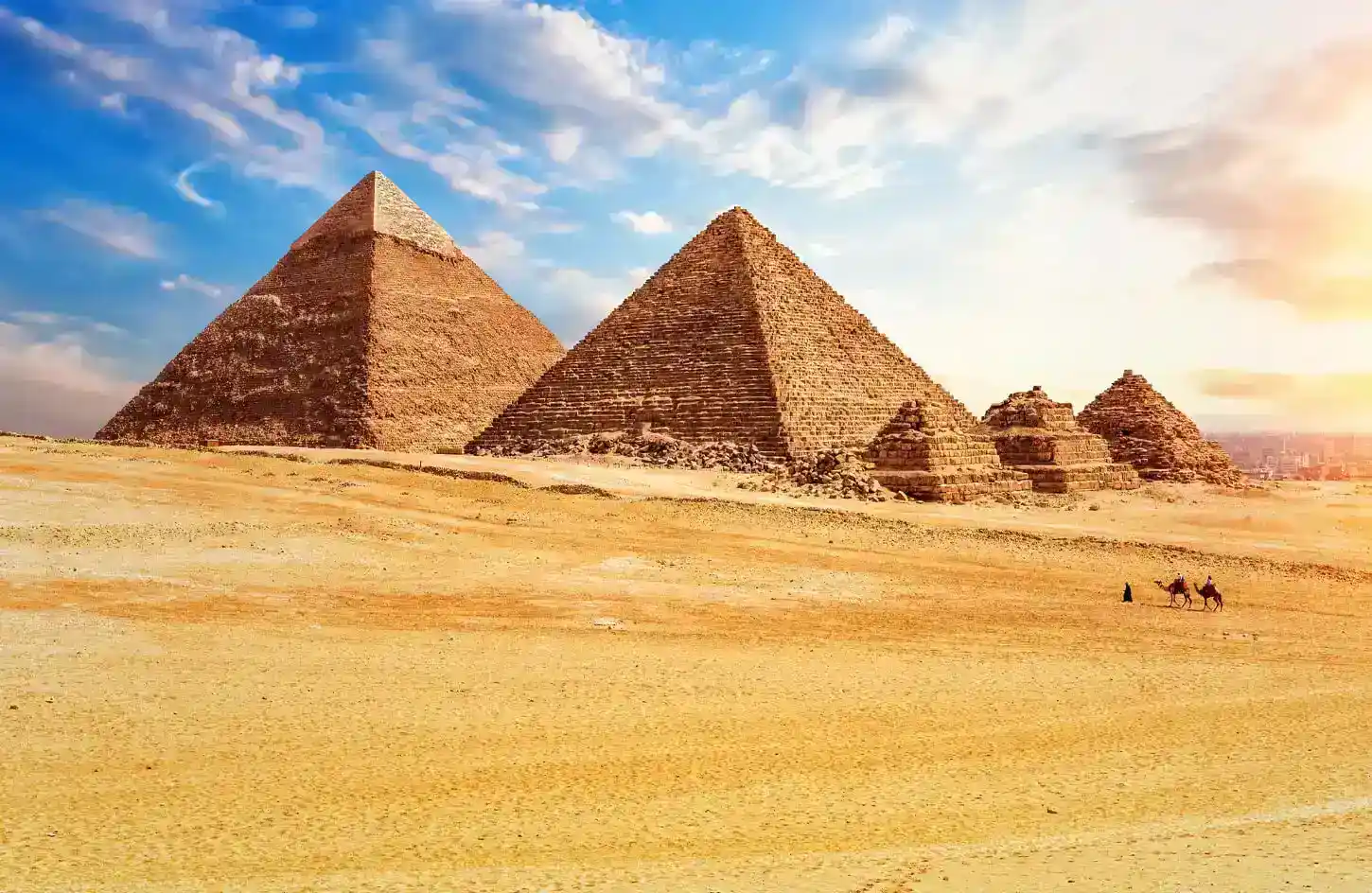
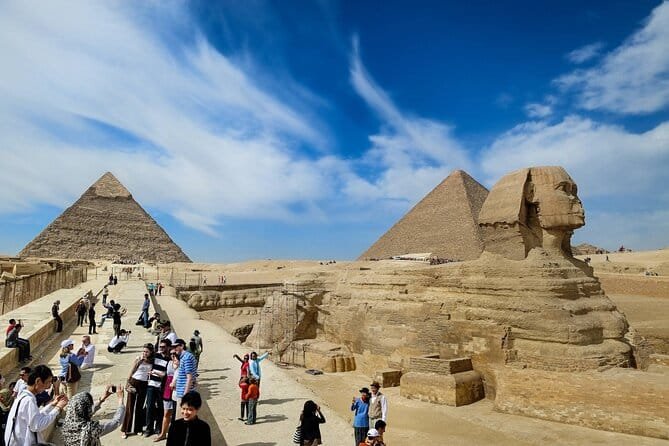
The Giza Plateau opens at 08:00 — arrive then to beat the heat and the crowds. Three pyramids, the Great Sphinx, and the Valley Temple take 2.5–3 hours. The panorama ridge to the southwest gives the unobstructed three-pyramid shot. Interior access to the Great Pyramid is an optional ticket at the gate.

Two kilometres away, the Grand Egyptian Museum holds 100,000+ artefacts including the complete Tutankhamun collection — 5,000+ objects in one dedicated gallery. Budget 2 hours minimum. Evening options: a Nile dinner cruise ($40–$60) or early rest ahead of Day 3.


Day 3: Old Cairo, Khan El-Khalili & Flight to Luxor

Morning: Coptic Cairo — the Hanging Church (Al-Muallaqah), built above a Roman gateway and in continuous religious use since the 3rd century; the Ben Ezra Synagogue; and the Coptic Museum. From there, a 10-minute drive reaches Islamic Cairo and the lanes of Khan El-Khalili bazaar, in operation since 1382. Budget 60–90 minutes to walk, browse, and haggle. Fishawy Café — open since 1773 — is the right stop for mint tea before leaving the market.

Afternoon: transfer to Cairo International Airport for the 60-minute domestic flight to Luxor. Check in at your Nile cruise ship, which departs from Luxor dock. After dinner on board, a taxi or walk takes you to Luxor Temple: the massive avenue of sphinxes, the twin obelisks of Ramesses II (one still standing, one in Paris since 1833), and the colonnade hall flood-lit at night. The site stays open until 22:00.


Day 4: Luxor — Valley of the Kings & Karnak Temple

The most site-dense day on a 1 week Egypt tour. The West Bank of Luxor holds the Valley of the Kings: 63 royal tombs cut into the limestone cliffs of the Theban Necropolis, most dating from 1550–1070 BCE. Standard admission covers entry to three tombs (chosen on arrival); the tomb of Tutankhamun requires a separate ticket (EGP 800). Neighbouring the valley: the funerary temple of Hatshepsut, cut into a cliff face on three ascending terraces — one of the best-preserved New Kingdom structures in Egypt.

On the East Bank: Karnak Temple Complex. The Hypostyle Hall alone — 134 sandstone columns up to 23 m tall, covering 5,000 m² — is the largest columned hall ever built. The complex was under construction for 2,000 years, from the 16th century BCE to the Ptolemaic period. Budget 2–2.5 hours here and arrive before 10:00 before the site fills. Cruises depart Luxor dock in the late afternoon; dinner and overnight on the river.

For guidance on structuring your time on the water, Crafting the Perfect Nile Cruise Itinerary covers route options, ship types, and what to expect at each stop.


Day 5: Nile Cruise — Edfu & Kom Ombo Temples

The cruise moves south through agricultural land, past riverside villages and sugar cane fields. Morning arrival at Edfu: the Temple of Horus, built 237–57 BCE and the best-preserved ancient temple in Egypt. The two massive pylons flank an entrance courtyard; inside, the Sanctuary holds a granite naos (shrine) of the god Horus. The site takes 60–75 minutes. Back on the ship for lunch, then an afternoon stop at Kom Ombo: a double temple on a bend in the Nile, built simultaneously for the crocodile god Sobek and the falcon god Haroeris. The Crocodile Museum adjacent to the main temple holds 300+ mummified crocodiles recovered from the site.

The cruise moves to Aswan overnight. Galabeya (traditional Egyptian dress) parties are a standard feature of cruise entertainment on this evening — most ships provide galabeyas for guests. Optional but one of the more genuinely enjoyable experiences on the river.


Day 6: Aswan — Philae Temple, High Dam & Felucca

Aswan sits at the first cataract of the Nile, where the river narrows between granite outcrops and the desert turns a deep orange. Philae Temple — dedicated to the goddess Isis — was dismantled block by block in the 1970s and reassembled on Agilkia Island to save it from rising waters behind the Aswan High Dam. A short motorboat ride crosses to the island; the temple’s reliefs and columns are among the most sharply detailed in Egypt.

The Aswan High Dam itself, completed in 1971, created Lake Nasser — one of the largest man-made reservoirs in the world at 550 km long. The dam’s visitors’ area gives a perspective on the scale of the engineering. Afternoon: a felucca (traditional sailing boat) ride among the Nile islands near Aswan, past Elephantine Island and the Botanical Garden. Dinner in Aswan — the spice market near the Nile Corniche is the place to buy saffron, hibiscus (karkadeh), and dried fruits at local prices.

For current pricing on the Nile cruise segment, Nile Cruise Luxor to Aswan Prices 2026 breaks down ship categories, inclusions, and what to expect at each budget level.

Nile Cruise Luxor to Aswan Prices 3


Day 7: Abu Simbel & Fly Home from Aswan

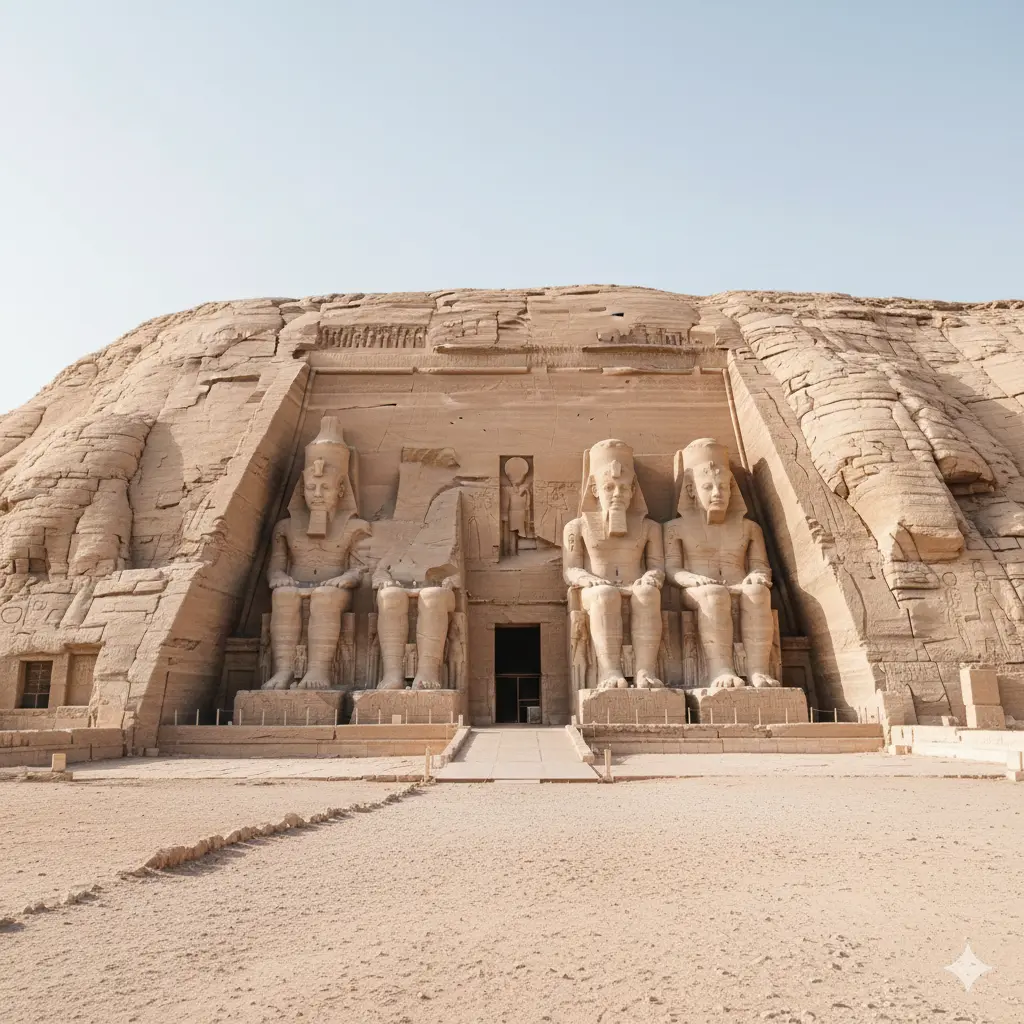
Abu Simbel sits 280 km south of Aswan, 40 km from the Sudanese border. Two temples cut into a sandstone cliff by Ramesses II around 1264 BCE: the Great Temple (four 20-metre seated colossi of Ramesses II guard the entrance) and the smaller Temple of Nefertari. Both were dismantled and relocated 65 m higher between 1964 and 1968 to save them from the rising waters of Lake Nasser — one of the most complex archaeological rescue operations in history.

Most tours reach Abu Simbel by a 45-minute flight from Aswan airport (departures around 06:00–07:00). By road, the journey takes 3.5 hours. The temples open at 05:00; arriving for the 06:00 light is the best-known timing. Allow 90 minutes at the site. Return to Aswan by midday for the flight back to Cairo, connecting to your international departure.


The 7-Day Cairo & Nile Cruise Tour by Flight from Pure Nile Tours

The 7-Day Cairo & Nile Cruise Tour by Flight covers Cairo (Days 1–3), a flight to Luxor, the Nile cruise south via Edfu and Kom Ombo, Aswan, and Abu Simbel on the final morning — all by domestic flights rather than trains, which saves a full day of transit.

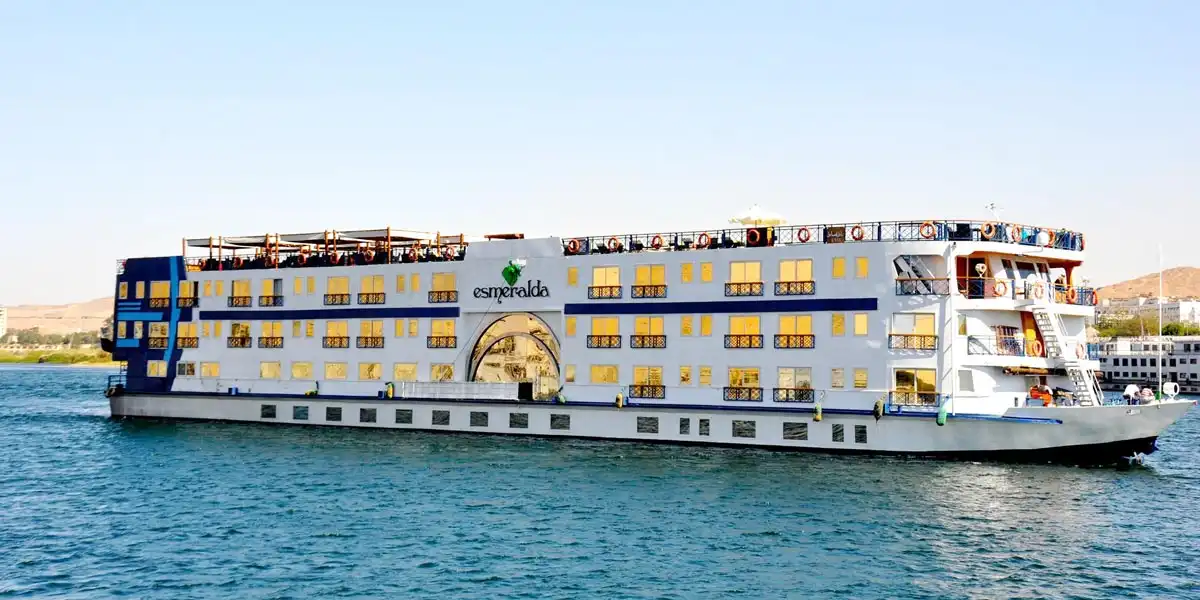
Included: both domestic flights, 2 nights 4-star Cairo hotel, 3 nights 5-star cruise (full board), 1 night Aswan, licensed Egyptologist guide, private transfers, all entrance fees, and the Abu Simbel excursion.

The tour runs as a private itinerary — your guide, your vehicle, your pace. A second option with adjusted inclusions is the 7-Day Cairo & Nile Cruise Package — same structure, different cruise and hotel combinations for different group sizes. Both require a 20–30% deposit to confirm.


Alternative 1-Week Egypt Tour Itineraries

The Cairo + Nile cruise format is the most complete structure for a 1 week Egypt tour, but three alternatives are worth knowing about depending on your priorities.

Cairo + Red Sea (Hurghada) — 7 Days

Four days in Cairo (Pyramids, GEM, Islamic Cairo, day trip to Saqqara and Memphis), then a 3-night extension at a Red Sea resort in Hurghada. This structure works well for travellers who want to combine ancient history with beach recovery time, or for families with children who need downtime between intensive sightseeing days. The Luxor and Aswan temples are missed, which is the main trade-off. Hurghada sits 450 km from Cairo; domestic flights take 55 minutes.

Cairo + Alexandria — 7 Days

Three days in Cairo, then a train or drive along the Mediterranean coast to Alexandria — Egypt’s second city, founded by Alexander the Great in 331 BCE. Alexandria’s main sites: the catacombs of Kom El Shoqafa (a three-tier Greco-Roman necropolis, one of the Seven Wonders of the Medieval World), the Citadel of Qaitbay built on the site of the ancient Pharos Lighthouse, and the Bibliotheca Alexandrina — the modern reinvention of the ancient library. This structure suits travellers with a strong interest in Greco-Roman and medieval history rather than Pharaonic monuments.

Cairo Only — 7 Days Deep Dive

All 7 days in Cairo and the surrounding area: 2 days at Giza and the GEM, a day at Saqqara (Step Pyramid, built 2650 BCE — the world’s oldest stone monument) and Memphis (the ancient capital, with a colossal Ramesses II statue), a day for Islamic Cairo and Coptic Cairo in depth, a day for the Egyptian Museum in Tahrir Square, and two free days for neighbourhood exploration, cooking classes, or day trips. This structure suits history specialists or return visitors who have already done the Nile south.


Top Sites on a 1 Week Egypt Tour

Pyramids of Giza

The Giza Plateau holds three pyramids built during the 4th Dynasty (2589–2504 BCE). The Great Pyramid of Khufu stood 146.5 m at original completion — the tallest structure on earth for 3,800 years. The plateau sits on Cairo’s western edge, 12 km from the city centre. Site opens 08:00. General admission for foreign visitors: ~EGP 360. Interior Great Pyramid ticket: ~EGP 600 (separate purchase at the gate, limited daily quota).

Grand Egyptian Museum (GEM)

Opened fully in 2024, the GEM sits 2 km from the Giza Plateau entrance. 100,000 artefacts; 12 themed galleries; dedicated Tutankhamun hall with 5,000+ objects. The 11-metre granite statue of Ramesses II in the entrance atrium is the first thing you see on arrival. Entry: ~EGP 1,000 for foreign visitors. Confirmed opening hours and ticketing at gem.gov.eg.

For a combined private visit to both sites in one guided day, the Pyramids of Giza Tours — Cairo & GEM in 1 Day (2026) page covers the current itinerary and logistics.

1 Week Egypt Tour: The Perfect 7-Day Itinerary for Cairo & the Nile (2026) - Pure Nile Tours

Valley of the Kings

63 royal tombs on Luxor’s West Bank. Standard admission covers 3 tombs of your choice; the site map shows which are currently open. The tomb of Ramesses VI has the finest ceiling paintings; the tomb of Seti I (when open) has the most detailed reliefs. Tutankhamun’s tomb requires a separate ticket (EGP 800) and is smaller than most visitors expect — the famous treasures are at the GEM, not here. Opens 06:00.

Karnak Temple Complex

The largest ancient religious complex ever built, covering 200 acres on Luxor’s East Bank. Construction began around 1550 BCE and continued for 20 centuries. The Hypostyle Hall: 134 columns, the largest reaching 23 m. Evening Sound & Light Show runs 3 times nightly; tickets ~$15–$20. Site opens 06:00.

Philae Temple

On Agilkia Island in Aswan, reached by motorboat from the Shellal dock (5-minute ride). Dedicated to the goddess Isis. Reliefs are among the sharpest in Egypt because the temple was submerged under Nile water for much of the year between 1902 and 1970 — which paradoxically preserved the paintwork. Entry: ~EGP 450.

Abu Simbel

The most distant site on a standard 1 week Egypt tour, 280 km south of Aswan. Two rock-cut temples by Ramesses II. The astronomical alignment of the Great Temple is engineered so that sunlight reaches the inner sanctuary and illuminates the statues of four gods on two specific dates: 21–22 February and 21–22 October (the Solar Festival). Entry: ~EGP 1,200 for foreign visitors.


Best Time for a 1 Week Egypt Tour

October through April covers the entire comfortable window for a 7-day Egypt tour. November to February offers the coolest outdoor conditions — daytime highs of 20–26°C in Cairo and Luxor, 22–28°C in Aswan. These months also coincide with peak tourist season: the pyramid site and Valley of the Kings are at maximum capacity from December to February. Book tour packages and cruise ships at least 6–8 weeks in advance for travel in this window.

March and October sit in a useful shoulder position: temperatures are warm (26–32°C) but not extreme, and booking lead times drop to 2–4 weeks. April is warm with manageable crowds until the Easter and spring break period.

May through September brings genuine heat to Upper Egypt — Luxor regularly hits 40–43°C in July. The temples are accessible early morning, but midday tours become oppressive. Cruise ships are less busy and prices drop by 15–25% — but the trade-off is real.

For a month-by-month breakdown of weather, crowd levels, and festival dates, Best Months to Visit Egypt: Weather, Crowds & Travel Tips has the full picture.


Budget for a 1 Week Egypt Tour

The table below shows approximate all-in costs for 7 days in Egypt at three budget levels. International flights are excluded from all three.

Expense Budget Mid-range Luxury
Accommodation (6 nights) $200–$350 $500–$800 $1,200–$2,000
Domestic flights (2 sectors) $120–$180 $150–$220 $200–$350
Guided tours & entrance fees $150–$200 $300–$500 $600–$1,000
Meals (beyond cruise inclusions) $80–$120 $150–$250 $300–$500
Tips (guides, drivers, cruise staff) $80–$100 $120–$150 $150–$200
Personal expenses $50–$100 $100–$200 $200–$400
Total (land only, per person) $680–$1,050 $1,320–$2,120 $2,650–$4,450

All-inclusive 7-day packaged tours from Egypt operators typically cost $1,100–$2,000 per person at mid-range, covering all domestic flights, accommodation, guided excursions, entrance fees, and most meals. This often represents better value than booking components independently, particularly for first-time visitors who benefit from logistics management.

Exchange rates fluctuate — verify current rates before travel.

For practical guidance on stretching your budget in Egypt, Budget Travel Tips for Egypt covers where to save and where not to cut corners.


Where to Stay on a 7-Day Egypt Tour

Cairo (Days 1–3): Hotels near the Giza Plateau save 30–40 minutes on Day 2. A 4-star room runs $80–$180 per night. Downtown Cairo and Zamalek have more character but longer morning drives to Giza.

Nile Cruise (Days 3–6): Your floating hotel between Luxor and Aswan. Mid-range packages use 4-star ships with private cabins, A/C, and a sun deck — all meals included. 5-star ships add larger cabins and a better crew ratio. Dahabiya sailboats suit smaller groups wanting a slower, more private pace.

Aswan (Day 6–7): One night before or after Abu Simbel. Elephantine Island is quieter; the Corniche has Nile-view chain hotels. Budget: $70–$150 per night at 4-star.


Getting Around Egypt in 7 Days

Domestic flights connect Cairo, Luxor, and Aswan in 60–90 minutes — all included in packaged 7-day tours. Trains are an option for independent travellers but Cairo–Luxor takes 9–11 hours, which burns a full day each way.

Private transfers cover all ground movement in Cairo and Aswan on organised tours. The Nile cruise handles the Luxor–Aswan leg, stopping at Edfu and Kom Ombo along the way — the ship docks, you visit, you re-board.

Within Cairo: Uber is reliable. The metro covers central areas but the Giza Plateau requires a car. For a full breakdown of Egyptian transport options, Mastering Public Transport in Egypt has the detail.


Egypt Tour Tips: What First-Timers Need to Know

  • Book early. Nile cruise cabins sell out 8–12 weeks ahead in peak season (October–March). December–February: start looking 3 months out.
  • Carry cash. ATMs give better rates than airport kiosks. Keep EGP 20 and 50 notes for tips, toilet fees, and small purchases.
  • Tip daily. Budget $10–$20 per day across your guide, driver, cruise staff, and porters. It’s built into how the industry works.
  • Passport on you at all times. Checkpoints and airport security require the original — digital copies are not accepted.
  • Stay close to your guide at Giza. Touts cluster near the Sphinx exit and panorama area. A calm, repeated “no” is all you need.
  • Pack medication. Stomach upsets are common. Bring oral rehydration salts, Imodium, and any prescription drugs. Full packing list: Packing Tips for Egypt.

Food & Drink on a 7-Day Egypt Tour

Egyptian food is built around legumes, grilled meat, fresh bread, and tahini-based sauces. A mid-range restaurant lunch costs EGP 200–400 per person. Most dishes are naturally gluten-accessible; vegetarian options are the default at many Egyptian street-food counters.

Five dishes to eat on a 1 week Egypt tour:

  • Koshari — lentils, rice, pasta, crispy onions, and spiced tomato sauce in one bowl (EGP 40–80 at a street counter)
  • Ful medames — slow-cooked fava beans with lemon, cumin, and olive oil, eaten at breakfast
  • Kofta — minced lamb and spice grilled on skewers, standard on every restaurant menu
  • Feteer meshaltet — multi-layered pastry filled with cheese, meat, or sweet ingredients (like Egyptian pizza, eaten at any time)
  • Om Ali — bread pudding with milk, nuts, and raisins; the most common Egyptian dessert

Tap water is not safe to drink anywhere on the itinerary. Bottled water is included in most tour vehicles and on cruise ships. Drinks beyond water (soft drinks, juices, tea) are typically excluded from package prices — budget EGP 50–150 per day. For the full guide to Egyptian cuisine, Top 7 Egyptian Cuisines to Try covers what to order and what each dish involves.


Culture, Dress Code & Etiquette

Egypt is a predominantly Muslim country and a conservative society by Western standards. At outdoor archaeological sites — the Giza Plateau, Valley of the Kings, Abu Simbel — dress is relaxed; shorts and T-shirts are accepted. Inside mosques, churches, and religious sites, the code tightens:

  • Women: Cover shoulders and knees. Carry a loose scarf — required for mosques (hair must be covered), recommended for Coptic churches.
  • Men: Long trousers inside mosques. Sleeveless shirts are acceptable at outdoor sites but not inside places of worship.
  • Both: Remove shoes before entering any mosque.

At the bazaar and in market areas, modest dress (covered shoulders for women) reduces unsolicited attention without requiring anything elaborate. Bargaining in markets is expected and normal; the starting price is a negotiating position, not a fixed offer. On cruise ships and at tourist restaurants, dress is casual. For a full breakdown of local customs and social norms, Egypt’s Cultural Etiquette: A Guide for Travelers covers everything from greetings to photography rules.


Frequently Asked Questions

Is 7 days enough for Egypt?

Seven days is enough to see Egypt’s most important highlights: the Pyramids of Giza, the Grand Egyptian Museum, the Valley of the Kings, Karnak Temple, a Nile cruise between Luxor and Aswan, Philae Temple, and Abu Simbel. The pace is full but not frantic on a well-structured package. What 7 days cannot cover adequately: Alexandria, the White Desert, Abu Simbel with a comfortable overnight stay, and the Sinai Peninsula. If you have 10–14 days, the itinerary opens up considerably. If you only have 7, the Cairo + Nile cruise structure is the right priority.


What is the best 7-day Egypt itinerary?

The most complete structure for a first-time visitor: Days 1–3 in Cairo (Pyramids, GEM, Islamic Cairo, Khan El-Khalili), then fly to Luxor, Days 4–5 on a Nile cruise (Valley of the Kings, Karnak, Edfu, Kom Ombo), Day 6 in Aswan (Philae Temple, High Dam), Day 7 Abu Simbel and fly home from Aswan. This structure uses domestic flights to avoid wasting days in transit and gives the maximum site time for a 7-night trip.


How much does a 1 week Egypt tour cost?

At mid-range: $1,100–$2,000 per person for a fully packaged tour including domestic flights, 4-star accommodation, Nile cruise, Egyptologist guide, entrance fees, and most meals. International flights are additional. Budget independent travel (hostel/3-star, trains instead of flights, group tours) runs $700–$1,050 per person land-only. Luxury packages with 5-star hotels and a premium cruise ship: $2,650–$4,450 per person. All prices exclude international flights to Cairo.


Do I need a visa for a 1 week Egypt tour?

At the time of writing, most nationalities need a visa to enter Egypt. Two options: an e-visa applied online before departure (USD $25, processed in 3–5 business days) or a visa on arrival at Cairo International Airport (USD $25, paid in USD, euros, or GBP at the desk). The e-visa is strongly recommended for busy periods — arrival visa queues at Cairo airport can be 45–60 minutes. Nationals of some GCC countries are exempt. For current requirements by nationality, Egypt Visa Requirements for Travelers has an up-to-date breakdown.


Is Egypt safe for a first-time visitor?

Egypt’s main tourist corridor — Cairo, Luxor, Aswan, Red Sea resorts — is safe for organised travel. Millions of first-time visitors travel the Cairo + Nile cruise circuit without incident every year. The most common issues are petty tourism hustling at the Giza Plateau (camel handlers, unofficial guides, photograph-then-pay operators) and minor theft in busy markets. Use a licensed tour operator, stay close to your guide at archaeological sites, carry a crossbody bag rather than a backpack, and keep your passport secure. For a current assessment of safety conditions, Is Egypt Safe for Tourists in 2026? is updated regularly.


What is the best time to do a 1 week Egypt tour?

October through April, with November–February offering the most comfortable outdoor temperatures (20–26°C in Cairo, 22–28°C in Upper Egypt). December and January are peak season — book 8–12 weeks in advance for cruise ships and popular tour packages. March and October are the best compromise of comfortable weather and shorter booking lead times. May–September is possible but the heat at outdoor sites (35–43°C in Upper Egypt) significantly limits comfortable visiting hours.


Can I do a 7-day Egypt tour as a solo traveller?

Yes. Egypt has strong solo travel infrastructure: organised group tours and private tours are both available for 7-day itineraries. Private tours allow you to travel alone with your guide and driver — the same itinerary, no group to follow, your pace. Group tours are cheaper but mean set timings at each site. Solo female travellers regularly complete Cairo + Nile cruise itineraries without problems; harassment is more common in crowded market areas than at organised archaeological sites. Choosing a reputable licensed operator removes most logistical friction for solo travellers. For specific guidance, Egypt Travel Guide for Solo Adventurers covers the practical considerations.


Is a Nile cruise worth it on a 7-day Egypt tour?

Yes — and for most first-time visitors it is the most memorable part of the trip. The cruise handles all movement between Luxor and Aswan, eliminates hotel check-ins and check-outs for 3–4 nights, and delivers guided temple visits as part of the daily program. Edfu and Kom Ombo are not easily accessible without a cruise or a private car; the cruise makes them obvious stops. The evenings on board — sunset over the Nile, dinner, the galabeya party — deliver a version of Egypt that no hotel visit replicates. Entry-level 4-star cruise ships are comfortable and well-staffed. Going below 4-star compromises the experience meaningfully.


What should I not miss on a 1 week Egypt tour?

In order of irreplaceability:

  1. The Giza Plateau at 08:00 — before the heat and the crowds
  2. The Tutankhamun collection at the GEM — the complete artefact set, together for the first time
  3. Valley of the Kings — the painted royal tombs are unlike anything else in the ancient world
  4. Karnak Temple’s Hypostyle Hall — the scale defeats every expectation
  5. The Nile between Luxor and Aswan at sunrise — best seen from the ship’s top deck before the day’s first temple stop
  6. Abu Simbel — the 20-metre Ramesses colossi and the story of how the temples were saved justify the early morning start

How do I book a 1 week Egypt tour?

The simplest route for a first-time visitor is a fully packaged private tour from a licensed Egyptian operator. This covers all domestic flights, accommodation, guided excursions, entrance fees, and transfers in one booking. Compare operators by: Ministry of Tourism licence number (ask for it), recent TripAdvisor or Google reviews specifically for the itinerary you want, and what is included versus excluded in the price. Partial payment (20–30% deposit) confirms the booking; balance is due before travel. The 7-Day Cairo & Nile Cruise Tour by Flight at Pure Nile Tours is a private, fully guided package covering all the highlights above — itinerary, current pricing, and availability are on the tour page.

Related posts to read

The Grand Egyptian Museum Opening 2025 marks a historic moment for Egypt and the world. Located near the...
Introduction: Is Christmas celebrated in Egypt? Yes—Christmas is celebrated in Egypt, but it may not look like Christmas...
The Tanoura Show at Wekalet El Ghouri is one of the most practical cultural evenings you can do...
Egypt itinerary 9 days offers a balanced way to experience the country’s famous history and culture without rushing....
Ramadan vibes in Egypt often feel like two trips in one: calm, slower days followed by lively, community-filled...
Solar Eclipse Egypt 2027: On August 2, 2027, the moon’s shadow will sweep across the Nile Valley and...
.pnt-author-bar{display:flex;align-items:center;gap:12px;padding-bottom:16px;margin-bottom:16px;border-bottom:1px solid #E5E7EB;flex-wrap:wrap} .pnt-av{width:42px;height:42px;border-radius:50%;background:#DBEAFE;display:flex;align-items:center;justify-content:center;font-weight:700;font-size:14px;color:#1E40AF;flex-shrink:0} .pnt-an{font-size:14px;font-weight:700;margin:0 0 2px;color:#111827} .pnt-ac{font-size:12px;color:#6B7280;margin:0} .pnt-dates{margin-left:auto;display:flex;align-items:center;gap:8px;flex-wrap:wrap} .pnt-dt{font-size:12px;color:#9CA3AF} .pnt-up{font-size:11px;padding:2px 9px;border-radius:99px;background:#DCFCE7;color:#15803D;font-weight:600} .pnt-da{background:#EFF6FF;border-left:4px solid #2563B0;border-radius:0 8px 8px 0;padding:14px...