This guide covers routes, costs, onboard life, temple stops, packing advice, tipping norms, and safety — all reflecting 2026 conditions. At the time of writing, prices and schedules can change — check official sources and your tour operator before booking.
-
Typical route: Luxor ↔ Aswan (one-way or round-trip)
-
Standard duration: 3–4 nights (one-way) or 7 nights (round-trip / combined with Cairo)
-
Vessel types: large cruise ship (50–150 guests), dahabiya sailboat (10–24 guests), felucca (budget, no cabins)
-
Peak season: October–April (mild temperatures, 21 °C–29 °C daytime)
-
Key stops: Karnak, Luxor Temple, Valley of the Kings, Edfu, Kom Ombo, Philae, optional Abu Simbel
Here is a broad overview of what different budget levels look like for a Nile cruise:
| Budget Level | Approx. Cost (per person, twin-share) | What You Get |
|---|---|---|
| Budget / 3-star local ship | $300–$500 (3–4 nights) | Basic cabin, full-board meals, guided temple visits |
| Mid-range / 5-star local ship | $500–$1,200 (4–5 nights) | Spacious cabin, buffet + à la carte options, pool, sundeck, Egyptologist guide |
| Luxury dahabiya | $1,500–$3,000 (4–5 nights) | 6–12 guests, wind-powered sailing, chef-prepared meals, flexible itinerary |
| Premium international line | $5,500–$7,500 (11–12 days incl. Cairo) | Suites, spa, included flights, private transfers, all excursions |
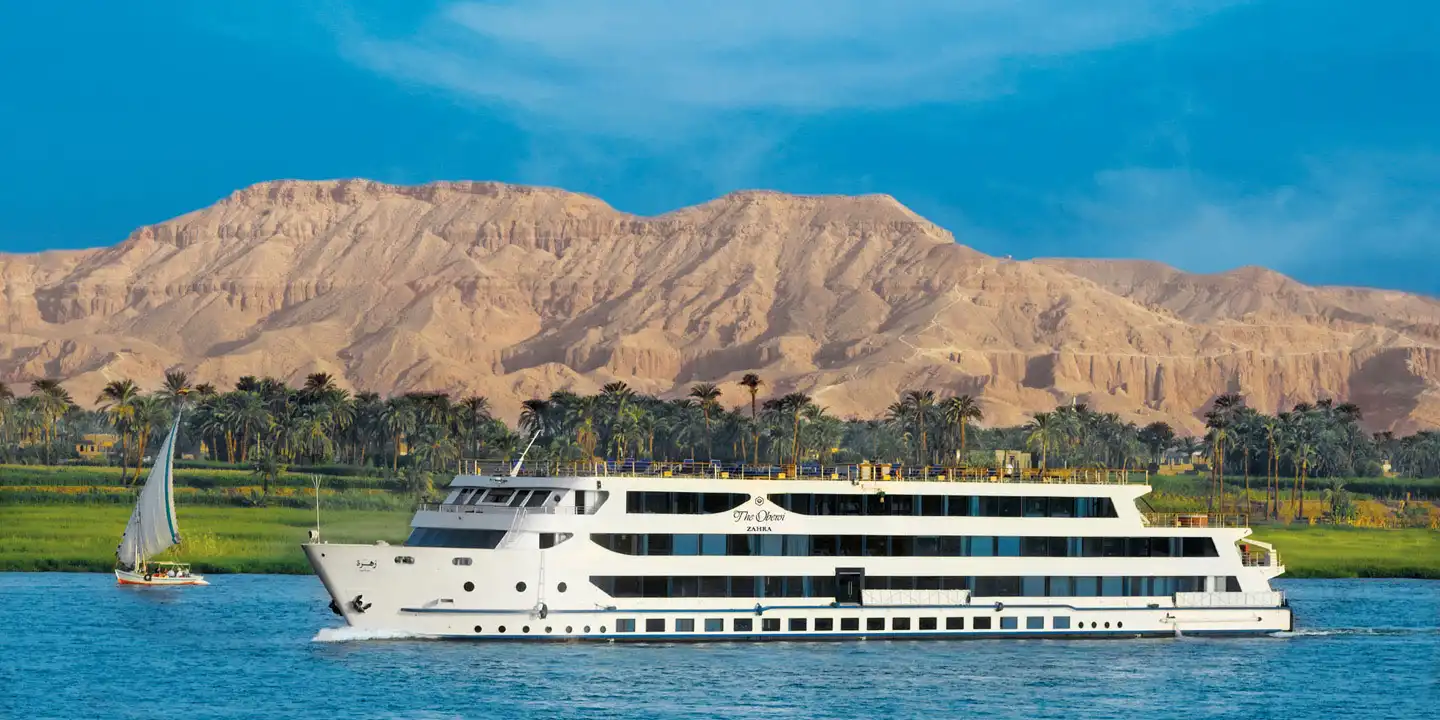
| Ultra-luxury (Uniworld, Oberoi) | $8,500–$12,000+ (10–12 days) | Suite-only ship, fine dining, all-inclusive, bespoke excursions |
Exchange rates fluctuate — verify current rates before travel.
Most mid-range Nile cruises operate on a full-board basis: three meals a day plus guided shore excursions. Alcoholic drinks, premium excursions (such as Abu Simbel), tips, and personal expenses are usually extra.
Types of Cruises on the Nile River: Large Ship, Dahabiya, or Felucca?
Choosing the right vessel shapes your entire experience. Cruises on the Nile River in Egypt fall into three main categories, each serving very different travel styles.
Standard Nile Cruise Ships
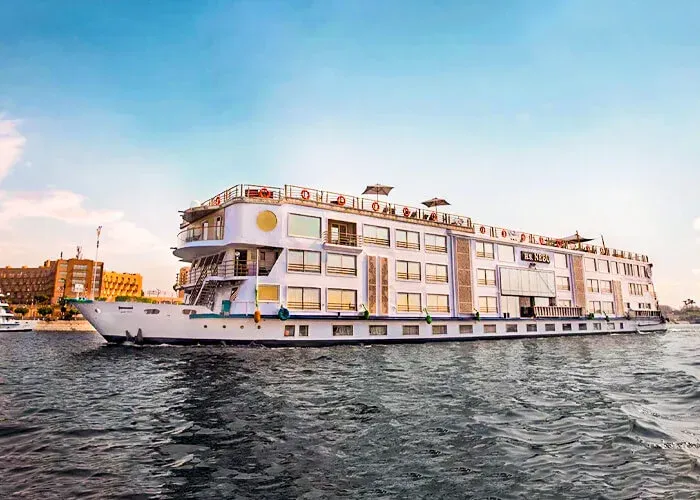
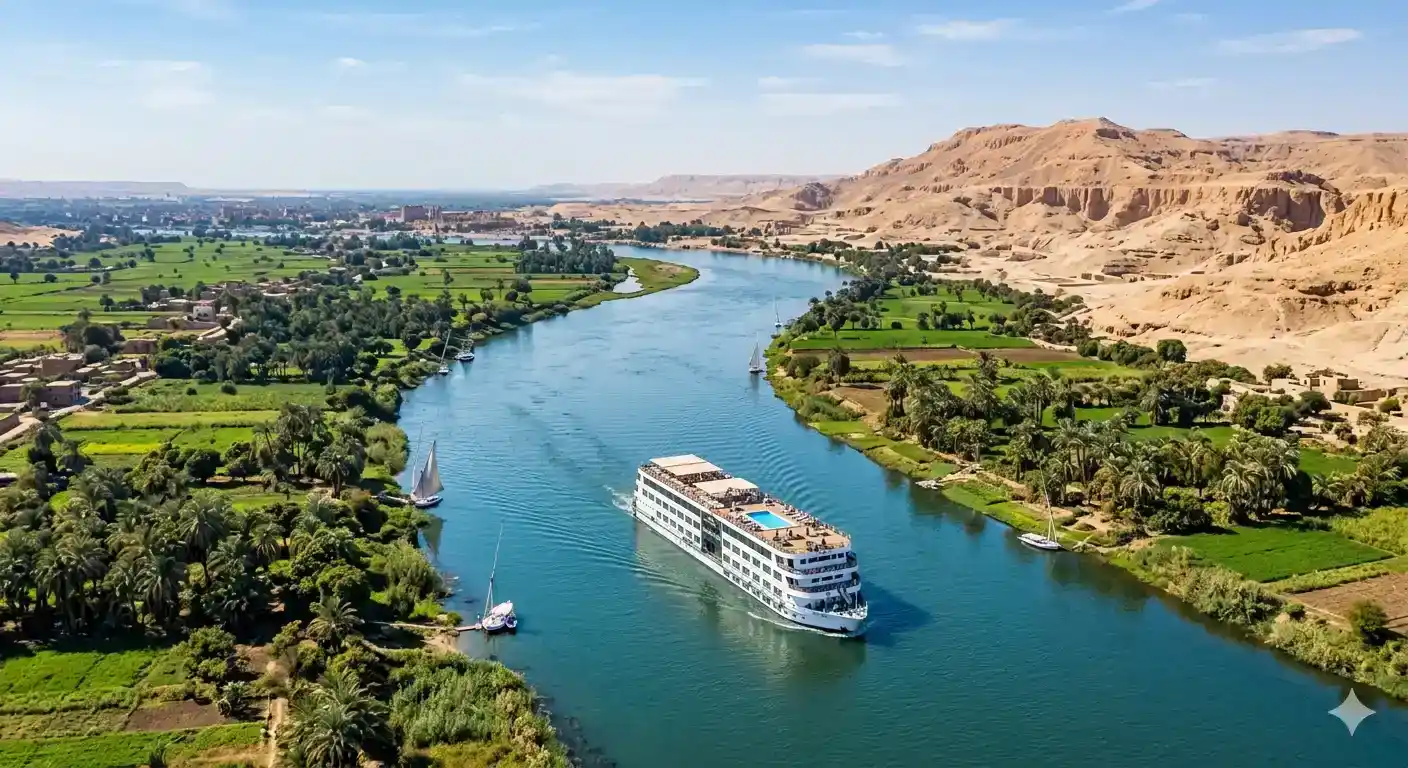
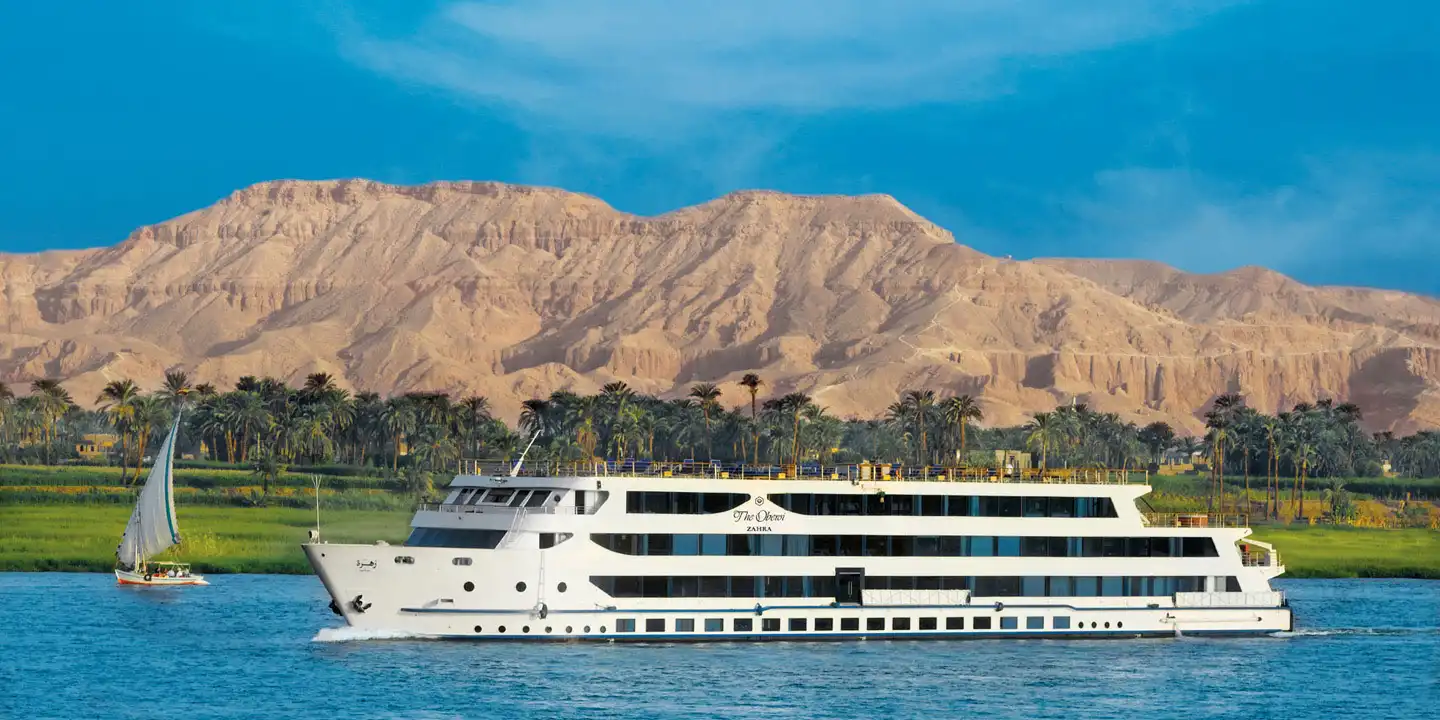
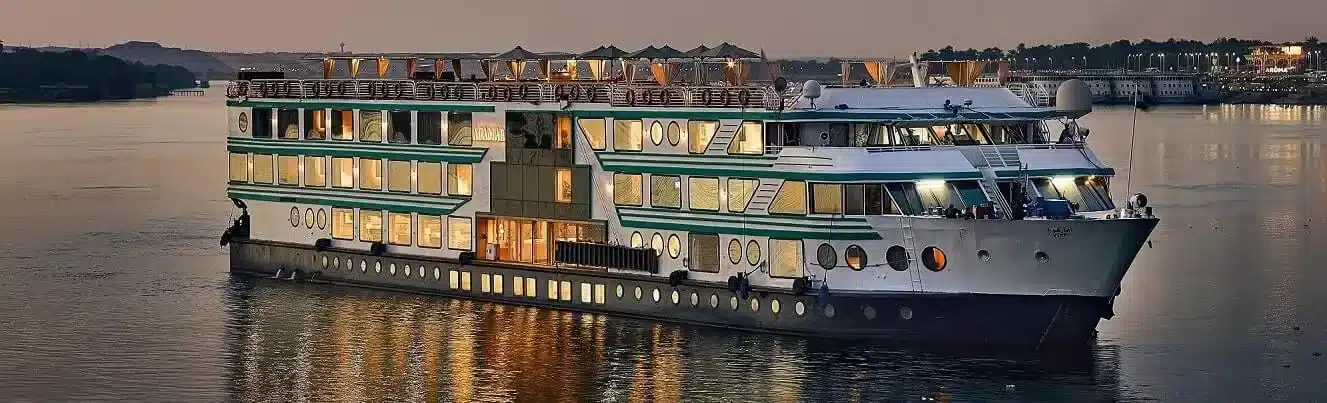
These are the floating hotels you see lined up at Luxor and Aswan docks. A typical ship holds 50 to 150 passengers across three to five decks, with air-conditioned cabins, a restaurant, a lounge bar, a swimming pool, and a sundeck. They run on engines and follow fixed schedules, departing on set days and docking at major temples according to a shared timetable.
The upside: predictability, hotel-level comfort, onboard entertainment (belly dancing shows, Nubian music nights, galabiya parties), and competitive pricing. The downside: you disembark alongside passengers from several other ships simultaneously, and temples can feel crowded during peak hours. Sailing typically happens overnight, so you may not see much of the river in motion.
Dahabiya Sailing Cruises
A dahabiya is a traditional two-masted wooden sailboat carrying 10 to 24 guests. The name means “golden one” in Arabic — a nod to the gilded private yachts used by Egyptian royalty and wealthy travelers in the 19th century.
Dahabiyas use wind power whenever possible, sailing during daylight hours so passengers watch the riverbanks drift past. Their shallow draft allows them to moor at quiet islands and lesser-visited sites that large ships cannot reach. Meals are typically prepared by an onboard chef using fresh local ingredients, and the atmosphere is closer to a private villa than a hotel. The is one example of a 5-day sailing that follows this intimate format.
Dahabiyas cost more — roughly two to four times the price of a standard ship — and the pace is slower. For travelers who value silence, privacy, and a deeper connection to the river, they are hard to beat.
Feluccas — The Budget Alternative
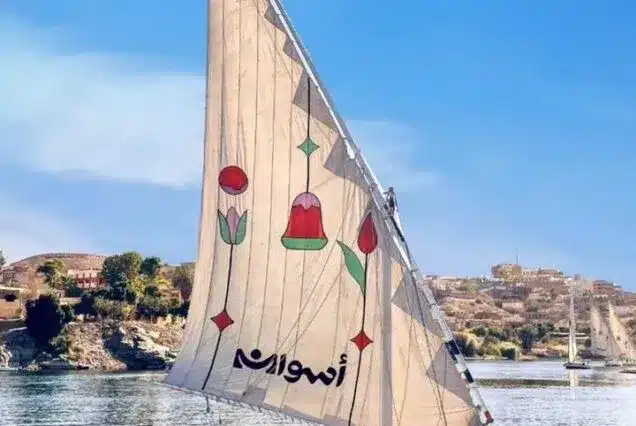
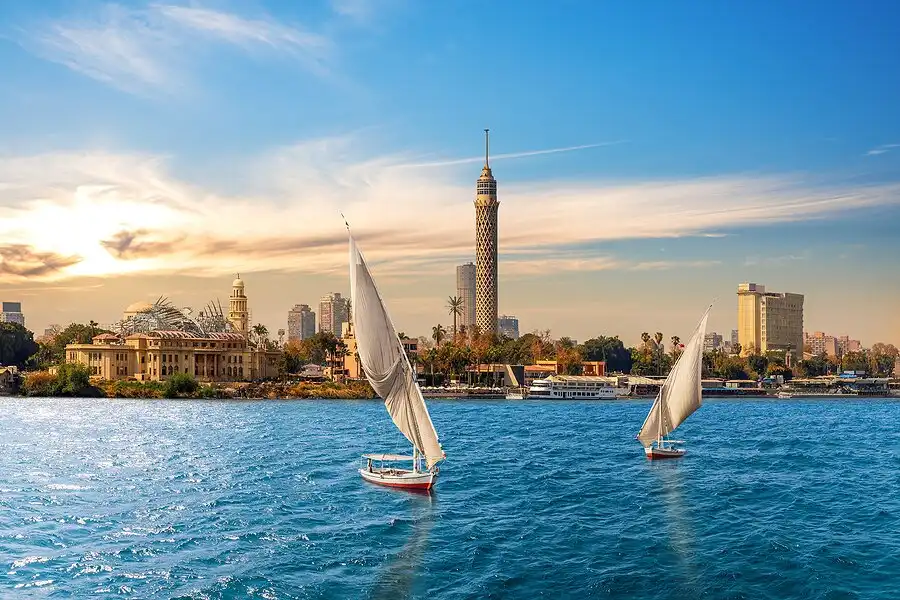
A felucca is a small, open-decked wooden sailboat with a single lateen sail. These carry 6 to 10 passengers and have no cabins, no bathroom, and no engine. You sleep on cushioned benches under the stars (or a canopy), and a crew member prepares simple meals on a small stove.
Felucca trips typically run from Aswan heading north and last one to three nights. They are the cheapest way to experience the Nile, often costing $30–$60 per person per day. The trade-off is comfort: no air conditioning, basic food, shared sleeping space, and limited stops.
This comparison highlights the core differences:
| Feature | Large Cruise Ship | Dahabiya | Felucca |
|---|---|---|---|
| Capacity | 50–150 guests | 10–24 guests | 6–10 guests |
| Engine | Motor-powered | Wind + motor assist | Wind only |
| Cabins | Private, air-conditioned | Private, air-conditioned | Open-deck sleeping |
| Meals | Buffet + à la carte | Chef-prepared, local focus | Basic, crew-cooked |
| Price per night | $100–$300 | $300–$700+ | $30–$60 |
| Best for | First-timers, families, mid-range budgets | Couples, slow travelers, privacy seekers | Budget travelers, adventurers |
Classic Nile River Cruise Routes and Itineraries in Egypt
Almost all cruises on the Nile River in Egypt operate on the same stretch between Luxor and Aswan — approximately 220 km. The direction, duration, and starting point differ.
Luxor to Aswan (4–5 Days)
The most popular route. You board in Luxor, visit the East Bank (Karnak and Luxor Temple) and West Bank (Valley of the Kings, Hatshepsut Temple) on the first day or two, then sail upstream to Edfu and Kom Ombo before reaching Aswan. Total sailing time is typically four days and three nights, or five days and four nights with additional stops. This direction follows the historical flow of Upper Egypt’s temple corridor from north to south.
Aswan to Luxor (3–4 Days)
The return route is slightly shorter — three nights is the standard — because the ship travels downstream with the current. Itineraries usually begin with Philae Temple and the Aswan High Dam, then sail north through Kom Ombo and Edfu before ending at Luxor.
Round-Trip Sailings
Some operators run seven-night cruises that sail from Luxor to Aswan and back (or the reverse). These cover all the major temples in both directions and include extra time at each stop, plus occasional visits to lesser-known sites like Khnum Temple at Esna.
Extended Cairo + Nile Cruise Packages
The most comprehensive Egypt itineraries combine two to three days in Cairo — covering the Pyramids of Giza, the Sphinx, and the Grand Egyptian Museum — with a domestic flight to Luxor or Aswan, followed by the Nile cruise. Total trip length ranges from 7 to 12 days. The
The concentration of ancient sites between Luxor and Aswan is extraordinary. A standard cruise on the Nile River in Egypt visits six to eight major monuments, with optional add-ons like Abu Simbel.
Karnak Temple
The largest religious complex ever built. Construction began around 2000 BCE and continued for nearly 1,500 years, with each pharaoh adding halls, pylons, and obelisks. The Great Hypostyle Hall alone contains 134 massive columns, many standing over 20 metres tall. Karnak sits on the East Bank of Luxor, about 3 km north of Luxor Temple, and most cruise itineraries schedule a morning visit to beat the midday heat.
Luxor Temple
Connected to Karnak by the restored Avenue of Sphinxes — a 2.7 km processional road lined with over 1,000 sphinx statues — Luxor Temple is more compact and easier to absorb in a single visit. Built primarily during the reigns of Amenhotep III and Ramesses II (around 1400–1250 BCE), it served as a setting for the annual Opet festival. Evening visits are possible and atmospheric, as the temple is dramatically lit after dark.
Valley of the Kings
On the West Bank of Luxor, this desert valley served as a royal burial ground for over 500 years. Of the 63 tombs discovered so far, three or four are open to visitors on a rotating basis. Tutankhamun’s tomb requires a separate ticket (approximately 400 EGP / ~$8 at the time of writing). The tomb interiors feature extraordinarily well-preserved wall paintings depicting scenes from the Book of the Dead and the pharaoh’s journey to the afterlife.
Temple of Hatshepsut (Deir el-Bahari)
This terraced mortuary temple, set against dramatic limestone cliffs, was built for Queen Hatshepsut — Egypt’s most successful female pharaoh. Three colonnaded levels rise from the desert floor, each decorated with reliefs chronicling her reign, including a famous trading expedition to the Land of Punt. The West Bank visit usually combines the Valley of the Kings, Hatshepsut Temple, and a photo stop at the Colossi of Memnon.
Temple of Horus at Edfu
Arguably the best-preserved ancient temple in Egypt. Built between 237 and 57 BCE during the Ptolemaic period, Edfu’s sandstone walls and ceilings retain sharp relief carvings with their original detail intact. The massive entrance pylon stands 36 metres high. Ships typically dock at Edfu in the early morning; horse-drawn carriages transport passengers the short distance from the river to the temple.
Kom Ombo Temple
Unusual because it is a double temple — the left half dedicated to the falcon god Horus, the right to the crocodile god Sobek. The temple sits on a bend in the Nile where crocodiles once gathered, and a small Crocodile Museum beside the complex displays several well-preserved mummified crocodiles. Many cruises schedule the Kom Ombo stop in the late afternoon, which means you arrive as the light turns golden across the columns.
Philae Temple
Dedicated to the goddess Isis and located on Agilkia Island near Aswan, Philae was physically relocated in the 1970s to save it from the rising waters of Lake Nasser after construction of the Aswan High Dam. Visitors reach the island by small motorboat — a five-minute ride from the ticket office. The temple complex blends Egyptian, Greek, and Roman architectural styles. A Sound and Light Show runs on select evenings, retelling the Isis and Osiris myth with the temple as backdrop.
Abu Simbel (Optional Add-On)
Not on the standard cruise route but frequently offered as an add-on excursion from Aswan. The two rock-cut temples of Ramesses II and Queen Nefertari, carved into a cliff face around 1264 BCE, were famously relocated to higher ground by a UNESCO-led operation between 1964 and 1968. The site is roughly 280 km south of Aswan; most visitors reach it by a three-hour early-morning coach transfer or a 45-minute flight. For a detailed breakdown of tickets, opening hours, and transport options, see this .
Best Time for Cruises on the Nile River in Egypt
Upper Egypt has a subtropical desert climate. The Aswan High Dam regulates the river’s water level year-round, so low water is not a concern. Your main variable is heat.
| Season | Months | Daytime Temp | Crowds | Prices | Notes |
|---|---|---|---|---|---|
| Peak (winter) | Oct–Feb | 20 °C–29 °C (68 °F–84 °F) | High | Highest | Most comfortable for temple visits; Dec–Jan busiest |
| Shoulder | Mar–Apr, Sep | 28 °C–35 °C (82 °F–95 °F) | Moderate | 15–20% lower | Warm but manageable; good value |
| Summer (off-peak) | May–Aug | 35 °C–45 °C (95 °F–113 °F) | Low | Lowest | Extreme heat in Luxor/Aswan; sightseeing starts at 06:00 |
December and January are the busiest months. Book at least 6–10 months in advance if you want a specific ship or departure date during peak season. March and October offer a strong balance: warm rather than scorching temperatures, smaller crowds, and lower rates.
Traveling during Ramadan (dates shift each year based on the Islamic calendar) does not prevent a cruise, but some restaurants in cities may adjust daytime hours. Onboard dining continues as normal. For a deeper look at planning around Egypt’s seasonal patterns, the guide covers weather, festivals, and crowd data month by month.
How Much Do Cruises on the Nile River in Egypt Cost in 2026?
The cost of cruises on the Nile River in Egypt depends on four things: the ship category, the route length, the season, and whether the package includes Cairo, flights, and transfers.
A focused look at what each tier typically includes:
| Tier | Price Range (per person) | Duration | Inclusions |
|---|---|---|---|
| Budget (local 3–4 star) | $300–$500 | 3–4 nights | Cabin, full board, shared guided tours |
| Mid-range (local 5-star) | $500–$1,200 | 4–5 nights | Upgraded cabin, buffet + set menu, pool, Egyptologist guide |
| Dahabiya | $1,500–$3,000 | 4–5 nights | Boutique cabin, chef meals, wind-powered sailing, flexible itinerary |
| International line (Viking, AmaWaterways) | $5,500–$7,500 | 11–12 days | Cairo + cruise, domestic flights, private transfers, all excursions |
| Ultra-luxury (Uniworld, Oberoi) | $8,500–$12,000+ | 10–12 days | Suite, spa, all-inclusive dining + drinks, bespoke experiences |
Prices approximate for 2026; always confirm current rates. All figures per person, twin-share.
For a specific breakdown of ship-by-ship pricing on the Luxor–Aswan route, provides updated comparison data.
What Is Usually Not Included
Even on “full-board” cruises, expect to pay extra for: alcoholic beverages (beer typically $3–$5, cocktails $5–$8), Abu Simbel excursion ($150–$250 per person by coach), optional hot-air-balloon ride over Luxor ($80–$150), tipping ($3–$15 per person per night depending on the ship tier), and entry to Tutankhamun’s tomb in the Valley of the Kings (separate ticket, ~400 EGP).
How Many Days Do You Need for a Nile River Cruise in Egypt?
Three nights (Aswan to Luxor) is the shortest mainstream option. It covers the essential temples but at a fast pace with early starts and limited free time.
Four to five nights (Luxor to Aswan, or the reverse) is the most popular format. It allows a full day each for Luxor’s East Bank and West Bank, plus stops at Edfu and Kom Ombo, with some downtime to sit on the sundeck and watch the riverbanks pass.
Seven nights (round-trip) gives the most relaxed experience. You cover all the main sites in both directions, often with extras like a felucca ride in Aswan, the Philae Sound and Light Show, or a visit to Esna Temple.
Adding Cairo and Abu Simbel pushes the total trip to 9–12 days. This is the ideal length for a first visit to Egypt — enough time to see the highlights without the fatigue of rushing.
Life on Board a Nile River Cruise: What to Expect
Cabins and Facilities
Mid-range and luxury cruise ships offer private cabins with en-suite bathrooms, air conditioning, a TV, a small safe, and a window or French balcony overlooking the river. Cabin sizes range from roughly 18 to 30 square metres depending on the ship category. Most ships also have a swimming pool (small but welcome in the heat), a sundeck with loungers, a lounge bar, and a gift shop.
Dahabiya cabins tend to be fewer in number but more generously sized, with higher-quality fixtures. Shared spaces are simpler: an open deck with cushioned seating, a shaded dining area, and sometimes a small jacuzzi.
Meals and Dining
Full-board cruises serve three meals daily. Breakfast is usually a buffet with Egyptian and international options — foul medames, falafel, eggs, pastries, fruit, cheese. Lunch is either a buffet or a set menu, often featuring grilled meats, rice, salads, and Egyptian dishes like molokhia or koshary. Dinner tends to be the most formal meal, sometimes with à la carte options on higher-tier ships. Themed dinners — Egyptian Night, Captain’s Dinner — are standard.
Dietary requirements (vegetarian, halal, gluten-free) are usually accommodated with advance notice. Tap water on ships is filtered but bottled water is recommended for drinking; most cruise ships provide two complimentary bottles per person per day.
Evening Entertainment
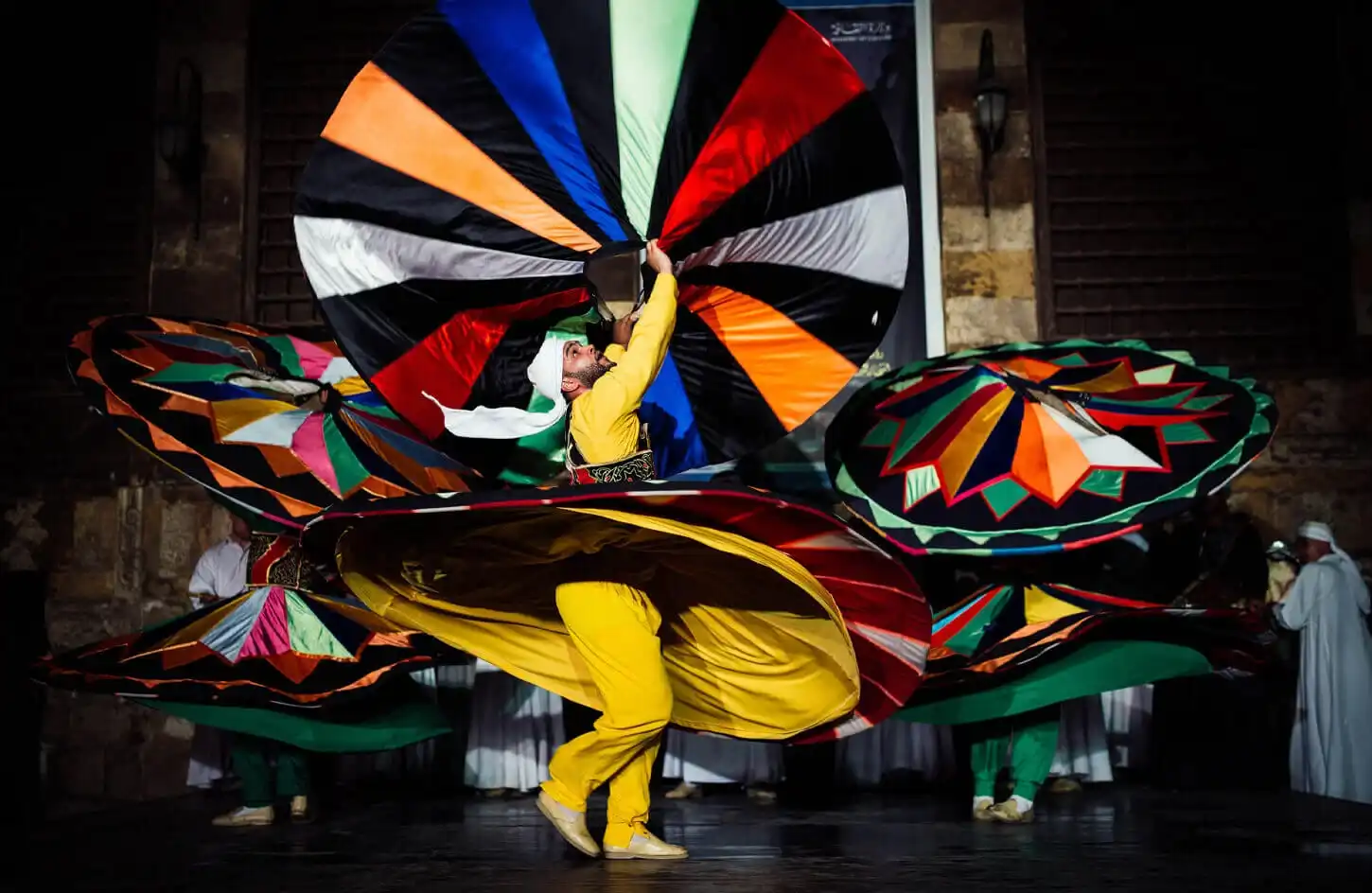
Standard ships run a nightly program: expect a belly dance performance, a Nubian music night, a whirling-dervish-style tanoura show, and the popular galabiya (Egyptian dress) party where passengers wear traditional robes purchased from local markets or the onboard shop for about $15–$25. On dahabiyas, evenings are quieter — dinner on deck, conversation, sometimes a local musician.
Onboard Dress Code
Daytime on board is casual: shorts, t-shirts, swimwear by the pool. Dinner is smart-casual on most ships — collared shirts and trousers for men, dresses or blouses with skirts for women. Luxury ships may request semi-formal attire for gala nights. There is no tuxedo requirement on any Nile cruise.
What to Pack for a Cruise on the Nile River in Egypt
Packing light and practical is the goal. Cabins are smaller than ocean-cruise staterooms, and you will spend much of your time off the ship exploring in the heat.
Clothing essentials:
-
Lightweight, breathable fabrics (cotton, linen) in light colors that reflect sunlight
-
Loose-fitting long trousers or skirts and tops that cover shoulders — required for entering temples and mosques
-
A light scarf or shawl for women (useful at religious sites and for sun protection)
-
One or two smart-casual outfits for dinner
-
Swimwear for the pool; a cover-up for walking around the ship
-
A light jacket or fleece for evening deck time, especially November–February when temperatures drop to 8 °C–12 °C after dark
Footwear:
-
Comfortable closed-toe walking shoes with good grip (temple floors are uneven stone and sand)
-
Sandals for the ship and evening wear
-
Avoid heels — impractical on ancient terrain
Sun protection:
-
Wide-brimmed hat, UV-protection sunglasses, SPF 30+ sunscreen (reapply every two hours)
-
A refillable water bottle — dehydration creeps up fast
Other essentials:
-
Insect repellent (evenings on deck near the river)
-
A small backpack or crossbody bag for excursions
-
Portable power bank and a European-style plug adapter (Egypt uses Type C, two-pin round)
-
eSIM or local SIM card for data — coverage is reliable along the Luxor–Aswan corridor
-
Cash in small denominations (USD, EUR, or EGP) for tips, market purchases, and small vendors
For a full packing breakdown tailored to Egypt, see the guide.
Tipping on Nile River Cruises in Egypt
Tipping — known locally as baksheesh — is expected and forms a meaningful part of service workers’ income in Egypt.
Onboard crew: Most ships collect a pooled tip at the end of the cruise, distributed among housekeeping, kitchen, and service staff. The standard recommendation is $3–$5 per guest per night on mid-range ships, and $10–$15 per guest per night on luxury vessels. You leave this in an envelope at the front desk on the final evening. US dollars, euros, and British pounds are all accepted.
Egyptologist guide: Tip separately. A fair range is $15–$30 per person per day for a private guide, or $5–$10 per person per day for a shared group guide.
Driver: If your package includes a dedicated driver for transfers and excursions, $5–$10 per day per group is reasonable.
At temples and elsewhere: Small tips of 10–20 EGP (roughly $0.20–$0.40) are common for attendants who unlock tomb doors, assist with photo ops at restricted areas, or carry bags. Have a supply of small bills ready — 10 and 20 EGP notes are most useful.
Some all-inclusive cruise packages pre-include tips in the price. Confirm this with your operator before departure to avoid double-tipping.
Safety on Cruises on the Nile River in Egypt
Egypt’s Nile cruise corridor between Luxor and Aswan is well-established, heavily policed, and considered safe for international visitors. The Egyptian government maintains a strong tourism police presence at all major archaeological sites, docks, and transport hubs in Upper Egypt.
Cruise ships themselves are regulated and inspected. Life jackets are stored in cabins, and staff conduct a safety briefing at the start of each sailing. Medical incidents are rare, but larger ships carry a basic first-aid station; dahabiyas may not have a dedicated medic, so bring any prescription medication you need.
Practical safety considerations:
-
Sun and heat: The single biggest physical risk, especially May–September. Drink at least 2–3 litres of water daily, wear sun protection, and avoid prolonged midday exposure at open-air temple sites.
-
Water quality: Drink bottled water only. Avoid ice from unknown sources, and peel fruit yourself.
-
Stomach issues: A mild traveler’s stomach is common. Pack oral rehydration salts, Imodium, and any preferred digestive remedy.
-
Petty crime: Rare on organized cruises. Keep valuables in your cabin safe, and use a crossbody bag during excursions in market areas.
-
Scams at tourist sites: Vendors near temples may quote inflated prices or insist you accept services you did not request (camel photo ops, unsolicited “guiding”). A firm but polite “no, thank you” is effective.
For a detailed assessment of current conditions, the article covers government advisories, transport safety, and solo-travel considerations.
At the time of writing, the UK FCDO, US State Department, and Australian DFAT all advise that tourist areas including the Nile cruise corridor are generally safe. Details can change — always check your government’s official travel advisory before booking.
Booking Tips: How to Choose the Right Nile River Cruise in Egypt
Book through a tour operator, not directly at the dock. Walk-up bookings in Luxor or Aswan can land you on a poorly maintained ship with no accountability. Reputable operators vet ships, guarantee cabin categories, and provide a named Egyptologist guide.
Check what is included. “Full board” means three meals — but does the package include temple entry tickets, domestic flights from Cairo, airport transfers, and the Abu Simbel excursion? Budget options often exclude these; mid-range and luxury packages tend to be more comprehensive.
Read recent reviews. Ship conditions change over time. A five-star rating from 2019 may not reflect the 2026 reality. Check reviews from the past 12 months on TripAdvisor, Google, and Trustpilot.
Compare ship age and size. Newer ships generally mean better air conditioning, quieter engines, and fresher interiors. Ships with 50–80 passengers tend to feel less crowded at temples than 150-passenger vessels.
Book early for peak season. December and January departures on popular ships sell out 6–10 months in advance. Shoulder-season travelers (March–April, September–October) have more flexibility.
For a wide view of what multi-day options are available, the page groups itineraries by duration and destination.
Sample 7-Day Cairo and Nile Cruise Itinerary
This day-by-day outline combines Cairo sightseeing with a 4-night cruise on the Nile River in Egypt — one of the most popular formats for first-time visitors.
Day 1 — Arrive in Cairo Transfer to your hotel near the Pyramids. Rest and acclimatize. If you arrive early enough, the Giza Sound and Light Show runs in the evening.
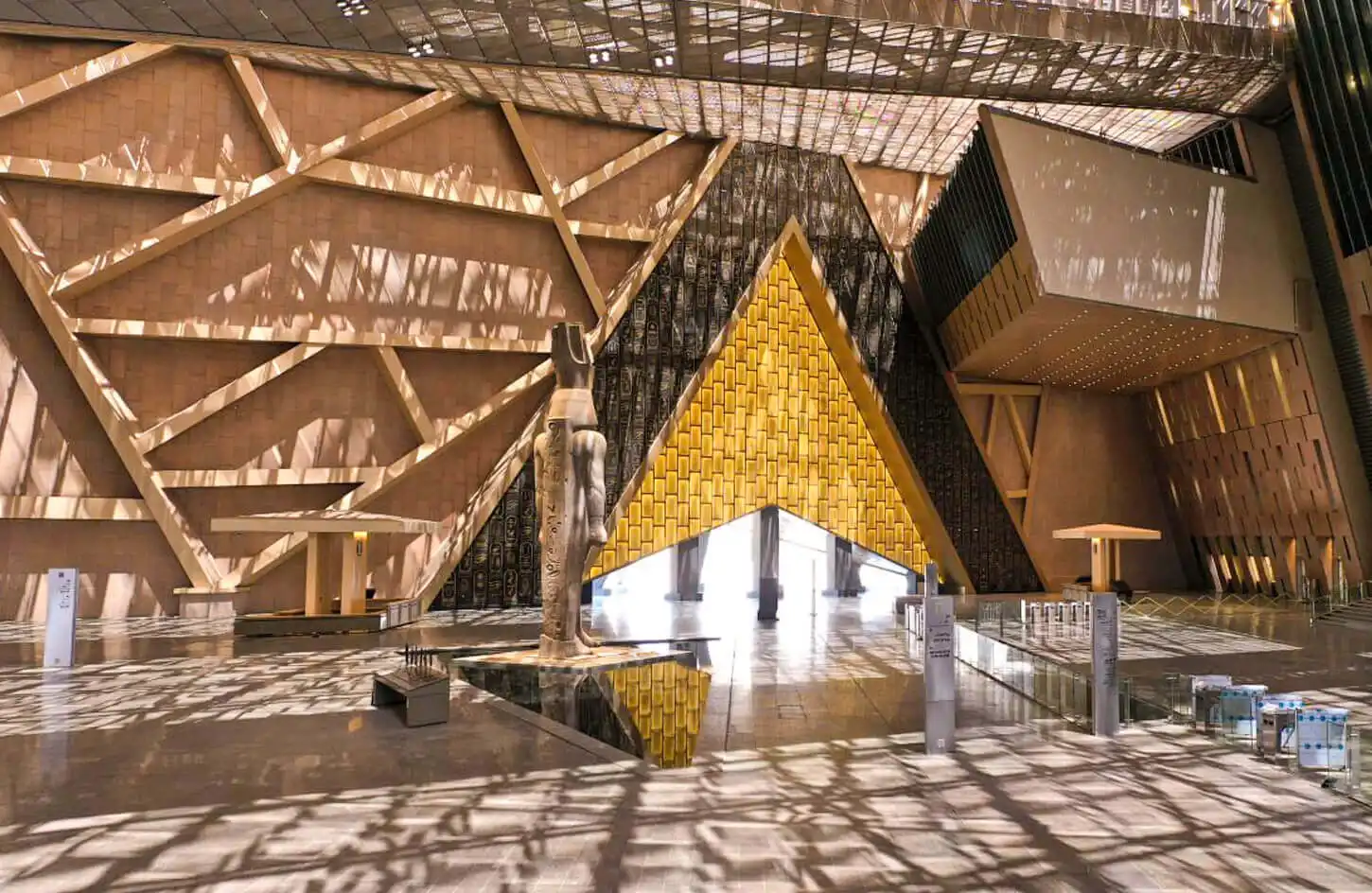
Day 2 — Pyramids of Giza and the Grand Egyptian Museum Morning at the Pyramids and the Sphinx. Afternoon at the Grand Egyptian Museum, home to the largest collection of pharaonic artefacts in the world, including the complete Tutankhamun gallery. Evening free to explore Khan El-Khalili bazaar.
Day 3 — Fly to Luxor, board the cruise Early flight from Cairo to Luxor (about 1 hour). Visit Karnak Temple and Luxor Temple on the East Bank. Board your Nile cruise in time for lunch. Afternoon free to relax on deck or explore Luxor’s souk. Evening entertainment on board.
Day 4 — West Bank, Luxor Morning visit to the Valley of the Kings (typically three tombs included), Hatshepsut Temple, and a photo stop at the Colossi of Memnon. Optional hot-air-balloon ride at sunrise (pre-book, weather permitting). Afternoon sailing toward Edfu; pass through the Esna Lock.
Day 5 — Edfu and Kom Ombo Early morning visit to the Temple of Horus at Edfu. Sail to Kom Ombo for a late-afternoon visit to the dual temple and Crocodile Museum. Continue sailing toward Aswan overnight.
Day 6 — Aswan Morning visit to the Aswan High Dam and Philae Temple (reached by motorboat). Afternoon options: felucca ride around Elephantine Island, visit the Nubian Village, or browse the Aswan Souk for spices and handmade goods. Optional Abu Simbel excursion (departs very early — around 03:00 — and returns by midday).
Day 7 — Disembark, fly to Cairo or continue Check out after breakfast. Transfer to Aswan airport for your onward flight or begin an extension to Abu Simbel, the Red Sea coast, or the Western Desert.
The follows a similar structure with all logistics — flights, guides, accommodation — arranged in advance.
Culture, Etiquette, and Practical Tips for Nile River Cruises in Egypt
Modest dress at religious sites. Cover shoulders and knees when entering mosques and temples. A lightweight scarf tucked into your daypack solves most situations. On the ship itself, there are no restrictions — swimwear at the pool and casual wear elsewhere are fine.
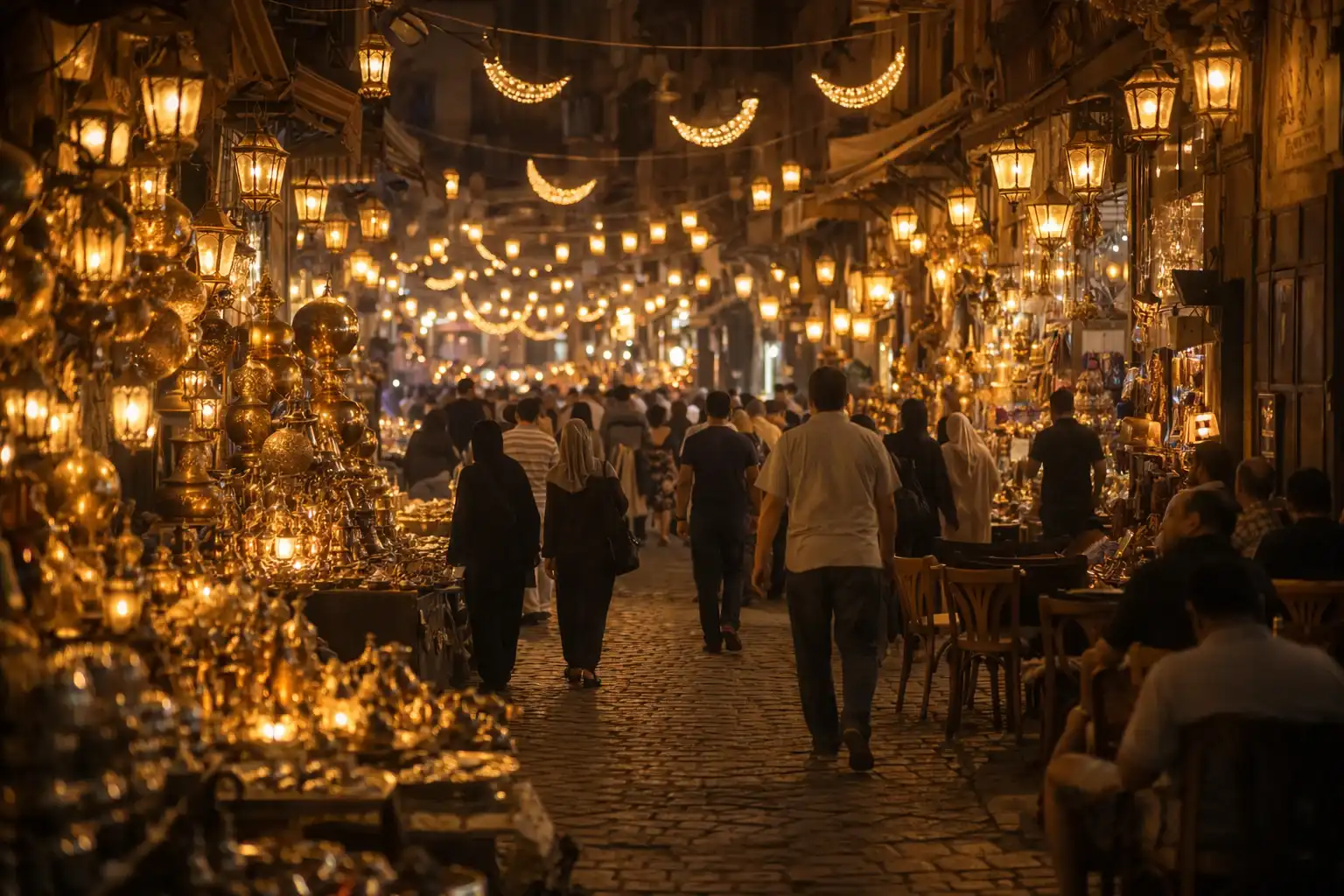
Haggling in markets. Prices in Egyptian souks and street markets are not fixed. Start at roughly 40–50% of the asking price and negotiate from there. Haggling is expected and not rude — it is part of the transaction culture. Fixed-price shops exist in hotels and malls.
Photography. Most temples allow photography without flash, but some tombs in the Valley of the Kings charge an additional camera fee ($5–$10). Always ask before photographing local people, especially women and children.
Language. Arabic is the official language, but English is widely spoken in tourism areas. Learning a few Arabic words — shukran (thank you), salaam alaikum (hello), la (no), aiwa (yes) — goes a long way in building rapport.
Money and payments. The Egyptian pound (EGP) is the local currency. ATMs in Luxor and Aswan accept international cards and dispense EGP. US dollars and euros are widely accepted for tips and market purchases. Credit cards work in hotels, ships, and some larger shops, but carry cash for smaller transactions. At the time of writing, $1 ≈ 50 EGP, but this fluctuates — check current rates before travel.
Electricity. Egypt uses Type C (two-pin round) plugs at 220V / 50Hz. Bring a universal adapter. Most cruise ships have outlets in cabins, but power strips may be useful for charging multiple devices.
Connectivity. eSIM providers (Airalo, Holafly) offer Egypt data packages from roughly $5–$10 for 1–5 GB. Alternatively, buy a local Vodafone or Orange SIM at Cairo or Luxor airport for about 300–500 EGP with data and local calls. Wi-Fi on cruise ships exists but is often slow and unreliable — do not rely on it for work.
For a deeper exploration of cultural expectations, the
? Is a Nile cruise worth it
For first-time visitors to Egypt, a Nile cruise is among the most effective ways to experience Upper Egypt. It eliminates the need to arrange separate transport, accommodation, and guides for each temple. You unpack once, and the ship moves you between sites while you sleep, eat, and relax. The views from the sundeck — green farmland giving way to sand dunes, fishermen in wooden boats, children waving from the bank — are part of the experience that road travel cannot replicate
The value depends on your priorities. If your goal is to see Karnak, the Valley of the Kings, Edfu, Kom Ombo, and Philae in a structured, comfortable format, a Nile cruise delivers that efficiently. If you prefer total independence and spontaneous scheduling, a self-guided road trip between Luxor and Aswan with a private driver may suit better
? What is the best month for a Nile cruise
October through April offers the most comfortable temperatures for temple visits. December and January are the most popular (and most expensive) months, with daytime highs around 22 °C–26 °C. March and October are excellent shoulder options — fewer crowds, 15–20% lower prices, and warm but tolerable temperatures. Avoid June through August unless you are very heat-tolerant; Luxor routinely exceeds 40 °C in midsummer
? Is Egypt safe for solo travelers on a Nile cruise
Organized Nile cruises are well-suited to solo travel. You are on a ship with a fixed itinerary, a guide, and other passengers — the structure minimizes the challenges that solo travelers might face elsewhere in Egypt. Most operators offer single-occupancy cabins, though a supplement applies (typically 50–80% of the double rate)
Female solo travelers should expect attention in markets and public spaces — persistent vendor approaches and occasional catcalling — but the cruise ship environment itself is controlled and comfortable. Practical tips: dress modestly at temples, keep your hotel and cabin details private, and trust the advice of your guide over unsolicited help from strangers. The [solo traveler guide to Egypt addresses these situations in depth
? What is the dress code on a Nile cruise
Onboard: relaxed during the day (shorts, t-shirts, swimwear by the pool), smart-casual for dinner (collared shirts, dresses, no flip-flops in the dining room). Most ships host one or two themed evenings where passengers wear a galabiya — a traditional Egyptian robe you can buy at port markets for $15–$25.
Off-ship: cover shoulders and knees at temples and mosques. Lightweight long trousers, a loose shirt, and a scarf for women handle nearly every situation
? Do I need a visa for Egypt
At the time of writing, citizens of most Western countries can obtain a tourist visa on arrival at Egyptian airports for $25 (cash, payable in USD, EUR, or GBP) or apply for an e-visa in advance through the official portal (visa2egypt.gov.eg) for roughly $25. Your passport must be valid for at least six months beyond your arrival date. Some nationalities require pre-arranged consular visas — check with your nearest Egyptian embassy
? Can you drink alcohol on a Nile cruise
Licensed Nile cruise ships serve alcohol on board — beer, wine, and spirits are available at the lounge bar and often at dinner. Prices vary by ship: expect $3–$5 for a local beer, $5–$8 for a cocktail, and $4–$7 for a glass of wine. Some luxury packages include drinks
Outside the ship, alcohol is available at licensed hotels, restaurants, and duty-free shops, but not at general stores or street vendors. Public drinking is illegal in Egypt. For a complete overview, see the guide to [buying alcohol in Egypt as a tourist]