
Cairo holds more history per square kilometre than almost any city on earth. The tourist places in Cairo Egypt range from the only surviving wonder of the ancient world — the Pyramids of Giza — to the world’s largest archaeological museum, a 1,000-year-old Islamic bazaar, and Coptic churches predating Islam by six centuries. Three days covers the essentials. A week barely scratches the surface.
Tourist Places in Cairo Egypt at a Glance
Cairo’s main attractions divide into four geographic clusters: Giza (Pyramids and GEM), Downtown and Tahrir (Egyptian Museum), Islamic Cairo (Citadel, Khan El Khalili, Al-Muizz Street), and Old Cairo (Coptic churches). Day trips to Saqqara and Memphis add a half-day each.
| Detail | Information |
|---|---|
| Recommended stay | 3–5 days minimum |
| Best season | October–April |
| Daily budget (mid-range) | $50–$100 per person |
| Main site entry fees | $5–$25 per attraction |
| Currency | Egyptian Pound (EGP) |
| Getting around | Uber, private car, Cairo Metro |
| Airport distance | Cairo International Airport — 20 km from city centre |
Exchange rates fluctuate — verify current rates before travel.
Top 5 tourist places in Cairo Egypt by visitor numbers:
- Pyramids of Giza and Great Sphinx
- Grand Egyptian Museum (GEM)
- Khan El Khalili Bazaar
- The Citadel of Saladin
- Coptic Cairo (Hanging Church, Abu Serga)
For accommodation near all major Cairo attractions, the Top Rated Hotels in Cairo guide covers the best neighbourhoods and mid-range to luxury options by location.
1. Pyramids of Giza and the Great Sphinx
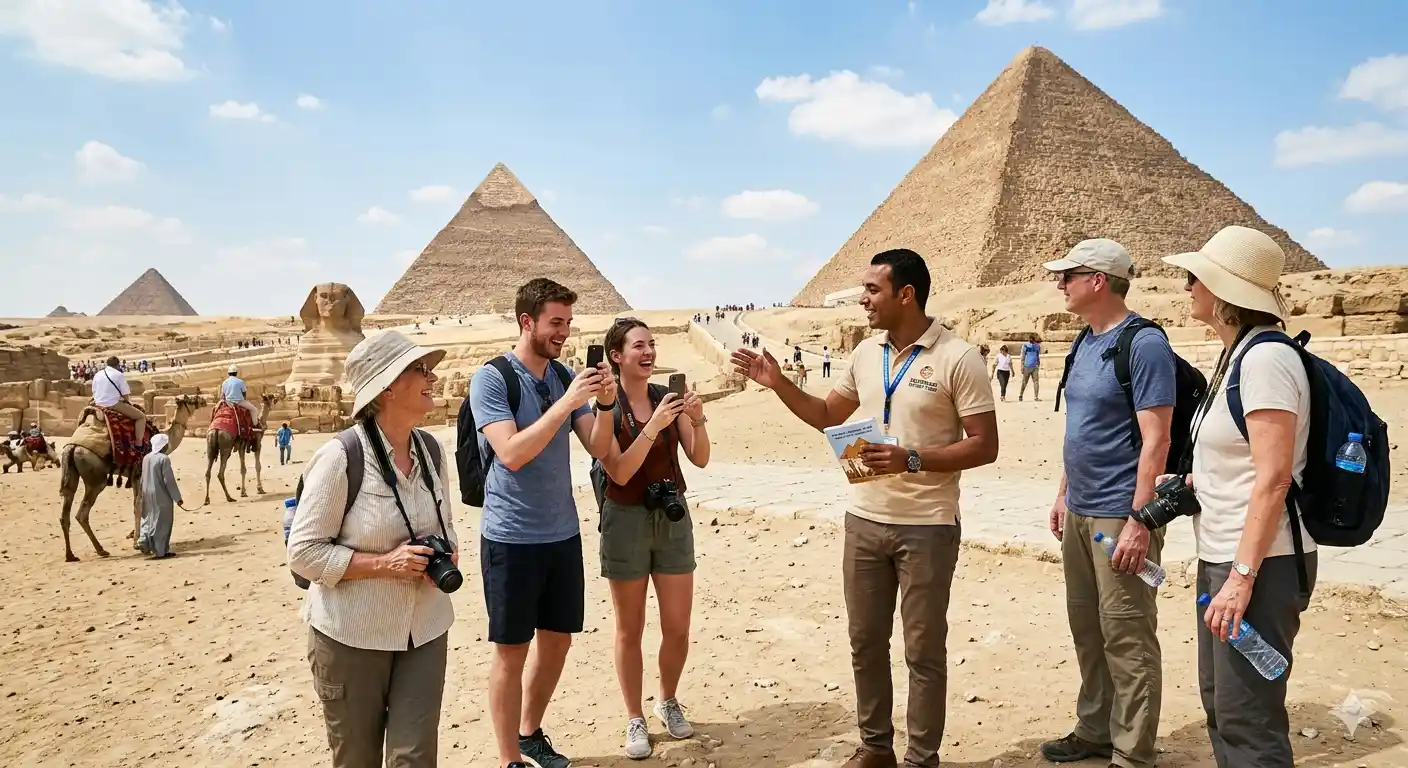
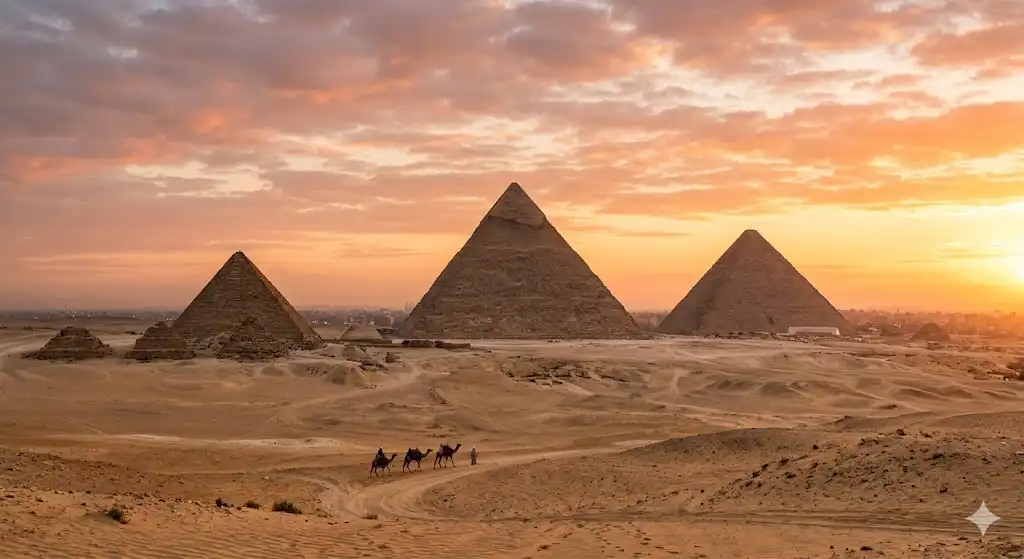
The Pyramids of Giza are the centrepiece of all tourist places in Cairo Egypt — and the only surviving wonder of the ancient world. The Great Pyramid of Khufu took approximately 20 years to build, used an estimated 2.3 million limestone blocks, and stood 146.5 metres tall on completion around 2560 BC. It remained the tallest human-made structure on earth for over 3,800 years.
The Giza Plateau holds three main pyramids: Khufu (Great Pyramid), Khafre, and Menkaure. The Great Sphinx — 73 metres long and carved from a single limestone outcrop — guards the eastern approach to Khafre’s pyramid. Entrance to the plateau covers all three pyramids and the Sphinx; entering individual pyramids requires a separate ticket ($5–$15 depending on the pyramid at time of writing).
Practical details:
- Opening hours: 08:00–17:00 daily (last entry 16:30)
- Standard plateau ticket: approximately $12–$15 at time of writing
- Camel and horse rides: available around the plateau — agree the full round-trip price before mounting
- Best time on site: arrive at opening (08:00) to beat tour bus crowds and the midday heat
The Pyramids of Giza Tours Cairo & GEM 2026 guide covers private tour options that combine the Giza Plateau with the Grand Egyptian Museum in a single day — the most efficient use of one day in Cairo.
2. Grand Egyptian Museum (GEM)
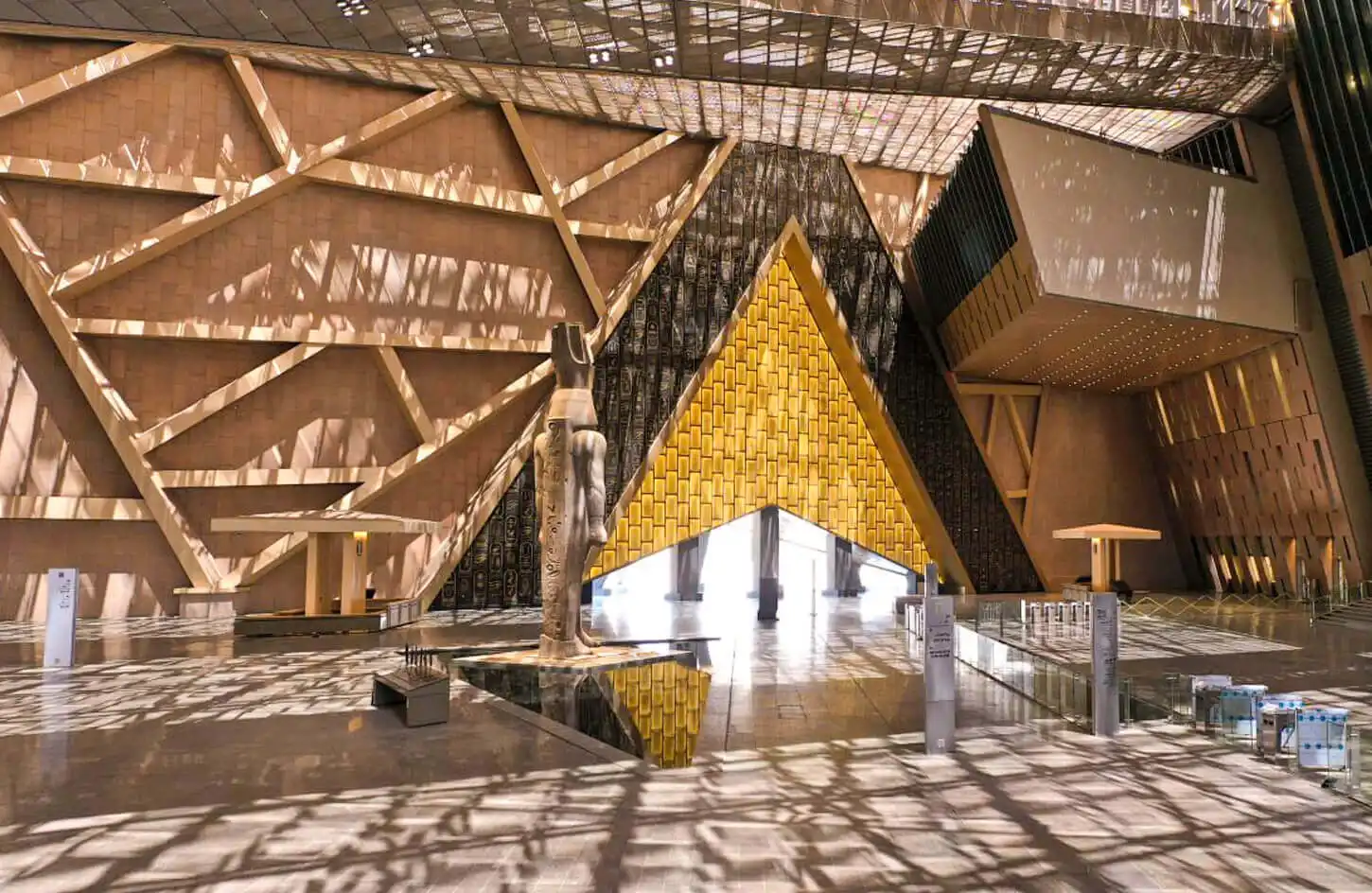
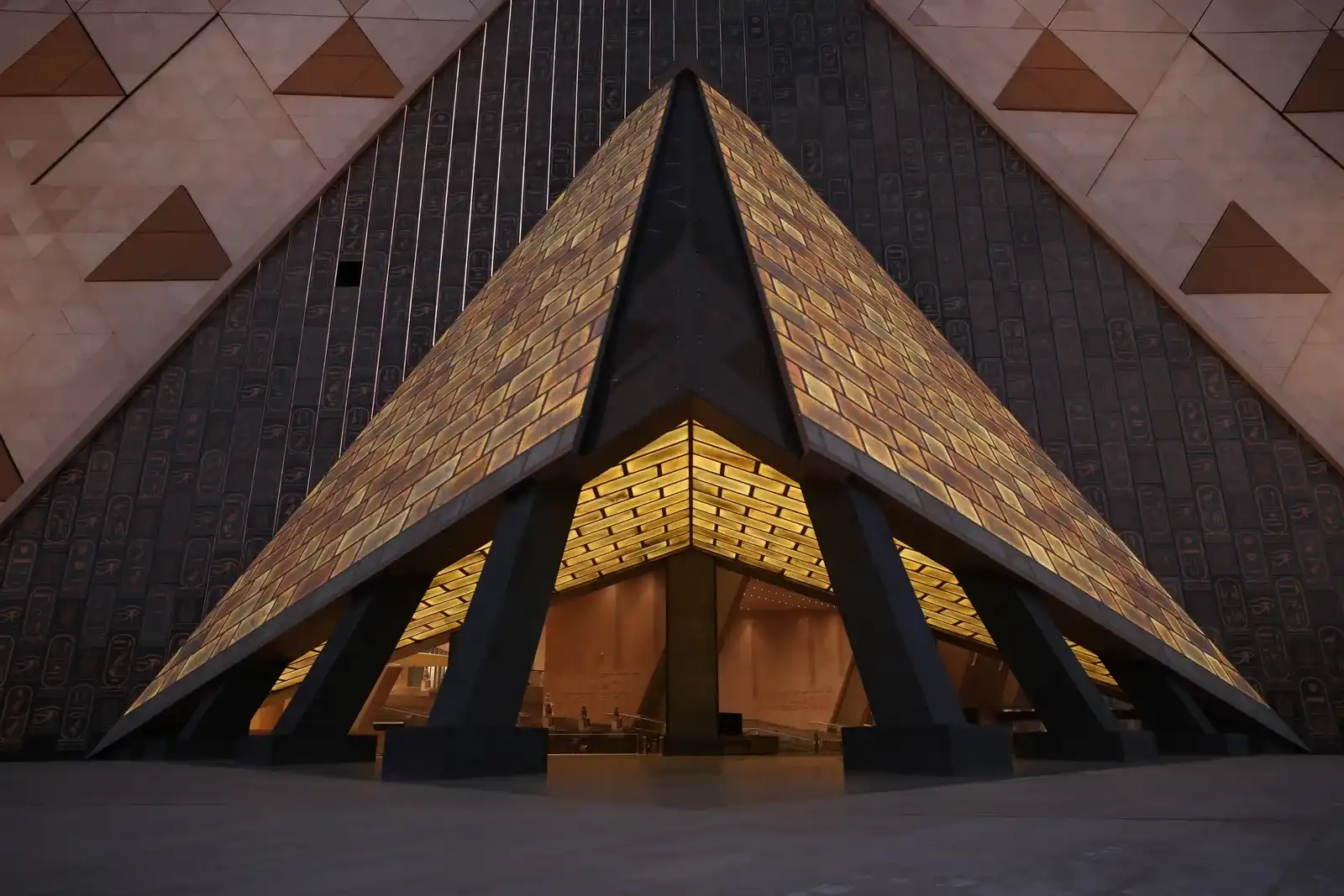
The Grand Egyptian Museum opened to the public in 2025 and immediately became the largest archaeological museum in the world. It sits 2 kilometres from the Pyramids of Giza and houses over 100,000 artefacts — including the complete treasures of Tutankhamun displayed together for the first time in history.
The Tutankhamun gallery alone contains over 5,000 objects: the golden death mask, the solid gold inner coffin, ceremonial chariots, furniture, and jewellery recovered from the tomb in 1922. The Grand Atrium entrance hall displays a 10-metre-tall standing statue of Ramesses II that was excavated in 1820 and weighs 83 tonnes.
Allow a minimum of 3–4 hours for the GEM. The building covers 480,000 square metres; the permanent galleries extend over multiple floors connected by escalators and ramps. Audio guides are available in English. Tickets: approximately $20–$25 at time of writing. Full opening details and current ticketing are covered in the Grand Egyptian Museum Opening 2025 post.
3. Egyptian Museum, Tahrir Square
The Egyptian Museum on Tahrir Square has housed Egypt’s most important antiquities since 1902. Even with the opening of the GEM, this building retains a substantial permanent collection — including royal mummies on the upper floor and artefacts spanning 5,000 years of Egyptian civilisation.
The Royal Mummy Room displays 22 pharaohs and queens, including Ramesses II and Seti I. Admission to the mummies requires a separate ticket on top of the general entry. The museum’s 120 rooms hold approximately 170,000 objects; it would take weeks to examine every item. Most visitors focus on the Tutankhamun galleries on the upper floor (some items remain here pending full transfer to the GEM) and the mummy room.
Practical details:
- Location: Tahrir Square, Downtown Cairo — walking distance from most Downtown hotels
- Opening hours: 09:00–17:00 daily
- Entry: approximately $12–$15; separate ticket for Royal Mummy Room
4. Tourist Places in Cairo Egypt: Islamic Cairo and Khan El Khalili
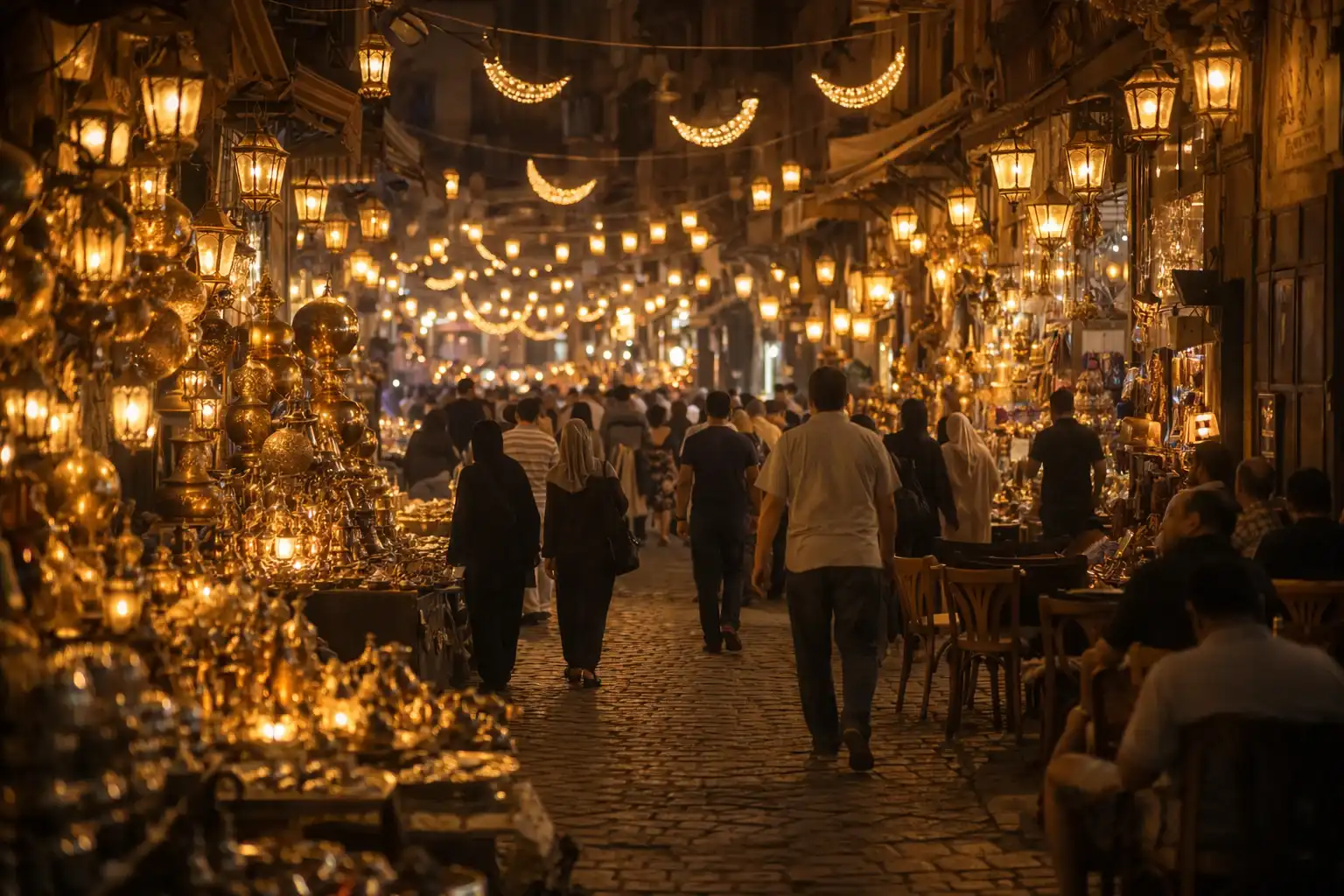
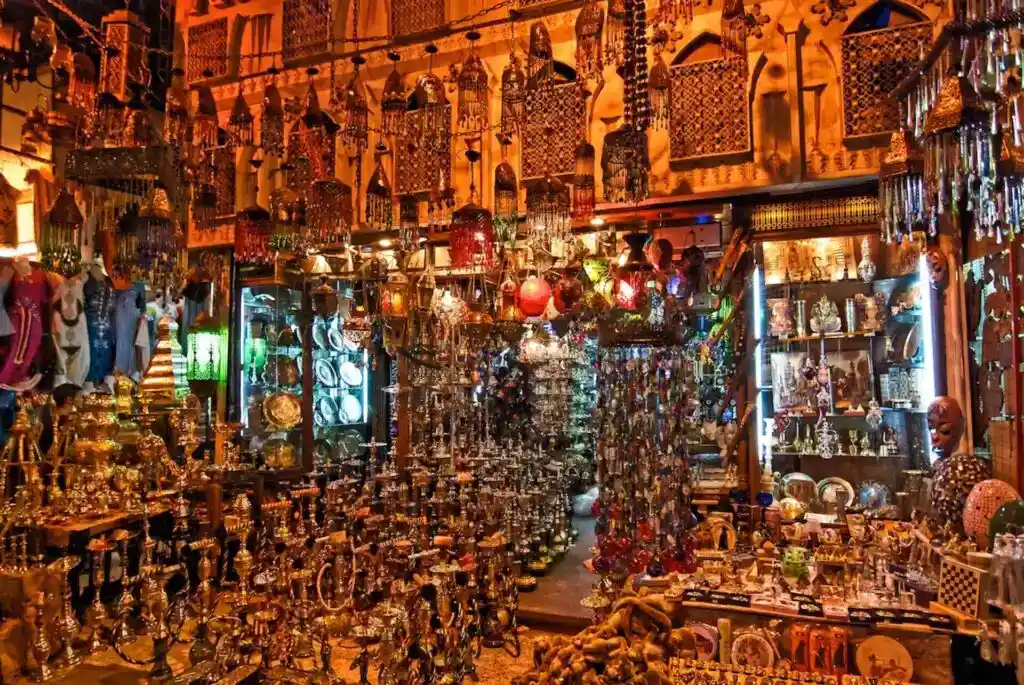
Islamic Cairo — the medieval walled city — is one of the most densely layered historic districts of any city in the world. Khan El Khalili bazaar at its centre has operated continuously since 1511, when it was established as a trading hub for merchants crossing between Africa and Asia. Today it covers a maze of interconnected alleys selling spices, gold, copper, leather, textiles, and Egyptian souvenirs.
Prices in Khan El Khalili are not fixed. A polite counteroffer at 40–60% of the opening price is standard practice. El Fishawi café, operating since 1773 in a covered alley at the heart of the bazaar, serves tea and coffee in carved wooden booths — worth the stop regardless of whether you buy anything in the market.
Al-Muizz Street, running north from Khan El Khalili, is the best-preserved medieval Islamic street in Cairo. Walking its 1-kilometre length at night — when the illuminated facades of Mamluk and Fatimid monuments glow against the sky — is one of the best free experiences among all tourist places in Cairo Egypt.
For guidance on bargaining etiquette, appropriate dress in Islamic Cairo, and photography rules at mosques, the Egypt’s Cultural Etiquette: A Guide for Travelers post covers every situation you will encounter in this district.
5. The Citadel of Saladin and the Mosque of Muhammad Ali
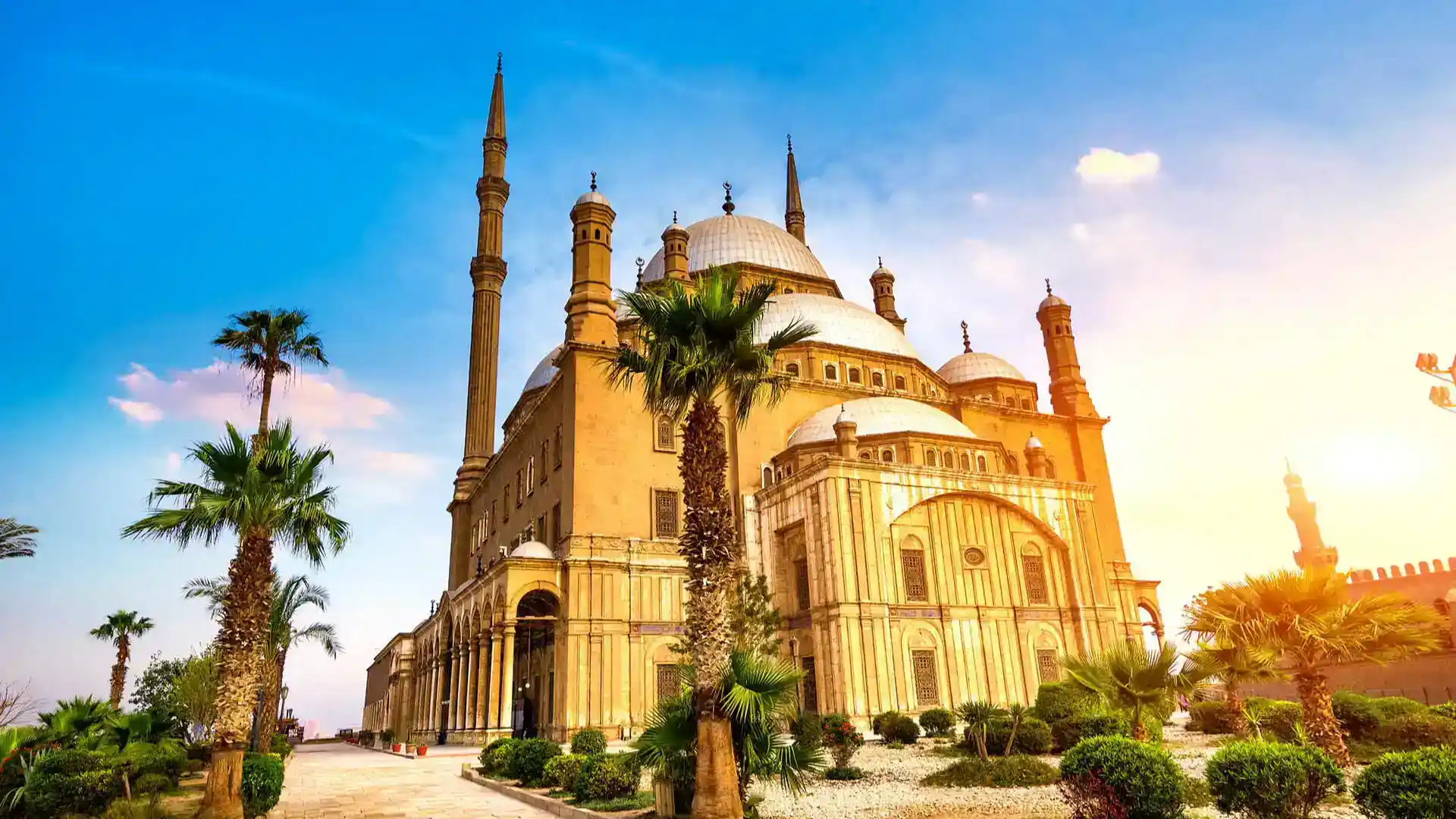
The Citadel of Saladin occupies the Mokattam Hills above Islamic Cairo, built between 1176 and 1183 AD. It served as Egypt’s seat of government for nearly 700 years. From the outer walls, the view over Cairo’s minarets and the Nile with the Giza Pyramids on the horizon is the single best panoramic viewpoint in the city.
The Mosque of Muhammad Ali — the Ottoman-style alabaster mosque inside the Citadel — was completed in 1857 and modelled on the mosques of Istanbul. Its twin minarets reach 82 metres. The interior courtyard contains a clock tower given by France in 1845 in exchange for the Luxor Obelisk now standing in the Place de la Concorde in Paris.
Practical details:
- Location: Salah Salem Road, Islamic Cairo — 20 minutes by Uber from Tahrir
- Opening hours: 08:00–17:00 daily
- Combined Citadel ticket (includes Muhammad Ali Mosque and three other museums inside): approximately $10–$12 at time of writing
- Dress code: covered shoulders and knees; head covering for women (scarves available at entrance)
6. Coptic Cairo: Hanging Church and Abu Serga
Old Cairo — the Coptic quarter — predates the Islamic city by six centuries. The neighbourhood contains churches, a synagogue, and a Coptic museum within a compact walled area 5 kilometres south of Tahrir Square.
The Hanging Church (Al-Muallaqa) is built over the gatehouse of a Roman fortress, with its nave suspended above the ancient gate towers — hence the name. Construction began in the 7th century; the carved ivory screens and painted icons inside date from the 8th to 13th centuries. Entry is free.
Abu Serga Church (St Sergius and Bacchus) is traditionally identified as the site where the Holy Family rested during their flight into Egypt. The crypt beneath the altar is the specific location of the tradition. The church dates to the 5th century and contains some of the oldest surviving Coptic architectural elements in Cairo.
The Coptic Museum next door holds the world’s largest collection of Christian Egyptian artefacts across 13,000 objects spanning five centuries. Entry approximately $5 at time of writing.
7. Saqqara and Memphis
Saqqara, 30 kilometres south of Cairo, is Egypt’s largest archaeological site and home to the world’s oldest complete stone building — the Step Pyramid of Djoser, built around 2650 BC. This six-tiered stone structure predates the Giza Pyramids by approximately a century and represents the transition from mud-brick mastaba tombs to the pyramid form.
The Saqqara necropolis also contains the Pyramid of Unas, the Serapeum (underground galleries where the sacred Apis bulls were buried), and the mastaba tombs of Ti and Mereruka — decorated with relief carvings of everyday life in such vivid detail that individual fish species, bird types, and craft techniques are identifiable 4,500 years later.
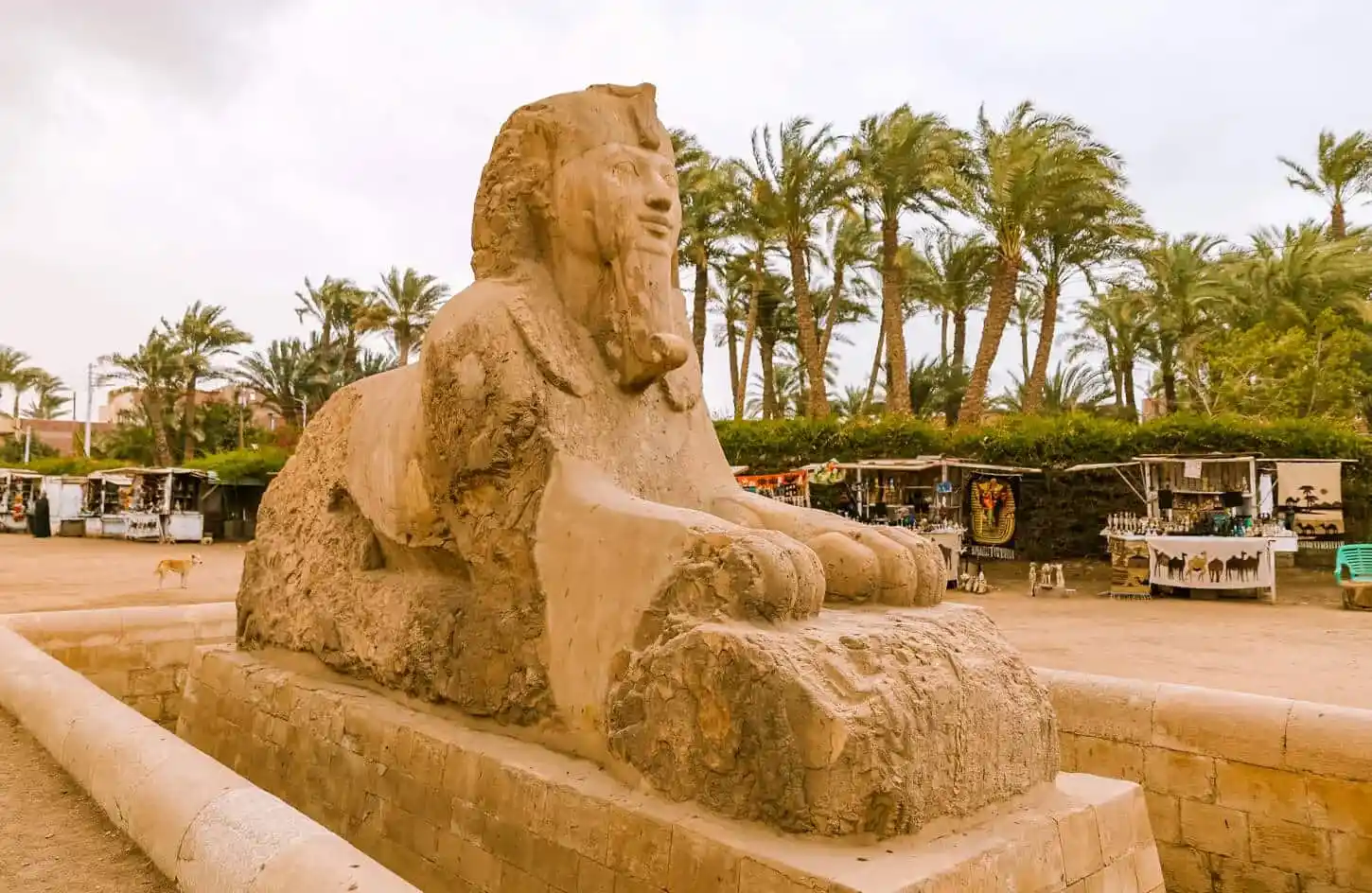
Memphis, a further 3 kilometres from Saqqara, was ancient Egypt’s first capital. The open-air museum holds a colossal limestone statue of Ramesses II lying flat (too large to stand upright in the existing structure) and a smaller alabaster sphinx. Allow a half day for Saqqara and Memphis combined. Entrance to Saqqara: approximately $8–$10 at time of writing.
8. Al-Azhar Mosque and Al-Azhar Park
Al-Azhar Mosque, founded in 970 CE, is one of the oldest continuously operating universities in the world and the most important religious institution in Sunni Islam. The mosque complex blends Fatimid, Ayyubid, Mamluk, and Ottoman architectural additions accumulated over more than 1,000 years. Non-Muslim visitors are welcome outside prayer times; covered dress is required.
Al-Azhar Park — 200 metres from the mosque — transformed one of Cairo’s largest historic rubbish dumps into 30 hectares of terraced gardens, fountains, and walking paths. The views from the park’s upper terrace across Islamic Cairo’s minarets toward the Citadel are among the most photographed in Egypt. Entry approximately $2–$3; open daily 09:00–23:00.
9. Al-Muizz Street at Night
Al-Muizz Street was the main axis of Fatimid Cairo from the 10th century onward. The 1-kilometre stretch between Bab El Futuh (north gate) and Bab Zuweila (south gate) is lined with Mamluk palaces, mausoleums, sabils (public water dispensaries), and mosques — more medieval Islamic architecture per metre than anywhere outside of Fez in Morocco.
Walking this street after dark, when the monuments are illuminated and the daytime market traffic dies down, costs nothing. Street food vendors set up between the monuments in the evening — koshary, ta’amiya, and fresh juice stalls. Entry to individual monuments along the street ranges from free to approximately $5.
10. Nile Dinner Cruise, Cairo
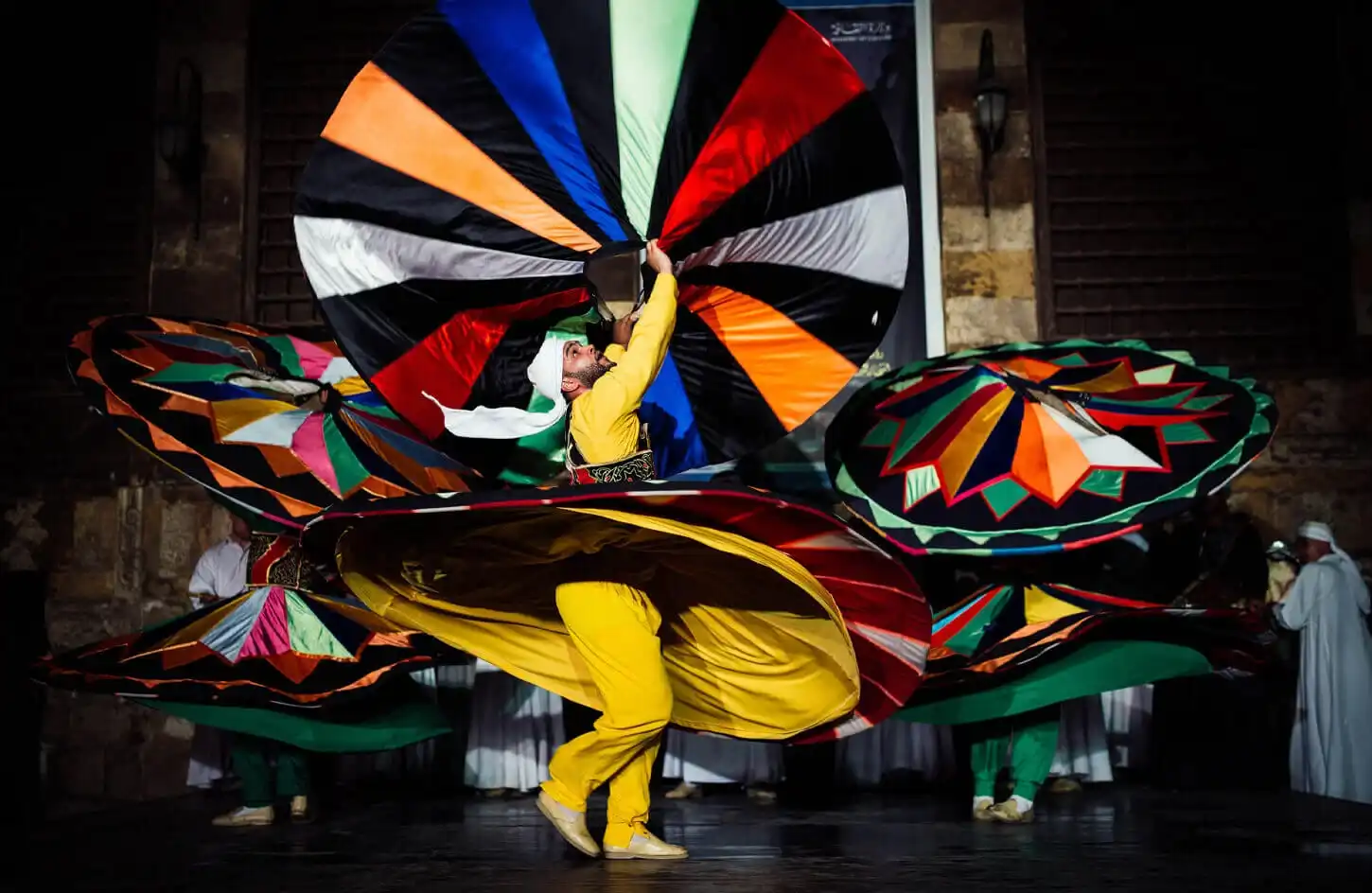
A dinner cruise on the Nile is one of the most relaxed tourist places in Cairo Egypt experiences — and works well as an evening activity after a full day at Giza or the Egyptian Museum. Boats depart from docks along the Corniche El Nil between Downtown and Giza, typically running 2–2.5 hours with dinner, live music, and a tanoura (whirling dervish) performance.
Standard dinner cruises run approximately $30–$60 per person including dinner and entertainment at time of writing. Departure times are typically 20:00 or 21:00. Book through your hotel or directly through a licensed operator. The Tanoura show at Wekalet El Ghouri — a fixed-location performance in Islamic Cairo rather than on the water — is an alternative for travellers preferring a cultural venue over a floating restaurant.
How Many Days Do You Need in Cairo
Three days covers the essential tourist places in Cairo Egypt: Pyramids and GEM on Day 1, Egyptian Museum and Islamic Cairo on Day 2, Coptic Cairo and Saqqara on Day 3. Five days allows a more comfortable pace with time for Al-Muizz Street at night, a Nile dinner cruise, and Memphis.
The Discover Cairo in 3 Days private tour package covers the core circuit — Pyramids, Sphinx, GEM, Egyptian Museum, Khan El Khalili, and Coptic Cairo — with a private Egyptologist guide and all entrance fees included. For visitors extending to Luxor after Cairo, the 5 Days Cairo and Luxor Private Tour connects both cities with an internal flight.
Best Time to Visit Tourist Places in Cairo Egypt
October through April is the most comfortable window for visiting tourist places in Cairo Egypt. Temperatures in Cairo during this period range from 15°C to 28°C (59°F–82°F). The Giza Plateau is manageable from 08:00, and an afternoon visit to the Egyptian Museum or Islamic Cairo does not require heat management planning.
May, June, and September are transitional — warm but less crowded than peak season, with lower accommodation prices. July and August push Cairo above 38°C (100°F) at midday. Morning departures before 09:00 are essential for outdoor sites in summer, and the Giza Plateau in particular becomes very challenging by 10:30.
December and January attract the highest volume of European visitors. Book private tour slots and popular restaurant reservations in advance for this period. Full seasonal detail — including Ramadan timing and its effect on site and restaurant hours — is covered in the Best Months to Visit Egypt guide.
Getting Around Cairo’s Tourist Places
Uber is the most practical option for moving between tourist places in Cairo Egypt. The app works throughout the city, prices are metered and displayed before booking, and drivers do not negotiate or attempt the “hotel is closed” scam that affects unlicensed street taxis. Uber from Tahrir to Giza takes 30–45 minutes depending on traffic; fare is approximately 50–80 EGP ($1–$1.50) at time of writing.
Cairo Metro covers Downtown, Shubra, Helwan, and several other areas — but does not reach Giza or Islamic Cairo directly. It is useful for moving between Tahrir Square and Coptic Cairo (Mar Girgis station). The metro costs approximately 8–10 EGP per journey.
Private driver for the day — arranged through your hotel or tour operator — is the most efficient option for covering Giza, GEM, Saqqara, and Memphis in a single day. A full-day private car with driver runs approximately $50–$80 at time of writing. Full transport guidance — including the train network and intercity connections — is covered in the Mastering Public Transport in Egypt article.
Budget and Entry Fees for Cairo’s Tourist Places
The table below lists approximate entry fees for the main tourist places in Cairo Egypt at time of writing. Fees change periodically — verify current prices before visiting.
| Attraction | Approx. Entry Fee (USD) |
|---|---|
| Pyramids of Giza Plateau | $12–$15 |
| Inside Great Pyramid of Khufu | +$15 |
| Grand Egyptian Museum (GEM) | $20–$25 |
| Egyptian Museum, Tahrir | $12–$15 |
| Royal Mummy Room (add-on) | +$10 |
| The Citadel of Saladin | $10–$12 |
| Saqqara (Step Pyramid complex) | $8–$10 |
| Coptic Museum | $5 |
| Al-Azhar Park | $2–$3 |
| Hanging Church | Free |
| Al-Muizz Street (walking) | Free |
Exchange rates fluctuate — verify current rates before travel.
For budget planning beyond entry fees — including accommodation, food, transport, and tipping — the Budget Travel Tips for Egypt guide covers daily cost breakdowns for mid-range and budget travellers.
Practical Tips for Visiting Cairo
Scams to know at Giza: The pyramid plateau has a concentrated scam ecosystem at its entrances. Common approaches: unofficial “free guides” claiming to take you to the best viewpoint, camel ride operators quoting one-way prices, and vendors claiming your ticket is invalid. Enter through the main official gate; your Pure Nile Tours guide handles all interactions at the site.
Dress code: Covered shoulders and knees are required at Islamic Cairo mosques, the Citadel, and Coptic Cairo churches. Lightweight linen works across all sites. At the Pyramids and GEM there is no dress requirement, though sunscreen and a hat are essential.
Cash and ATMs: ATMs are widely available in Downtown Cairo, near Tahrir Square, and at Cairo Airport. Carry EGP for small purchases, street food, and market bargaining. Most tourist sites, hotels, and restaurants accept credit cards.
Water: Tap water is not safe to drink. Bottled water costs under 10 EGP per 1.5 litre at every kiosk and corner shop throughout Cairo.
SIM cards: Available at Cairo Airport arrivals from Vodafone, Orange, and WE. A tourist SIM with 20–30 GB of data costs approximately 100–200 EGP ($2–$4 at time of writing). Signal coverage is strong throughout Cairo.
Frequently Asked Questions
What are the top tourist places in Cairo Egypt?
The top tourist places in Cairo Egypt are the Pyramids of Giza and Great Sphinx, the Grand Egyptian Museum (GEM), the Egyptian Museum on Tahrir Square, Khan El Khalili bazaar in Islamic Cairo, the Citadel of Saladin and Mosque of Muhammad Ali, Coptic Cairo (Hanging Church, Abu Serga, Coptic Museum), Saqqara and the Step Pyramid of Djoser, Al-Muizz Street, Al-Azhar Mosque and Park, and a Nile dinner cruise. Three days covers the first five; five days covers all of them comfortably.
How many days do you need to see Cairo’s tourist places?
Three days is the minimum for the core circuit: Pyramids and GEM on Day 1, Egyptian Museum and Islamic Cairo on Day 2, Coptic Cairo and Saqqara on Day 3. Five days is more comfortable and allows time for Al-Muizz Street at night, Memphis, and a Nile dinner cruise without rushing any single site.
What is the best time to visit tourist places in Cairo Egypt?
October through April is the best window. Temperatures range from 15°C to 28°C, outdoor sites are comfortable from morning through mid-afternoon, and the Giza Plateau does not require extreme heat management. December and January attract the most visitors — book in advance. July and August push Cairo above 38°C; morning-only temple visits are essential in summer.
Is Cairo safe for tourists?
Cairo is safe for tourists on a guided itinerary. Heavy security presence at all major sites deters serious crime. The main practical risks are scams at the Giza Plateau entrances and traffic — both managed by travelling with a licensed guide and using Uber or private transport. At the time of writing, the US State Department rates Egypt at Level 2 (Exercise Increased Caution), which applies to two border zones and not to Cairo.
Do I need a visa to visit Cairo?
At the time of writing, most nationalities — including US, UK, EU, Australian, and Canadian citizens — can purchase an Egypt e-visa online before travel or a visa on arrival at Cairo International Airport. The standard tourist visa costs $25. Details can change — check the Egypt Visa Requirements for Travelers guide and your government’s entry requirements before booking.
How do I get between tourist places in Cairo?
Uber is the most practical option throughout Cairo — metered, reliable, and available 24 hours. The Cairo Metro reaches Tahrir Square, Coptic Cairo (Mar Girgis station), and several Downtown stops but does not serve Giza or Islamic Cairo directly. A private driver for the day ($50–$80 at time of writing) is the most efficient option for combining Giza, GEM, Saqqara, and Memphis.
What is the entry fee for the Pyramids of Giza?
The standard Giza Plateau ticket — covering access to all three pyramid complexes and the Sphinx — costs approximately $12–$15 at time of writing. Entering the interior of the Great Pyramid of Khufu requires a separate ticket of approximately $15. The tomb of Tutankhamun in the Valley of the Kings (not in Cairo) requires a separate ticket of approximately $20–$25. All fees are subject to change — verify current prices before visiting.
What should I wear at Cairo’s tourist places?
Covered shoulders and knees are required at Islamic Cairo mosques, the Citadel, and Coptic Cairo churches. Lightweight linen trousers and a long-sleeved shirt work across all sites. At the Pyramids and GEM there is no dress requirement, but a hat with a brim and SPF 50+ sunscreen are essential for the outdoor Giza Plateau, especially between April and October.
External Links
Egypt Tourism Authority official site
https://www.egypt.travel
UNESCO: Ancient Thebes and its Necropolis