
Quick answer: Yes. Egypt is a Muslim-majority country, and Islam is the religion of the state under the Egyptian Constitution. The most commonly cited demographic estimates put roughly 90% of the population as Muslim, predominantly Sunni, and about 10% as Christian, with the Coptic Orthodox Church forming the largest Christian community. For travelers, this does not mean you must be Muslim, dress in religious clothing, fast during Ramadan, or change your personal beliefs. It does mean religion is visible in daily life, public holidays, food habits, prayer times, dress expectations at places of worship and parts of social etiquette.
Last fact-checked: September 2026. Religious-demographic figures are estimates rather than a single definitive religious census, and laws, opening hours and site rules can change. This article is a travel-focused explanation, not legal or theological advice.
If your main question is how to behave rather than how religion is structured, use our Cultural Etiquette for Travelers in Egypt guide. If your trip overlaps the fasting month, read Ramadan in Egypt for Tourists.
Egypt Religion at a Glance
| Question | Short Answer |
|---|---|
| Is Egypt a Muslim country? | Yes. Egypt is Muslim-majority and Islam is the state religion. |
| What branch of Islam is most common? | Sunni Islam is the dominant tradition. |
| Are there Christians in Egypt? | Yes. Christians form a significant historic minority, mostly Coptic Orthodox. |
| Do tourists have to follow Islam? | No. Visitors are not expected to convert, pray or fast. |
| Do women have to wear a hijab? | No. Foreign visitors are not required to wear a hijab in everyday tourist settings. |
| What should tourists wear in mosques? | Dress modestly; shoulders and legs should be covered, and women should bring a headscarf. |
| Can non-Muslims visit mosques? | Many historic mosques welcome visitors outside prayer periods, subject to local rules. |
| Is Egypt only Islamic culturally? | No. Modern Egypt also has deep Coptic Christian, ancient Egyptian, Mediterranean and other cultural layers. |
| Does religion affect tourism? | Yes, mainly through etiquette, holidays, Ramadan schedules and rules at religious sites. |
Is Egypt Officially an Islamic Country?
Egypt’s constitutional position is clear. Article 2 of the Egyptian Constitution states that Islam is the religion of the state, Arabic is its official language, and the principles of Islamic Sharia are the main source of legislation.
That constitutional language is one reason travelers often describe Egypt as an “Islamic country” or a “Muslim country.” However, the phrase can be misleading if it makes visitors imagine that every Egyptian is Muslim or that the tourism experience operates like a religious institution.
Egypt is simultaneously:
- a Muslim-majority society;
- home to one of the world’s oldest Christian communities;
- an Arab country where Arabic is the official language;
- a modern tourism destination used to receiving millions of visitors from different religious and non-religious backgrounds;
- a country whose public culture varies considerably between Cairo, rural towns, Upper Egypt, Red Sea resorts and international hotels.
The Constitution also separately recognizes the religious affairs of Egyptian Christians and Jews in Article 3, while Article 64 states that freedom of belief is absolute and regulates religious practice and places of worship within the legal framework.
For a tourist, the practical takeaway is simple: Islam is central to Egyptian public life, but visitors are not expected to become participants in the religion. Respect matters more than imitation.
What Percentage of Egypt Is Muslim?
There is no single modern religious census figure that every source treats as definitive. However, several widely cited reference sources converge around the same broad estimate: about 90% Muslim and 10% Christian.
The U.S. Department of State’s religious-demography reporting says most experts and media sources estimate approximately 90% of Egyptians are Sunni Muslim and about 10% are Christian. The CIA World Factbook has also published a 90% Muslim / 10% Christian estimate.
These numbers should be treated as planning-level demographic estimates, not as a precise count of every person’s belief. The part that matters most for travelers is not whether the true percentage is a point higher or lower; it is that Egypt is overwhelmingly Muslim while also having a large, visible and historically important Christian population.
What Kind of Islam Is Practiced in Egypt?
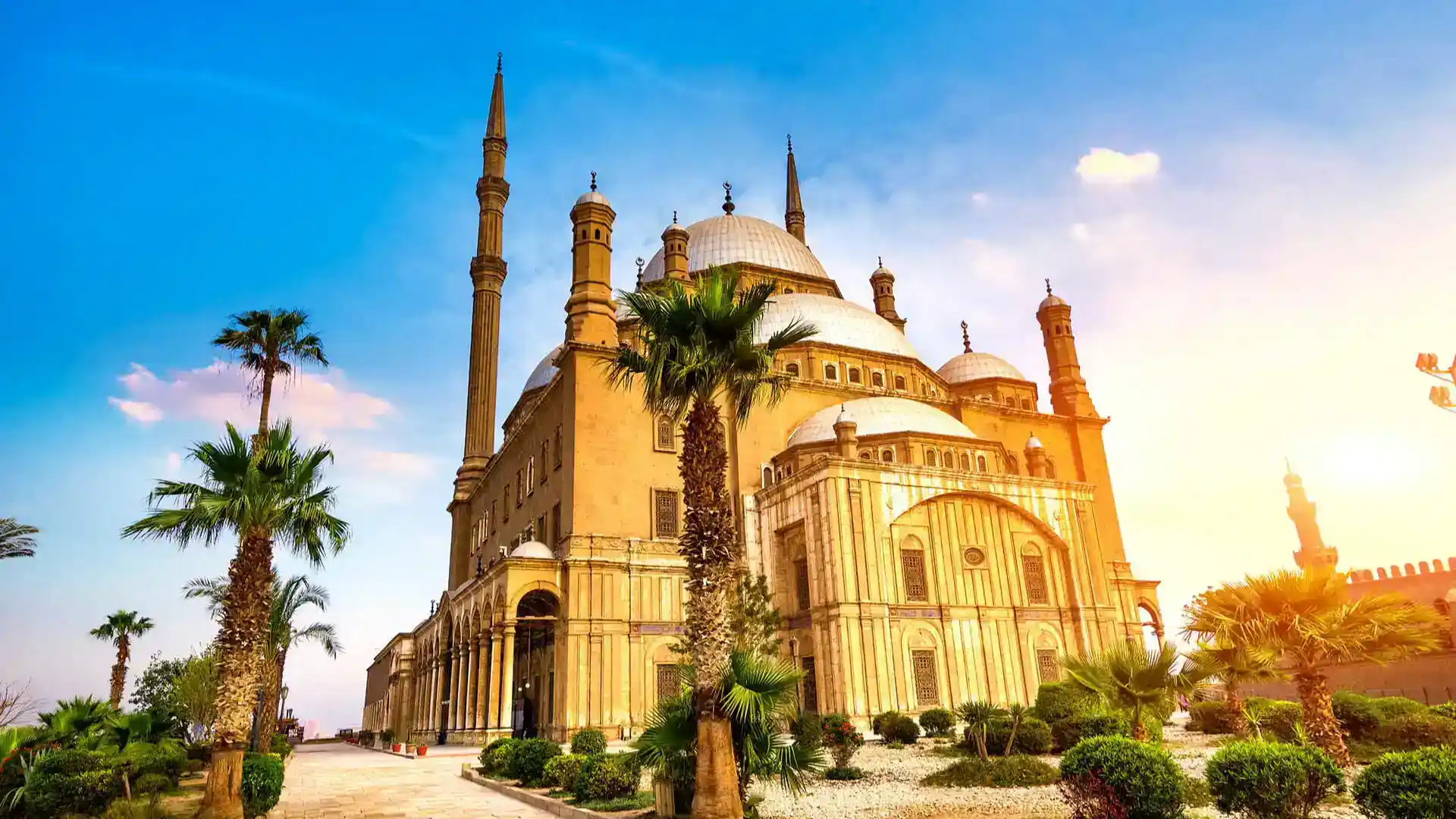
The majority of Egyptian Muslims are Sunni Muslim. Sunni religious culture is visible through mosques, Friday congregational prayer, Ramadan fasting, Eid celebrations, Qur’anic recitation, charity traditions and the importance of Al-Azhar.
Al-Azhar in Cairo is one of the most influential institutions of Sunni Islamic learning in the world. Its mosque and university are deeply connected to Egypt’s intellectual and religious history. Travelers walking through Islamic Cairo will see religion not as an abstract statistic but as architecture, sound, daily rhythm and community life.
There are also smaller Muslim communities and traditions, but a first-time traveler does not need to understand every theological distinction to travel respectfully. The practical rule is to treat mosques as active places of worship rather than only historical monuments.
Are There Christians in Egypt?

Yes, and Christianity is not a recent or imported part of Egyptian life. Egypt has one of the oldest continuous Christian traditions in the world.
The majority of Egyptian Christians belong to the Coptic Orthodox Church. U.S. religious-freedom reporting says Christian leaders estimate that roughly 90% of Egypt’s Christians are Coptic Orthodox. Other Christian communities include Catholics, Protestants, Greek Orthodox, Armenian Apostolic and other denominations.
For travelers, the strongest place to experience this history is Coptic Cairo, where churches, the Coptic Museum and historic religious buildings sit within Old Cairo. The Hanging Church is one of the best-known Christian landmarks, while the Church of Saints Sergius and Bacchus is associated with traditions surrounding the Holy Family’s journey in Egypt.
Egypt’s Christian identity is also very visible around Coptic Christmas on 7 January. If your trip is during the festive period, our Christmas in Egypt guide explains the difference between Western Christmas celebrations and Coptic Christmas.
Is Egypt Muslim or Christian?
Egypt is Muslim-majority, not exclusively Muslim. Christianity remains a major part of Egyptian history and society.
This distinction matters because many travelers arrive with an oversimplified picture. They see minarets in Cairo, hear the call to prayer and assume Egypt has only one religious identity. In reality, a single day in Cairo can include:
- the Mosque of Muhammad Ali at the Citadel;
- historic mosques in Islamic Cairo;
- churches in Coptic Cairo;
- the Coptic Museum;
- the Ben Ezra Synagogue area in Old Cairo;
- modern neighborhoods where people of different backgrounds live and work.
Religion in Egypt is therefore best understood as a majority tradition alongside important minority traditions rather than a single uniform identity.
Is Egypt an Arab Country or a Muslim Country?
It is both, but the words describe different things.
Muslim describes religion. Arab describes language, culture, political identity and regional belonging. A Christian Egyptian can be Arab and Christian at the same time. A Muslim Egyptian can be Arab and Muslim. The categories are not opposites.
Egypt’s official name is the Arab Republic of Egypt, Arabic is the official language, and the Constitution describes Egypt as part of the Arab nation and the Muslim world.
At the same time, Egyptian identity is more complex than one label. Ancient Egyptian heritage, Coptic language and tradition, Mediterranean connections, Nubian culture, Bedouin communities and modern global influences all contribute to the country’s character.
Do Tourists Have to Be Muslim in Egypt?
No. Tourists of different religions and visitors with no religious affiliation travel in Egypt every day.
You do not need to:
- convert to Islam;
- attend prayers;
- fast during Ramadan;
- wear Islamic religious clothing in normal tourist settings;
- avoid visiting Christian sites because the country is Muslim-majority;
- change your personal beliefs.
What is expected is normal cultural respect. The same principle applies when entering a mosque, church or synagogue anywhere in the world: understand that the building may be both a historic attraction and an active sacred space.
Do Women Have to Wear a Hijab in Egypt?
No. Foreign women are not generally required to wear a hijab while traveling in Egypt.
In Cairo, Luxor, Aswan, Alexandria, Hurghada and Sharm El Sheikh you will see a wide range of clothing. Some Egyptian women wear hijab, some wear other forms of modest dress, and some do not cover their hair.
For tourists, the best strategy is modest, practical clothing rather than trying to copy one religious style. Lightweight trousers, long skirts, loose dresses and tops that cover the shoulders work well in most settings.
Mosques are different. Egypt’s official tourism information recommends modest clothing for places of worship, with shoulders and legs covered, and advises women to bring a headscarf when visiting mosques.
At Red Sea resorts and private beaches, swimwear is normal. When leaving the beach or resort for local streets, shops or religious sites, covering up is the more respectful choice.
For a fuller clothing and behavior guide, see our Egypt cultural etiquette guide.
Can Non-Muslims Visit Mosques in Egypt?
Many historic mosques welcome non-Muslim visitors outside prayer periods, although access rules can vary by site and occasion.
Important visitor habits include:
- dress modestly;
- cover shoulders and legs;
- women should carry a scarf for the head where required;
- remove shoes before entering prayer areas when instructed;
- keep voices low;
- do not walk directly in front of people praying;
- do not photograph worshippers without permission;
- avoid disrupting Friday prayer or major religious services.
The official Experience Egypt tourism guidance specifically advises modest dress for mosques, churches and synagogues and notes that shoes are removed in mosques.
Good Mosques for First-Time Visitors
Cairo offers many accessible religious and architectural landmarks. Popular examples include the Mosque of Muhammad Ali at the Citadel, Sultan Hassan Mosque, Al-Rifa’i Mosque, Ibn Tulun Mosque and Al-Azhar Mosque.
These are not interchangeable experiences. Some function more strongly as active religious centers, while others are visited heavily for architecture and history. Your guide or local staff can tell you whether a prayer period or event affects access.
What Is the Call to Prayer in Egypt?
One of the first religious experiences many visitors notice is the adhan, the Islamic call to prayer. It is heard from mosques five times a day, with timing changing through the year according to sunrise and sunset.
In central Cairo or Luxor, several mosques may broadcast the call at nearly the same time. For first-time visitors, the sound can be one of the strongest reminders that Islam is part of everyday public life.
Tourists do not need to stop what they are doing when they hear the call. Simply avoid treating it as entertainment or mocking it. If you are inside a mosque when prayer begins, follow staff instructions and stay clear of worship areas unless invited to remain.
What Happens on Fridays in Egypt?
Friday is the most important weekly congregational prayer day for Muslims. Around midday, mosques can become significantly busier, especially major neighborhood mosques and historic religious centers.
Tourists should avoid planning a casual interior mosque visit exactly during Friday congregational prayer unless the site specifically allows visitors at that time.
Friday does not mean the whole country stops. Tourist attractions, restaurants, hotels and many shops continue operating, but local rhythms can vary. In busy cities and resort areas, visitors may notice very little disruption outside the prayer period.
How Does Ramadan Affect Tourists?
Ramadan is the month of fasting in Islam. Many Muslims abstain from food and drink from dawn until sunset, then break the fast at iftar.
Tourists are not required to fast. Major hotels, tourist restaurants, Nile cruises and resort areas continue to serve visitors. However, Ramadan can change:
- restaurant opening patterns;
- traffic before sunset;
- working hours;
- alcohol availability at some venues;
- the timing of nightlife and shopping;
- the atmosphere in local neighborhoods.
Public sensitivity is higher during fasting hours, particularly away from tourist hotels and resorts. You do not need to hide in your hotel to drink water, but eating, drinking or smoking very conspicuously in front of fasting people in a traditional neighborhood can feel inconsiderate.
After sunset, many areas become lively. Ramadan nights can be one of the most atmospheric times to experience Cairo, with families outside, restaurants busy and streets decorated.
For a detailed practical plan, use our Ramadan in Egypt for Tourists guide.
Does Religion Affect Food in Egypt?
Yes, but in a way that is generally easy for travelers.
Most meat served in mainstream Egyptian restaurants is prepared for a Muslim-majority market, and pork is uncommon in ordinary local restaurants. Alcohol is also not a standard part of everyday dining in many places.
At international hotels, licensed restaurants, major resorts and some tourist venues, the choices can be broader. Christian fasting traditions also influence some Egyptian food culture, especially among observant Coptic Christians, who may follow plant-based fasting periods.
Egyptian cuisine itself is extremely accessible to different diets. Koshary, ful medames, ta’ameya, lentil soup, salads, rice dishes and many mezze are naturally vegetarian or can be served without meat.
For food planning, see our guide to Egyptian cuisine to try.
Can Tourists Drink Alcohol in a Muslim-Majority Egypt?
Yes, alcohol is available to tourists through licensed channels, even though Egypt is a Muslim-majority country.
International hotels, some restaurants, many Red Sea resorts and many tourist Nile cruises serve alcohol. Public drinking is a different matter and should be avoided.
The key point is that “Muslim-majority” does not mean “alcohol does not exist,” but it does mean alcohol is more regulated and less visible than in many Western destinations.
If this matters to your trip, read Can You Drink Alcohol in Egypt? and our dedicated Drinking Age in Egypt guide.
What Religious Holidays Will Tourists Notice?
The main Islamic periods visitors commonly notice include:
- Ramadan — fasting month and major change in daily rhythm;
- Eid al-Fitr — celebration following Ramadan;
- Eid al-Adha — major Islamic holiday period;
- Friday prayer — weekly congregational rhythm rather than an annual holiday.
Christian holidays are also visible, especially Coptic Christmas on 7 January and Coptic Easter. International tourism areas additionally celebrate 25 December Christmas and New Year’s Eve for visitors.
Holiday dates can affect opening hours, traffic, domestic travel and hotel demand, so check your exact dates rather than relying on a previous year’s calendar.
Religion in Cairo: What Visitors Actually See
Cairo is the best city for understanding the religious complexity of Egypt because Islamic and Christian heritage are both easy to encounter in a normal sightseeing itinerary.
Islamic Cairo
Islamic Cairo contains some of the country’s most important mosques, madrasas, gates and medieval streets. Al-Azhar, Sultan Hassan, Al-Rifa’i, Ibn Tulun and the Mosque of Muhammad Ali each represent different historical periods and architectural traditions.
Coptic Cairo
Old Cairo’s Christian district offers the Hanging Church, Saints Sergius and Bacchus, the Coptic Museum and other religious landmarks. The area is essential for travelers who want to understand why describing Egypt only as “Muslim” misses a major part of its history.
Jewish Heritage
Egypt also has a long Jewish history, although today’s Jewish community is very small. Historic synagogues and restored heritage sites remain part of the country’s religious landscape. Travelers should treat them with the same respect as churches and mosques.
Religion in Luxor and Aswan
In Luxor and Aswan, most tourists spend their time at ancient Egyptian temples rather than modern religious institutions. That can create the impression that religion is only part of Cairo life, but everyday communities in Upper Egypt are also shaped by Muslim and Christian traditions.
You will hear the call to prayer, see neighborhood mosques and notice more conservative dress in some local areas. At the same time, hotels, Nile cruises and archaeological zones are accustomed to international visitors.
Aswan also adds another cultural dimension through Nubian communities, whose traditions contribute to the diversity of southern Egypt.
Religion in Hurghada and Sharm El Sheikh
Red Sea resorts usually feel more relaxed than traditional residential neighborhoods. International tourism is central to local business, and beachwear, nightlife and alcohol service are common inside resort environments.
That does not mean local norms disappear. When you leave the resort for a local market, mosque area or neighborhood, modest clothing and respectful behavior are still a better fit.
The easiest rule is: resort norms apply inside the resort; Egyptian public-space norms apply when you step outside.
Can Couples Travel Together in Egypt if They Are Not Married?
International tourists commonly travel together as couples and share hotel rooms. Major international hotels and tourist properties are accustomed to foreign couples.
Social expectations in public are more conservative than in many Western countries. Holding hands may attract little attention in tourist areas, but overt sexual behavior or intense public displays of affection are inappropriate.
Religion is part of the cultural background, but the practical travel issue is broader social conservatism rather than a requirement that visitors demonstrate a religious status.
Can LGBTQ+ Travelers Visit Egypt?
This is a separate legal and safety topic and should not be reduced to a simple religion question. Social attitudes can be conservative, and laws and enforcement issues affecting LGBTQ+ people require up-to-date, nationality-specific travel advice.
Travelers should check the latest official guidance from their own government before departure and avoid assuming that resort privacy or online social behavior is risk-free.
Should Tourists Discuss Religion in Egypt?
Friendly conversations about religion can happen naturally, and many Egyptians are open to discussing faith, holidays and culture. However, a tourist does not need to turn a taxi ride or market conversation into a theological debate.
Good subjects include:
- Ramadan traditions;
- Coptic Christmas;
- mosque architecture;
- church history;
- family food traditions;
- holiday celebrations.
Topics that deserve more care include conversion, sectarian politics, insulting religious figures or aggressively challenging someone’s beliefs. Curiosity is usually received better than confrontation.
Religious Etiquette: Simple Do and Don’t List
| Do | Don’t |
|---|---|
| Dress modestly at places of worship. | Do not enter prayer spaces in revealing beachwear. |
| Remove shoes in mosques when instructed. | Do not walk in front of people praying. |
| Ask before photographing worshippers. | Do not treat worship as a staged attraction. |
| Carry a scarf for mosque visits. | Do not assume every mosque has identical visitor rules. |
| Check opening and prayer times. | Do not schedule a casual tourist visit during Friday prayer without checking. |
| Be discreet during Ramadan fasting hours. | Do not mock fasting, prayer or religious clothing. |
| Respect churches and synagogues equally. | Do not photograph services if photography is restricted. |
What Should Tourists Wear in Egypt Because of Religion?
Religion influences dress expectations, but climate and location matter too.
For general sightseeing:
- lightweight trousers, long skirts or knee-length shorts;
- breathable shirts and T-shirts;
- comfortable walking shoes;
- a scarf or light cardigan;
- clothing that can cover shoulders and knees when needed.
At the Pyramids, archaeological sites and tourist hotels, dress is more flexible. At mosques, churches and traditional neighborhoods, modesty matters more.
Egypt’s official tourism portal specifically recommends light, loose clothing for the climate and modest dress at mosques, churches and synagogues.
For a broader packing checklist, use our Packing Essentials for Egypt guide.
Is Egypt Conservative?
Egypt is best described as socially mixed rather than uniformly conservative.
A five-star resort in Sharm El Sheikh, an international hotel in Cairo, a village in Upper Egypt and a mosque courtyard during Friday prayer are completely different social environments.
Visitors who adapt to context usually have no difficulty. You do not need one rigid wardrobe or behavior code for the whole trip. Instead:
- be relaxed in resort and hotel spaces;
- be more modest in residential and religious settings;
- follow local staff instructions at sacred sites;
- avoid loud public behavior that would be disrespectful anywhere.
Is Egypt Safe for Non-Muslim Tourists?
Being non-Muslim is not, by itself, a reason a normal tourist cannot visit Egypt. International visitors of many religious backgrounds travel through Cairo, Luxor, Aswan and Red Sea resorts.
Safety planning should focus on the same broader issues that affect other travelers: current regional advisories, transport choices, scams, heat, crowd awareness, documentation and respecting local law.
Travel conditions can change, so use current government travel advice rather than making safety decisions from religion alone. Our Essential Egypt Travel Tips page covers the wider planning issues.
Best Religious and Cultural Sites for Visitors
1. Al-Azhar Mosque, Cairo
One of the most important centers of Sunni Islamic learning and a major historic landmark in Islamic Cairo.
2. Sultan Hassan Mosque, Cairo
A monumental medieval mosque-madrasa complex and one of Cairo’s strongest examples of Mamluk architecture.
3. Mosque of Muhammad Ali, Citadel
An Ottoman-era landmark with panoramic views over Cairo and one of the easiest mosque visits for many first-time tourists.
4. Hanging Church, Coptic Cairo
One of Egypt’s best-known Coptic churches and a central stop for understanding Christian Egypt.
5. Coptic Museum
An essential collection for travelers interested in the development of Egyptian Christianity, art and Coptic heritage.
6. Saints Sergius and Bacchus Church
A historic Old Cairo church connected in local tradition with the Holy Family’s stay in Egypt.
7. Ben Ezra Synagogue Area
Part of the layered religious history of Old Cairo and an important reminder of Egypt’s Jewish heritage.
How Religion Changes an Egypt Itinerary
For most tourists, religion changes the rhythm of a trip more than the route.
You can still visit the Pyramids, take a Nile cruise, explore Luxor and relax in Hurghada regardless of your own religion. The main adjustments are:
- checking mosque prayer times;
- planning around Ramadan schedules if applicable;
- carrying modest clothing for worship sites;
- understanding Christmas, Eid or public-holiday demand;
- being respectful with alcohol and public behavior;
- allowing extra time when streets become busy before iftar or major prayers.
A culturally aware itinerary is not more difficult. It is usually smoother because you understand why certain places become quiet, crowded or especially lively.
Frequently Asked Questions
Is Egypt a Muslim country?
Yes. Egypt is Muslim-majority, Islam is the religion of the state, and Sunni Islam is the dominant religious tradition.
What is the main religion in Egypt?
Islam is the main religion. Widely cited estimates put about 90% of the population as Muslim, predominantly Sunni.
How many Christians are in Egypt?
A commonly cited estimate is around 10% of the population. Most Egyptian Christians belong to the Coptic Orthodox Church, although other Christian denominations are also present.
Do tourists have to follow Islamic law in Egypt?
Tourists must follow Egyptian law, but they are not required to convert to Islam, pray or fast. Respect local rules and social expectations, especially in religious settings and public spaces.
Do female tourists need to wear a hijab in Egypt?
No. A hijab is not generally required for foreign women in everyday tourist settings. A headscarf should be carried for mosque visits, and modest dress is recommended at places of worship.
Can Christians visit Egypt safely?
Christians and travelers of many beliefs visit Egypt. Travel planning should be based on current official advisories and normal tourist safety considerations rather than religion alone.
Can non-Muslims visit mosques in Egypt?
Many historic mosques welcome visitors outside prayer periods. Dress modestly, remove shoes when instructed and follow staff guidance.
Is Egypt strict during Ramadan?
Tourists are not required to fast, and hotels and tourist restaurants continue serving guests. However, opening hours and daily rhythms can change, and discreet behavior during daylight fasting hours is respectful.
Can tourists drink alcohol in Egypt?
Yes, in licensed hotels, restaurants, resorts, shops and many Nile cruises. Public drinking should be avoided.
Is Coptic Christianity Egyptian?
Yes. Coptic Christianity is an ancient Egyptian Christian tradition with roots reaching back to the early centuries of Christianity.
Is Egypt Arab or Muslim?
Both terms can apply, but they describe different things. Egypt is an Arab country by language and regional identity, while the majority of Egyptians are Muslim by religion.
What religion was ancient Egypt?
Ancient Egyptian religion was polytheistic and centered on deities such as Ra, Isis, Osiris and Amun. That ancient religion is historically distinct from the Christianity and Islam that later became major faiths in Egypt.
Final Answer: What Does Being a Muslim Country Mean for Your Trip?
Egypt is clearly a Muslim-majority country, and Islam has a major influence on public life, architecture, holidays, family culture and daily routines. But that fact does not define every Egyptian or restrict ordinary tourists to a religious lifestyle.
The most useful way to travel is to understand the context:
- Islam is the state religion and the majority faith.
- Christianity, especially Coptic Orthodoxy, is a major and historic part of Egyptian society.
- Visitors are not required to be Muslim or follow religious practices.
- Modest clothing is especially important at places of worship.
- Ramadan changes schedules and social rhythms but does not stop tourism.
- Resorts and international hotels are generally more relaxed than conservative local neighborhoods.
- Respecting mosques, churches, worshippers and holidays makes the trip easier and more meaningful.
For first-time visitors, combine this article with our Cultural Etiquette in Egypt, Essential Egypt Travel Tips and Ramadan in Egypt for Tourists guides.
Plan Your Egypt Trip With Local Culture in Mind
If you want an itinerary that balances Cairo, Islamic and Coptic heritage, Luxor, Aswan and a Nile cruise without missing important local customs or holiday timing, Pure Nile Tours can build the route around your travel dates and interests.
Ask Pure Nile Tours to Plan Your Egypt Itinerary
Sources
- Constitute Project — Egypt 2014 Constitution, including Articles 2, 3 and 64.
- U.S. Department of State — 2023 Report on International Religious Freedom: Egypt.
- Experience Egypt — Official Tourism FAQ for dress guidance at places of worship.