Egypt ranks among the best places to solo travel as a woman — not because it is frictionless, but because the rewards are extraordinary and the challenges are entirely manageable with the right preparation. The pyramids, Nile temples, desert landscapes, and Red Sea reefs deliver experiences that justify every logistical effort. This guide covers the six best destinations for solo female travelers in Egypt, exactly what to expect on the ground, and how to connect them into a practical, safe, and deeply satisfying trip.
Egypt for Solo Women at a Glance
Here is a fast orientation before the detail begins:
- Best entry point: Cairo International Airport — direct flights from most major European, Gulf, and African hubs
- Recommended trip length: 10–14 days covers the main destinations comfortably
- Best months: October–April (18–28°C); July–August extreme heat (40°C+ in Upper Egypt)
- Safety level at tourist sites: Generally safe with heavy security presence at all landmarks
- Solo female friendliness: Manageable with the right precautions — not effortless, but very rewarding
- Top 5 highlights: Cairo’s Giza Plateau, Luxor’s temples and tombs, a Nile cruise, Aswan’s Nubian culture, Red Sea snorkeling and diving
Daily budget ranges for solo female travelers:
| Budget style | Accommodation (per night) | Food (per day) | Transport & entry | Total per day |
|---|---|---|---|---|
| Budget | $15–30 | $8–15 | $10–20 | $35–65 |
| Mid-range | $50–100 | $20–35 | $20–40 | $90–175 |
| Luxury | $150–350+ | $50–100 | $40–80 | $240–530+ |
Exchange rates fluctuate — verify current rates before travel.
⚠️ Safety Notice Egypt’s main tourist sites — Cairo, Luxor, Aswan, and Red Sea resorts — carry significant security infrastructure. Certain areas carry higher risk: parts of the Sinai Peninsula (excluding Sharm el-Sheikh), border zones with Libya and Sudan, and remote desert areas off established routes. At the time of writing, multiple governments have issued partial travel advisories for Egypt. Always check your country’s official advisory before booking: UK FCDO | US State Department | Australian DFAT. Details change — recheck close to your departure date.
Is Egypt Safe for Solo Female Travelers?
The direct answer: yes, Egypt is safe for solo female travelers at its main tourist destinations — but it requires more active awareness than destinations in Western Europe or Southeast Asia.
Both the US Department of State and the UK’s FCDO classify the primary tourist areas — Cairo, Luxor, and Sharm el-Sheikh — as generally safe, with a significant security presence at all major sites. Tourist police patrol every landmark. Surveillance cameras and security checkpoints are standard at the Pyramids, Karnak, the Valley of the Kings, and Abu Simbel.
The more nuanced picture: street harassment in the form of verbal comments, staring, and persistent vendor attention is real and common in busy public areas, particularly in Cairo’s markets. It is manageable — not dangerous — and it decreases significantly in Luxor, Aswan, and the Red Sea resorts.
Solo female travelers who handle Egypt best share a few consistent habits: they dress modestly without being asked, use Uber and Careem instead of unmarked taxis, book hotels in established tourist neighborhoods in advance, and approach interactions with calm confidence rather than visible anxiety or over-friendliness.
For a full updated breakdown by region, the Egypt Travel Guide for Solo Adventurers covers current conditions across all main destinations.
What to Expect: The Honest Picture
Traveling Egypt as a solo woman means understanding one consistent dynamic: you will receive more attention than a couple or a mixed group. Most of this attention is curiosity rather than hostility.
Egypt is a conservative society where women traveling alone is still an uncommon sight outside major cities. Locals — men and women alike — will frequently ask where your husband or family is. The questions come from genuine curiosity, not aggression. Most encounters end in warmth and offers of tea.
Vendor persistence at markets and near tourist sites is the most consistently reported friction. A firm, calm “laa shukran” (no thank you) and walking on without engaging is the most effective response. Making eye contact or offering an explanation invites negotiation.
The Cairo Metro has dedicated women-only cars — a practical option during rush hour that removes the discomfort of crowded mixed carriages entirely. In Luxor and Aswan, the tourist circuit is compact and well-patrolled, making solo exploration comfortable during daylight hours.
Night movements outside hotel areas should be planned in advance: use Uber or arrange hotel transfers rather than walking unfamiliar streets after 21:00.
Best Places to Solo Travel as a Woman in Egypt
The destination comparison below gives a quick read before the detail sections:
| Destination | Solo female friendliness | Best for | Accommodation options |
|---|---|---|---|
| Cairo | Moderate (manageable) | History, culture, pyramids | All budgets, Zamalek & Maadi safest |
| Luxor | High (tourist-focused) | Temples, tombs, balloon rides | Guesthouses to 5-star |
| Aswan | High (calm, walkable) | Nubian culture, Nile, Philae | Boutique hotels, guesthouses |
| Nile Cruise | Very high (structured) | Temples + travel combined | 3–5 star cruise ships |
| Hurghada | High (resort zone) | Red Sea, diving, beach | All-inclusive to budget |
| Sharm el-Sheikh | High (resort zone) | Diving, snorkeling, nightlife | Luxury to mid-range |
Cairo: Gateway to the Pyramids and Islamic History
Cairo is where almost every Egypt trip begins — and where first-time solo female travelers tend to feel the most initial adjustment. With 20 million residents and a traffic system that operates by controlled chaos, the city is overwhelming for the first 24–48 hours. After that, the layers reveal themselves: 5,000 years of continuous civilization compressed into one sprawling, endlessly stimulating urban space.
Where to stay: Zamalek and Maadi are the two neighborhoods most consistently recommended for solo female travelers. Both are walkable, full of cafés and restaurants, and close to the city center without sitting in the loudest traffic zones. Downtown Cairo (around Tahrir Square) is central and cheaper but busier — manageable, but Zamalek offers more breathing room.
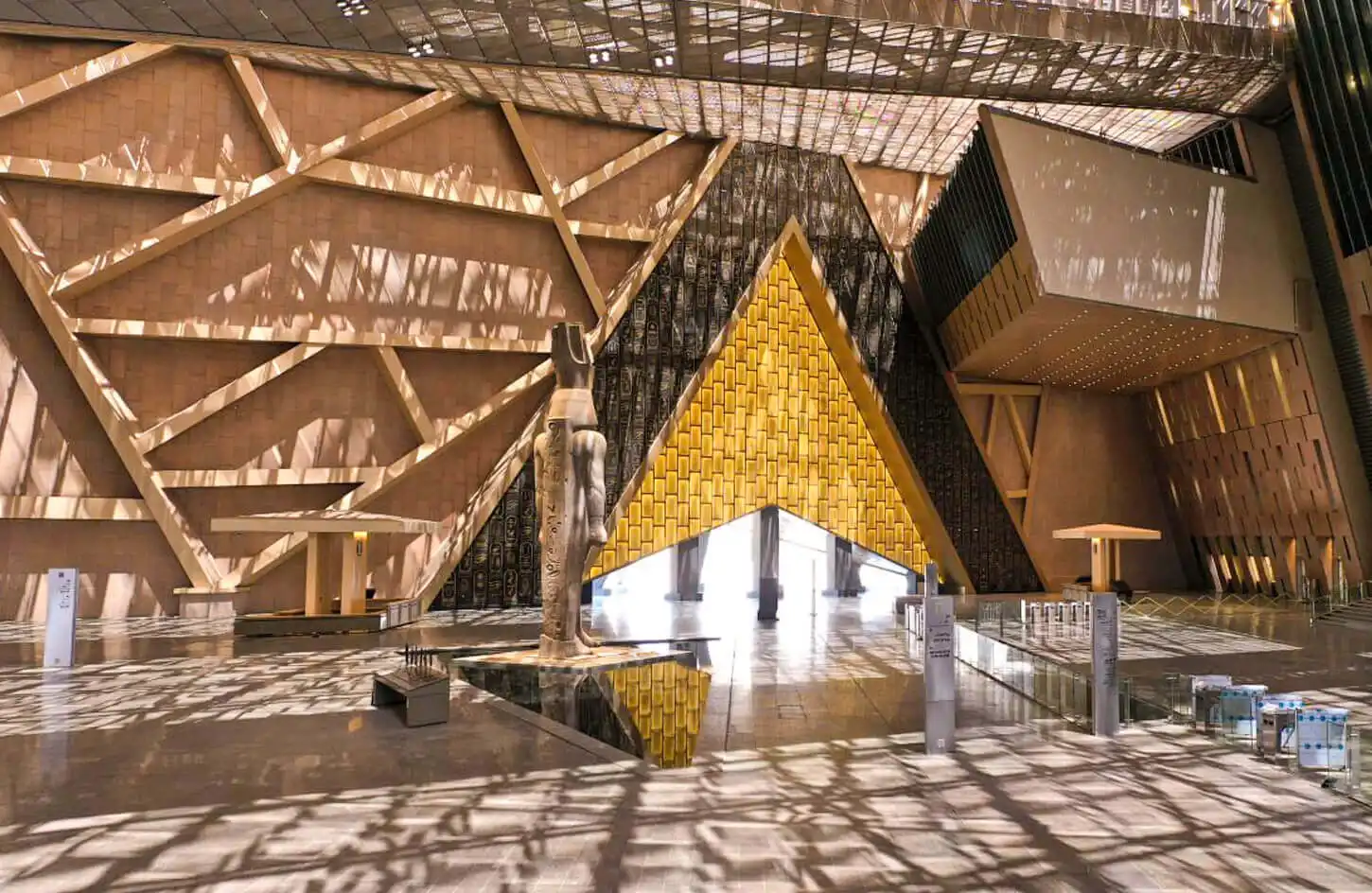
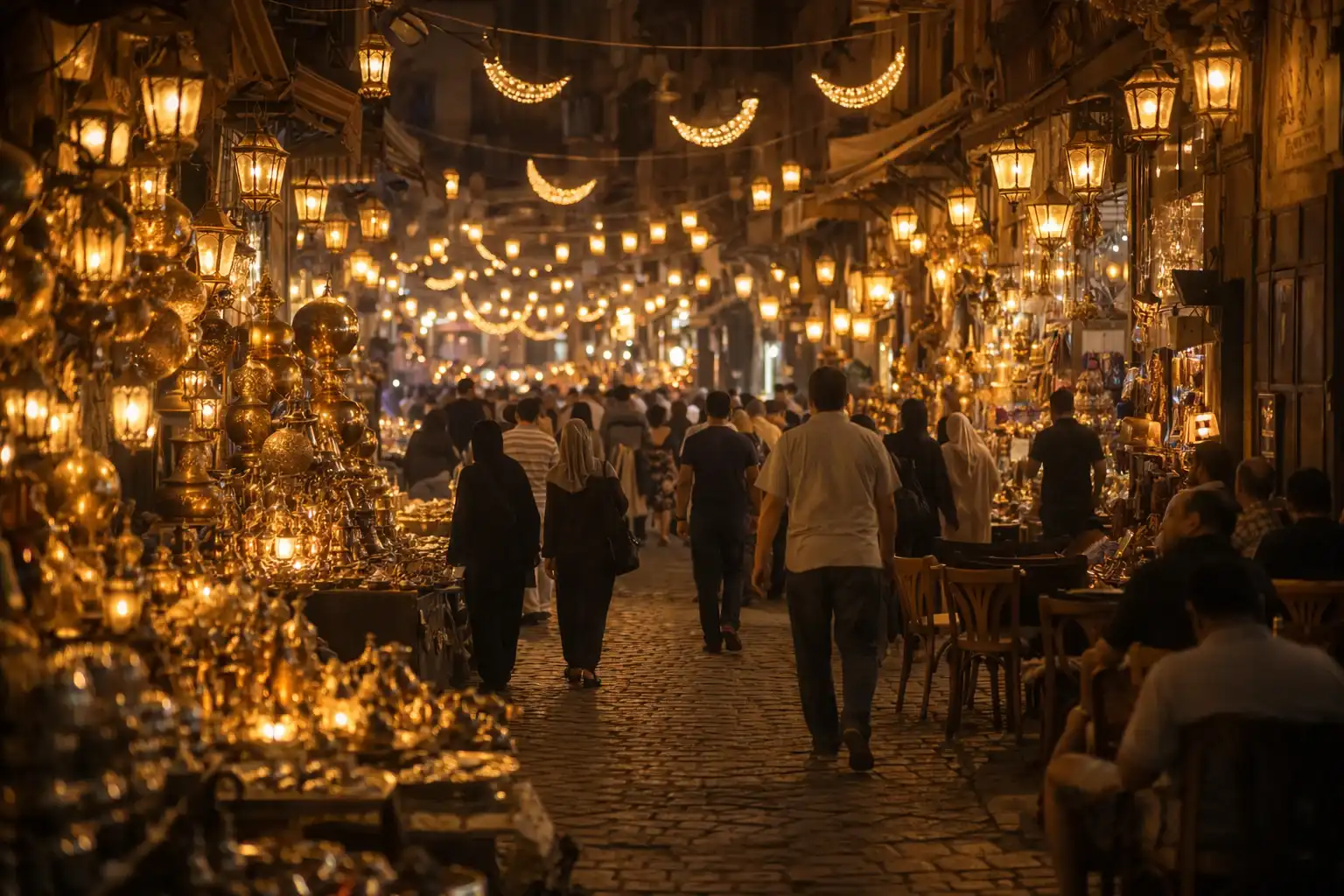
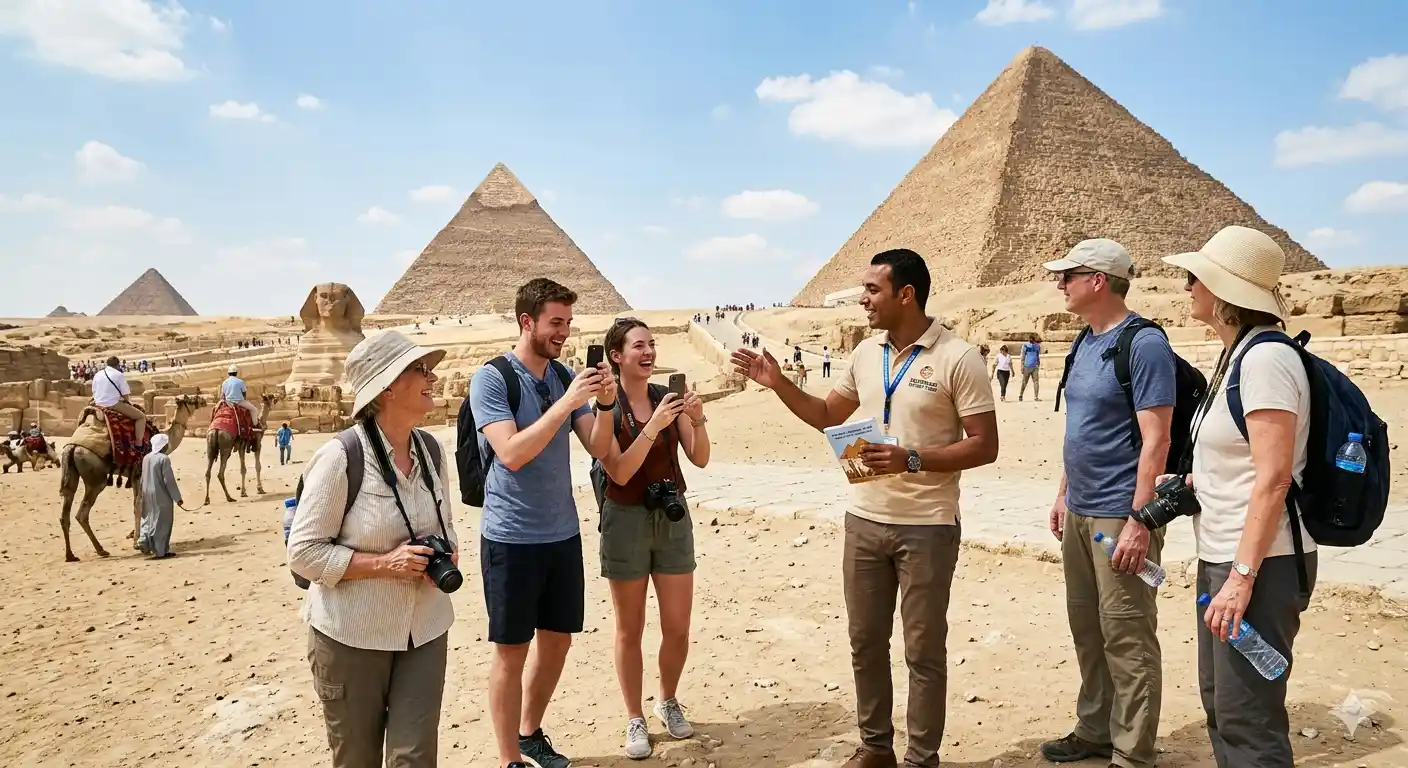
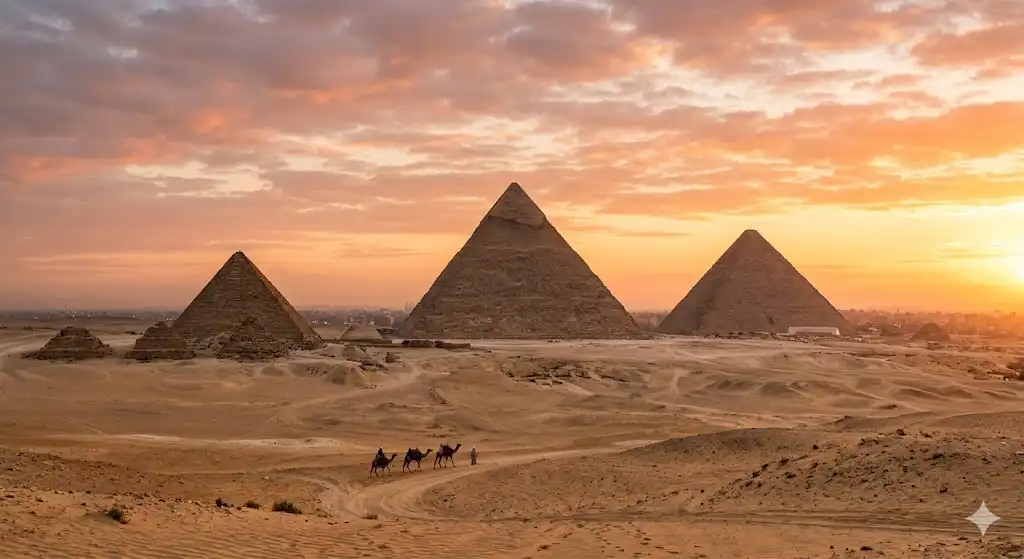
What to do: The Giza Plateau — Pyramids and Great Sphinx — is the non-negotiable first stop. Arrive at 07:30 before coach tour groups pile in from 09:00. The Grand Egyptian Museum, 2 kilometers from the pyramids, is best combined in a single day: spotless, well-labeled in English, and entirely navigable solo. Khan el-Khalili bazaar and Islamic Cairo — the al-Muizz Street, Ibn Tulun mosque, the Citadel — fill a full second day.
For a structured introduction to Cairo’s landmarks, the Discover Cairo in 3 Days: Pyramids, Museums & Cultural Wonders package covers the Giza Plateau, GEM, and Islamic Cairo with a private Egyptologist guide — a valuable option for solo travelers who want depth without navigating logistics alone on their first day.
Solo safety notes: Use Uber or Careem exclusively for transport — both apps show the driver’s name, plate, and route in real time. Never take unmarked or “tourist” taxis flagged on the street. In Khan el-Khalili, shop in the main alleys rather than accepting invitations to follow vendors into interior rooms. Keep a photocopy of your passport in your bag; the original stays in the hotel safe.
Luxor: The World’s Greatest Open-Air Museum
Luxor is the easiest Egyptian city for solo female travelers. The tourist circuit is compact, the sites are heavily staffed with tourist police, and the city is fully accustomed to independent international visitors. The concentration of temples, tombs, and monuments here is unmatched anywhere else in Egypt.
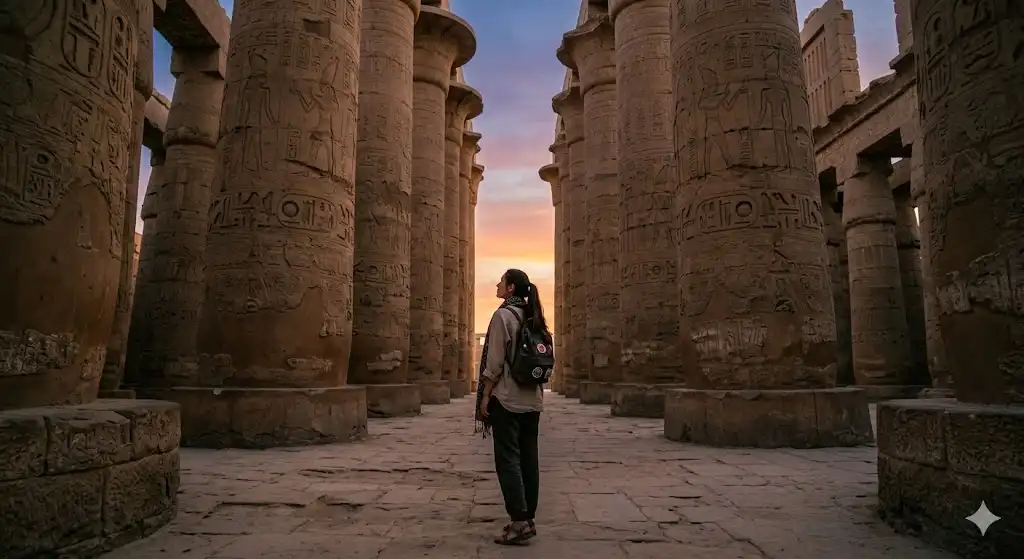
The East Bank holds Karnak Temple Complex and Luxor Temple, both walkable from the main hotel strip along the Corniche. Karnak opens at 06:00 — arriving just after dawn, before the first tour coaches, gives you the Hypostyle Hall’s 134 columns in near-silence. Luxor Temple, closer to the city center, is most striking in the evening when floodlit: entry is open until 22:00, and by 20:00 the crowd thins to a manageable handful.
The West Bank — Valley of the Kings, Valley of the Queens, Hatshepsut Temple — requires a 10-minute public ferry crossing (EGP 10) plus a local minibus or hired vehicle. The West Bank is compact enough to cover in a single full day if you start by 06:00. Three standard tombs are included in the Valley of the Kings ticket; Tutankhamun’s tomb requires a separate purchase (EGP 300).
Hot air balloon rides over Luxor are one of Egypt’s most memorable experiences and entirely safe for solo travelers — you share the basket with a group of 8–20 people. Licensed operators depart at dawn from the West Bank; prices run $60–$120 per person. Book through your hotel or a reputable agency rather than accepting offers from street touts.
The 3 Days Luxor Private Tour Package covers the East and West Bank highlights with a private guide — a practical choice for solo travelers wanting expert context inside the tombs.
Aswan: Calm, Nubian, and Nile-Perfect
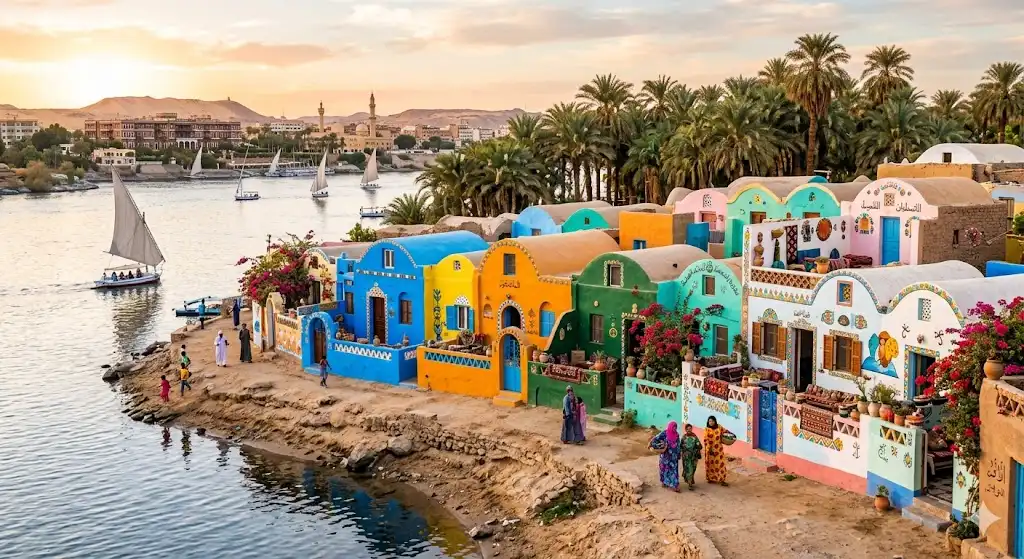
Aswan is quieter than Cairo and Luxor, smaller, and consistently rated by solo female travelers as one of Egypt’s most comfortable cities. The Nile here is at its most scenic: wide, with granite islands and felucca sailboats drifting between them. The Nubian people of Aswan are known for particularly warm hospitality.
The main sites are within easy reach: Philae Temple (motorboat from Shellal dock, EGP 80–120 per person for the crossing), the Aswan High Dam (EGP 100), the Unfinished Obelisk in the granite quarries (EGP 150), and the Nubian Museum (EGP 200). All can be covered in two full days. The Nubian villages on Elephantine Island, accessible by motorboat (EGP 20), offer a genuinely unhurried afternoon of painted houses, local food, and Nile views without any hard-sell pressure.
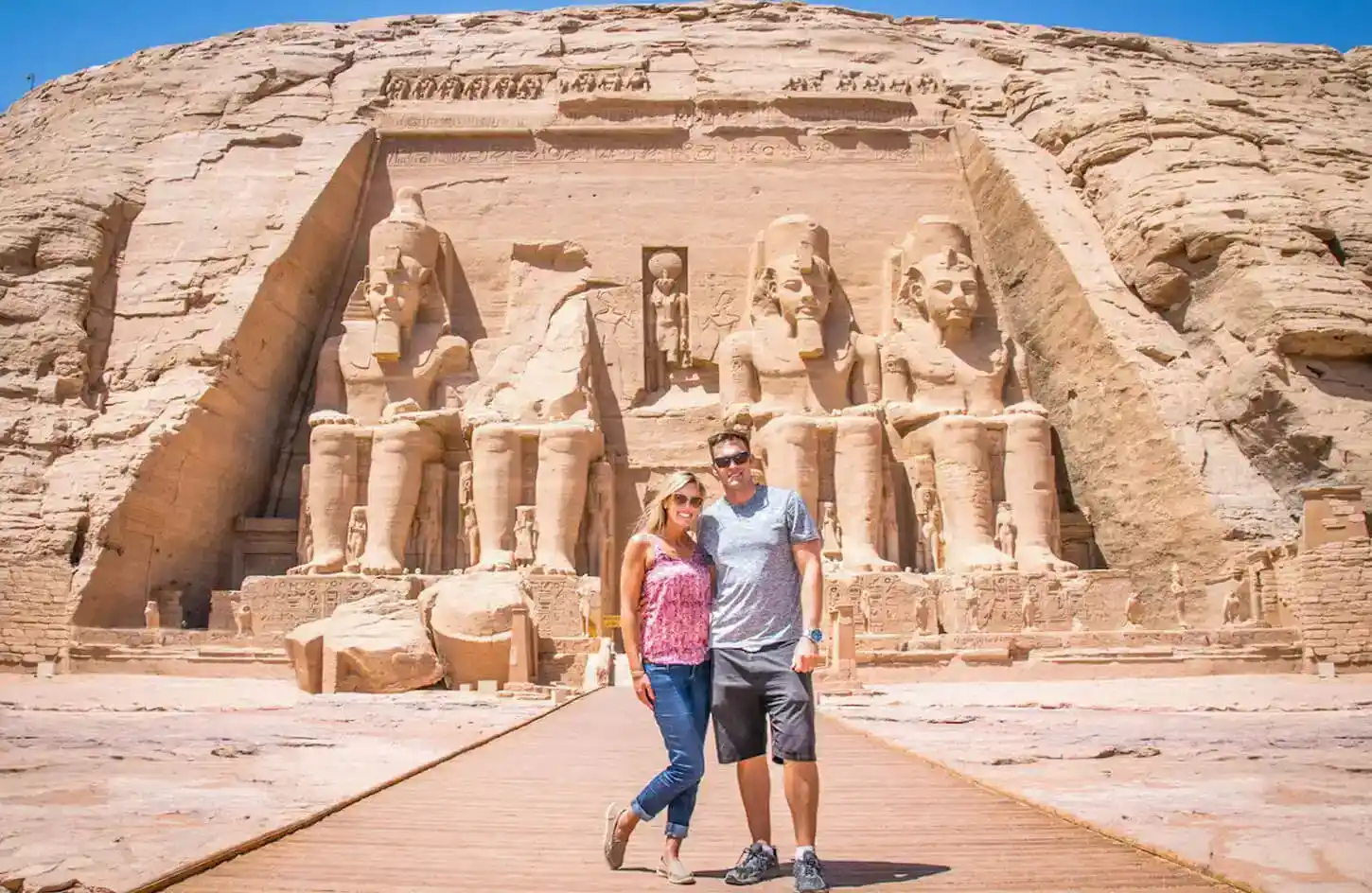
Abu Simbel — the rock temples of Ramesses II, 280 kilometers south — is best done as a day trip from Aswan, either by the 03:30 convoy or by EgyptAir / Air Cairo flight (35 minutes, ~$80–120 each way). Most solo female travelers find the flight preferable: less fatiguing and avoids the pre-dawn convoy logistics. Book tickets and arrange transport through your hotel or a trusted Aswan operator.
The 3 Day Luxor and Aswan With Abu Simbel package connects Luxor and Aswan with Abu Simbel in a structured three-day private tour — well suited for solo travelers who want to cover both cities without managing intercity logistics independently.
Nile Cruise: The Best Places to Solo Travel as a Woman, Afloat
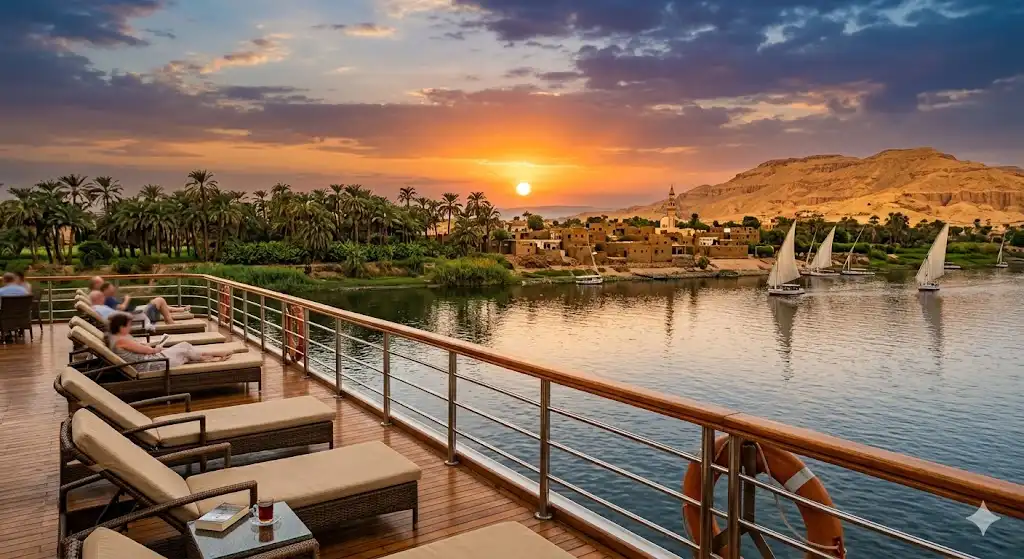
A Nile cruise between Luxor and Aswan is one of the best places to solo travel as a woman in Egypt — arguably in the world. The ship is your hotel, guide logistics are handled collectively, and meals are included. You arrive at each temple site with a group, explore with or without a guide, then return to the privacy of your cabin.
Three-night cruises cover Luxor to Aswan (or reverse), stopping at Edfu Temple, Kom Ombo Temple, and Esna Temple. Four-night cruises add more relaxed time at each stop. Most cruise ships carry 60–200 passengers; small-group dahabiya sailing boats carry 6–24, offering a more personal experience at a higher price point.
Solo supplement fees — charged by some ships for single occupancy of a double cabin — vary significantly. Budget cruise lines typically charge 50% extra on the base cabin rate; premium lines sometimes waive it in shoulder season. Ask specifically about solo rates before booking.
Trains are very practical between major cities (Cairo–Luxor–Aswan), with comfortable air-conditioned cars — and Uber and Careem allow you to find secure taxis in Cairo and Alexandria
Current pricing and cabin grades are detailed in the Nile Cruise Luxor to Aswan Prices 2026 guide. The Le Fayan Nile Cruise is a well-regarded mid-range option between Luxor and Aswan.
Hurghada: Red Sea Ease for Solo Women
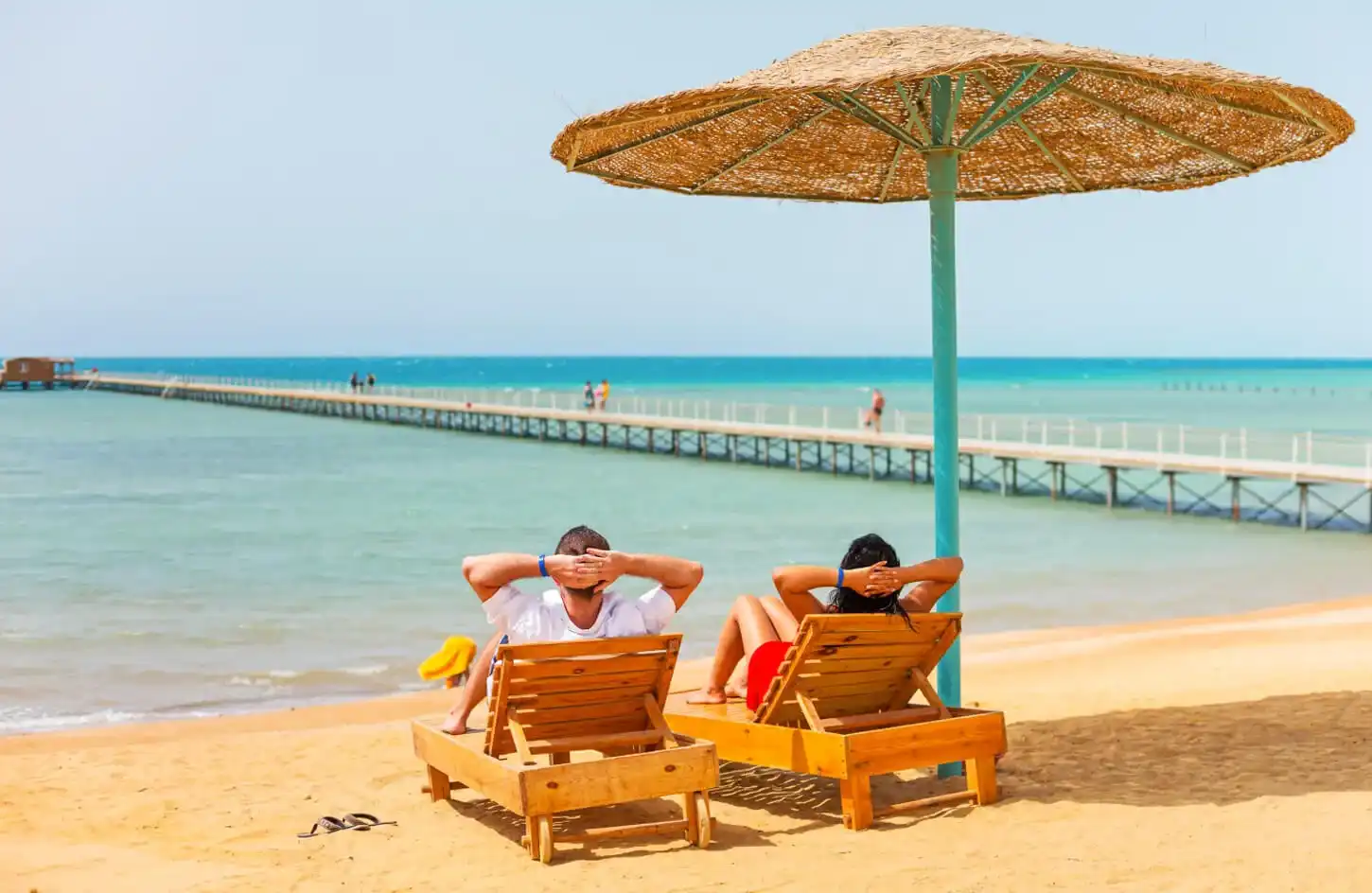
Hurghada on the Red Sea coast is the most low-pressure destination in Egypt for solo female travelers. It functions largely as a resort town: the hotel strips are self-contained, the beach culture is relaxed by Egyptian standards (swimwear is normal within resort areas), and the main activity — diving and snorkeling in the Red Sea — is entirely solo-friendly.
The Red Sea has over 1,000 species and more than 200 types of coral, and is one of the most spectacular places to dive in the world — ideal for obtaining your PADI certificate.
Hurghada itself divides into two zones: the older downtown (El Dahar), with markets and local life, and the modern resort strip (El Mamsha / Sakkala) where the hotels, restaurants, and beach clubs sit. Solo female travelers are comfortable throughout the resort strip in daylight and evening; El Dahar is more conservative and better explored in the afternoon with modest dress.
Flying between Cairo and Hurghada takes 50 minutes (EgyptAir and Air Cairo operate multiple daily); the bus from Luxor takes around 4 hours and connects Hurghada naturally to a Nile circuit.
Sharm el-Sheikh: Diving, Reefs, and a Solo-Friendly Atmosphere
Sharm el-Sheikh sits at the southern tip of the Sinai Peninsula, surrounded by some of the world’s best reef diving. Ras Muhammad National Park, accessible by day-trip boat from Sharm’s marina, has walls dropping hundreds of meters and visibility often exceeding 30 meters. The famous Thistlegorm wreck — a British WWII supply ship sunk in 1941 — sits 30 meters down and is one of the most celebrated dive sites in the world.
For non-divers, Naama Bay has a pedestrianized promenade, restaurants, and cafés that stay lively until late with an international crowd. The Sinai Mountains directly behind the city offer a striking desert backdrop — quad biking at sunset over the red-colored mountains is one of the most popular excursions from Sharm. The Quad Biking in Sharm El-Sheikh Desert experience runs regularly with licensed guides.
One practical note: the UK FCDO advises against all but essential travel to parts of the Sinai Peninsula outside Sharm el-Sheikh. The city and its immediate resort area are exempted from this advisory, but check the current status before booking. Most international flights to Sharm operate normally, and the resort area itself has extensive security infrastructure.
How to Get Around Egypt Solo as a Woman
Uber and Careem operate in Cairo, Alexandria, Luxor, Aswan, and Hurghada. Both apps show the driver’s photo, name, license plate, and route in real time — always preferable to unmarked street taxis. Always sit in the back seat.
Domestic flights are the fastest intercity option. Cairo–Luxor, Cairo–Aswan, Cairo–Hurghada, and Cairo–Sharm all have multiple daily flights on EgyptAir and Air Cairo. Prices range from $40–$120 one way depending on booking window. Flying costs roughly the same as a first-class train ticket and removes the need to navigate stations and platforms alone — a practical advantage for solo female travelers.
Night trains run between Cairo and Luxor/Aswan. First-class sleeper cabins with a lockable door are the appropriate choice; avoid the open-carriage second-class cars at night. The Watania sleeper train, bookable by foreign tourists directly, has historically been the most reliable option on this route.
Nile ferries between East and West Bank Luxor cost EGP 10 and are safe and commonly used by local commuters and tourists alike.
Avoid: unmarked taxis, accepting rides from individuals who approach you unsolicited at sites or markets, and overnight buses — the checkpoint stops and cramped conditions make them significantly less comfortable and less safe than trains.
What to Wear: Dress Code for Solo Female Travelers in Egypt
Covering shoulders and knees in public spaces is both a cultural courtesy and a practical way to reduce unwanted attention. This applies everywhere outside resort swimming pools and beach areas.
The general rule: loose-fitting, light-colored clothing that covers from the upper arms to the knees works in every Egyptian context — ancient temples, city markets, local restaurants, and mosques. Swimwear and shorts are perfectly appropriate at Red Sea resorts and on Nile cruise sun decks.
A practical packing guide for solo female travelers:
- Loose linen or cotton trousers — cooler than jeans in summer heat and appropriate everywhere
- Long-sleeved lightweight tops — long sleeves protect from sun as well as unwanted attention
- A large scarf or pashmina — covers hair when entering mosques, doubles as sun protection at Giza
- Closed-toe sandals with straps or walking shoes — essential on uneven temple stone
- UV-rated sunglasses — sun protection and a subtle way to avoid prolonged eye contact in crowded spaces
- Swimwear — perfectly appropriate at Red Sea resorts and on Nile cruise sun decks
Dress code does not need to be restrictive. Loose, light-colored clothing in breathable fabric keeps you cooler in 35°C+ heat than tight clothing, regardless of coverage.
Solo Female Travel Egypt: Best Tours and Packages
Joining a structured tour for at least part of an Egypt trip solves the two main friction points for solo female travelers: intercity transport logistics and not having a guide at complex sites like the Valley of the Kings. It also creates an immediate social group.
Three options work well in practice:
Private guided packages: A private Egyptologist guide and air-conditioned vehicle for each day’s sites. Maximum flexibility, tailored pace, and no group dynamic to manage. The 5 Days Cairo & Luxor Private Tour Package covers the most visited landmarks in both cities with private guiding. For a longer circuit including the Red Sea, the 9 Day Cairo, Nile Cruise & Hurghada Experience combines the Nile temples with Red Sea relaxation — a circuit many solo female travelers find balances the stimulation of the heritage sites with more downtime by the coast.
Nile cruise packages: All-inclusive by design. Meals, guided excursions, and transport between temples are bundled. The social environment on a cruise ship naturally pairs solo travelers with other passengers. Most cruise operators seat solo passengers at shared dining tables by default.
Day tours: For travelers who prefer fully independent accommodation booking, reputable day tour operators in Cairo, Luxor, and Aswan run licensed group excursions to all major sites. Prices start at $25–$60 per person for a half-day guided group.
Sample 10-Day Solo Female Itinerary: Best Places in Egypt
This itinerary distributes time between the six best destinations while keeping each transport moment manageable.
Day 1 — Cairo arrival: Check in to Zamalek or Maadi hotel. Evening walk along the Nile Corniche or dinner in Zamalek (safe and lively at night).
Day 2 — Giza Plateau and GEM: Pyramids by 07:30, GEM by 12:00. Allow 4 hours in the GEM. Return to hotel by 18:00.
Day 3 — Islamic Cairo: Khan el-Khalili bazaar, al-Muizz Street, Ibn Tulun mosque, Saladin Citadel. Full day. Uber throughout.
Day 4 — Fly Cairo to Aswan: Afternoon arrival. Check in. Evening: Nile Corniche walk in Aswan — the most walkable waterfront in Egypt, lined with cafés and felucca docks.
Day 5 — Aswan sites: Morning: Philae Temple. Afternoon: Aswan High Dam and Unfinished Obelisk. Late afternoon: Nubian village on Elephantine Island by motorboat.
Day 6 — Abu Simbel day trip: Morning flight (06:00) or 03:30 convoy. Return by afternoon. Board the Nile cruise ship departing from Aswan toward Luxor.
Day 7 — Cruise: Kom Ombo and Edfu: Morning docking at Kom Ombo Temple; afternoon at Edfu Temple. Dinner on board.
Day 8 — Luxor arrival: Cruise docks. Afternoon: Karnak Temple. Evening: Luxor Temple at dusk.
Day 9 — Luxor West Bank: Valley of the Kings (06:00 arrival), Valley of the Queens, Hatshepsut Temple. Optional: hot air balloon at dawn (book the day before).
Day 10 — Fly to Hurghada or depart: Optional two additional nights in Hurghada for Red Sea diving and beach days before flying home.
Budget and Average Daily Costs
Egypt’s heritage sites are affordable by international standards. Entry to all major landmarks combined costs approximately EGP 3,500–5,000 per person — roughly $70–$100 total. Accommodation costs drive the main variation in daily spend.
A solo female traveler on a mid-range budget should expect:
- Hotels: $50–$100 per night in Zamalek (Cairo), along the Luxor Corniche, or in central Aswan
- Food: $15–$30 per day covering breakfast at the hotel, one local lunch (koshary or ful), and a sit-down dinner
- Transport: Domestic flights $40–$120 one way; Uber within cities $2–$10 per trip; Nile cruise $100–$250 per night all-inclusive
- Guided tours: $50–$100 per person per day for a private guide and vehicle
A solo premium: some cruise ships and a few hotels charge a single-occupancy supplement (typically 25–50% above the double-room rate). Factor this in when budgeting, and ask hotels explicitly about their single-room rate before booking.
For practical ways to reduce costs without compromising safety, the Budget Travel Tips for Egypt page lists current transport prices, free-entry opportunities, and how to negotiate at markets without overpaying.
Practical Tips for Solo Female Travelers in Egypt
SIM and internet: Buy a Vodafone, Orange, or Etisalat tourist SIM at Cairo Airport arrivals immediately on landing. A 30-day data plan with 50GB costs approximately EGP 150–200 (under $5). Having data from the moment you exit baggage claim lets you Uber directly from the terminal without negotiating with drivers.
Money: ATMs are available in all main tourist areas. Carry EGP 50 and EGP 100 notes — change is frequently scarce for larger denominations. Paying for market items with a large note gives vendors an excuse to round up.
Scam awareness: The most common scams targeting solo female travelers: unofficial “tourist police” who ask to see your passport then demand payment; perfume and papyrus shop invitations framed as a “free cultural visit”; taxi drivers who claim your hotel is “closed” or “moved.” If your hotel is supposedly closed: call them directly. If someone asks for your passport: ask to see their official ID first.
Tipping: Standard rates — EGP 50–100 per guide per day; EGP 20–50 for drivers, hotel porters, and temple guards who assist you. Carry small EGP notes for this purpose throughout the trip.
Emergency contacts: Save the Egyptian Tourist Police number (126) in your phone before you arrive. Note your hotel’s address in Arabic — show it to Uber drivers or in case of emergency. Keep your embassy’s emergency line accessible.
Night safety: Cairo, Luxor, and Aswan are generally safe in tourist areas until 22:00–23:00. After that, return to your hotel by Uber rather than on foot. Avoid deserted streets anywhere after dark. The Luxor Corniche is an exception — it stays lively with local families and tourists until late and is safe for solo evening walks.
Language: “Laa shukran” (no thank you) said firmly and while continuing to walk is your most-used phrase. Learning “ana mish aayza” (I don’t want) adds a layer of assertiveness that locals recognize immediately.
For cultural etiquette beyond dress code — tipping protocol, mosque behavior, photography permissions — the Egypt’s Cultural Etiquette: A Guide for Travelers post covers the specifics in detail.
Frequently Asked Questions
Is Egypt safe for solo female travelers in 2026?
Egypt’s main tourist destinations are safe for solo female travelers with standard precautions. The Egyptian government maintains significant tourist police presence at all landmark sites, and cities like Luxor and Aswan are small and well-organized enough to navigate comfortably alone. The primary challenge is not crime but vendor persistence and verbal attention in crowded areas. Staying in established tourist neighborhoods, using Uber, and dressing conservatively reduces friction significantly. The Is Egypt Safe for Tourists in 2026? post covers the region-by-region picture with current information.
What are the best places to solo travel as a woman in Egypt for first-timers?
Luxor and Aswan are the two easiest starting points for first-time solo female travelers. Both cities are compact, heavily touristed, and have a well-worn infrastructure for independent visitors. Cairo is worth including but benefits from having hotel-arranged transport pre-booked for the first day. A Nile cruise between Aswan and Luxor is the most structurally comfortable option — everything is handled, and the social environment is naturally welcoming for solo travelers.
What should I do if I experience harassment in Egypt?
Stay calm and do not engage. A firm, repeated “laa shukran” (no thank you) while continuing to walk is effective in most vendor-pressure situations. For more persistent unwanted attention, move toward any group of people or toward a visible tourist police officer — they are stationed at all major sites and respond quickly to complaints from foreign visitors. In Cairo’s metro, use the women-only cars (the first two carriages) during busy hours. Report any serious incidents to the tourist police at 126.
What is the best time of year to solo travel Egypt?
October to November is the optimal window for first-time solo female travelers. Temperatures are comfortable (22–30°C), crowds at sites are moderate rather than peak, and daylight hours allow full days of outdoor exploration. December to February is peak season — busier but still very manageable, and cooler temperatures (14–22°C) make outdoor sites comfortable all day. Avoid June to August for Upper Egypt (Luxor and Aswan) unless you are comfortable with 40°C+ heat; the Red Sea resorts remain pleasant year-round.
Do I need to wear a headscarf in Egypt?
A headscarf is required only when entering mosques. It is not required at ancient Egyptian temples, markets, restaurants, or in public streets. Carrying a large scarf is practical — it can cover your hair for mosque visits, shade your face and neck at outdoor sites, and add a layer of modest coverage when needed. At Red Sea resorts (Hurghada, Sharm), normal beachwear is appropriate within the resort grounds.
Can I travel between Egyptian cities alone safely?
Yes. Domestic flights are the safest and most comfortable intercity option. The EgyptAir and Air Cairo networks connect Cairo to Luxor, Aswan, Hurghada, and Sharm el-Sheikh multiple times daily. The night train between Cairo and Luxor/Aswan in a first-class sleeper cabin is also safe and has a reasonable track record. Avoid unmarked taxis for any intercity travel, and use only official or app-based transport.
What visa do I need for Egypt?
Most nationalities — including US, UK, EU, Australian, and Canadian passport holders — can obtain a single-entry tourist e-visa for $25 USD through Egypt’s official government portal. At the time of writing, visas on arrival are also available at major international airports. Your passport must be valid for at least six months beyond your planned departure from Egypt. For full details by nationality, the Egypt Visa Requirements for Travelers page covers current rules.
Is it possible to do a Nile cruise solo?
Entirely. Nile cruises are one of the most solo-friendly travel formats in Egypt. The structured itinerary means all excursions, meals, and transport are arranged — no solo logistics to manage between temples. Most ships seat passengers at shared tables, which naturally creates social opportunity. The main consideration is the single-supplement fee some ships charge for single-occupancy cabins. Ask specifically about solo rates or look for cruise departures that explicitly waive the supplement.
What apps are most useful for solo female travelers in Egypt?
Uber and Careem are the two essential transport apps — download and set up payment before you arrive. Google Maps works well in Cairo, Luxor, and Aswan for navigation. Google Translate’s camera function handles Arabic text on menus and signs accurately. WhatsApp is universally used in Egypt, so saving your hotel, guide, and any local contacts as WhatsApp numbers ensures easy communication throughout the trip.
Are there women-only tour options in Egypt?
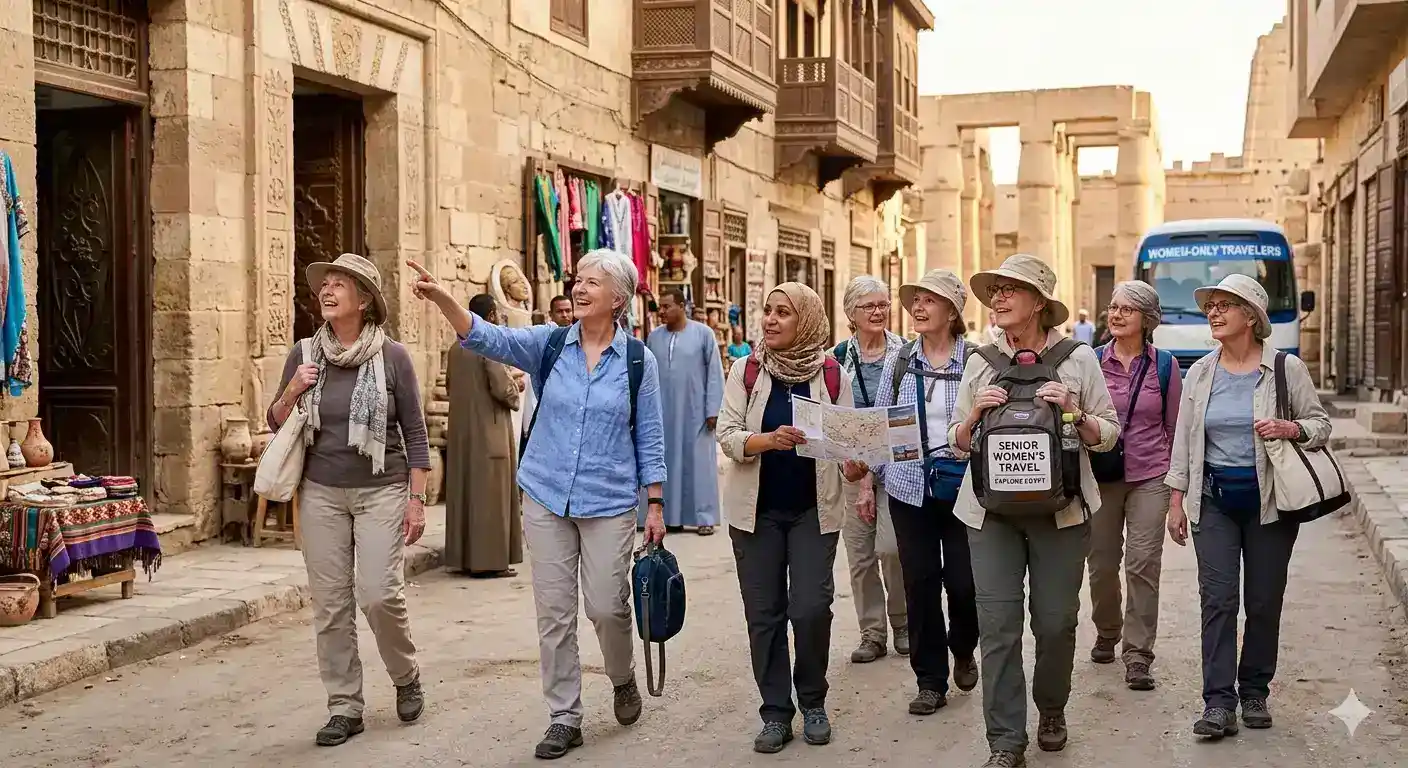
Yes. Several Egypt-focused tour operators run women-only group tours — worth considering for travelers who want the companionship of a same-gender group for their first Egypt trip. Pure Nile Tours can also arrange private female-guide options on request. Small-group mixed tours with reputable operators are another comfortable alternative, as the group dynamic naturally reduces solo exposure in crowded or uncertain situations.