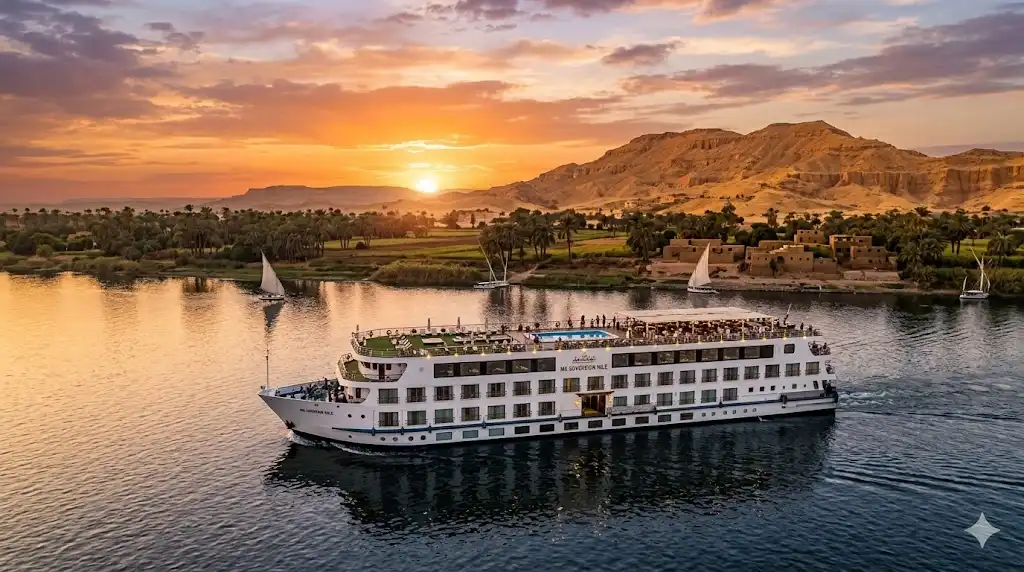
Book a Nile cruise from Luxor to Aswan by choosing the sailing direction, departure date, ship and cabin that fit your Egypt itinerary. Four-night cruises commonly sail from Luxor to Aswan; three-night programs often run in the opposite direction. Departure days, sightseeing stops and package inclusions vary by vessel, so request a confirmed itinerary for your own travel dates.
Book Your Luxor–Aswan Nile Cruise in Four Steps
- Choose your route and duration. Compare the 5-day / 4-night Luxor-to-Aswan cruise with the 3-night Aswan-to-Luxor itinerary. Match the direction to your flights and hotel dates.
- Compare ships and cabin categories. Explore the Nile Cruises collection to choose between standard, deluxe, luxury and small Dahabiya boats. Request the actual deck, bed configuration and cabin category.
- Check a written quotation. Confirm sailing date, number of nights, meals, guide, admission tickets, transfers, additional drinks, optional excursions and cancellation terms. A displayed starting rate does not confirm availability.
- Request availability before payment. Send your preferred dates, number of travelers, departure city and cabin preferences through the custom trip request. For a second opinion before booking, follow our Nile cruise booking checklist.
Booking note: Individual ship pages and written quotes determine the final itinerary and price. The example route pages below are planning references, not guarantees of a specific ship, cabin or sailing date.
At a Glance
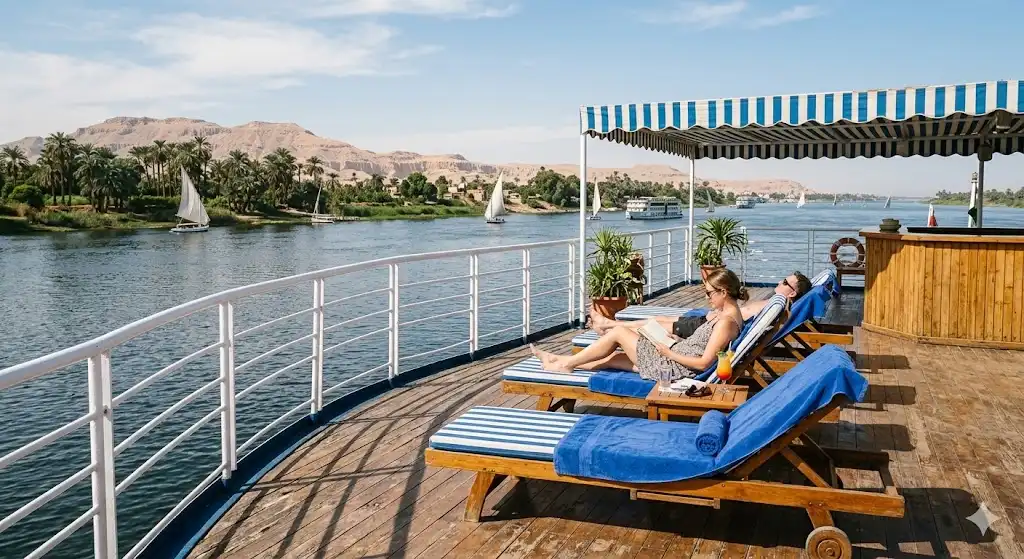
A Luxor–Aswan cruise works best when you treat it like a “floating hotel + guided day tours” rather than a party boat. Most mornings start early for sightseeing, and most afternoons are for sailing, lunch, and downtime on deck. That rhythm is exactly why many first-time visitors prefer this route.
Quick facts to decide fast
- Best weather: October to April (cooler touring conditions).
- Most popular duration: 5 days / 4 nights Luxor to Aswan or 4 days / 3 nights the opposite way.
- What you’ll see: Karnak, Valley of the Kings, Edfu, Kom Ombo, Philae (most itineraries include these stops).
- Who it suits: first-timers, couples, families, and solo travelers who want structured logistics.
- What changes the price most: season, ship category, cabin type, and solo supplements.
Here’s a realistic budgeting snapshot that helps you plan without guessing:
| Cruise style (typical) | Low/Hot season (approx.) | Peak season (approx.) | What you usually get |
|---|---|---|---|
| Standard 5-star cruise ship | $550–$850 | $750–$1,150 | Cabin + full board meals + guided touring schedule (details vary) |
| Deluxe / higher-end ship | $850–$1,300 | $1,100–$1,800 | Newer cabins, better food variety, stronger service consistency |
| Dahabiya (small sailing boat) | $1,300–$2,200 | $1,700–$3,000 | Small group feel, slower pace, quieter nights |
Common add-on ranges (often paid separately): Abu Simbel day trip ($90–$160+ depending on transport), hot air balloon in Luxor ($80–$140+), upgraded cabin views, and drinks packages.
Exchange rates fluctuate — verify current rates before travel.
Safety Notice
Travel conditions and official advice can change quickly. At the time of writing, always check your government’s official travel advisory before booking, then keep an eye on updates as your dates get closer.
Useful official sources:
- UK: Foreign travel advice (FCDO)
- USA: U.S. State Department travel advisories
- Australia: Smartraveller
A simple preparation checklist that helps in any scenario:
- Travel insurance that covers medical + trip interruption.
- Passport valid for at least 6 months beyond entry date (common requirement).
- Digital copies of passport, visa, and insurance saved offline.
- A small daily cash amount separated from the main wallet.
Is it safe to take a Nile cruise between Luxor and Aswan?
For most visitors, a Nile cruise between Luxor and Aswan feels more controlled than independent city touring, because accommodation, transport to sites, and timing are organized. You are usually moving as part of a group, and most cruise ships have onboard staff and a clear guest list, which reduces random access.
That said, “safe” in practical travel terms means knowing what issues actually happen and how to prevent them.
The most common problems are not violent crime. They are usually:
- Sales pressure and small scams near temples and docks (overpriced souvenirs, “free” gifts that become paid).
- Heat and dehydration in warmer months, especially during early afternoon.
- Traffic risk during road transfers (seatbelts, careful boarding, and professional drivers matter).
- Trip fatigue from early starts, which makes people careless with phones and money.
Actions that reduce risk immediately
- Use a crossbody bag that zips and keep it in front in crowded areas.
- Carry small notes for tips and minor purchases so you don’t expose a thick wallet.
- Agree on prices before any service (carriage rides, small boats, photos with animals).
- Drink bottled water and keep electrolyte packets for summer months.
- On deck, keep kids supervised and avoid leaning over railings during docking.
Solo travelers usually do well on this route because the structure removes many “unknowns.” If solo comfort is a priority, a private guide for the main temples can also reduce stress on timing and personal space, especially at peak hours.
Best time to book and travel (month-by-month comfort)
If comfort while walking temples matters, October to April is the easiest season. It’s also the busiest, so cabins can sell earlier and prices can rise.
A useful way to think about timing:
- October–November: warm days, cooler nights, strong overall balance.
- December–February: coolest temperatures; also the most popular for international visitors.
- March–April: warmer again; still comfortable, especially mornings.
- May–September: hot to very hot; lower prices can appear, but touring mid-day is hard work.
When to book
- For peak months, booking 6–10 weeks ahead is a smart baseline if you care about a specific ship category or cabin style. This aligns with common booking advice seen across cruise planning guides and operator FAQs.
- For holiday weeks (Christmas/New Year, Easter), planning even earlier helps avoid “only what’s left” cabins.
How many days do you need: 3 nights vs 4 nights vs longer
The fastest way to choose is to decide how rushed you can tolerate your mornings.
3 nights (4 days): best for tight schedules
A 3-night cruise is often used when your Egypt trip is short and you still want the classic highlights. Expect:
- Early mornings most days
- Less downtime in ports
- A strong “see a lot quickly” pace
4 nights (5 days): best balance for most first-timers
A 4-night cruise is popular because it gives you:
- Better pacing for Luxor’s West Bank
- More relaxed afternoons for sailing
- More time to enjoy the ship instead of only sleeping in it
Many itinerary comparisons highlight 4 nights as the most common choice for covering highlights without stretching into a long holiday.
7 nights or a Dahabiya: best if you want calm days
Longer cruises and dahabiya sailing are for travelers who value slow mornings, fewer crowds, and quieter nights. You trade speed for atmosphere.
Decision rules
- Choose 3 nights if your total Egypt trip is under 8 days.
- Choose 4 nights if you want highlights + breathing room.
- Choose dahabiya/longer if you want minimal crowds and slower sailing.
Where to start: Luxor to Aswan or Aswan to Luxor?
Both directions cover similar major sites, but your flight/train plan can make one direction smoother.
Luxor to Aswan often fits travelers who:
- Arrive in Luxor from Cairo, then finish in Aswan for Abu Simbel and a calmer final city.
- Want Luxor’s “big hitters” early, when energy is high.
Aswan to Luxor often fits travelers who:
- Start in quieter Aswan, then finish in Luxor where there are more flights and more onward options.
In real operation, the exact order of visits can change due to docking schedules and lock timing, but the “set” of main temples is usually consistent.
Where to stay before and after your cruise
A simple rule that saves money and stress: add 1 buffer night either before boarding or after disembarking (ideally both if flights are tight).
Luxor: East Bank vs West Bank
- East Bank is practical for restaurants, evening walks, and easy access to the temples of Karnak and Luxor Temple.
- West Bank is closer to the Valley of the Kings area, but evenings are quieter and transport planning matters more.
Most first-timers prefer East Bank for convenience and flexible dining.
Aswan: Corniche vs islands
- Corniche area is easy for walking, cafes, and pickups.
- Island stays can be quieter but add boat transfers.
If Abu Simbel is planned, staying somewhere that allows early pickup without confusion is more important than “the prettiest view.”
Top things you will see on a Luxor–Aswan Nile cruise
A Nile cruise is popular because it strings together Egypt’s core sites in one line.
Luxor highlights (usually 1–2 days of touring)
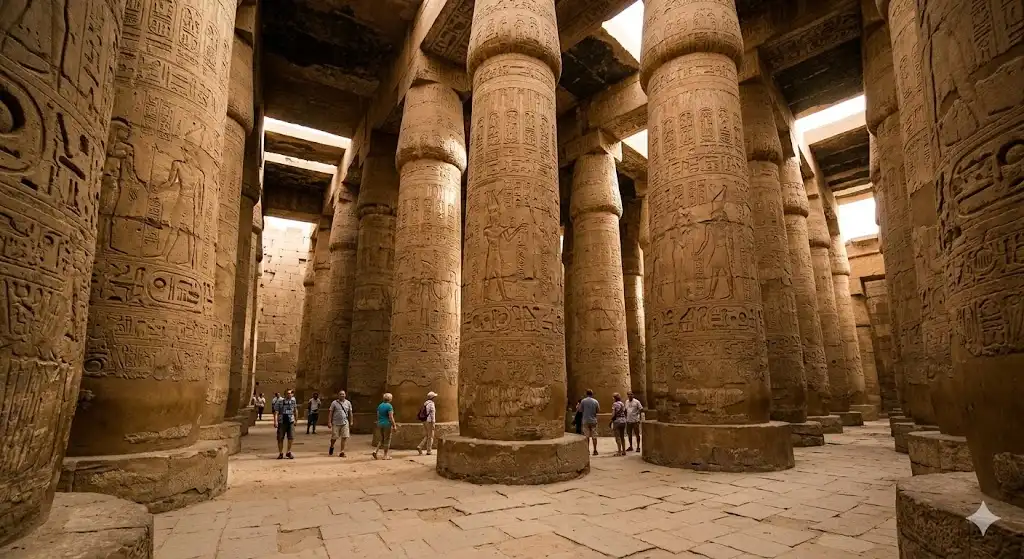
- Karnak Temple: huge complex; a guide helps because it’s easy to miss the main processional route.
- Luxor Temple: often best near sunset if your schedule allows.
- Valley of the Kings: tomb visits; some tombs require separate tickets.
- Temple of Hatshepsut: dramatic terraces; usually paired with West Bank touring.
- Colossi of Memnon: quick stop and photos.
En-route temples (between the cities)
- Esna lock area: you might pass through or dock nearby depending on timing.
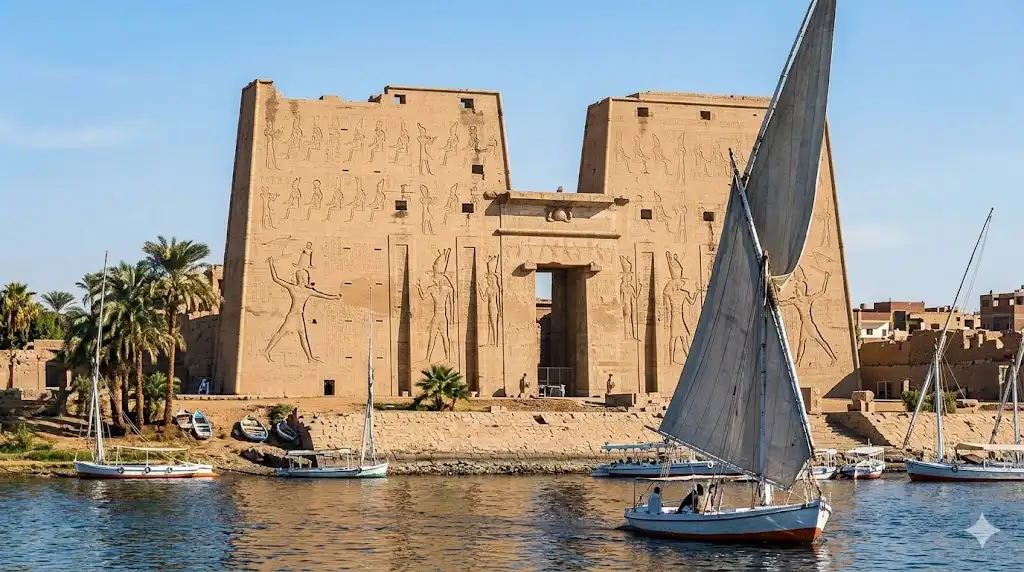
- Edfu Temple: typically reached by short transfer; many itineraries include it because it’s one of the best-preserved.
- Kom Ombo Temple: often visited late afternoon or early evening; famous for its double dedication and riverside setting.
Aswan highlights
- Philae Temple: usually accessed by motorboat transfer; very popular for photos.
- Aswan High Dam: quick viewpoint stop.
- Optional experiences: Nubian village visit, felucca ride, botanical garden, or a calm evening walk along the Corniche.
A reliable booking decision is to confirm exactly which sites are included in your package and which are optional. Many advertised cruises include guided visits but treat entrance tickets, drinks, and some add-ons separately.
Cruise styles explained (Standard vs Deluxe vs Dahabiya)
The right cruise style is the one that matches how you travel day-to-day.
Standard 5-star ships (value-focused comfort)
- Usually buffet meals and set tour schedules
- Cabins can be comfortable, but age and maintenance vary by vessel
- Good choice when price matters and you’re out touring most mornings
Deluxe ships (better consistency)
- More predictable cabin condition and service
- Often better dining variety
- Better for couples and families who care about comfort between tours
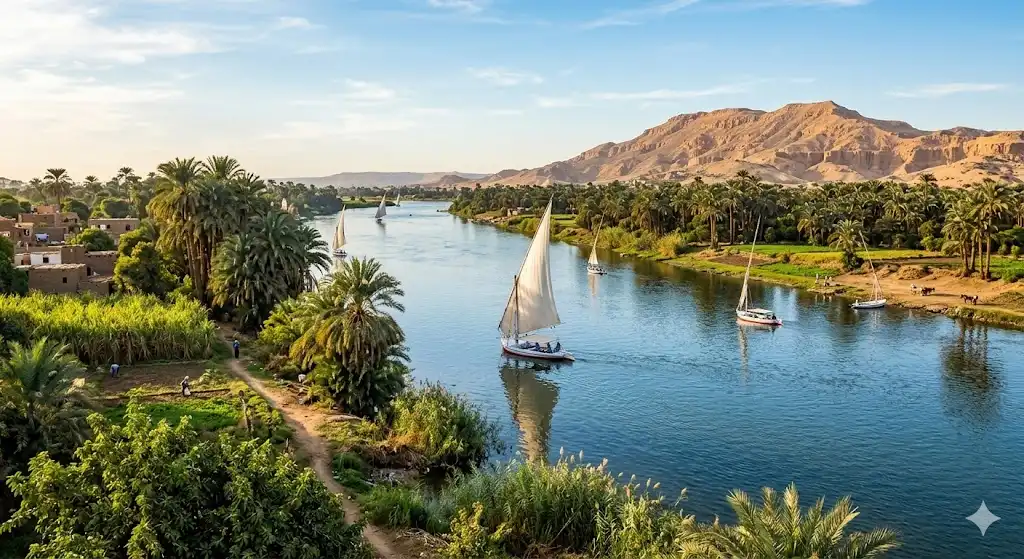
Dahabiya sailing boats (quiet, boutique feel)
- Smaller capacity means fewer guests and calmer evenings
- A slower atmosphere that suits travelers who dislike crowds
- Often priced higher, but many people pay for the privacy and pacing
When comparing options, focus on cabin size, bed type, deck layout, and whether your touring is private or group-based. Those details change the experience more than fancy-sounding labels.
What’s included when you book (and what is often extra)
This is the section that prevents “surprise costs.”
Usually included (varies by package)
- Cabin accommodation for the cruise nights
- Meals (often full board: breakfast, lunch, dinner)
- Guided sightseeing schedule (group or private, depending on booking)
- Transfers between hotel/airport/train station and the cruise (in many packaged bookings)
Often extra (confirm before paying)
- Entrance tickets to temples and tombs
- Drinks (water can be included or limited; soft drinks and alcohol are often extra)
- Tips for guide, driver, and ship staff
- Wi-Fi packages (coverage can be uneven on the river)
- Abu Simbel add-on from Aswan
A good confirmation checklist to send when you want to book:
- Exact sailing dates + direction (Luxor→Aswan or reverse)
- Cabin type (standard, upper deck, suite), bed type, smoking preference
- Pickup location and time (hotel name, train number, flight details)
- Dietary needs (vegetarian, allergies)
- Whether you want private guiding or group guiding
- Clear list of inclusions/exclusions written in one message
Tours and booking options on Pure Nile Tours
If the goal is to book nile cruise luxor aswan with clear inclusions and smooth pickups, the simplest choice is selecting a duration first, then matching it to your Egypt schedule.
Option A: 3 nights (Aswan to Luxor)
- Works well when you want a shorter cruise window and still cover the key temples
- Tour page: 3 nights Nile cruise from Aswan to Luxor
Option B: 5 days / 4 nights (Luxor to Aswan)
- Best balance for most first-time visitors who want highlights without feeling rushed
- Tour page: Egypt Nile River Cruise 5 Days 4 Nights
Option C: Dahabiya sailing (slower, quieter)
- Best if you want a boutique experience with fewer guests onboard
- Tour page: Dahabiya Nile Sailing Cruise
To confirm quickly (and avoid back-and-forth), send these details in one message:
- Travel dates + flexibility (exact dates or date range)
- Number of travelers + ages (if kids)
- Cabin preference (twin/double, upper deck, suite if needed)
- Start city and end city (Luxor/Aswan)
- Add-ons: Abu Simbel and/or hot air balloon
- Hotel names or arrival details (flight/train)
For itinerary planning logic, this guide helps you map cruise days into a bigger Egypt trip: Planning a Nile Cruise Itinerary
Day trips and add-ons worth considering
Add-ons should solve a specific goal: either “see a world-class site” or “save time.”
Abu Simbel from Aswan
Abu Simbel is one of the strongest add-ons if you can handle an early start. Many travelers do it as a day trip by road or flight, depending on timing and budget.
If you want a structured option that fits into a Luxor-based plan, this can help: 2 Days Aswan and Abu Simbel From Luxor
Hot air balloon in Luxor
Balloon rides depend on wind and operational approvals. Treat it as “nice if it runs” rather than “guaranteed,” and keep your schedule flexible the morning after.
Getting around: flights, trains, and transfers (easy planning)
Most international visitors connect through Cairo, then continue to Luxor or Aswan by flight or train.
Fastest: domestic flights (Cairo–Luxor or Cairo–Aswan)
- Good when time is tight or you want predictable timings.
Budget-friendly: trains
- Works well if you like ground travel and can handle longer hours.
- For overnight travel, comfort varies by service type, so set expectations.
For general Egypt transport planning (and what is realistic for first-timers), this overview can help: Navigating public transportation in Egypt
Budget & costs (realistic mid-range numbers)
A Nile cruise looks “all-in” at first glance, but the final spend depends on choices.
What drives total cost
- Season: peak months can be noticeably higher.
- Ship category: standard vs deluxe vs boutique.
- Cabin choice: upper deck and suites cost more.
- Solo travel: single supplements can be significant.
- Private guiding: higher cost, but easier pacing.
Typical extra budgets (mid-range)
- Entrance tickets for major sites (can add up across multiple temples)
- Tips (guide/driver/ship crew)
- Drinks and snacks
- Optional tours (Abu Simbel, balloon)
For a broader “save money without sacrificing comfort” approach, use: Budget travel tips for Egypt
Food & drink on board and in port
On most cruises, meals are buffet-style with a mix of Egyptian and international staples. The practical approach is simple:
- Eat cooked foods hot, especially in summer.
- Use bottled water for drinking and teeth brushing if your stomach is sensitive.
- Pack basic medicine for stomach upsets as a precaution.
Alcohol availability varies by boat and policy. If you want certainty (for example, a beer or wine with dinner), confirm in writing before booking, because rules and stock differ by operator and route timing.
Culture & etiquette (temples, photos, dress)
A respectful approach also makes touring smoother.
Dress code
- At temples: shoulders and knees covered is a safe default, and it protects you from sun and dust.
- Comfortable closed-toe shoes help on uneven stone and sand.
Photos
- Ask before photographing locals or staff.
- Inside tombs, camera rules vary; follow the signage and your guide.
Handling persistent sellers
- A polite, firm “no, thank you” and continuing to walk is usually enough.
- Avoid taking “free” items, because that often turns into a demand for payment.
For deeper etiquette guidance that matches first-time visitors, use: Cultural etiquette for travelers in Egypt
SIM cards and internet on the cruise
Mobile signal on the river is usually good near cities and can weaken in rural stretches. If reliable messaging matters (pickups, meeting times), plan for:
- A local SIM or eSIM with data
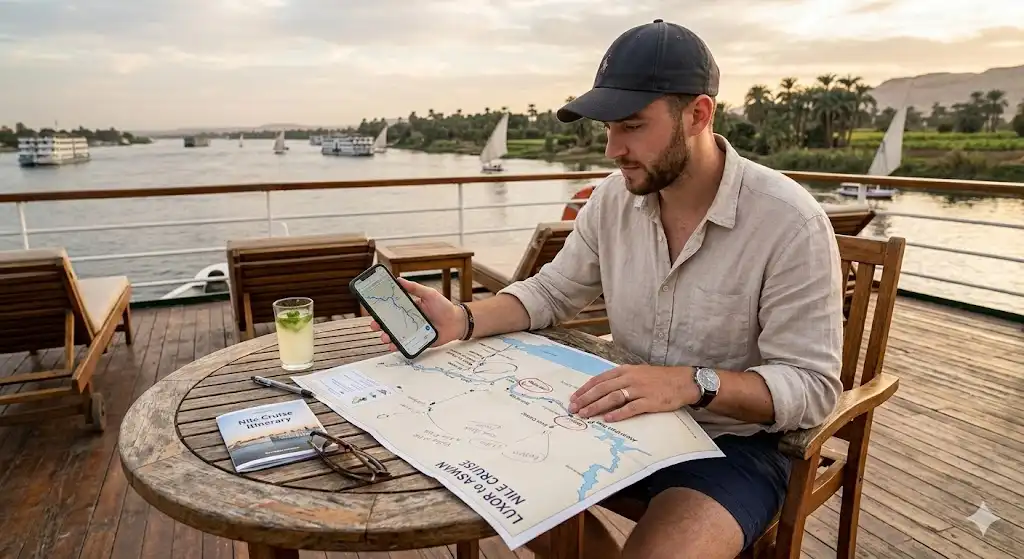
- Offline maps downloaded before you sail
- Important confirmations saved as screenshots
Wi-Fi on ships can be slower than you expect, so treat it as a backup, not your main plan.
Sample itinerary: 5 days / 4 nights Luxor to Aswan (typical flow)
Exact sequences can change, but this is a realistic pattern for a 4-night cruise.
Day 1: Arrive Luxor + East Bank sights
- Pickup from hotel/airport/train station
- Check-in and lunch (timing depends on arrival)
- Afternoon visit to Karnak Temple and/or Luxor Temple (schedule varies)
- Dinner onboard
Practical tip: If you land late, it’s better to move a temple visit than rush it. Karnak is large and worth focused time.
Day 2: Luxor West Bank (early start)
- Morning: Valley of the Kings + Hatshepsut Temple + Colossi of Memnon (common grouping)
- Back to ship for lunch
- Afternoon sailing begins (or later departure depending on docking)
Practical tip: Bring a hat, sunglasses, and at least 1 liter of water for the West Bank morning.
Day 3: Edfu (and sailing rhythm)
- Early transfer to Edfu Temple (timing depends on docking)
- Return to ship, then sail onward
- Afternoon downtime on deck
Practical tip: Mornings can start before 7:00. Set clothes and sunscreen the night before.
Day 4: Kom Ombo + arrive Aswan
- Visit Kom Ombo (often later in the day)
- Continue sailing and dock in/near Aswan
Practical tip: Kom Ombo can be breezy at night. A light layer helps even in warm months.
Day 5: Aswan sights + checkout
- Philae Temple is often the key final visit
- Transfer to hotel/airport/train station
Practical tip: Keep travel documents and cash accessible on checkout day so you’re not repacking under time pressure.
Practical tips that prevent trip-stress
These are small, but they change the whole experience.
Packing
- Light scarf (sun + dust + temple etiquette)
- Electrolyte sachets (especially May–September)
- Small flashlight/phone light for cabin corners
- Copies of passport/visa stored offline
Cabin comfort
- If you are a light sleeper, ask about cabin location away from engines and docking points.
- Upper deck cabins can feel nicer for views, but stairs/elevators vary by boat.
Timing
- Most stress comes from tight connections. Adding a buffer night before/after the cruise removes 80% of “what if” problems.
Money
- Carry small notes daily for tips and quick purchases.
- Use hotel safes for passports when possible, and carry copies for day touring.
Frequently Asked Questions
Below are the most common “People Also Ask” style questions travelers search before they book. Some details can change over time, so for changing rules use “At the time of writing…” checks and confirm with official sources and your booking confirmation.
Is a Nile cruise between Luxor and Aswan safe for tourists?
Most tourists experience this route as structured and controlled because transfers and touring times are organized. The main issues are sales pressure, heat, and occasional overcharging near busy sites, not random violence. At the time of writing, always check your government’s official advisory before booking, then follow basic precautions like carrying small cash, avoiding isolated areas at night, and keeping valuables zipped.
Helpful reading on country-wide safety planning: Is Egypt safe for tourists 2026
Is it safe for solo female travelers to book a Nile cruise?
A cruise can be a good choice for solo women because you are not negotiating transport daily, and many activities happen with a guide and a group. Dress modestly at temples, use a crossbody bag, and keep boundaries firm with pushy sellers. If you want maximum comfort, choose a private guide for shore visits so your pace and personal space stay consistent.
For solo travel planning: Egypt travel guide for solo travelers
Do you need a visa to travel to Egypt for a Nile cruise?
Many visitors need a tourist visa, and the rules can vary by nationality and can change. At the time of writing, the safest approach is to check official Egyptian government channels or your embassy guidance, then confirm whether you should use eVisa, visa on arrival, or a pre-arranged visa. Make sure your passport validity meets entry rules (often at least 6 months remaining).
Visa guidance in one place: Egypt visa requirements
What is the dress code on a Nile cruise and at temples?
On the boat, smart-casual is usually enough for dinner, and daytime is casual due to heat. At temples and religious areas, shoulders and knees covered is a respectful, practical default that also protects you from sun. Comfortable closed shoes help on stone steps and sandy paths, and a light scarf is useful for both etiquette and dust.
Packing support: Packing essentials for Egypt
How much does it cost to book a Nile cruise Luxor to Aswan?
Prices depend heavily on season, ship category, cabin type, and whether guiding is private or group-based. As a mid-range planning range, many standard 5-star cruises land roughly in the several-hundred to low-thousand USD per person range, while deluxe and boutique options are higher. At the time of writing, always confirm what is included (meals, transfers, tickets) before comparing prices.
For a dedicated cost breakdown: Nile cruise Luxor to Aswan prices 2026
What is usually included in a Nile cruise booking?
Most cruise packages include cabin accommodation and meals, and many include guided touring schedules and transfers, but exclusions are common. Entrance tickets, drinks, tips, Wi-Fi, and major add-ons like Abu Simbel are often extra. The best way to avoid surprises is requesting a single written list of inclusions and exclusions before payment, then keeping it as a screenshot during travel.
For general trip planning help: Planning a trip to Egypt
Which is better: 3 nights or 4 nights between Luxor and Aswan?
Three nights is a faster highlights run with earlier starts and less downtime. Four nights gives a better pace, especially for Luxor’s West Bank, and more time to enjoy sailing afternoons rather than only sleeping onboard. Many first-time visitors choose four nights because it balances touring with rest, especially in peak season when crowds and heat add pressure.
If you want a route-planning framework: Planning a Nile cruise itinerary
What is the best month for a Luxor–Aswan Nile cruise?
For most travelers, October to April is the most comfortable window for walking temples, with December to February being cooler but busier. May to September can be significantly hotter, so value prices can appear, but you need better heat planning. At the time of writing, it’s smart to book earlier for peak holiday weeks because cabin availability tightens.
Season planning resource: Best months to visit Egypt
Can you use SIM cards and internet during the cruise?
Yes, mobile data often works well near Luxor and Aswan and can drop in rural stretches. A local SIM or eSIM helps for WhatsApp messages with pickup drivers and guides. Ship Wi-Fi can be slower than expected, so keep key details offline and download maps before boarding.
General travel readiness: Egypt travel tips for first-time visitors
Is the food and water safe on a Nile cruise?
Most cruises serve buffet-style meals that are generally fine when you follow simple habits: choose freshly cooked hot foods, wash hands, and use bottled water if you have a sensitive stomach. In summer, dehydration can feel like “food sickness,” so drink regularly and use electrolytes when needed. If you have allergies, share them in writing before you board and remind staff at check-in.
Food planning ideas: Egyptian cuisines to try in Egypt