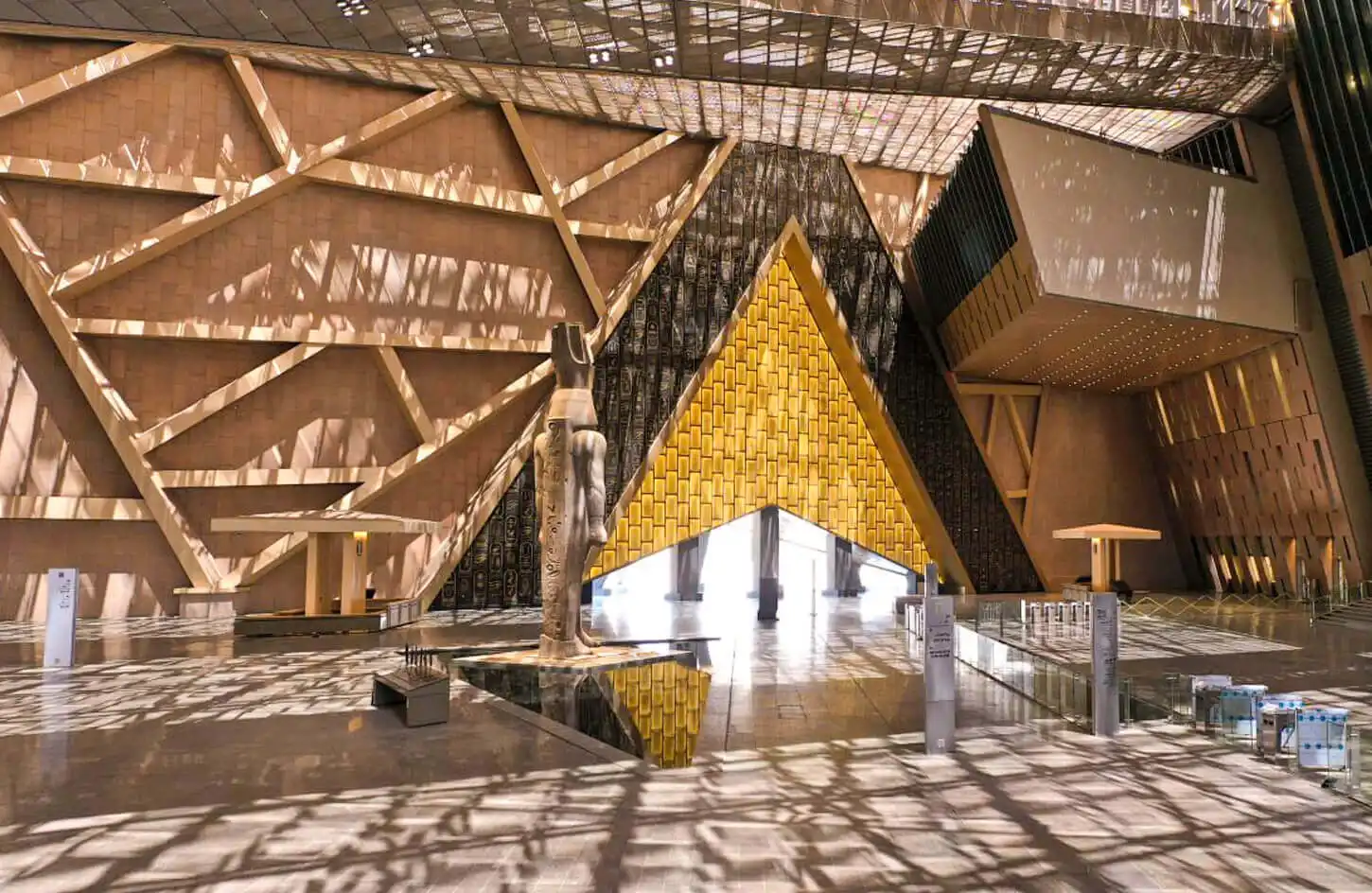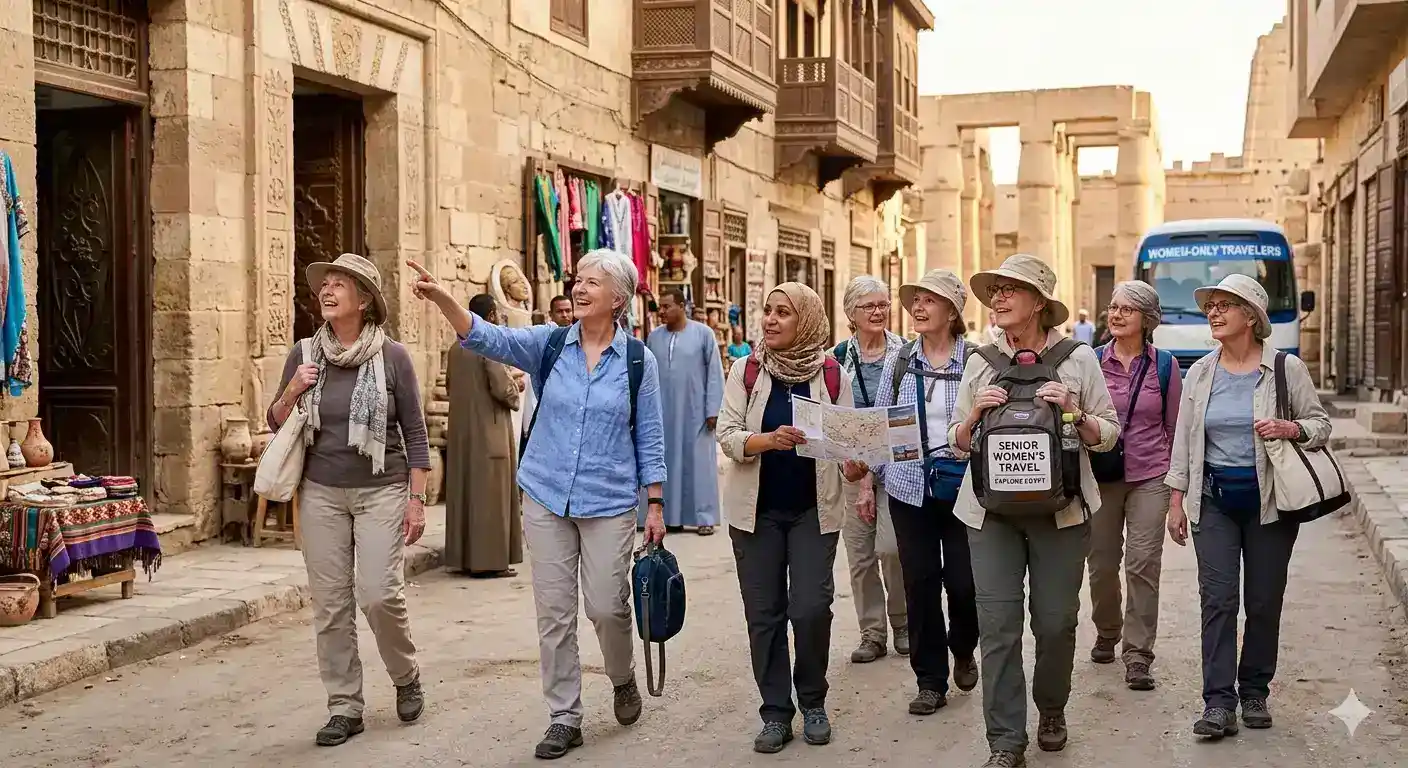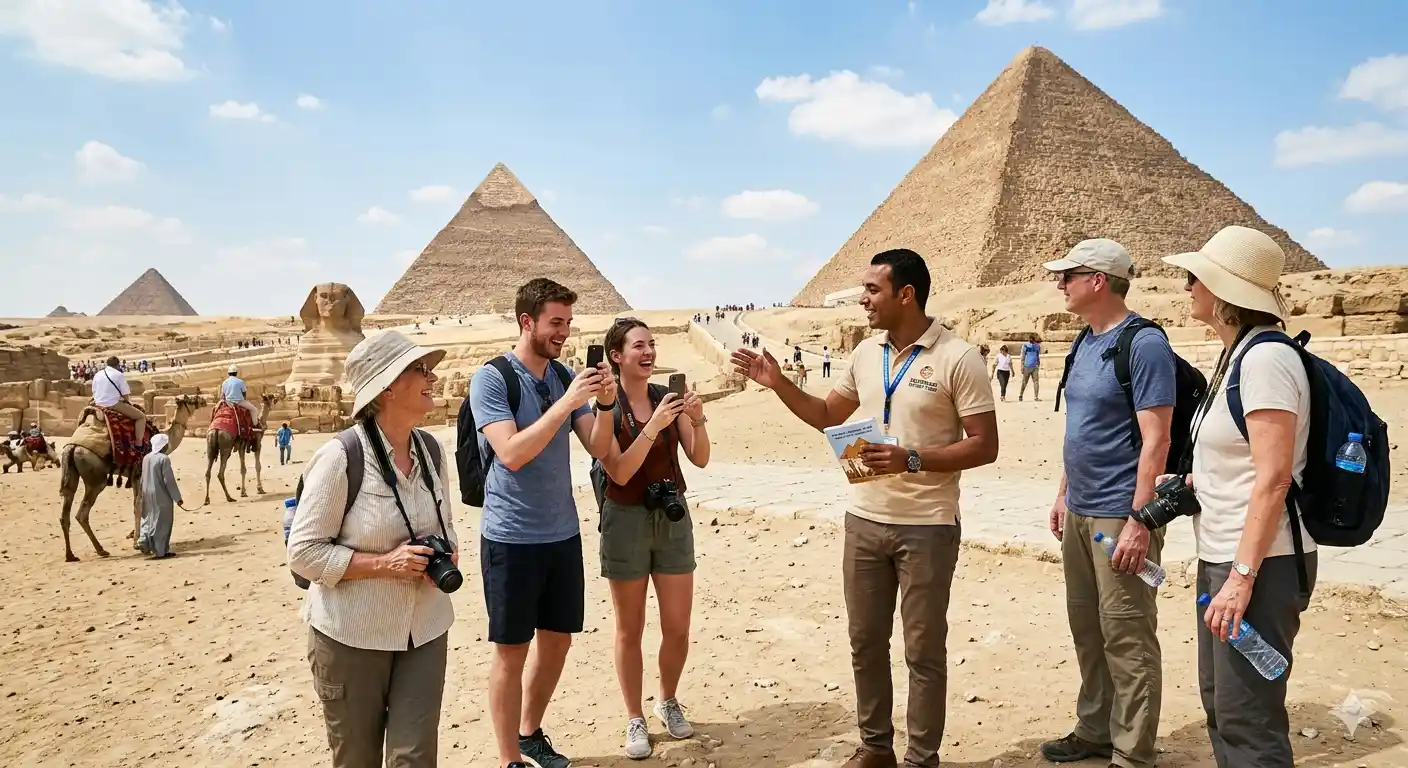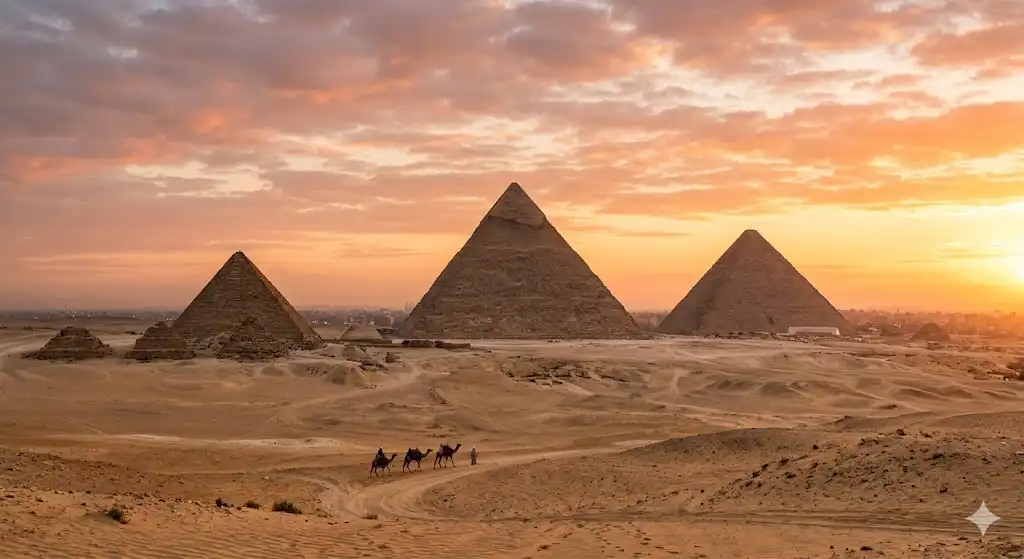
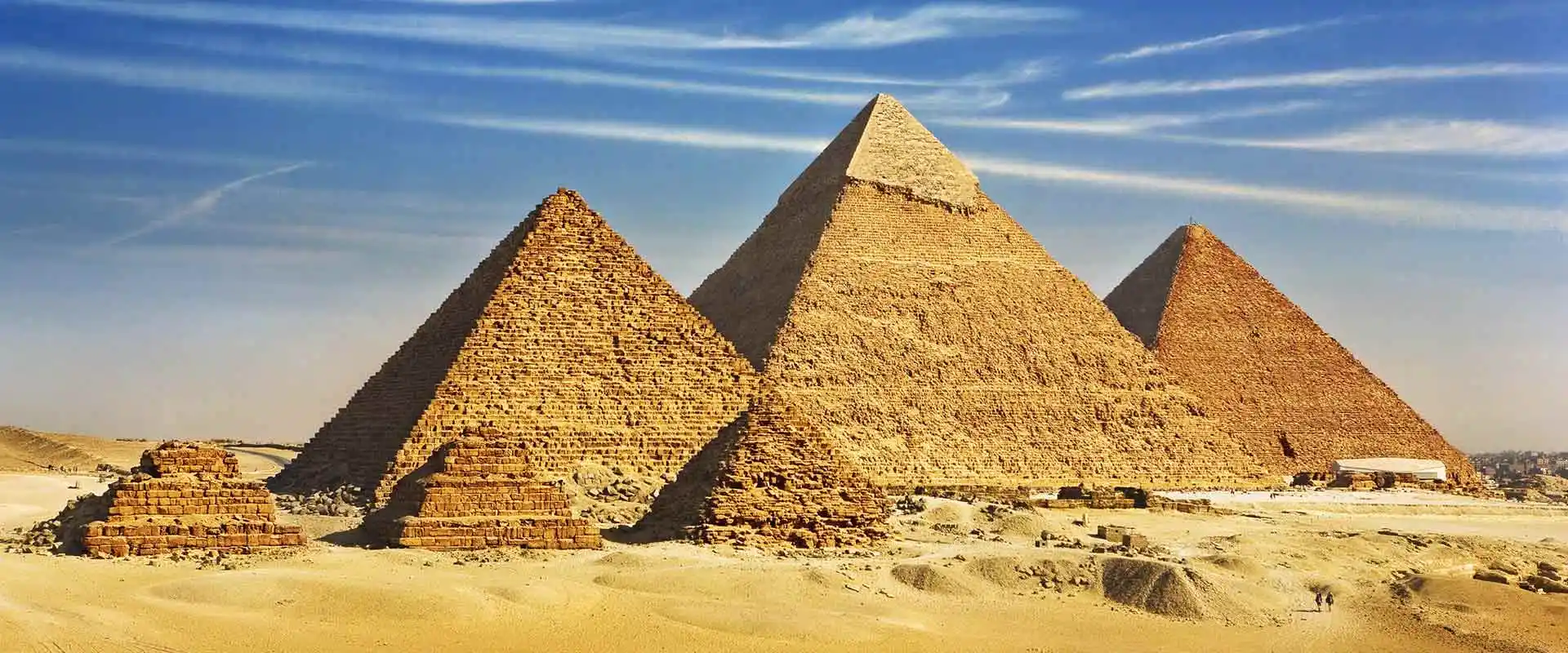
Pyramids and Nile cruise holidays combine the two most iconic experiences in Egypt — and in doing so, they cover 5,000 years of history in one trip. The Giza Plateau and the Grand Egyptian Museum anchor the Cairo leg. A river cruise between Luxor and Aswan delivers Karnak Temple, the Valley of the Kings, Edfu, Kom Ombo, and Philae without a single hotel transfer between them. This guide covers every aspect of planning a nile cruise and pyramids holiday: what to expect, which packages to choose, how much to budget, and when to go.
Egypt Pyramids and Nile Cruise at a Glance
- Ideal trip length: 7–12 days covers Cairo, the Nile cruise, and Aswan comfortably
- Best seasons: October–April (18–28°C); summer viable but hot in Upper Egypt
- Currency: Egyptian Pound (EGP); USD and EUR accepted at hotels and tour operators
- Who it suits: First-time Egypt visitors, couples, families, solo travelers, and groups
- Booking lead time: 2–3 months ahead for peak season (December–February); 4–6 weeks sufficient in shoulder season
Average daily budget for egypt holidays pyramids and nile cruise:
| Style | Cairo hotel (per night) | Nile cruise (per night, all-incl.) | Flights (domestic) | Total per day |
|---|---|---|---|---|
| Budget | $30–60 | $80–120 | $40–80 one way | $120–200 |
| Mid-range | $80–150 | $150–250 | $60–100 one way | $200–350 |
| Luxury | $200–500+ | $400–900+ | $80–150 one way | $500–1,200+ |
Exchange rates fluctuate — verify current rates before travel.
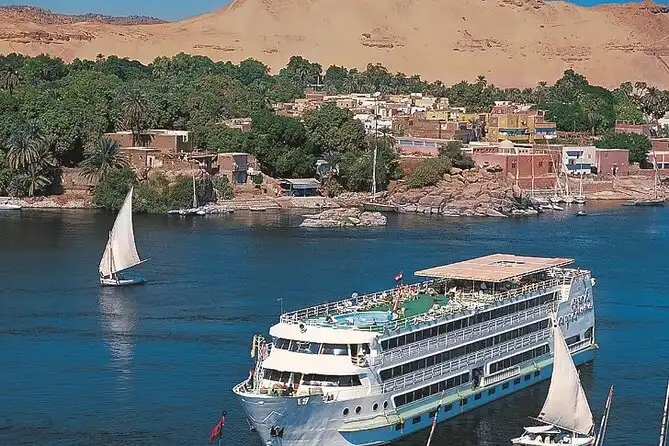
⚠️ Safety Notice Egypt’s main tourist destinations — Cairo, Luxor, and Aswan — are safe for international visitors, with significant tourist police presence at all landmark sites. Certain border areas and parts of the Sinai Peninsula (outside Sharm el-Sheikh) carry elevated risk. At the time of writing, multiple governments have issued partial travel advisories for Egypt. Always check before booking: UK FCDO | US State Department | Australian DFAT. Details change — recheck close to your departure date.
Why Pyramids and Nile Cruise Holidays Are Egypt’s Classic Combination
Egypt has two distinct travel identities. In Cairo, the story is pharaonic on an urban scale: the Giza Plateau rising from the desert edge of a city of 20 million, the Grand Egyptian Museum housing 100,000 artifacts including every recovered object from Tutankhamun’s tomb. In Luxor and Aswan, the story moves to the river: temples carved into cliffs, tombs painted in colors still vivid after 3,200 years, and the Nile threading between them at a pace that feels unchanged since antiquity.
Pyramids and Nile cruise holidays work because these two identities complement rather than duplicate each other. Cairo front-loads the trip with scale and ambition — the pyramids are larger than any photograph suggests. The Nile cruise then slows the pace: you unpack once, wake up beside a different temple each morning, and the river itself becomes part of the experience.
The combination also solves Egypt’s main logistical challenge. Traveling independently between Cairo, Luxor, and Aswan requires managing domestic flights, hotel bookings, and intercity transfers across three different cities. A nile cruise and pyramids holiday packages all of that into one booking — one guide, one ship, one price.
The Pyramids: What to Expect on Your Holiday
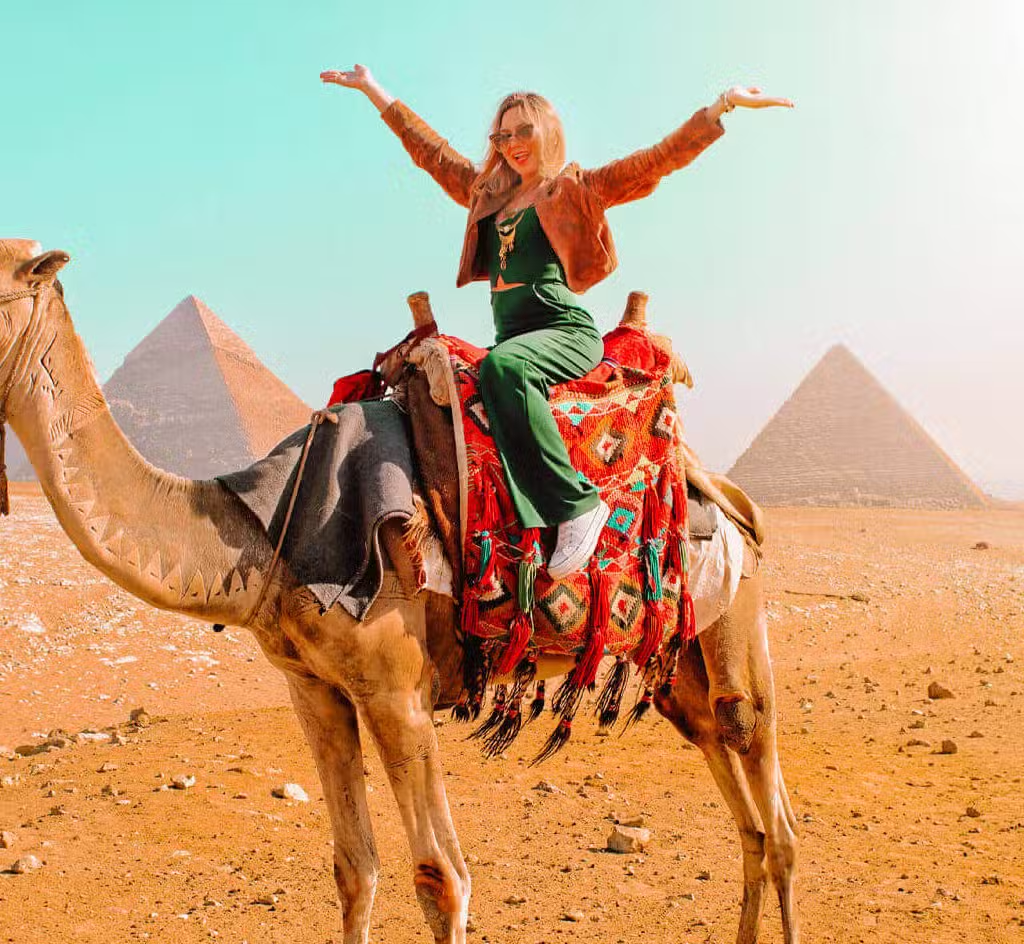
The Giza Plateau sits on the southwestern edge of Cairo, about 20 kilometers from the city center. Three pyramids define it. The Great Pyramid of Khufu, built around 2560 BC, originally stood 146.6 meters — the tallest man-made structure on Earth for nearly 3,800 years. Beside it, Khafre’s pyramid (136 meters) still retains its original white limestone casing at the apex. Menkaure’s pyramid, smallest of the three at 65 meters, is the most recently excavated and contains the most elaborate interior chamber arrangement.
The Great Sphinx crouches directly in front of Khafre’s pyramid — 73 meters long, 20 meters high, carved from a single limestone outcrop around 2500 BC. The so-called Dream Stele between its paws, placed by Thutmose IV, records a royal dream in which the Sphinx asked to be freed from the encroaching sand.
What changes with a guided holiday: An Egyptologist guide changes the Giza visit fundamentally. The plateau, without context, is visually overwhelming but historically opaque. With a guide who can explain the quarrying methods, the workmen’s village (excavated nearby and now partially open), the solar boat buried beside Khufu’s pyramid and now displayed in the Grand Egyptian Museum — the pyramids shift from impressive to extraordinary.
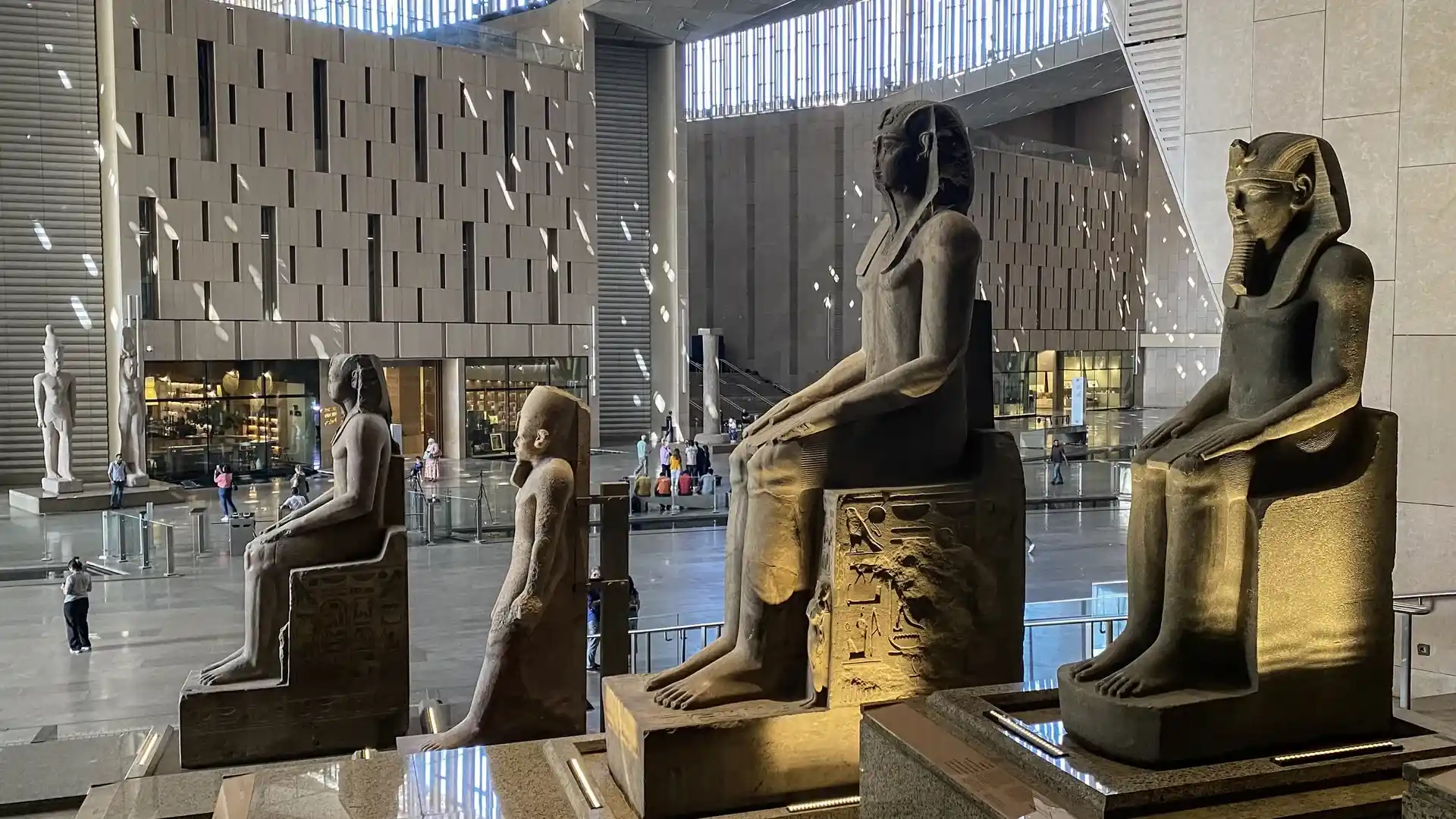
The Grand Egyptian Museum sits 2 kilometers from the plateau. It is the largest archaeological museum in the world, with panoramic views of the pyramids from its terrace. The Tutankhamun galleries — all 5,000 objects from the tomb displayed together for the first time — are the headline exhibit. Khufu’s Solar Boat, a 43.4-meter cedar vessel buried beside the pyramid around 2500 BC, occupies its own dedicated hall. Budget four to six hours minimum.
For the most up-to-date logistics on combining the Giza Plateau and GEM in one day, the Pyramids of Giza Tours — Cairo & GEM in 1 Day (2026) guide covers ticketing, timing, and the best sequence for a private visit.
The Nile Cruise: What to Expect on Your Holiday
A Nile cruise between Luxor and Aswan is the spine of every egypt holidays pyramids and nile cruise package. The 215-kilometer stretch of river between the two cities is the most temple-dense waterway in the world. Edfu Temple, Kom Ombo, Esna, Karnak, Luxor Temple, Philae, and the Valley of the Kings all sit within reach of the cruise route.
Standard cruise ships carry 60–200 passengers in air-conditioned cabins with Nile-view windows, a sun deck, a pool, a dining room serving three meals daily, and an onboard guide for shore excursions. Three-night cruises cover Luxor to Aswan or the reverse. Four-night cruises add time for Esna Temple and a more relaxed pace at Edfu.
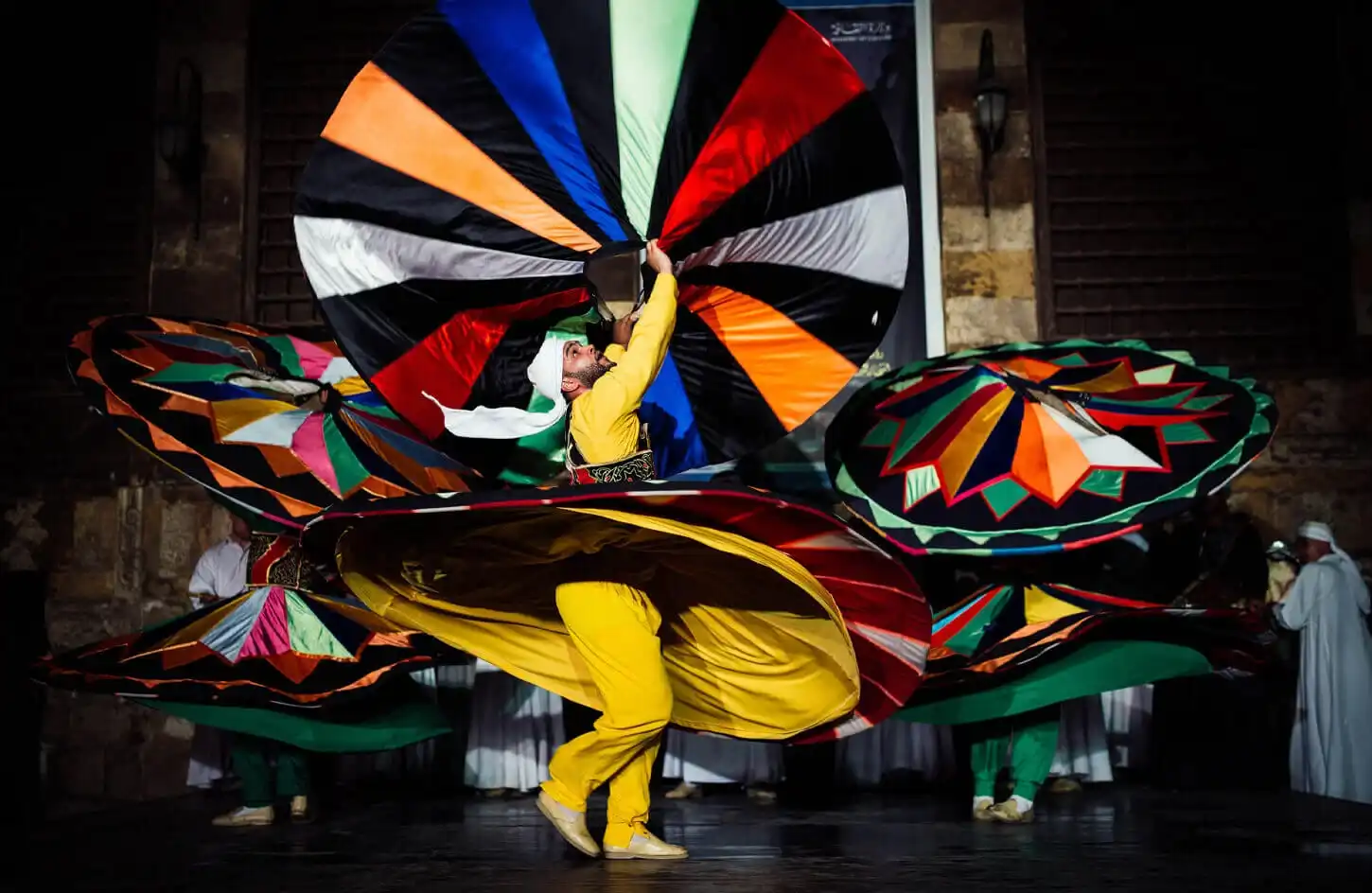
Meals on board are fully included and typically buffet-style, with a mix of Egyptian and international dishes. Onboard entertainment — a tanoura (whirling dervish) show, a traditional music performance — runs one or two evenings during the cruise. The rhythm of the trip is structured: dock at 07:00, excursion by 08:00, back aboard by 13:00, sail while passengers rest during the hottest afternoon hours, dock again by late afternoon for the next site.
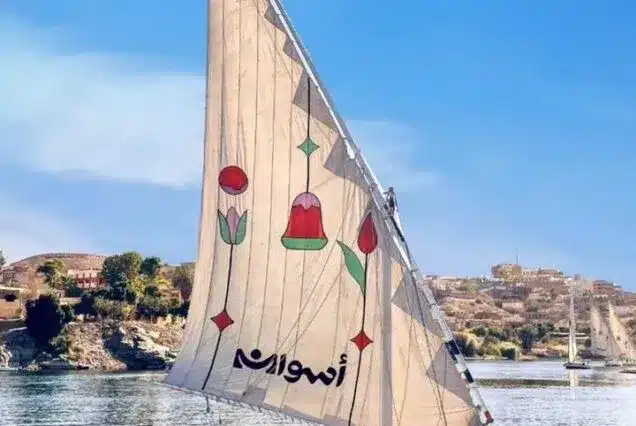
The Nile from the sun deck is a different Egypt from the one visible on land. Feluccas drift between the riverbanks. Farmers work small plots right to the water’s edge. The desert begins exactly where the irrigation ends — a hard line between green and sand that hasn’t changed since Herodotus described it 2,500 years ago.
For a full breakdown of what different cruise grades include and what current prices look like, the Nile Cruise Luxor to Aswan Prices 2026 guide covers budget to luxury options with cabin categories.
Top Temples on a Nile Cruise Between Luxor and Aswan
Every nile cruise and pyramids holiday stops at these core sites between the two cities. Here is what each one delivers:
| Temple | Location | Dynasty/Period | Key feature | Visit time |
|---|---|---|---|---|
| Karnak Temple | Luxor East Bank | Middle–New Kingdom | 134-column Hypostyle Hall | 3–4 hours |
| Luxor Temple | Luxor East Bank | New Kingdom | Avenue of Sphinxes; floodlit evenings | 2 hours |
| Valley of the Kings | Luxor West Bank | New Kingdom | 63 royal tombs; Tutankhamun | 3–4 hours |
| Hatshepsut Temple | Luxor West Bank | New Kingdom | 3-tiered cliff temple of Egypt’s first female pharaoh | 1.5 hours |
| Esna Temple | Esna (on the river) | Ptolemaic–Roman | Last hieroglyphic inscriptions ever recorded | 45 min |
| Edfu Temple | Edfu | Ptolemaic | Best-preserved temple in Egypt; Temple of Horus | 2 hours |
| Kom Ombo Temple | Kom Ombo | Ptolemaic | Double temple; Sobek and Haroeris side by side | 1.5 hours |
| Philae Temple | Aswan | Ptolemaic | Last active ancient Egyptian religion site; boat access | 1.5–2 hours |
Karnak and the Valley of the Kings are the two sites where an Egyptologist guide adds the most value — both are complex enough that the chronology and significance are not obvious from signage alone. Edfu and Kom Ombo are the most visually intact and make the strongest impressions on first-time visitors who arrive expecting ruins and find instead near-complete temples.
For a deeper guide to planning the sequence and timing, the Crafting the Perfect Nile Cruise Itinerary post covers how to structure days to avoid peak crowd times at each site.
Best Pyramids and Nile Cruise Holiday Packages
The packages below are Pure Nile Tours’ most relevant options for pyramids and nile cruise holidays, from a compact 7-day introduction to comprehensive 10-day and 12-day circuits.
7 Days: The Essential Pyramids and Nile Cruise Holiday
The 7-Day Cairo & Nile Cruise Tour by Flight is the most popular entry-level package for first-time Egypt visitors. Three nights in Cairo cover the Giza Plateau, the Grand Egyptian Museum, and the Egyptian Museum in downtown. A domestic flight to Aswan begins the four-night Nile cruise toward Luxor, stopping at Philae Temple, Edfu, Kom Ombo, and the Valley of the Kings before flying back to Cairo from Luxor.
This format — fly to Aswan, cruise north to Luxor — is the optimal direction. Traveling upstream (south to north, the direction of the Nile’s current) means the ship moves with less engine effort and the temperatures gradually moderate as you move from Aswan’s desert heat toward slightly cooler Luxor. Every morning, a different pharaonic site waits outside the cabin window.
8 Days: All-Inclusive Pyramids and Nile Cruise
The 8-Day All-Inclusive Cairo & Nile Cruise Tour extends the classic circuit by one full day, allowing a more relaxed morning at the Giza Plateau and afternoon time at Saqqara — Egypt’s oldest pyramid site, home to the Step Pyramid of Djoser built around 2650 BC, predating Giza by nearly a century. The Nile cruise portion follows the same Aswan-to-Luxor route with the same temple stops.
All-inclusive pricing covers accommodation, domestic flights, cruise meals, guided excursions, and entry fees — removing the need to budget separately for each element of the trip.
8 Days with Abu Simbel: The Most Complete Short Package
The 8 Days Cairo and Nile Cruise with Abu Simbel adds one of Egypt’s most dramatic sites — the rock temples of Ramesses II at Abu Simbel, 280 kilometers south of Aswan — to the standard Nile cruise circuit. The Abu Simbel excursion runs as a day trip from Aswan, either by the 03:30 morning convoy or by domestic flight (35 minutes each way). Four colossal statues of Ramesses II, each over 20 meters tall, guard the entrance to the main temple — one of the most powerful visual experiences in Egypt.
This package is the recommended choice for travelers who want pyramids, a full Nile cruise, and Abu Simbel in a single trip without exceeding eight days.
10 Days: Pyramids, Nile Cruise, Alexandria, and Abu Simbel
The 10 Day Cairo, Nile Cruise, Alexandria & Abu Simbel Tour is the most comprehensive mid-length egypt holidays pyramids and nile cruise package. The additional two days go to Alexandria — the Bibliotheca Alexandrina, the Catacombs of Kom el Shoqafa, the Citadel of Qaitbay, and the Mediterranean Corniche. Alexandria adds an entirely different chapter to the Egypt story: Greco-Roman, coastal, and architecturally distinct from anything on the Nile circuit.
This format suits travelers who want the pyramids, the Nile, Abu Simbel, and a Mediterranean counterpoint in one trip — the most complete introduction to Egypt’s range available in ten days.
Nile Cruise Only: 3 and 5 Night Options
For travelers who already have Cairo covered or who are combining a Nile cruise with independent city time, the 3 Nights Nile Cruise From Aswan to Luxor covers the core Nile temple circuit in the most efficient format. The Egypt Nile River Cruise 5 Days and 4 Nights adds a second full day in Luxor for the West Bank — Valley of the Kings, Valley of the Queens, and Hatshepsut Temple — and one extra evening on the river.
How to Choose the Right Nile Cruise Ship
Cruise ship quality varies significantly and has a direct impact on the overall holiday experience. The grade of ship affects cabin size, food quality, guide quality, and sun deck comfort. Here is a practical breakdown:
| Grade | Price per night (approx.) | Best for | Examples |
|---|---|---|---|
| Budget (2–3 star) | $80–120 all-inclusive | Cost-focused travelers | Basic cabins, shared excursions |
| Mid-range (4 star) | $150–250 all-inclusive | Most first-time visitors | Comfortable cabins, Nile-view windows, pool |
| Luxury (5 star) | $300–600 all-inclusive | Couples, special occasions | Spacious suites, fine dining, private guides |
| Ultra-luxury / Boutique | $600–900+ | Honeymoons, high-end travel | Suite-only ships, personalized service |
| Dahabiya (sailing boat) | $400–700 per night | Small groups, slow travel | 6–12 cabins, traditional wooden vessel |
Pure Nile Tours operates and partners with several well-regarded vessels across these categories:
- Jaz Crown Jewel Nile Cruise — a five-star option with spacious cabins, panoramic sun deck, and an Egyptologist guide on board for every excursion
- A Sara Nile Cruise — a five-star ship running 4–5 night itineraries between Luxor and Aswan with superior suite cabins
- MS Jaz Senator Nile Cruise — a luxury suite-only vessel operating 3 or 4 night itineraries, ideal for couples and travelers who want fewer fellow passengers
- Nebu Nile Cruise — suite-only configuration with 3 or 4 night options, consistently rated among the quieter and more private ships on the route
- Dahabiya Nile Sailing Cruise — a 5-day/4-night traditional wooden sailing boat with 10–12 cabins, stopping at smaller riverside villages not included on standard motorized cruise itineraries
The dahabiya option suits travelers who want a slower, more personal version of the Nile cruise experience. Days are governed by the wind rather than an engine schedule. The trade-off is pace: a dahabiya takes five to eight days to cover the same route a motorized ship does in three to four.
Best Time for Egypt Holidays: Pyramids and Nile Cruise
| Month | Temperature | Nile cruise conditions | Notes |
|---|---|---|---|
| October–November | 24–32°C | Excellent | Best shoulder season — warm, manageable |
| December–February | 14–22°C | Excellent | Peak season; book 3–4 months ahead |
| March–April | 22–35°C | Excellent | Strong value; Khamsin winds possible in April |
| May–June | 32–42°C | Good (air-con makes it workable) | Cheaper rates; extreme midday heat outdoors |
| July–August | 36–44°C | Adequate | Hottest months; start outdoor visits by 07:00 |
| September | 30–38°C | Good | Begins cooling; good availability |
October and November offer the best balance for first-time visitors combining pyramids and a Nile cruise: the heat is present but manageable, the Nile light at sunrise and sunset is at its most photogenic, and ship availability is good without the December–February premium pricing.
For the full month-by-month picture including how Egyptian public holidays affect site opening hours, the Best Months to Visit Egypt guide covers the complete calendar.
Sample 8-Day Pyramids and Nile Cruise Holiday Itinerary
This itinerary follows the 8 Days Cairo and Nile Cruise with Abu Simbel structure and represents the most complete version of a nile cruise and pyramids holiday in eight days.
Day 1 — Cairo arrival: Airport transfer to hotel. Evening at leisure or optional Tanoura show in Islamic Cairo.
Day 2 — Giza Plateau and GEM: Pyramids and Sphinx by 07:30. Grand Egyptian Museum from 12:00 — four hours minimum for the Tutankhamun galleries and Solar Boat hall.
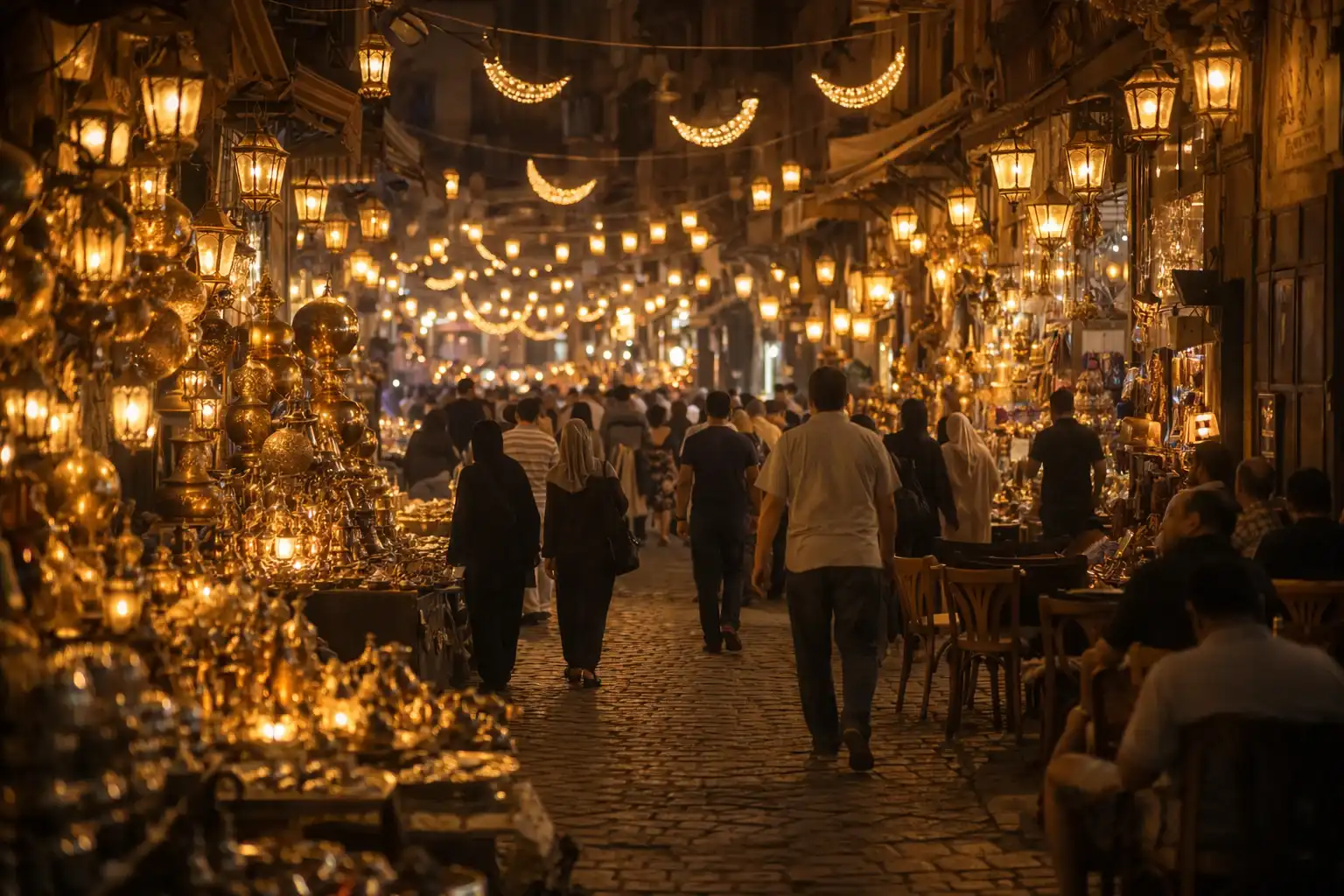
Day 3 — Cairo continued: Egyptian Museum (downtown), Khan el-Khalili bazaar, Saladin Citadel. Saqqara optional (Step Pyramid) if energy permits.
Day 4 — Fly to Aswan; board cruise ship: Morning domestic flight Cairo–Aswan (45 minutes). Board ship. Afternoon: Philae Temple by motorboat. High Dam drive-by on the return. First dinner on board.
Day 5 — Abu Simbel day trip: 03:30 convoy departure or 06:00 morning flight (35 minutes). Two hours at the temples of Ramesses II and Nefertari. Return by 14:00. Afternoon at leisure on the sun deck as the ship begins sailing toward Kom Ombo.
Day 6 — Kom Ombo and Edfu: Morning docking at Kom Ombo Temple (90 minutes). Afternoon sailing to Edfu; Edfu Temple (Temple of Horus) in late afternoon (2 hours). Dinner on board while sailing toward Luxor.
Day 7 — Luxor: East Bank: Morning docking. Karnak Temple Complex (3 hours — arrive early). Afternoon: Luxor Temple (2 hours, or return in the evening when floodlit).
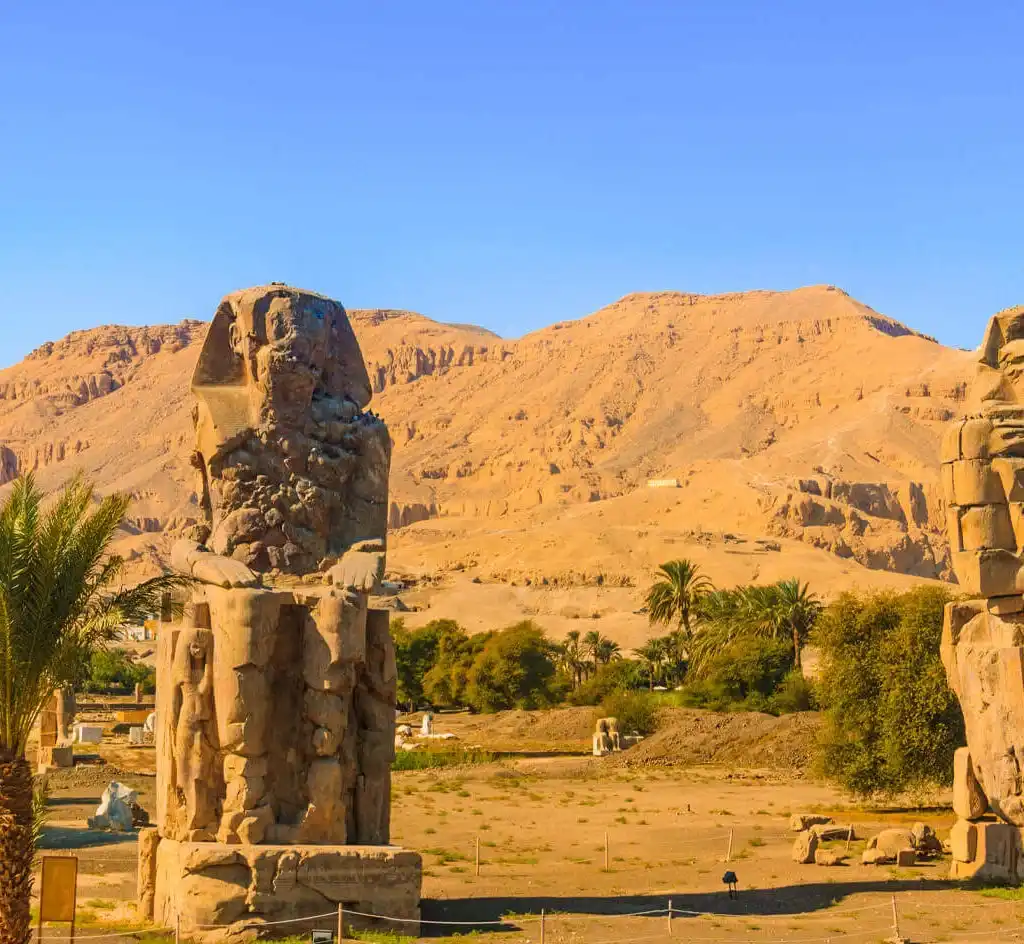
Day 8 — Luxor: West Bank and departure: Valley of the Kings (06:00 arrival), Hatshepsut Temple, Colossi of Memnon. Midday: fly Luxor–Cairo for international connection, or add an extra night in Luxor for the hot air balloon at dawn.
Egypt Holidays Pyramids and Nile Cruise: Budget and Costs
Egypt holidays pyramids and nile cruise packages from Pure Nile Tours are priced per person based on double occupancy. A seven-day package including domestic flights, three nights in a four-star Cairo hotel, and a four-night mid-range Nile cruise typically costs $900–$1,400 per person depending on season and cabin grade. The eight-day all-inclusive package with Abu Simbel runs $1,100–$1,700 per person at mid-range.
The main cost variables are:
- Cruise ship grade: Moving from mid-range to five-star adds $150–$300 per person per night
- Season: December–February peak rates run 15–25% higher than October–November or March–April
- Abu Simbel add-on: Flight option ($80–$120 per person each way) versus convoy (included in most packages)
- Single supplement: Solo travelers occupying a double cabin typically pay 30–50% extra — ask specifically about solo rates when booking
International flights to Cairo are not included in most package prices and should be budgeted separately: $400–$900 return from Europe; $800–$1,400 from North America depending on season and airline.
Practical Tips for Your Pyramids and Nile Cruise Holiday
Packing for the cruise: Lightweight, loose-fitting clothing for shore excursions; something warmer for evenings on the sun deck October–February (temperatures drop to 12–16°C after sunset on the Nile). Comfortable walking shoes with closed toes — temple floors are uneven stone. A wide-brim hat and sunscreen SPF 50+ are non-negotiable at Giza and on the open deck.
Money: Egypt is largely cash-dependent for tips, small purchases, and market shopping. The Egyptian Pound (EGP) isthe local currency. ATMs are available in Cairo, Aswan, and Luxor. Carry EGP 50 and EGP 100 notes for tips. Budget approximately $5–$10 per person per day for tipping guides (EGP 50–100 per guide per day), drivers, and ship crew.
Photography: Permitted freely at all outdoor pyramid and temple sites. Inside the Valley of the Kings tombs, a photography permit is required (approximately EGP 300 per tomb). Never use flash on painted tomb walls — it degrades pigments over time. On the cruise ship, sunrise and sunset from the sun deck are the two times of day worth setting an alarm for.
SIM and connectivity: Buy a tourist SIM at Cairo Airport arrivals immediately on landing. Vodafone, Orange, and Etisalat all offer 30-day data plans with 50GB for approximately EGP 150–200 (under $5). Internet on the Nile cruise is variable — most ships have Wi-Fi in common areas but speeds drop significantly between Luxor and Aswan.
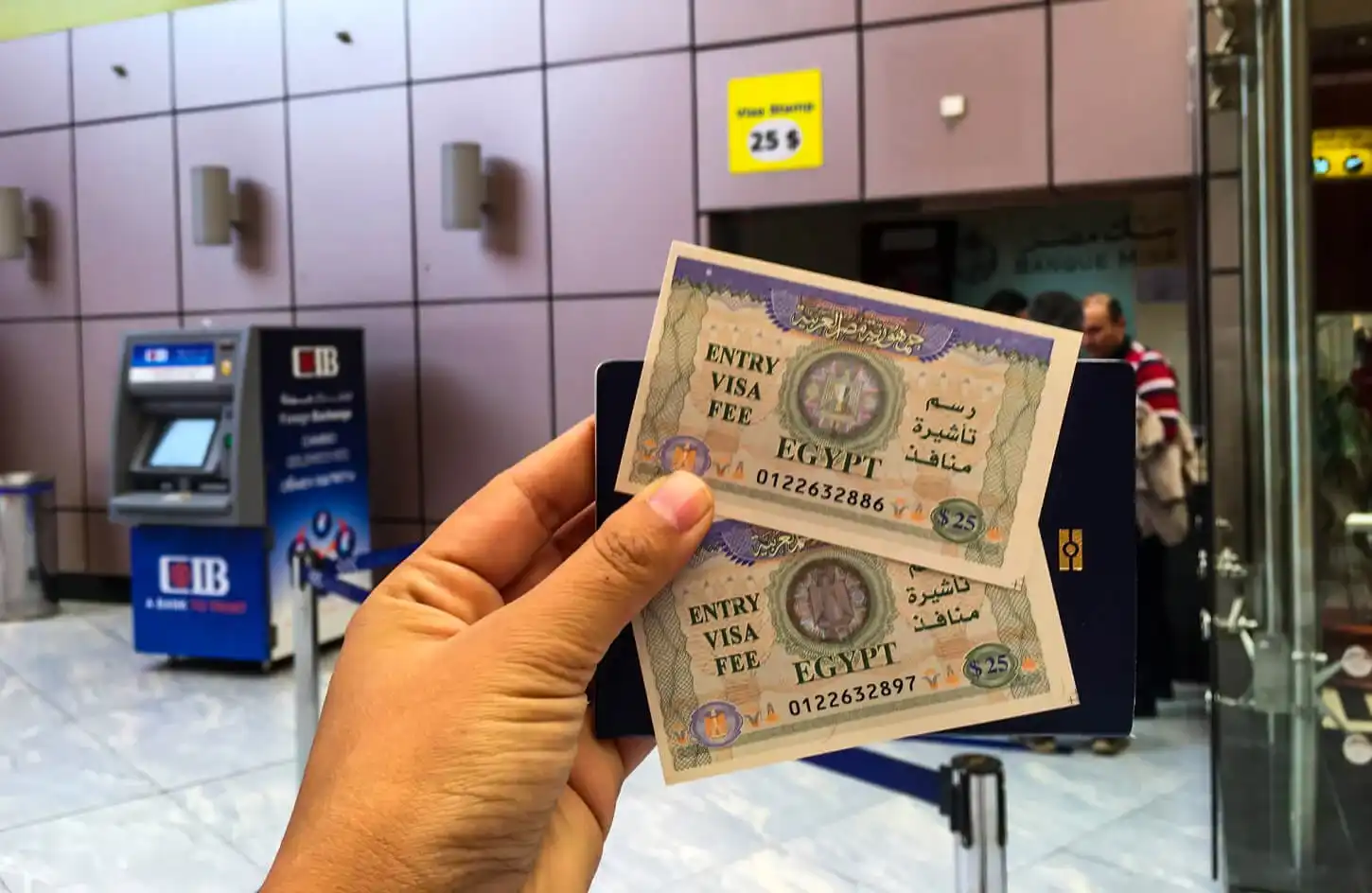
Visa: Most nationalities obtain an Egyptian tourist e-visa for $25 USD through the official government portal, or a visa on arrival at Cairo Airport. Passport must be valid at least six months beyond your departure date. Current requirements by nationality are on the Egypt Visa Requirements for Travelers page.
Frequently Asked Questions
What is included in a pyramids and nile cruise holiday package?
Most egypt holidays pyramids and nile cruise packages include: airport transfers, accommodation (Cairo hotel plus cruise ship cabin), domestic flights between Cairo and Aswan/Luxor, all meals on the cruise ship (breakfast in Cairo hotels), English-speaking Egyptologist guide for shore excursions, and entry fees to the sites covered in the itinerary. International flights and personal spending are typically excluded. At the time of writing, Pure Nile Tours packages include all the above — confirm specifics at booking as inclusions vary by package tier.
How long should a pyramids and nile cruise holiday be?
Seven days is the practical minimum for a nile cruise and pyramids holiday covering Cairo and a three- to four-night cruise. Eight days adds Abu Simbel. Ten days allows Alexandria and a more relaxed pace throughout. Fourteen days suits travelers who want to extend into Hurghada or Sharm el-Sheikh for Red Sea time after the historical circuit.
Which direction should I do the Nile cruise — Luxor to Aswan or Aswan to Luxor?
Both directions work. The Aswan-to-Luxor direction (sailing north, with the current) is marginally faster and is the more common choice for packages that fly you to Aswan first. The Luxor-to-Aswan direction means you end the cruise in Aswan, which is the quieter and more relaxed of the two cities — a pleasant way to conclude before flying back to Cairo. On a three-night cruise, the sequence of temple stops is the same either way.
What is the best Nile cruise ship for a first-time visitor?
A four-star mid-range ship is the right choice for most first-time visitors combining pyramids and a Nile cruise holiday. Cabins are comfortable with Nile-view windows, meals are good quality, the sun deck and pool are functional, and the onboard guide is included. Moving to five-star is worthwhile for travelers who prioritize more space, finer dining, and a less crowded ship. Suite-only vessels like the MS Jaz Senator or Nebu are the right choice for honeymoons and special occasions.
Is it better to fly or take the train between Cairo and Aswan/Luxor?
For egypt holidays pyramids and nile cruise packages, the domestic flight is overwhelmingly the better option. Cairo to Aswan takes 45 minutes by air versus 13–15 hours by overnight train. The time saved allows a full day of sightseeing on arrival. Flight prices ($40–$120 one way on EgyptAir or Air Cairo) are comparable to a first-class sleeper train ticket. Most packages include the domestic flight; if booking independently, prioritize the flight for this leg.
Is Egypt safe for international tourists in 2026?
Egypt’s main tourist destinations — Cairo, Luxor, and Aswan — are safe for international visitors, with tourist police stationed at all major sites. The primary risks at tourist areas are vendor persistence and traffic rather than crime. The Is Egypt Safe for Tourists in 2026? post gives a current, honest breakdown by region. At the time of writing, no specific advisories target the Nile cruise route or Giza.
Can I extend a pyramids and Nile cruise holiday to include the Red Sea?
Yes — Hurghada (50 minutes by air from Luxor) and Sharm el-Sheikh are the most common extensions. Adding three to four nights at the Red Sea after the Nile cruise gives a contrast between intensive archaeology and beach relaxation that many travelers find ideal. The 10 Day Tour Cairo, Nile Cruise & Relaxation in Hurghada covers this combination directly.
What should I wear on a Nile cruise?
Lightweight, loose-fitting clothing for shore excursions at temples and tombs — cover shoulders and knees at all ancient and religious sites. Swimwear is appropriate on the cruise ship’s sun deck and at the pool. Bring one layer for cool evenings on the river (October–March). Comfortable walking shoes with grip are essential at the Valley of the Kings and on the uneven stone of Karnak. A wide-brim hat and high-SPF sunscreen are required at all outdoor sites.
When is the Abu Simbel Sun Festival and can I see it on a Nile cruise package?
The Abu Simbel Sun Festival occurs twice a year — February 22 and October 22 — when the rising sun penetrates 63 meters through the temple passageway and illuminates the inner sanctuary statues. To see it, you need to be at Abu Simbel by 05:30. This requires either overnight accommodation in Abu Simbel (book at least six months ahead) or the pre-dawn convoy from Aswan. Standard Nile cruise packages include Abu Simbel as a day trip but do not time it specifically for the solar event. If this is a priority, arrange it separately or request a specific festival-date booking.