Al Haram, Cairo–Fayoum Road, Giza. The parking area adjacent to the new entrance holds over 1,200 private vehicles and 200 tourist buses. Private cars are no longer permitted inside the site.
The New Visitor Centre
Step through the Great Gate and the first thing you reach is the new Visitor Centre. It is fully accessible, including wheelchair ramps. Inside, self-service ticket machines accept both cash and cards — the queues here are far shorter than the old gate ever produced. Beyond ticketing, the centre contains a modern exhibition hall with artifact replicas and historical infographics, and a heritage cinema that runs short films reimagining ancient Egyptian construction and daily life. Allow 20–30 minutes here before moving out to the plateau.
Electric Hop-On Hop-Off Buses
Private vehicles cannot reach the pyramids themselves anymore. Transportation inside the site runs on a fleet of 45 electric buses running on four routes, with the main red route serving most visitors. Buses depart from the Visitor Centre approximately every five minutes and stop at seven stations, each positioned near a key monument or viewpoint. Each station has a small café or snack point — useful during summer visits when the midday heat can be extreme. The buses are free to ride once you have paid site admission.
Vendor-Free Zones & Animal Welfare
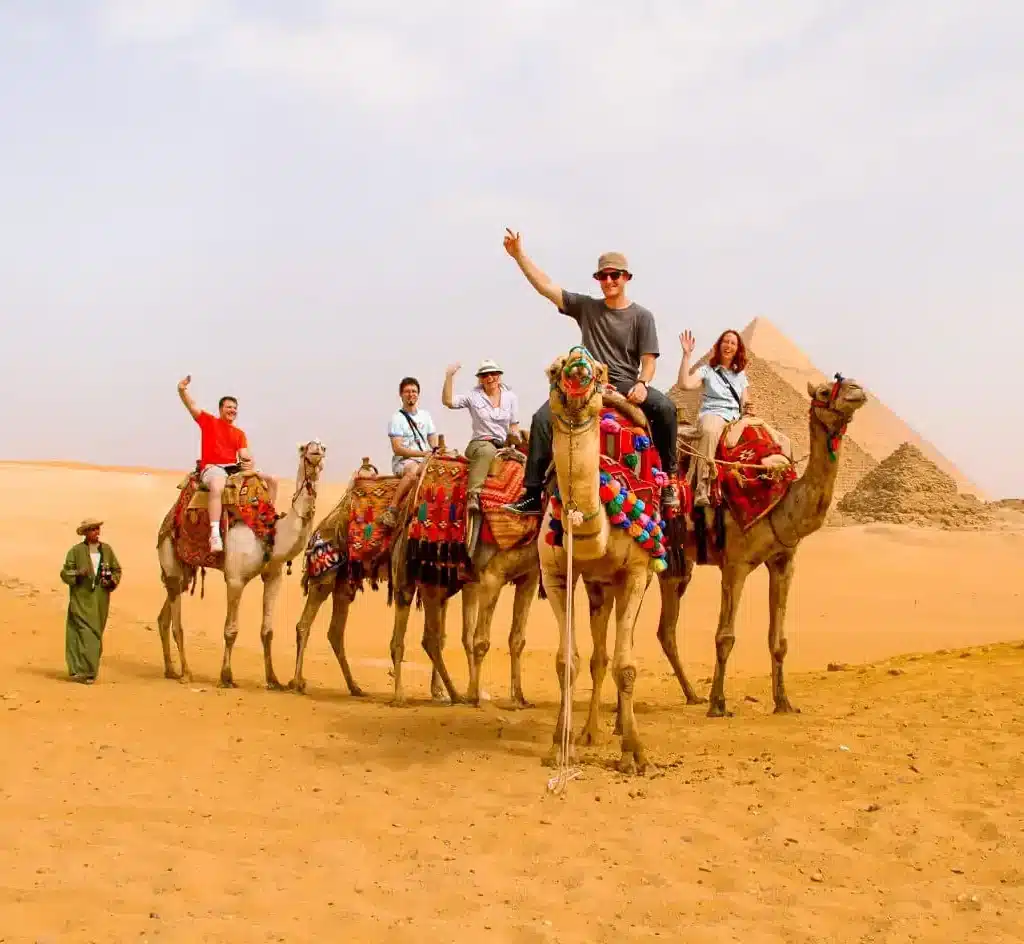
Street vendors, souvenir hawkers, and unsolicited “guides” have been relocated to designated commercial zones away from the main archaeological areas. The informal camel and horse operations that once crowded the plateau have been regulated. Certain licensed handlers still operate in specific zones, but the blanket harassment that defined earlier visits has been significantly reduced. PETA and several international welfare organizations have documented past abuse of animals at this site — if you choose a camel or horse ride, use only operators with visible licensing credentials and set the price before mounting.
The Grand Egyptian Museum: Now Fully Open
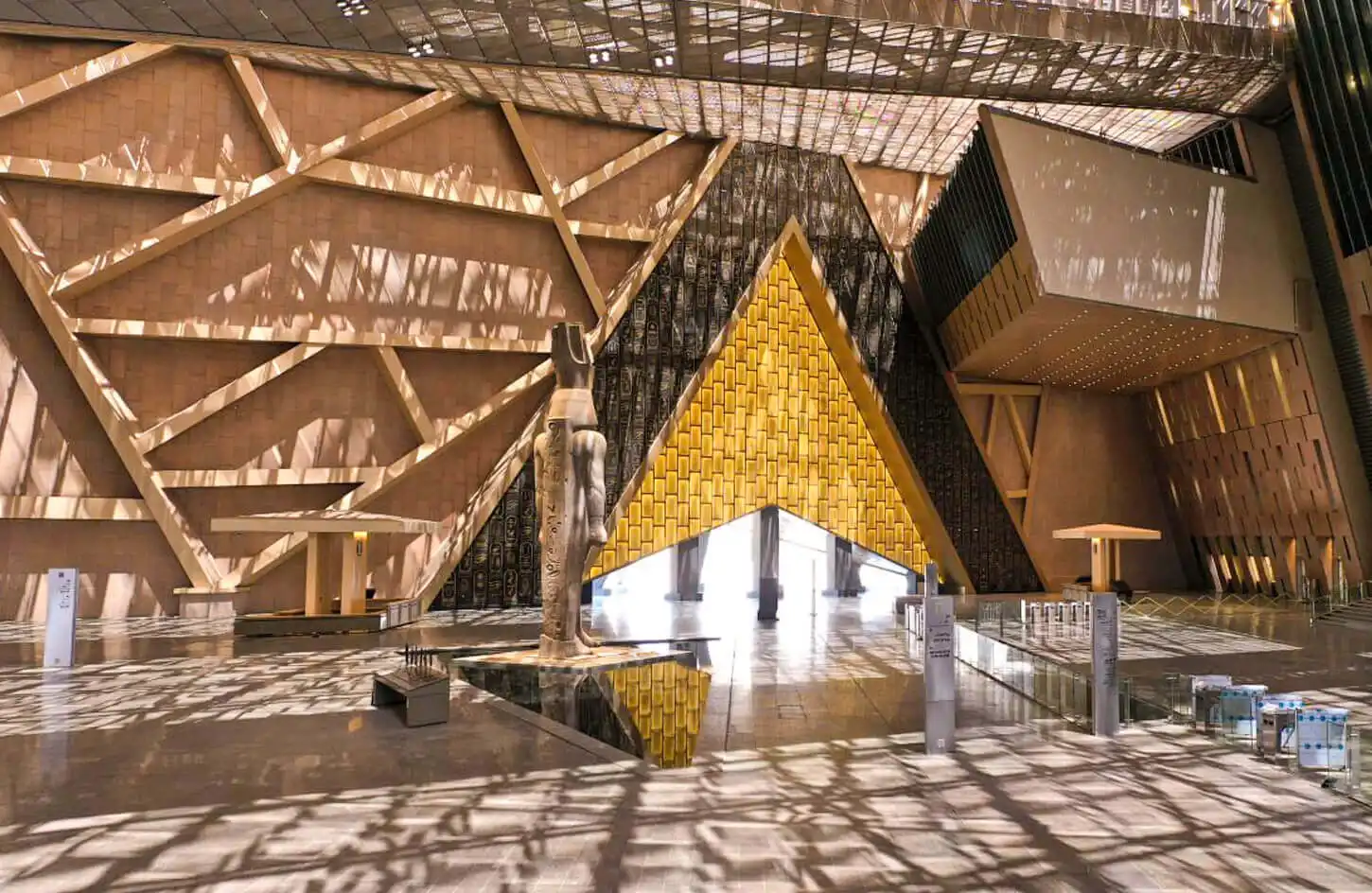
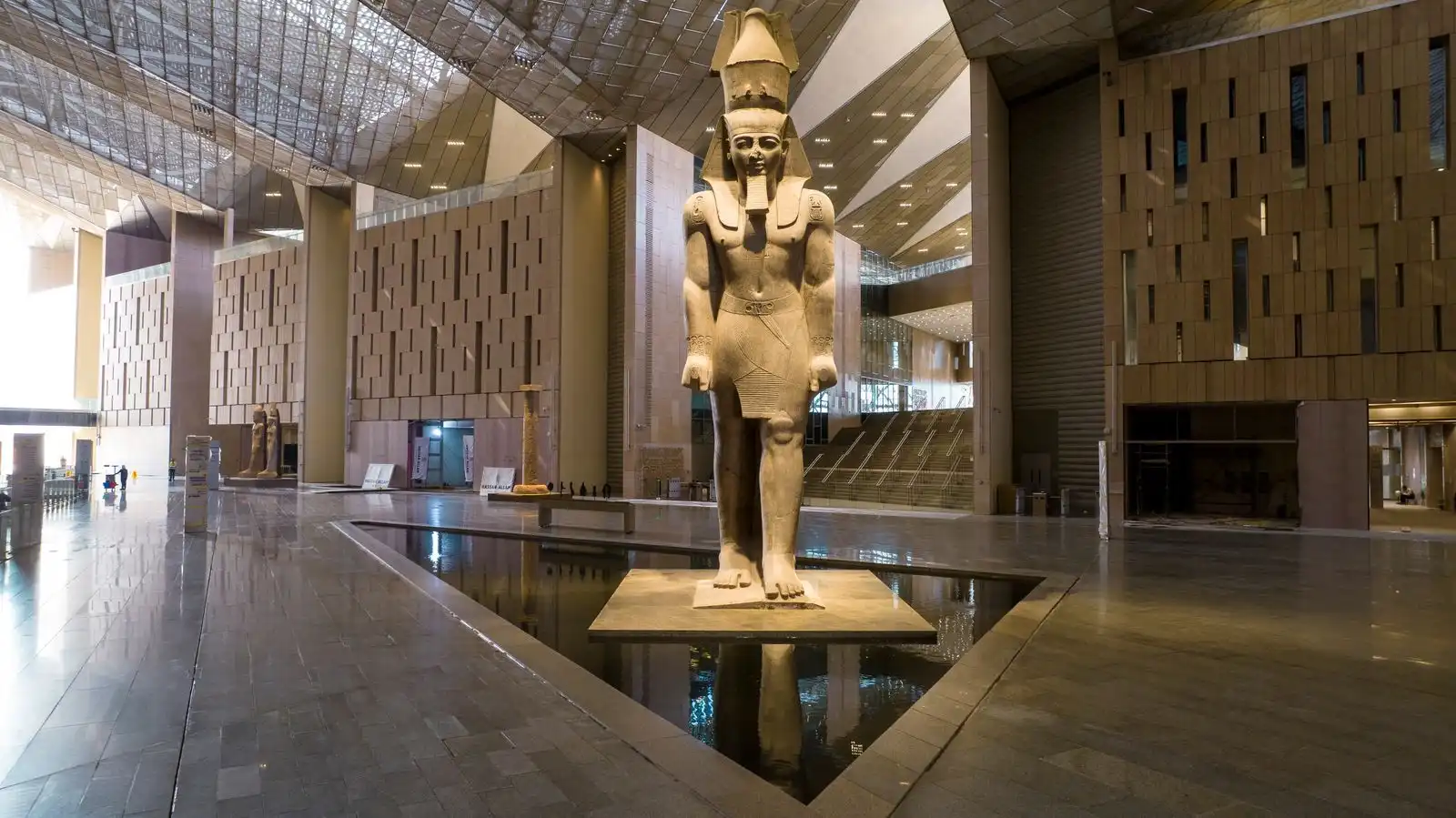
The Grand Egyptian Museum (GEM) sits 2 km from the Great Gate, visible from parts of the plateau. After years of phased openings, it opened fully in November 2025. The museum holds over 100,000 artifacts — the complete collection of Tutankhamun’s treasures, the Solar Boat of Pharaoh Khufu in its own purpose-built hall, and panoramic galleries with direct sightlines to the pyramids outside. Admission is handled separately and requires pre-booking through the museum’s official ticketing website, as walk-up tickets are not sold on-site. Allow 3–4 hours minimum for the museum. Our detailed breakdown of the covers galleries, ticket prices, and logistics.
Tickets & Costs — What You’ll Pay in 2026
General admission to the Giza Plateau — covering the exterior of all three pyramids, the Great Sphinx viewing area, the Panoramic Viewpoint, and access to the electric bus network — costs 700 EGP for adults and 350 EGP for students with a valid ISIC card. Children under 6 enter free. This is the ticket most visitors buy and, for many, it is enough to fill a half-day.
If you want to enter the interior of the pyramids, additional tickets apply:
-
Inside Great Pyramid of Khufu: 1,500 EGP. Limited daily capacity — these sell out, particularly from October to April. Book online in advance.
-
Inside Pyramid of Khafre: 280 EGP. Shorter queues and generally available on the day.
-
Inside Pyramid of Menkaure: 200 EGP. The most affordable interior option.
-
Tomb of Queen Meresankh III (also called Mars Ankh on the ticketing website): 200 EGP. A beautifully decorated rock-cut tomb near the pyramids, undervisited and worth the addition.
Tickets can be purchased at the self-service machines inside the new Visitor Centre — cash (EGP) or cards accepted. Online purchase through the Ministry of Tourism and Antiquities official site is also available and recommended for the Khufu interior ticket.
A word on scams: Do not buy tickets from any individual approaching you outside the gate or on the road. There is no legitimate private ticketing for general site admission — all tickets are sold at official windows or the ministry website. Anyone claiming to offer “cheaper tickets” or “VIP access” outside the gate is running a scam.
For a full breakdown of private tour options combining the pyramids with the Grand Egyptian Museum in a single day, see the .
How to Get to the Pyramids from Cairo
The new entrance on the Cairo–Fayoum Road changes the approach route. Google Maps listings for the Pyramids of Giza may still show the old Mena House entrance — ignore them and search specifically for “Giza Pyramids Visitor Centre” or “Great Gate Giza.”
By taxi or Uber: From central Cairo hotels, the drive takes 30–45 minutes depending on traffic (longer during morning rush, 8–10 AM). A one-way taxi fare is approximately 150–250 EGP ($4–7). Uber pricing is transparent and usually comparable. Ask the driver to use the Fayoum Road entrance specifically.
By metro + taxi: Take Cairo Metro Line 2 to Giza Station, then a short taxi ride (approximately 10–15 minutes, 50–80 EGP) to the new entrance. The total cost is under $3 from most city-centre starting points.
By private tour transfer: Most guided tours from Cairo hotels include round-trip transfers in an air-conditioned vehicle. This is the most practical option if you are combining the pyramids with the Grand Egyptian Museum or adding Saqqara to the day, as public transport does not serve those sites conveniently.
By car (self-drive): The parking area at the new entrance accommodates over 1,200 vehicles. From central Cairo, take the Ring Road and follow signs for the Cairo–Fayoum Road (also signed as Cairo–Bahariya Road). The entrance is on the right-hand side heading south.
Tourist Attractions at the Giza Plateau: What to See
Six distinct tourist attractions sit within the general admission area. Here is what each one offers and how long to allocate.
The Great Pyramid of Khufu (Cheops)
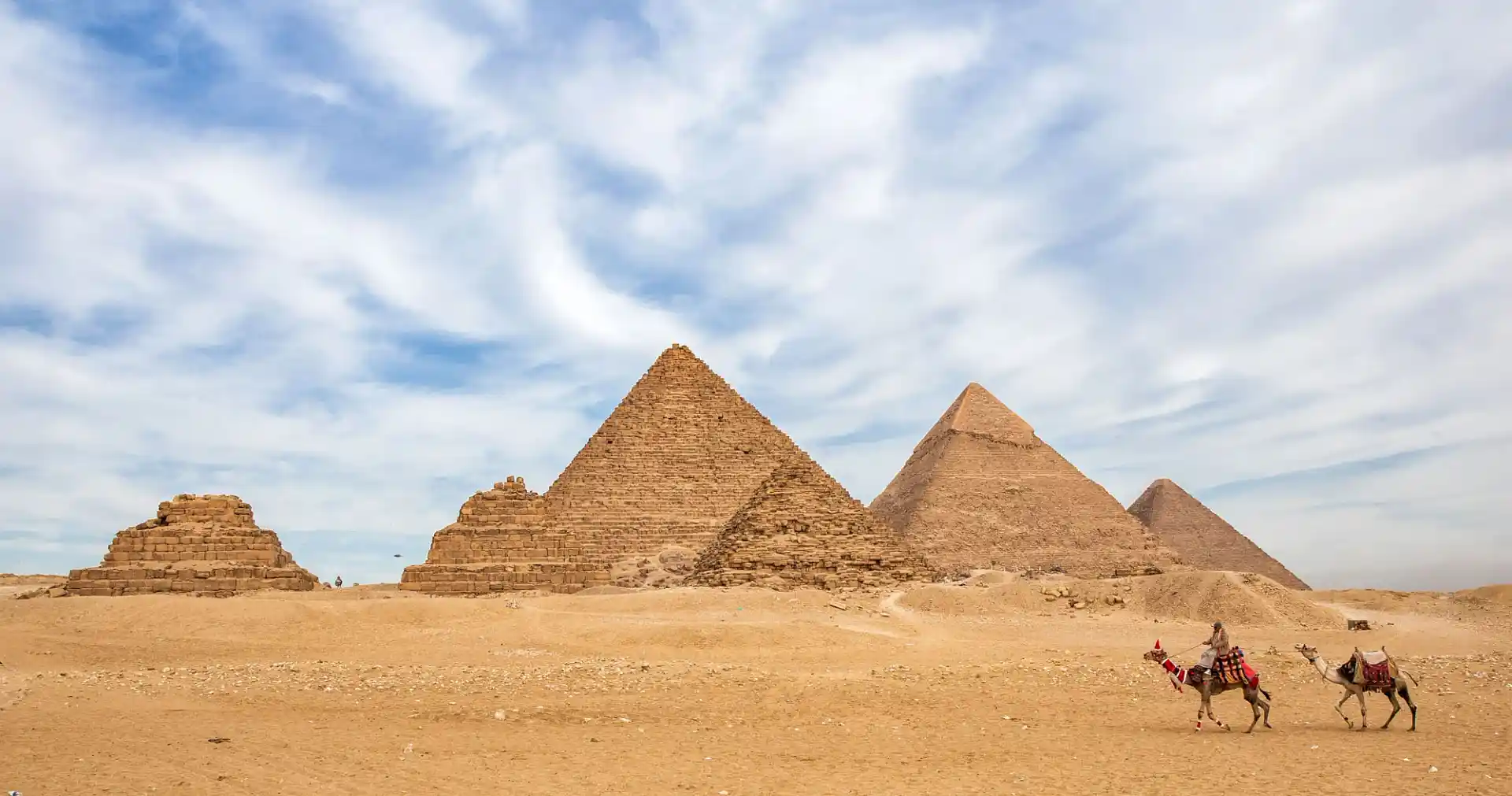
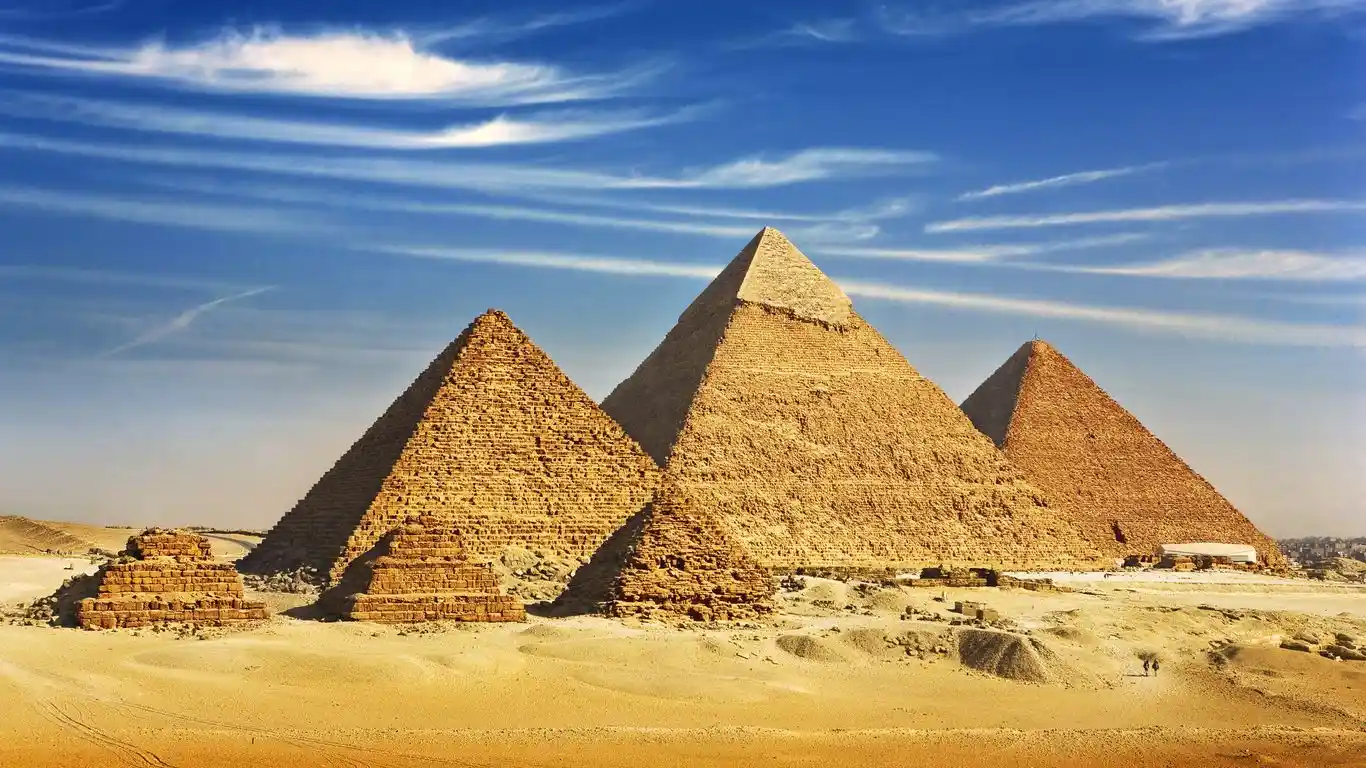
The oldest and largest of the three, built around 2580 BCE for Pharaoh Khufu. It originally stood 146 metres tall; it now measures 138 metres due to the loss of its polished white limestone casing over millennia. The base covers 53,000 square metres — roughly equivalent to 9 football pitches. Standing directly beneath it and looking up produces a disorienting sense of scale that photographs simply do not convey.
The interior, if you choose to purchase the separate ticket (1,500 EGP), takes you up a steeply inclined passageway called the Grand Gallery — 47 metres long, 8.5 metres high — and into the King’s Chamber, a granite-lined room that once contained Khufu’s sarcophagus. The climb is physically demanding: the passage is narrow, the air is warm, and you will need to stoop for significant stretches. People with claustrophobia should consider this carefully before purchasing the interior ticket.
The Pyramid of Khafre
Khufu’s son built this pyramid around 2570 BCE, slightly smaller than his father’s but positioned on higher ground — which makes it appear taller in most photographs. Look closely at the apex: a section of the original smooth limestone casing has survived at the top, giving a precise idea of how all three pyramids appeared when new. The interior is less spectacular than Khufu’s but requires less physical effort to navigate.
The Pyramid of Menkaure
The smallest of the three, completed around 2510 BCE, stands 65 metres tall. Its lower third is clad in red Aswan granite — a deliberate choice that marked it as distinct from the two larger limestone pyramids. The interior ticket (200 EGP) is the most affordable on the plateau and draws the fewest visitors, making it the most relaxed interior experience of the three.
The Great Sphinx
Twenty metres tall and 73 metres long, carved directly from the limestone bedrock of the plateau, the Sphinx depicts a figure with the body of a lion and the head of a pharaoh — most likely Khafre, based on the stylistic similarities to his funerary statues. It gazes due east, toward the sunrise. Visitors view it from a designated area with clear sightlines; entry inside the Sphinx is not permitted. Early morning visits (7–8 AM) give the best photographic light, as the sun rises directly behind the pyramids to the west of the Sphinx.
The Panoramic Viewpoint
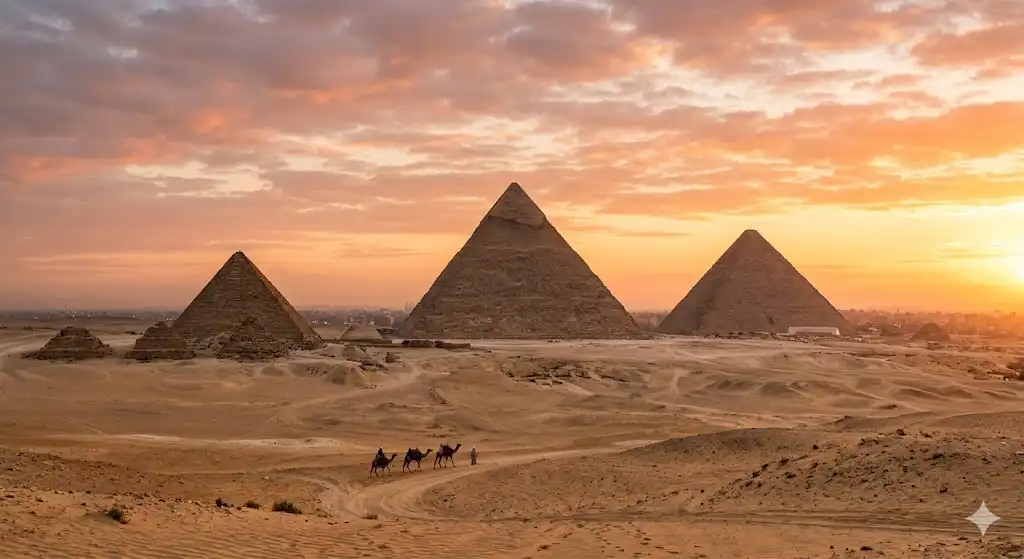
Located uphill from the main plateau, this viewpoint positions you perfectly for the only angle where all three pyramids align in a single frame. The electric bus stops here. Sunset visits (arriving at the plateau in the mid-afternoon and walking to this point) produce striking light — though note that the site closes at 4 PM, so plan the timing carefully.
Tomb of Queen Meresankh III
Undiscovered until 1927, this rock-cut tomb belongs to Khufu’s granddaughter and contains detailed painted reliefs across three rooms — figures of craftsmen, boat-builders, and daily scenes from life in the Old Kingdom. It costs 200 EGP, requires approximately 15 minutes to visit, and is consistently undervisited. If you have not already planned a trip to the Valley of the Kings in Luxor, this is the most accessible decorated burial chamber near Cairo.
Workers’ Cemetery
An excavated area near the pyramid complex reveals where the builders themselves were buried. The discovery of this cemetery in 1990 by Egyptologist Zahi Hawass helped overturn the earlier theory that the pyramids were built by slaves — the workers were well-fed, received medical care, and were buried with honours. Entry is included with the general admission ticket.
Tours and Travel Packages: The Best Cairo Pyramid Options for 2026
Egypt’s tours and travel packages for the Giza Plateau range from a simple half-day group outing to a fully guided multi-day itinerary combining Cairo, Luxor, and a Nile cruise. The choice between a guided tour and a self-guided visit comes down to how much context you want and how much time you are willing to spend managing logistics.
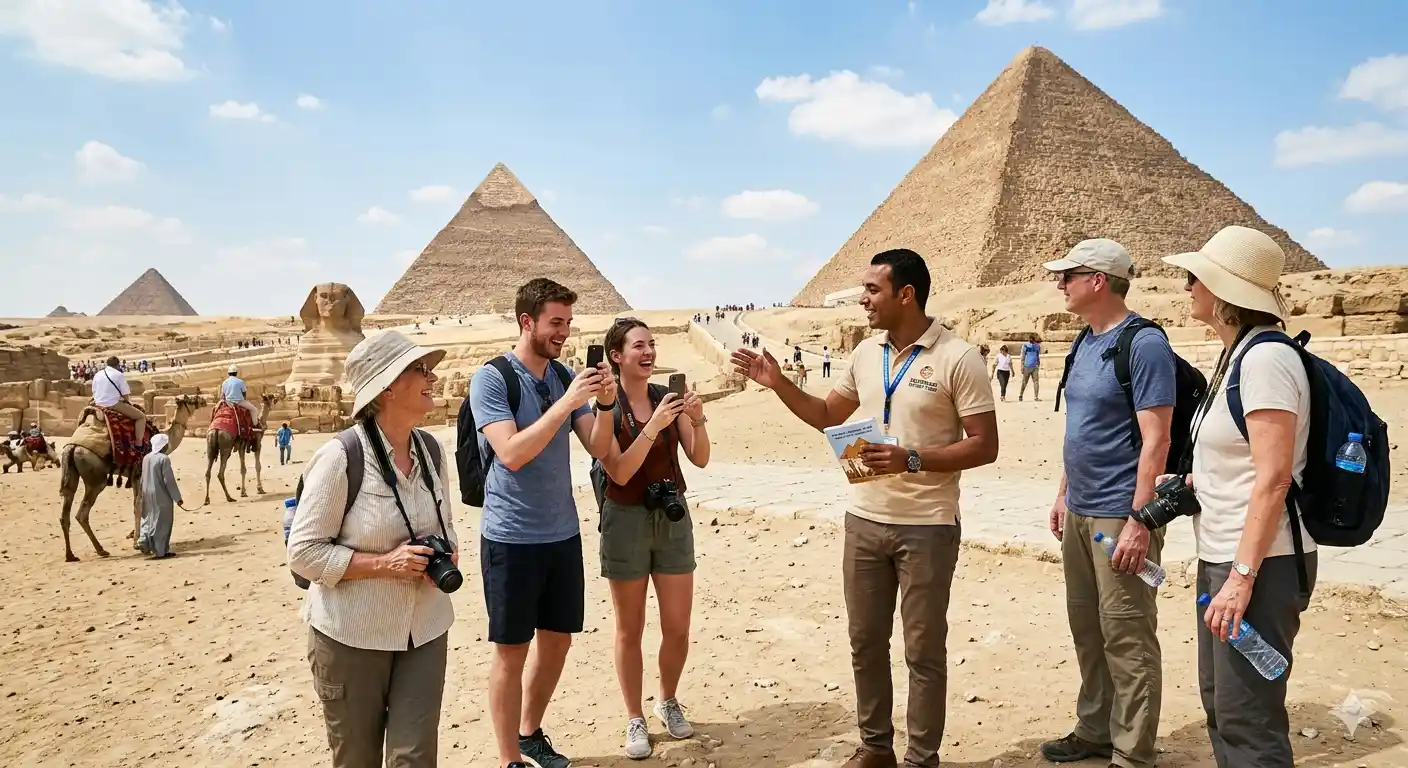
A private guided tour with a licensed Egyptologist covers tickets, transfers, and context — you learn why the alignment of the pyramids precisely mirrors Orion’s Belt, how 2.3 million limestone blocks were transported without modern machinery, and who the workers actually were. Private half-day tours typically run $80–$150 per person; full-day tours including the Grand Egyptian Museum run $150–$250, depending on inclusions.
A group tour covers the same sites with a shared guide and costs $30–$80 per person for a half-day. These work well for solo travellers who would rather meet people than wander alone.
Self-guided visits are completely viable. Purchase your ticket at the Visitor Centre machines, pick up the free site map, and use the electric bus to navigate. The limitation is context: the plateau has improved signage, but it does not yet match the interpretive depth of a good guide.
The pairs the Pyramids and Sphinx with the Grand Egyptian Museum and Islamic Cairo in a structured three-day itinerary — practical for first-time visitors who want to cover Cairo’s highlights without spending hours on logistics.
For visitors who want to extend beyond Cairo, Egypt’s tours and travel packages combine the pyramids with a Nile cruise and additional southern sites — the is the best place to compare multi-day options by duration, budget, and destinations covered.
Day Trips from Cairo: Combining Pyramids with Other Sites
The pyramids alone, even with GEM, do not require more than one full day. Visitors spending two or three nights in Cairo typically add one or two of the following tourist attractions to complete their Egypt experience.
Saqqara (30 km south of Cairo): Home to the Step Pyramid of Djoser, built around 2670 BCE — the world’s first large-scale stone monument, predating the Giza pyramids by about 70 years. The complex also contains the Imhotep Museum and numerous decorated mastaba tombs. Admission is approximately 450 EGP. Most guided tours combine Saqqara with either Dahshur or Memphis in a single day.
Dahshur (35 km south): Two pyramids built by Pharaoh Sneferu, Khufu’s father — the Bent Pyramid, which shows the mid-construction change in angle that tells us the Egyptians were still solving the engineering problem, and the Red Pyramid, the first successful smooth-sided pyramid in history. Entry costs 140 EGP and visitor numbers are low, making it one of Egypt’s most peaceful archaeological sites.
Memphis (30 km south): Once the capital of ancient Egypt, now an open-air museum containing a fallen colossus of Ramesses II and an alabaster sphinx. Admission is around 220 EGP. Most tours combine Memphis with Saqqara and Dahshur in a single day.
The includes the Giza Plateau, GEM, Saqqara, and then flights south to Luxor for the Valley of the Kings and Karnak — the most efficient way to cover both halves of Egypt’s ancient history.
Best Time to Visit the Pyramids of Giza
October through April offers the most comfortable conditions. Daytime temperatures sit between 15°C and 25°C (59–77°F), there is almost no rain, and the air is clear enough for good photography. December and January are the most visited months — book pyramid interior tickets and popular Cairo hotels well in advance. November, February, and March offer a balance of good weather and slightly lower crowd levels.
May through September is technically possible but challenging. Temperatures regularly exceed 38°C (100°F) by midday, and the plateau has almost no shade outside the café stations. If you visit in summer, arrive at 7 AM, complete your main exploration before 10 AM, then retreat to GEM (which is air-conditioned) for the afternoon.
Best time of day: 7–9 AM. The light is directional and golden for photography, temperatures are at their lowest, and the tour buses from Cairo hotels have not yet arrived. Late afternoon (after 2 PM) offers softer light for the Panoramic Viewpoint but leaves limited time before the 4 PM last entry.
Days to avoid: Fridays and Egyptian public holidays bring higher domestic visitor numbers. During Ramadan, the site opens one hour later (8 AM instead of 7 AM) — check the for a month-by-month breakdown including specific holiday dates.
How Many Days Do You Need at the Giza Plateau?
The plateau itself — all three pyramids exterior, Sphinx, Workers’ Cemetery, Panoramic Viewpoint, and one tomb interior — takes 3–4 hours for a relaxed visit.
Add the Grand Egyptian Museum and you need a full day, arriving at the plateau at 7 AM and spending the afternoon at GEM (allowing 3–4 hours there).
If you are adding Saqqara and Dahshur, plan two days in the Giza/Cairo area: Day 1 for the plateau and GEM, Day 2 for the southern pyramid sites.
For first-time visitors to Cairo who also want to experience Islamic Cairo (the Khan el-Khalili bazaar, the Mosque of Muhammad Ali, Al-Azhar Mosque), the Egyptian Museum in Tahrir Square, and the Citadel, allow a minimum of 3 full days in Cairo.
Where to Stay Near the Pyramids
Giza neighbourhood (closest to the site): Staying in Giza puts the pyramids 10–15 minutes away by taxi. The area is quieter than central Cairo, accommodation is generally cheaper, and early-morning plateau access is far easier. Pyramid-view hotels exist here, though “pyramid view” in local listings ranges from an unobstructed rooftop panorama to a partial glimpse from a high floor.
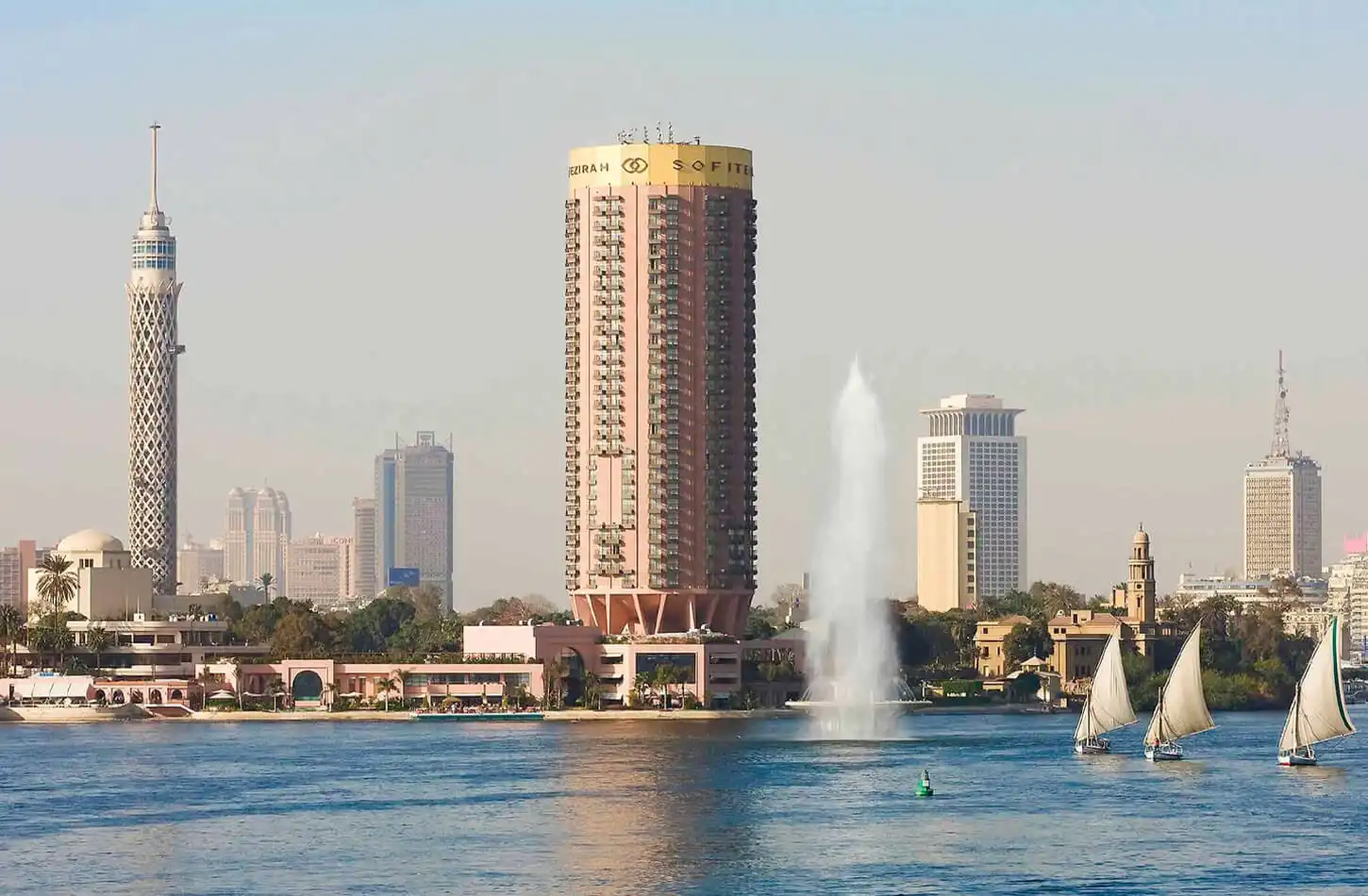
Downtown Cairo / Garden City: Central Cairo is better for visitors who want to combine the pyramids with the Egyptian Museum (Tahrir), the Coptic quarter, and Islamic Cairo in a single trip. The drive to the Giza Plateau from this area takes 30–45 minutes in normal traffic.
Zamalek (Nile island): A quieter, leafier neighbourhood between downtown and Giza. Good mid-range hotel options and easy taxi/Uber access to both Cairo’s historic centre and the plateau.
Whichever area you choose, book in advance for any visit between October and April. For verified hotel recommendations in different Cairo budget tiers, the lists independently reviewed options across price ranges.
Budget & Average Costs for a Pyramids Day
The following table shows approximate all-in costs for a single day visiting the Giza Plateau and Grand Egyptian Museum, starting from a Cairo hotel. Figures include transport, entry, food, and one guided tour option.
| Budget Level | What’s Included | Approx. Daily Cost (USD) |
|---|---|---|
| Budget | Metro + taxi, general admission only, self-guided, café lunch on-site, water | $25–40 |
| Mid-range | Taxi/Uber, general admission + Khafre interior, group half-day tour, sit-down lunch nearby | $60–90 |
| Mid-range + GEM | Taxi/Uber, plateau ticket + GEM admission, group full-day tour, lunch included | $100–140 |
| Comfort/private | Private transfer, plateau + Khufu interior + GEM, private Egyptologist guide, lunch | $180–260 |
All figures are approximate. Exchange rates fluctuate — verify current rates before travel.
For strategies to keep costs lower — including free sites, off-season pricing, and shared transport options — the covers Cairo specifically alongside other Egyptian destinations.
Food & Drink at the Plateau and Nearby
The Pyramids of Giza revamp tourism improvements introduced café and snack stations at each of the seven electric-bus stops across the plateau. These serve tea, coffee, cold drinks, and packaged snacks. The food is basic but the locations are convenient — particularly useful in summer when escaping the heat for 10 minutes matters.
For a proper sit-down meal, the area immediately outside the site on Al-Haram Street (Pyramid Road) has a cluster of restaurants. Several offer rooftop seating with views of the pyramids. Prices vary widely: expect $5–12 for a full Egyptian meal (fuul, tameyya, grilled chicken, salads) at a mid-range local restaurant.
What to bring: At least 1.5 litres of water per person if visiting between April and October. The site’s café stations sell bottled water but at premium prices. There is almost no shade between the bus stops, and the midday sun reflects off the limestone plateau.
Alcohol: Not available on the Giza Plateau itself. Bars and licensed restaurants in Cairo hotels serve alcohol — the plateau area is open and public, where alcohol consumption is not appropriate. For clarity on Egypt’s alcohol rules, the covers local food culture and what to expect at restaurants across the country.
Safety Tips & Scam Awareness at the Pyramids
The Giza Plateau is safe for tourists. The broader safety picture for Egypt in 2026 is stable for tourist areas — the guide covers the full picture, including current government travel advisories.
At the plateau specifically, the main risks are financial, not physical. Common scams to know before you arrive:
“Free photo” trick: Someone offers to take your phone and photograph you beside the pyramids. When done, they demand payment — sometimes aggressively. Take your own photos or use a tripod.
Unofficial guides: People near the entrance present themselves as official licensed guides. They are not. Licensed Egyptologist guides work through registered tour companies or are pre-arranged by your hotel. An ad-hoc guide at the gate has no formal credentials and typically ends the tour at a souvenir shop.
Camel/horse ride price switching: A price is agreed before you mount. When you return, a different (much higher) price is demanded. If you use any animal ride, get the price confirmed and written if possible, and pay only at the end when the agreed amount is clear.
“The pyramid is closed today”: Someone approaches you before the gate and tells you the pyramid you wanted to see is closed. They then offer an alternative tour. The information is false. Walk to the Visitor Centre and check directly.
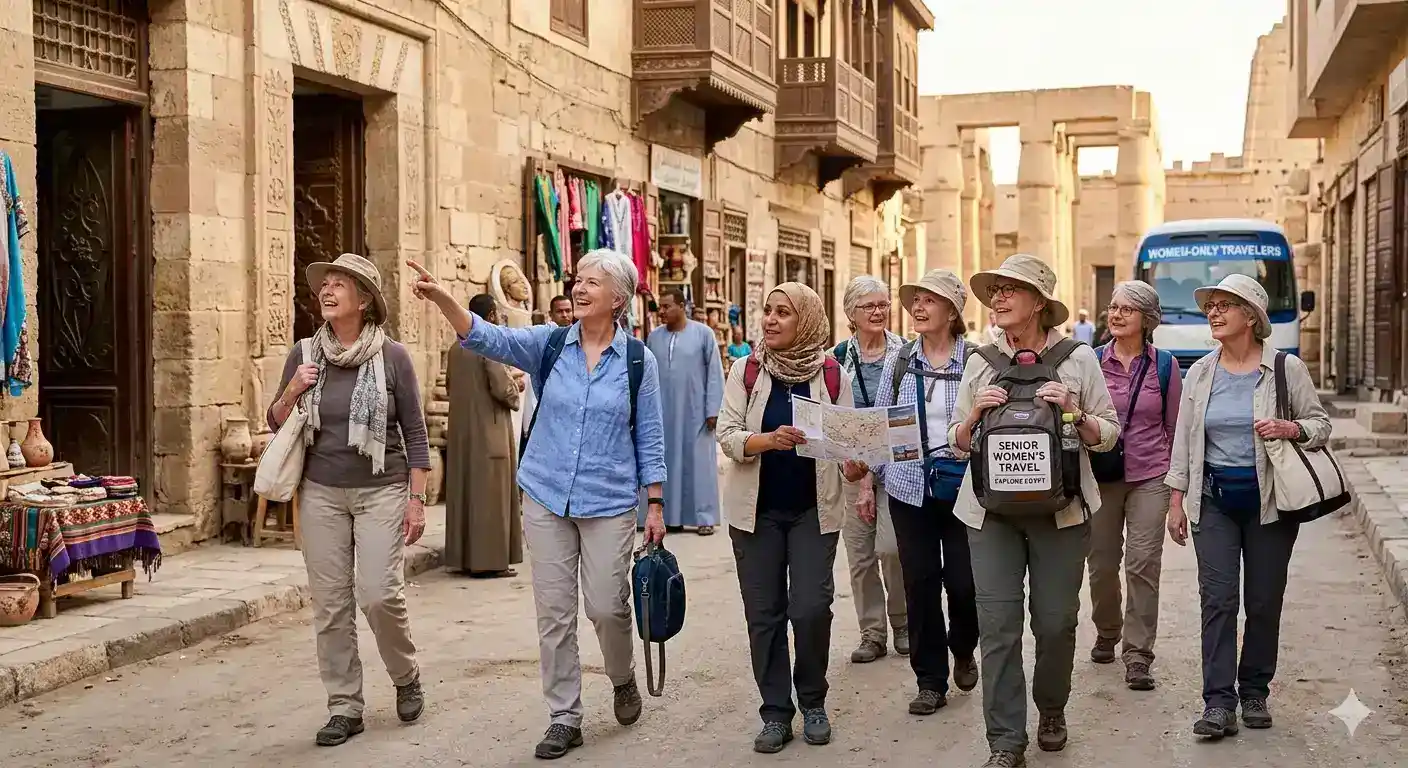
For solo female travellers: Verbal attention and unwanted approach from touts does occur at the plateau, though the 2025 reorganisation has reduced it significantly compared to earlier years. Wearing conservative clothing (shoulders and knees covered), moving with purpose, and not making sustained eye contact with persistent individuals are effective management strategies. Travelling with even one other person reduces approach rates considerably.
Culture, Dress Code & Etiquette at the Giza Plateau
The pyramids are an open-air archaeological site, not a religious building, so the dress code is less strict than at mosques. That said, conservative clothing — shoulders covered, knees covered — is respectful and practical. Lightweight long trousers and a loose long-sleeved shirt in a breathable fabric keep you cooler than shorts and reduce unwanted attention.
Photography inside the pyramids: Flash photography is prohibited inside the interior chambers. Small cameras and phones without flash are generally permitted. Tripods require a separate photography permit, which can be purchased at the Visitor Centre.
Do not touch or climb: Touching the limestone blocks causes erosion damage that compounds with 2.5 million annual visitors. Climbing on the pyramids is illegal and carries a significant fine. The Egyptian authorities do enforce this.
Tipping (baksheesh): Small tips are expected after any paid service — a helpful bus driver, a Visitor Centre staff member who assists you, a security guard who allows a slightly better photo angle. 20–50 EGP is appropriate in these contexts. For licensed guides, 10–15% of the tour cost is standard.
For broader cultural guidance — covering mosques, markets, family interactions, and daily Egyptian social norms — the is useful reading before you arrive.
Practical Tips — Visas, SIM Cards, Tipping, Money & More
Visa: At the time of writing, most nationalities (including US, UK, EU, Australian, and Canadian citizens) can obtain a tourist visa on arrival at Cairo International Airport for $25 USD cash. An e-Visa is also available in advance at the official Egyptian e-Visa portal. Always verify with your own government’s travel advisory before booking, as visa rules can change. Full current requirements are listed in the .
Currency: The Egyptian Pound (EGP) is the local currency. USD is widely understood but not always accepted at the plateau itself — EGP cash is more reliable for on-site purchases and tips. ATMs are available in the Giza area and in Cairo hotels. Withdraw EGP from a bank ATM rather than using currency exchange desks at the airport, which typically offer worse rates.
Cards: Major hotel restaurants and tour operators accept credit cards. The Visitor Centre ticket machines accept cards. Small purchases and tips require cash.
SIM card: Egyptian SIM cards (Vodafone Egypt, Orange Egypt, Etisalat/e&) are available at Cairo International Airport and in the city. A tourist SIM with 10–20 GB data costs approximately $5–10. Data coverage is good across the plateau and most tourist sites.
Electricity: Egypt uses Type C and Type F plugs (round pin), 220V/50Hz — the same as continental Europe. UK and US visitors need an adapter.
Language: Arabic is the official language. English is widely spoken at the pyramids, in Cairo hotels, and in tourist areas. French is understood by some guides.
Opening hours note: The site is open year-round. It does not close for the Egyptian national holidays themselves, but visitor numbers spike sharply — avoiding official Egyptian public holidays reduces crowd exposure.
Sample 1-Day Itinerary: Pyramids + GEM from Cairo
This schedule works for visitors staying in central Cairo. Adjust start time earlier in summer months to beat the heat.
07:00 — Depart hotel by taxi or pre-arranged private transfer. Specify the Cairo–Fayoum Road (Great Gate) entrance to the driver.
07:30 — Arrive at the Visitor Centre. Purchase plateau ticket plus any pyramid interior tickets at the self-service machines. Collect the site map.
07:40 – 08:30 — Walk or take the first electric bus to the Great Pyramid of Khufu. If you have an interior ticket, enter now while numbers are lowest. The King’s Chamber is quietest in this first hour.
08:30 – 09:15 — Electric bus to the Panoramic Viewpoint for the three-pyramid alignment photo. Light is still directional and warm.
09:15 – 10:00 — Khafre and Menkaure pyramids. Visit Menkaure interior if you have a ticket.
10:00 – 10:45 — Sphinx viewing area. Walk to the Valley Temple of Khafre adjacent to the Sphinx.
10:45 – 11:15 — Tomb of Queen Meresankh III (if ticket purchased). Workers’ Cemetery.
11:15 — Return to Visitor Centre by electric bus. Take a taxi or transfer to GEM (approximately 10 minutes, or 5 minutes by private transfer).
11:30 – 15:00 — Grand Egyptian Museum. Begin with Tutankhamun galleries (buy timed entry ticket online in advance). Continue to the Solar Boat hall and the panoramic gallery with pyramid views.
15:00 – 15:30 — Lunch at the GEM restaurant or nearby.
15:30 — Return to central Cairo by taxi/Uber (~35–45 minutes).
Sample 3-Day Cairo Itinerary Including the Pyramids
Day 1 — Giza Plateau + Grand Egyptian Museum Follow the 1-day itinerary above. Arrive at the plateau at 7 AM, finish at GEM by mid-afternoon. Consider the Sound & Light Show at the pyramids in the evening if energy allows (separate evening ticket, approximately $15–25).
Day 2 — Saqqara, Dahshur & Memphis Depart hotel at 8 AM by private transfer or taxi. Visit the Step Pyramid of Djoser at Saqqara (2 hours), drive to Dahshur for the Bent Pyramid and Red Pyramid (1.5 hours), then Memphis (45 minutes). Back in Cairo by late afternoon. Evening: Khan el-Khalili bazaar in Islamic Cairo.
Day 3 — Islamic Cairo, Coptic Quarter & Egyptian Museum (Tahrir) Morning: Citadel of Saladin and Mosque of Muhammad Ali. Midday: Al-Azhar Mosque and the Coptic quarter (Hanging Church, Coptic Museum). Afternoon: Egyptian Museum on Tahrir Square, home to Tutankhamun’s original funerary mask (separate from GEM’s collection). This is a full day without any driving to the plateau.
For a broader view of how these three Cairo days fit into a longer Egypt trip, the maps out the full route for first-time visitors with pre-planned guides, flights, and transfers across all major destinations.
Frequently Asked Questions
Is it safe to visit the Pyramids of Giza in 2026?
Yes. The Giza Plateau is one of Egypt’s most heavily managed and monitored tourist sites. Security personnel, tourist police, and CCTV coverage are present throughout. The 2025 reorganisation specifically addressed the harassment issues that had made earlier visits uncomfortable — vendor-free zones now cover the main archaeological areas.
Egypt as a whole remains stable for tourism in 2026. The UK Foreign, Commonwealth & Development Office and the US State Department both currently advise normal precautions for Cairo and tourist areas. At the time of writing, there are no advisories against travel to Giza or central Cairo — always check your own government’s official advisory page before booking, as conditions change. More detail is in the post.
Do I need to book pyramid tickets in advance?
For the general Giza Plateau admission, you can purchase at the self-service machines in the Visitor Centre on the day. For the interior of the Great Pyramid of Khufu, advance booking is strongly recommended — interior tickets sell out during peak season (October–April). Book through the Egyptian Ministry of Tourism and Antiquities official website. GEM tickets must always be purchased online in advance; there are no walk-up sales at the museum.
What is the dress code at the Pyramids?
The pyramids are an open-air site, not a place of worship, so the dress code is not strictly enforced. However, covering shoulders and knees is both respectful and practical — the limestone plateau reflects significant heat, and light, loose long clothing keeps you cooler than exposed skin. Closed-toe shoes with grip are useful on the uneven rocky terrain. Inside the pyramid interiors, the passages are narrow and warm — avoid bulky layers.
Can I enter the pyramids without a guide?
Yes. The plateau, the Sphinx, and the open areas are straightforward to explore independently. The electric bus system has clear stop maps, and the new signage is bilingual (Arabic/English). Interior visits are self-navigated — you purchase your ticket and enter the queuing system unassisted. A licensed Egyptologist guide adds considerable historical context and handles logistics, but it is not required.
How much does it cost to visit the Pyramids in 2026?
General admission is 700 EGP for adults (approximately $15–18 USD). Students with a valid ISIC card pay 350 EGP. Entering the Great Pyramid of Khufu costs an additional 1,500 EGP ($32–38). The Pyramid of Khafre interior costs 280 EGP and Menkaure’s is 200 EGP. The Grand Egyptian Museum charges a separate entry fee of approximately 500–600 EGP ($11–15), purchasable only online in advance. Prices can change — at the time of writing these figures reflect the current official pricing; verify at the official Ministry of Tourism and Antiquities website before travel.
How do I get from Cairo to the Pyramids?
By taxi or Uber from central Cairo, the journey takes 30–45 minutes and costs 150–250 EGP ($4–7) one-way. Specify the Cairo–Fayoum Road entrance (“Great Gate” / new Visitor Centre) when you book, as the old Mena House entrance is now closed. Metro Line 2 to Giza Station, then a short taxi, is the cheapest public option. Most guided tours include round-trip hotel transfers.
What are the opening hours of the Pyramids of Giza?
The site opens at 7:00 AM and the last entry is at 4:00 PM, closing at 5:00 PM. During Ramadan, the opening shifts to 8:00 AM — exact Ramadan hours vary by year; check the official Egyptian tourism website closer to your travel date. The site is open every day of the year, including Egyptian national holidays, though visitor numbers rise sharply on public holidays.
Is there a best day of the week to visit?
Tuesday, Wednesday, and Thursday mornings (arriving at 7:00–7:30 AM) are consistently the least crowded. Fridays attract more Egyptian domestic visitors after morning prayers. Saturdays and Sundays see increased international group tour traffic. Weekday mornings from November through February hit the ideal intersection of cool weather and manageable crowds.
Is Egypt safe for solo female travellers at the pyramids?
The plateau’s reorganisation has reduced the vendor and tout presence that previously made female solo visitors particularly uncomfortable. That said, verbal attention from persistent individuals still occurs. Conservative clothing (shoulders, knees covered), decisive movement, and not engaging prolonged conversation with strangers at the gate reduces interaction. Many solo female travellers prefer to join a small-group or private tour for the plateau visit specifically, as having a guide creates a clearer social buffer. Evenings in the Giza area are generally fine for walking to/from nearby restaurants, but travel by taxi rather than on foot after dark.
Can I visit the Pyramids and the Grand Egyptian Museum in the same day?
Yes, and it is now the standard recommended approach. The GEM is 2 km from the pyramid entrance — a 5–10 minute taxi ride. A 7 AM pyramid start and a 11:30 AM GEM arrival gives comfortable time at both. Budget at least 3–4 hours for the museum. Book GEM tickets online before your visit, as timed-entry slots fill up quickly, particularly for the Tutankhamun galleries.
What should I bring to the Pyramids?
Bring at least 1.5 litres of water per person (more in summer), sunscreen rated SPF 50+, a hat or headscarf, comfortable closed-toe shoes, and EGP cash for small purchases, tips, and any on-site extras. A portable phone charger is useful if you plan to take many photos. Cameras without flash are permitted in most areas. Leave large bags at your hotel if possible — the security screening at the Visitor Centre is faster with smaller baggage.
Do I need a visa to visit Egypt?
At the time of writing, most nationalities including US, UK, EU, Canadian, and Australian citizens can obtain a tourist visa on arrival at Cairo International Airport for $25 USD. An e-Visa is also available in advance through Egypt’s official e-Visa portal. Visa fees and eligibility change — always verify current requirements at your own government’s official travel advice page and Egypt’s official entry requirements site before booking travel. Full details on current requirements are covered in the guide.
External Links
Egyptian Ministry of Tourism and Antiquities
Cairo Metro official website