Temple of the oracle siwa
In 331 BCE, Alexander the Great — fresh from founding the city of Alexandria and about to begin his invasion of Persia — made one of the most consequential detours in ancient history. He left his army at the Mediterranean coast, crossed hundreds of kilometers of Saharan desert with a small group of companions, and arrived at a ruined hilltop in what is now Siwa Oasis to consult an oracle. What was said in that private meeting has never been recorded. What’s certain is that the question Alexander asked — whether he was truly the son of a god — and the answer he received changed how he understood himself and how he presented his rule to the world.
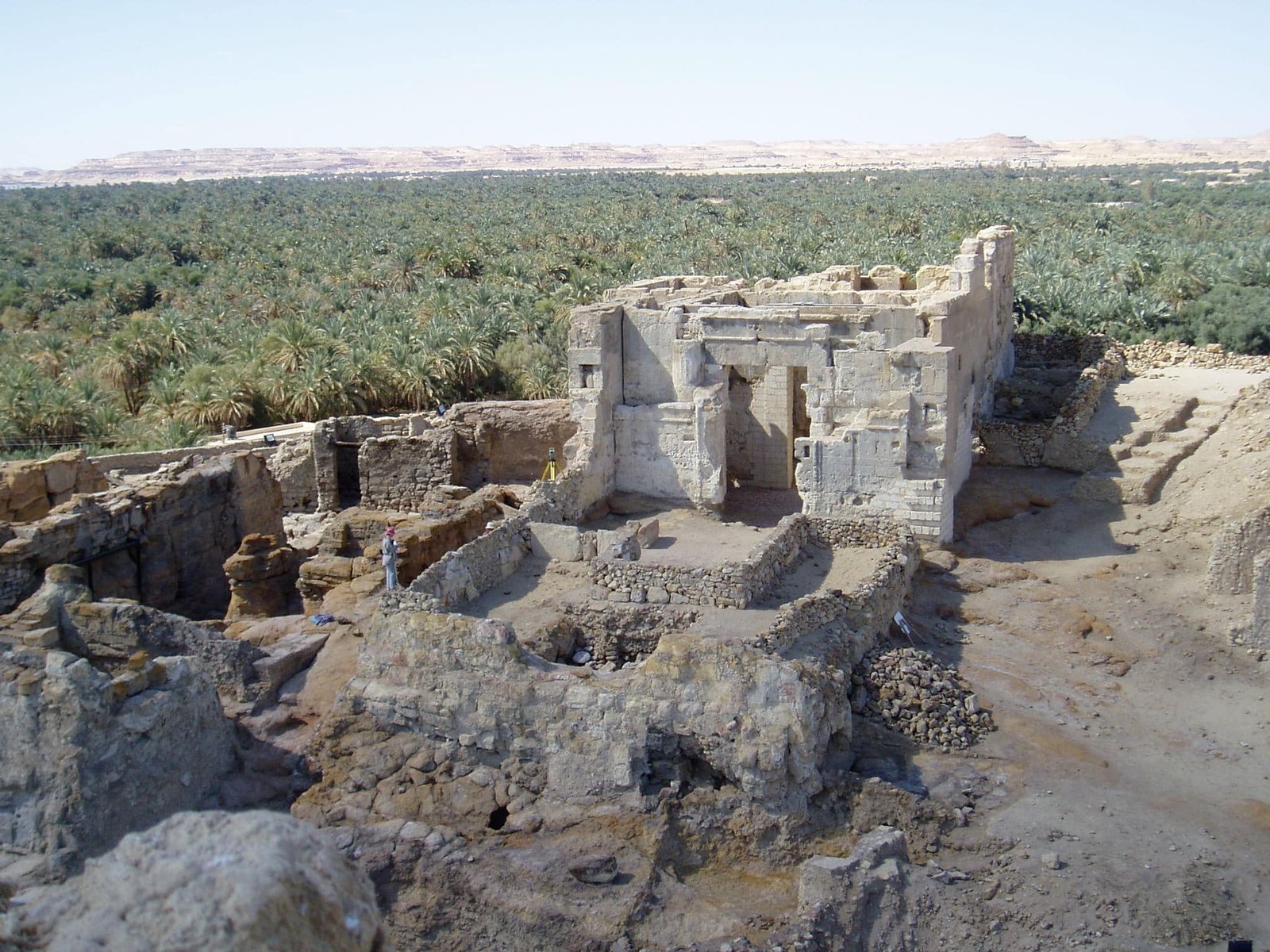
The temple where that encounter took place still stands, in partial ruin, on a rocky hill in the village of Aghurmi, 4 kilometers from Siwa town. It remains the most historically significant site in Siwa and one of the most remarkable in Egypt — not for the state of its preservation, which is modest, but for the depth of its history and its direct connection to events that shaped the ancient world.
What Is the Temple of the Oracle?
The Temple of the Oracle of Amun at Aghurmi is one of two temples dedicated to the god Amun in Siwa (the other is at Umm Ubayda, roughly 350 meters away). The Oracle temple sits atop a flat rocky outcrop, the ruins of its walls and inner sanctuary visible above the surrounding palm groves and the remains of the abandoned medieval village of Aghurmi that grew up around it over subsequent centuries.
Built primarily during Egypt’s 26th Dynasty (approximately 664–525 BCE), the temple was dedicated to Amun-Ra — known to the Greeks as Zeus-Ammon, a fusion of Egyptian and Greek religious identities reflecting Siwa’s position as a crossroads between African, Mediterranean, and Near Eastern cultures. At its height, the Oracle of Amun at Siwa was considered one of the seven most revered oracles in the ancient world — the only one of that status not located in Greece. Its reputation rivaled the famous Oracle at Delphi.
The History: Who Came to Consult the Oracle
Cambyses and the Lost Army (525 BCE)
The earliest dramatic episode connected to Siwa’s oracle comes from the Persian ruler Cambyses II, son of Cyrus the Great and conqueror of Egypt. Angered by the oracle’s prophecies, Cambyses dispatched an army of 50,000 soldiers with orders to destroy the Siwan temple and enslave its population. The army never arrived. According to Herodotus, it disappeared entirely, consumed by the Saharan desert, leaving no survivors and no trace. The story reinforced the oracle’s reputation enormously: the god Amun had, it seemed, sent the desert itself to destroy those who threatened his sanctuary.
Lysander and the Spartan Consultations
The Spartan general Lysander — architect of Sparta’s victory over Athens in the Peloponnesian War — visited Siwa twice in the 390s BCE, reportedly attempting to bribe the oracle to endorse his political ambitions. His efforts failed; the oracle declined to be influenced, adding to its reputation for incorruptibility.
Alexander the Great (331 BCE)
The oracle’s most famous consultation. After conquering Egypt and founding Alexandria, Alexander made the difficult desert crossing to Siwa specifically to consult the Oracle of Amun. His motivations remain debated: some historians argue he sought formal divine confirmation as a legitimate pharaoh of Egypt (Egyptian rulers traditionally derived authority from being recognized as sons of Amun-Ra); others propose more personal curiosity or a desire to replicate mythological heroes.
What happened inside the temple’s inner sanctum was never publicly disclosed. Alexander reportedly said only that he had received “what his heart desired.” The oracle was said to have confirmed him as the son of Zeus-Ammon. From this point, Alexander increasingly presented himself as divinely descended, and his image on coins began to show him wearing the curved ram horns of Amun.
After Alexander: Decline and Abandonment
Following Alexander’s death in 323 BCE and the gradual decline of Egyptian religious authority, the oracle’s prestige faded. By the time Strabo visited Egypt around 23 BCE, he noted the oracle had lost most of its former importance. Inscriptions dating as late as the Emperor Trajan (98–117 CE) have been found at the site, but the oracle had long ceased active function.
Siwa’s Oracle vs. Other Ancient Oracles
The Oracle at Delphi (Greece) — the most famous in the Greek-speaking world, dedicated to Apollo, known for cryptic pronouncements delivered by the Pythia. Consulted by Greek city-states before major military decisions for centuries.
The Oracle of Zeus at Dodona (Greece) — one of the oldest oracles in Greece, where divine messages were interpreted through rustling sacred oak trees. Ancient tradition connected Dodona’s founding to a priestess from the temple of Amun at Thebes, suggesting a deep conceptual link to the Siwan oracle.
The Oracle at Siwa — uniquely, the only oracle of the top tier of ancient fame not Greek in origin. Its Egyptian roots gave it a different character: less cryptic than Delphi, more direct and politically focused. Its physical remoteness also distinguished it — reaching Siwa was itself an act of devotion, filtering out casual consultants. That Athens maintained a dedicated galley specifically to transport delegations to the coast for the desert trek to Siwa is a remarkable testament to how seriously its authority was taken.
What You’ll Find at the Site Today
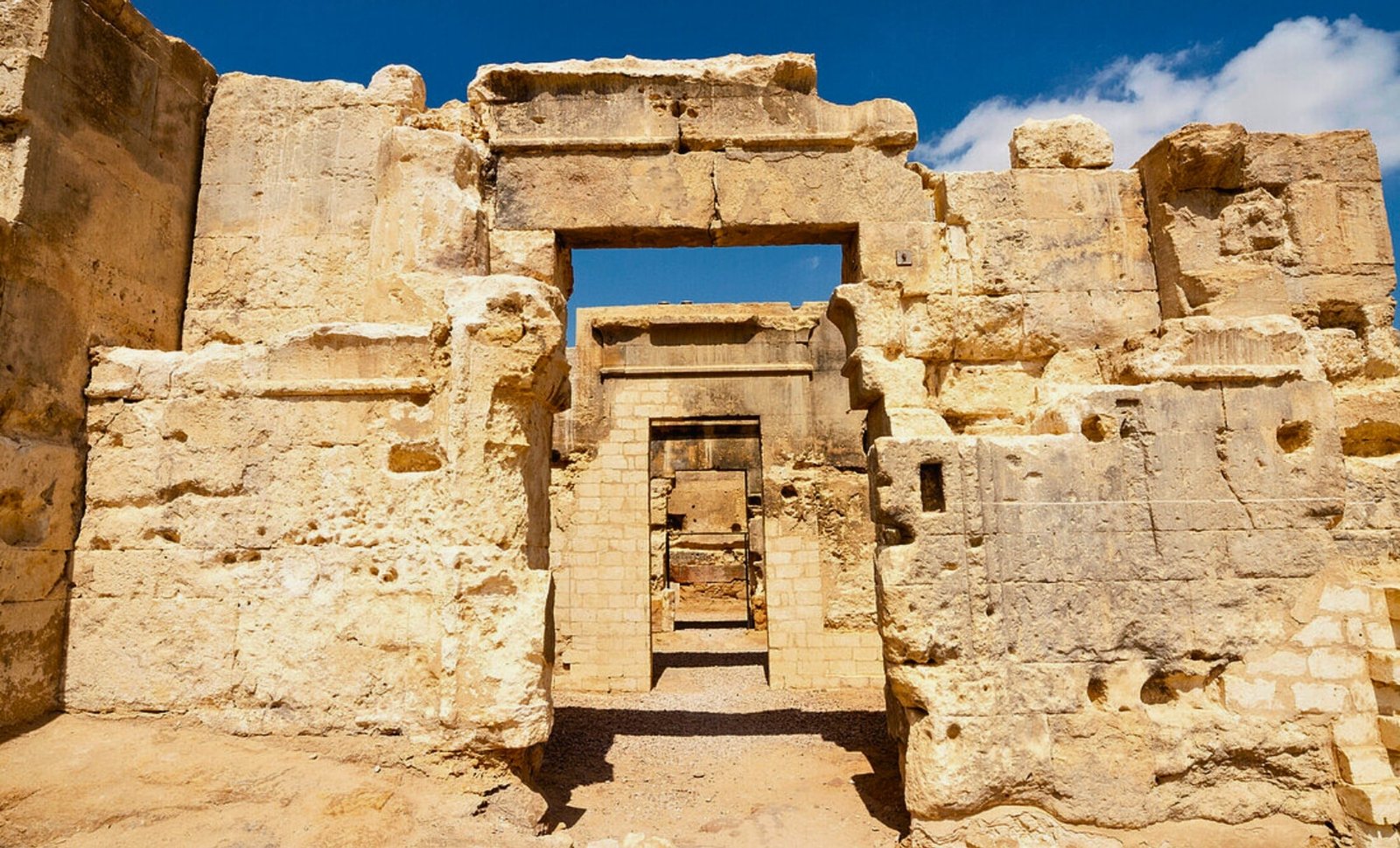
Visitors should approach with realistic expectations: this is not a well-preserved monument like Luxor Temple or Karnak. The site experienced significant damage — including a major earthquake in 1811, and reportedly deliberate destruction in the late 19th century when temple stones were used for building a staircase. What survives:
The Aghurmi Hill — a rocky outcrop rising roughly 25 meters above the oasis floor, with panoramic views across Siwa’s palm groves, salt lakes, and desert beyond.
The Temple Foundation and Core Walls — the basic structure is legible: outer courtyard, inner sanctuary, and scattered large limestone blocks. Some carved reliefs and hieroglyphic inscriptions survive.
The Inner Sanctuary — the small, modest chamber where Alexander is believed to have received the oracle’s pronouncement. Its intimacy is striking: not a grand hall but a compact, close space — appropriate for the secretive nature of oracle consultations.
Views over Siwa — from the summit, the full extent of the oasis is visible: green palm groves, the shimmer of Birket Siwa, ochre desert to the horizon.
The Nearby Umm Ubayda Temple
A short distance (roughly 350 meters) from the Oracle temple sits the second Amun temple at Siwa — the temple of Umm Ubayda. Even more ruined than the Oracle temple, having suffered particularly severe deliberate destruction in the 19th century, but worth a brief visit as part of a combined temple stop. Most guides offer commentary on both in a single excursion.
Visiting the Temple: Practical Information
Location: Aghurmi village, approximately 4 km southeast of Siwa town center.
Getting there: Bicycle (30 minutes on flat roads), tuk-tuk (10 minutes), or as part of a half-day guided historical tour.
Opening hours and tickets: Generally open during daylight hours with an entrance fee for foreign visitors. Confirm current rates with your hotel or guide before visiting.
Time to allow: Approximately 45 minutes to 1 hour for the Oracle temple, plus 15–20 minutes for Umm Ubayda. Combined with Gebel al-Mawta (Mountain of the Dead), the three sites make a natural half-day historical tour, completable before an afternoon visit to the Siwa salt lakes.
Best time: Early morning or late afternoon, when the light is softer and the hilltop viewpoint is most atmospheric. Midday heat makes the exposed hilltop uncomfortable.
Guide recommendation: A guide with genuine knowledge of the site’s history significantly enhances the experience. Without context, the physical remains may seem underwhelming. With expert commentary, the oracle temple becomes one of the most compelling historical stops in Siwa.

The Temple’s Place in Siwa’s Broader History
The oracle’s significance explains the entire trajectory of Siwa’s history. The oasis’s isolation, which might otherwise have made it marginal, instead made it powerful: a sanctuary so remote that its word seemed untainted by political pressure, so difficult to reach that consultants proved the seriousness of their questions through the act of making the journey. Persian kings, Spartan generals, Macedonian conquerors, and Roman emperors all made the desert crossing at different points — and the oracle’s reputation outlasted them all.
For a complete picture of everything Siwa has to offer, see our Siwa Oasis Egypt travel guide and our dedicated guide to Siwa’s salt lakes.
🏜️ Want to visit the Temple of the Oracle with expert historical context? Pure Nile Tours’ private Siwa Oasis tours include the Oracle temple, Umm Ubayda, Gebel al-Mawta, and the oasis’s natural highlights — with guides who bring the history to life. Explore Our Siwa Oasis Tour → https://pureniletours.com/egypt-private-tours
Frequently Asked Questions
Why did Alexander the Great visit Siwa? To consult the Oracle of Amun — likely seeking divine confirmation of his status as son of Zeus-Ammon, legitimizing his claim as pharaoh of Egypt.
What did the Oracle tell Alexander? The private consultation was never officially recorded. He reportedly received “what his heart desired” — understood to be confirmation as son of the god Amun. The exact words remain unknown.
Is the Temple of the Oracle well-preserved? No. Significant damage has occurred over centuries, including earthquake damage and 19th-century deliberate destruction. The basic layout is legible with some carved blocks and inscriptions surviving.
Where exactly is it? Aghurmi village, approximately 4 km from Siwa town center, atop a rocky hill with panoramic views over the oasis.
Who built it? The current structure dates primarily from Egypt’s 26th Dynasty (664–525 BCE), dedicated to the god Amun-Ra.
Are there two oracle temples at Siwa? Two Amun temples: the Oracle temple at Aghurmi (the historically famous one) and Umm Ubayda nearby. Both can be visited together on a single half-day excursion.
What happened to the Persian army? According to Herodotus, a 50,000-strong army sent by Cambyses II to destroy the oracle in 525 BCE disappeared entirely in the Western Desert. Its fate remains archaeologically unconfirmed.
Final Thoughts
The Temple of the Oracle at Siwa will not impress visitors looking for the grandeur of Luxor or Abu Simbel. What it offers instead is something harder to find: a place where genuinely world-altering history happened in an intimate, surprisingly modest setting, and where the scale of the surrounding desert — still unchanged from when Alexander crossed it — gives the past an unusual immediacy. Twenty-three centuries have passed since the most powerful man in the world stood on this hill and asked, in private, whether he was the son of a god. The ruins are modest. The history is not.
🏜️ Ready to visit Siwa Oasis and follow in Alexander the Great’s footsteps? Pure Nile Tours’ private Siwa tours combine the Oracle temple with the oasis’s natural highlights in a fully-guided itinerary from Cairo. Plan Your Siwa Oasis Trip → https://pureniletours.com/egypt-private-tours