
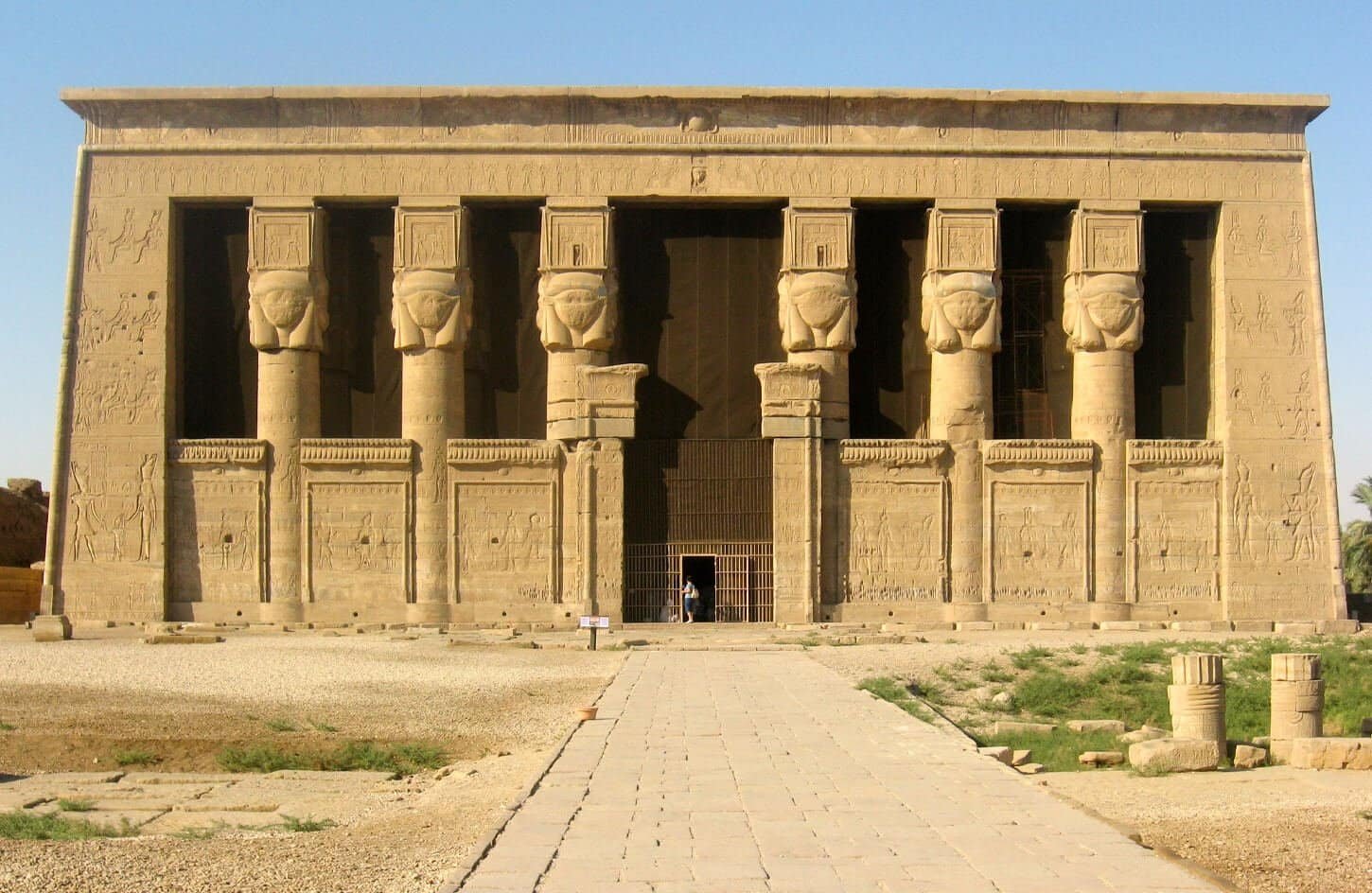
The Temple of Hathor at Dendera is one of the most complete temples in Egypt and one of the most rewarding day trips from Luxor. Its ceilings are covered with astronomical scenes in restored, vivid colour, its roof hides small chapels and a copy of the famous Dendera Zodiac, and its crypts contain the mysterious reliefs that some people call the “Dendera light”. Because it is not on the standard Nile cruise route, it is also far quieter than Karnak or Edfu. This guide explains the history, the highlights, the myths and how to plan your visit.
Dendera Temple at a Glance
- Dedicated to: Hathor, goddess of love, music, joy and motherhood.
- Built: mainly in the late Ptolemaic and early Roman periods (1st century BC to 1st century AD).
- Location: on the west bank of the Nile near Qena, about 60–70 km north of Luxor.
- Time needed: about 1.5–2 hours.
- Best combined with: the Temple of Seti I at Abydos, on a long day trip from Luxor.
A Short History of the Temple of Hathor
Dendera, ancient Iunet, was a sacred place of Hathor for thousands of years. The temple that stands today was begun around 54 BC under Ptolemy XII and continued under Cleopatra VII and the Roman emperors who followed, including Augustus and Tiberius. Like Edfu, it was built in the traditional Egyptian style, with Roman emperors shown as pharaohs on its walls.
Hathor of Dendera was linked with Horus of Edfu. Every year her statue travelled up the Nile to Edfu for a joyful festival of their reunion, described in our Edfu Temple guide.
What to See at Dendera
The façade and hypostyle hall
The temple’s front is lined with massive columns topped by the face of Hathor, with cow’s ears. Inside, the great hypostyle hall has 24 of these columns. Its ceiling, cleaned and restored in recent years, shows the sky goddess Nut, the hours of day and night, the signs of the zodiac and the boats of the sun and moon in deep blue, yellow and red. It is one of the most colourful ceilings in Egypt.
The sanctuary and side chapels
Beyond the hall, smaller rooms lead to the sanctuary, where the goddess’s statue was kept. Side chapels were used to store offerings, perfumes and ritual objects.
The roof and the Dendera Zodiac
Staircases on either side of the temple lead up to the roof, with reliefs of priests carrying the goddess in procession. On the roof are small chapels dedicated to the resurrection of Osiris. One of them once held the famous Dendera Zodiac, a circular map of the sky showing the constellations and the signs of the zodiac. The original was removed in 1821, taken to Paris and has been displayed in the Louvre since 1922; a cast is in its place. The roof also gives wide views over the temple complex and the surrounding countryside.
The crypts and the “Dendera light”
Narrow crypts beneath the temple were used to store sacred objects. One of them contains reliefs showing a large lotus flower from which a snake emerges inside an elongated shape, supported by a pillar. Some modern writers have claimed these show ancient electric light bulbs. Egyptologists read them very differently: as images from Egyptian creation myths, with the snake representing a form of the sun god emerging from the lotus at the beginning of the world, a theme known from other texts. Whatever you believe, it is a fascinating place to see the reliefs for yourself. Access to the crypts can depend on the day.
Cleopatra and Caesarion
On the outer rear wall of the temple, a large relief shows Cleopatra VII with her son Caesarion, whose father was Julius Caesar, making offerings to the gods. It is one of the few large surviving images of Cleopatra in a temple.
The birth houses, sacred lake and Coptic church
Around the main temple are two birth houses (one Roman, one older), a sunken sacred lake now planted with palms, a sanatorium where pilgrims sought healing, and the remains of an early Coptic church.
How to Visit Dendera
Day trip from Luxor
Dendera is about 1 hour 15 minutes by car from Luxor. It is easily combined with Abydos and the Temple of Seti I, about 2 hours further north, in a long day trip (roughly 10–12 hours in total). Starting early lets you see Abydos first and Dendera in the softer afternoon light.
On a Nile cruise or dahabiya
Standard three- and four-night cruises between Luxor and Aswan do not reach Dendera, but longer cruises, including some seven-night trips and cruises from Cairo, stop here. Read our Nile cruise from Cairo to Luxor guide for the long route.
Tickets and Opening Hours
- Tickets: bought at the site; check the current price before you go, as entry fees change. Student discounts are available with an ISIC card.
- Opening hours: usually from about 7 am to 5 pm.
- Light: bring a small torch or use your phone in the darker rooms and crypts.
Tips for Your Visit
- Do not skip the roof; the views and chapels are among the highlights.
- Look up in the hypostyle hall; the ceiling is the star of the temple.
- Walk around the outside to find the Cleopatra relief on the rear wall.
- Combine with Abydos for one of the best days of any Egypt trip.
- Bring water and snacks; facilities around the site are limited.
Planning the rest of your time in Luxor? See our Luxor packages and our guide to Karnak Temple.
Abydos: The Perfect Companion to Dendera
About two hours north of Dendera lies Abydos, one of the most sacred places in ancient Egypt and the legendary burial place of Osiris. Its Temple of Seti I contains some of the finest raised reliefs in the country, with colours still visible, and the famous King List, a carved sequence of royal names from the earliest pharaohs to Seti I. Behind the temple is the mysterious Osireion. Visiting Abydos first and Dendera second on the drive back to Luxor makes for an exceptional day.
Hathor: The Goddess of Dendera
Hathor was one of the most popular goddesses in Egypt. She was the goddess of love, music, dance and joy, a protector of women and childbirth, and also a sky goddess. She was often shown as a cow, as a woman with cow’s ears or as a woman wearing a headdress of horns and a sun disc. At Dendera, her festivals included music, dancing and drinking, and pilgrims came to seek healing. Many of the temple’s reliefs show the sistrum, a rattle used in her worship.
Planning a Day Trip: Sample Schedule
- 7:00: leave Luxor by private car.
- 9:30: arrive at Abydos; visit the Temple of Seti I and the Osireion.
- 11:30: drive to Dendera, with a lunch stop on the way.
- 14:00: visit Dendera, including the roof and crypts.
- 16:00: drive back to Luxor, arriving around 17:30.
Our Luxor packages can include this day as a private tour with an Egyptologist guide.
Frequently Asked Questions
Is Dendera Temple worth visiting?
Yes. It is one of the best-preserved temples in Egypt, with spectacular painted ceilings, a roof you can climb and far fewer crowds than the main Luxor sites.
What is the Dendera Zodiac?
A circular relief of the night sky, with constellations and zodiac signs, from a chapel on the temple roof. The original was taken to Paris in 1821 and is now in the Louvre; a cast remains at Dendera.
What is the “Dendera light”?
Reliefs in the temple crypts showing a snake emerging from a lotus flower. Some claim they depict electric lamps, but Egyptologists interpret them as religious images from creation myths.
How far is Dendera from Luxor?
About 60–70 km, or roughly 1 hour 15 minutes by car.
Can you visit Dendera and Abydos in one day?
Yes. A long day trip from Luxor of about 10–12 hours covers both temples comfortably.